
Our Short List of 3

- Best for: Drivers who want louder, fuller sound from the factory radio alone.
- 6.5-inch coaxial speaker
- 180 watts peak power handling
- 60 watts RMS power handling
- Frequency response 53 Hz to 21 kHz

- Best for: Owners who want balanced sound for music, podcasts and calls in a daily-driven car.
- 6.5-inch coaxial speaker
- 100 watts RMS power handling
- 300 watts maximum power handling
- Frequency response 40 Hz to 20 kHz
- Best for: Older cars and shallow doors where a compact, dependable speaker is the priority.
- 6.5-inch 2-way coaxial speaker
- 55 watts RMS power handling
- 110 watts maximum power handling
- Frequency response 52 Hz to 20 kHz
All 3 Picks at a Glance
| Product | Specs | Action |
|---|---|---|
| JBL GTO629 |
| Check price on Amazon |
| Kicker 46CSC654 |
| Check price on Amazon |
| Rockford Fosgate P1650 |
| Check price on Amazon |
Key takeaways
- Looking for the best 6 1 2 door speakers 3 picks? We compare four 6.5-inch coaxial models on power, sensitivity and mounting depth so the upgrade fits.
Factory door speakers are built to a budget, and the difference shows the first time you turn the volume up on a motorway. The real decision is not which speaker has the biggest wattage number, but which one fits the door depth, plays loud enough on the power your car already makes, and keeps its sound clean when the volume climbs. A speaker that needs an amplifier to wake up will sound flat on a factory radio, and one that is too deep will foul the window.
This guide is for drivers replacing blown or tired door speakers, for owners who want a straight swap without cutting metal, and for anyone planning a small amplifier later. It suits readers running a factory head unit and readers who want detail and clarity on long drives. Each speaker below was picked from the name and specifications on its Amazon product page, so you can verify every claim against the listing before you buy.
Quick Picks
As an Amazon Associate we earn from qualifying purchases
| Product | Best for | Key spec from title |
|---|---|---|
| JBL GTO629 | Loud sound from a factory radio | 180-watt peak, 3-ohm, 93 dB sensitivity |
| Kicker 46CSC654 | Balanced everyday sound | 100-watt RMS, 40 Hz to 20 kHz |
| Pioneer TS-A1680F | Crisp detail from a 4-way design | 350-watt maximum, 4-way coaxial |
| Rockford Fosgate P1650 | Shallow doors and modest power | 55-watt RMS, 2.24-inch mounting depth |
How to Choose
Check the mounting depth first
A 6.5-inch speaker fits most car doors by diameter, but depth is the number that causes trouble. The speaker must clear the window track when the glass rolls down, and a basket that is a quarter inch too deep will buzz or refuse to seat. Find the mounting depth on the listing, measure the door with the panel off, and note the cutout diameter as well. Some cars need a thin adapter ring even when the diameter matches, so check the bracket before ordering. A speaker that fouls the track will buzz every time the window moves, and the fix is either a spacer ring or a shallower speaker.
Read RMS power, not peak power
Power handling has two figures, and only one of them describes daily listening. RMS power is what the speaker handles hour after hour, while peak power is a short burst it survives for a moment. A factory head unit sends modest power per channel, so a speaker with a high RMS rating will still play, just without reaching its full voice. If an amplifier is planned later, RMS matching matters, because too much clean power can still damage a small voice coil. Read the RMS figure first. Peak figures sell speakers, but RMS figures describe the speaker you will actually live with, so read the smaller number first.
Sensitivity decides loudness on factory power
Sensitivity tells you how loud a speaker plays from a given amount of power, and on a factory radio that number carries real weight. A speaker rated at 93 dB plays noticeably louder than one rated at 89 dB on the same head unit, because each three-decibel step roughly doubles the output for the same input. That gap can decide whether vocals stay clear at speed or sink under tyre noise. When two models have similar power ratings, the higher sensitivity figure usually wins for a car running on factory power. That is why a modest speaker with high sensitivity can outplay a powerful one with low sensitivity on the same radio.
Cone, tweeter and life inside a door
A door is a damp, vibrating place, so the materials matter. Polypropylene and mica-blended cones resist moisture far better than untreated paper, and a rubber surround lasts longer than foam through heat and cold. Coaxial speakers mount the tweeter on the same frame as the woofer, which keeps the install simple and aims the highs at the listener from one point. A four-way design adds extra tweeters for sparkle, while a two-way keeps the sound clean and focused. Choose the layout that matches how you listen. Rubber surrounds and treated cones last longer in a damp door, and they keep their sound when the temperature swings.
The 4 Best Options
JBL GTO629
- Best for: Drivers who want louder, fuller sound from the factory radio alone.
- 6.5-inch coaxial speaker
- 180 watts peak power handling
- 60 watts RMS power handling
- Frequency response 53 Hz to 21 kHz
Drivers who want louder, fuller sound from the factory radio alone.
The 3-ohm rating suits most head units, but check the manual for the minimum impedance before wiring two pairs together.
The GTO629 is the pick for a driver who wants a clear jump in volume without adding an amplifier. Its three-ohm impedance draws more power from a factory head unit than a standard four-ohm speaker, and the high sensitivity turns that extra draw into usable loudness on the road. The oversized woofer cone moves more air for its size, which helps bass notes stay present over road noise. It fits most 6.5-inch openings, and the shallow frame suits doors where depth is tight. The Plus One cone gives the woofer more surface area than a standard 6.5-inch frame, which is why the bass feels fuller than the size suggests.
Watch out for: The 3-ohm rating suits most head units, but check the manual for the minimum impedance before wiring two pairs together.
Kicker 46CSC654
- Best for: Owners who want balanced sound for music, podcasts and calls in a daily-driven car.
- 6.5-inch coaxial speaker
- 100 watts RMS power handling
- 300 watts maximum power handling
- Frequency response 40 Hz to 20 kHz
Owners who want balanced sound for music, podcasts and calls in a daily-driven car.
Measure the mounting depth against the door, since the basket sits deeper than some slim factory speakers it replaces.
The 46CSC654 is a steady all-round choice for a car that sees daily use in every season. Its woofer covers a wide frequency range, so bass guitar and kick drum keep their shape without a separate subwoofer, and the tweeter stays smooth rather than sharp at high volume. The build is simple and tough, with a surround made to survive door moisture and temperature swings. It is an easy fit for owners who want one speaker that does everything well instead of chasing one standout trait. The ribbed surround keeps the cone moving evenly at high volume, so bass notes stay tight instead of turning muddy.
Watch out for: Measure the mounting depth against the door, since the basket sits deeper than some slim factory speakers it replaces.
Pioneer TS-A1680F
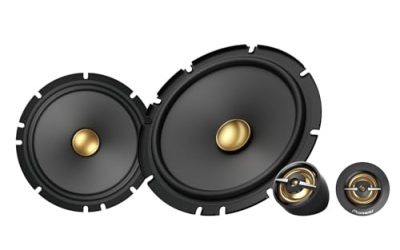
The TS-A1680F suits a listener who notices the small details in a recording. Its four-way layout splits the highs across a tweeter and a super tweeter, so cymbals, strings and vocal breath stay distinct instead of blurring into one bright edge. The mica-blended cone keeps midrange voices firm at volume, and the high maximum power gives headroom for a later amplifier. It is the most detailed speaker in this guide, and it rewards a careful install with a noticeably wider sound. The super tweeter reaches frequencies most listeners only notice as air and space around the music, and the effect is real on a good recording.
Specs
- 6.5-inch 4-way coaxial speaker
- 350 watts maximum power handling
- 80 watts nominal power handling
- 4-ohm impedance
- Multilayer mica matrix woofer cone
- 11 mm tweeter plus super tweeter
Best for: Listeners who value crisp highs and fine detail on long drives.
Watch out for: The bright top end can sound sharp in a cabin with hard plastic panels, so set the treble near flat first and adjust by ear.
Rockford Fosgate P1650
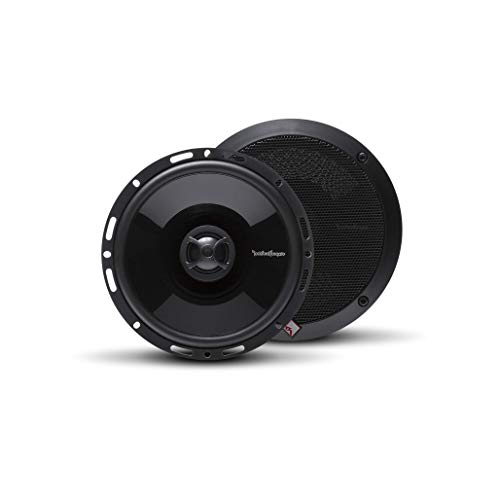
- Best for: Older cars and shallow doors where a compact, dependable speaker is the priority.
- 6.5-inch 2-way coaxial speaker
- 55 watts RMS power handling
- 110 watts maximum power handling
- Frequency response 52 Hz to 20 kHz
Older cars and shallow doors where a compact, dependable speaker is the priority.
Confirm the cutout diameter against the factory opening, since some cars need a thin adapter ring to seat this frame flush.
The P1650 is the sensible pick for shallow doors and modest power. Its slim basket and short mounting depth fit cars where deeper speakers foul the window track, and its moderate power rating pairs well with a factory head unit or a small amplifier. The sound stays clean and even, with enough low end for rock and country and a tweeter that never shouts. It is a practical upgrade for an older car where reliability matters more than showroom sparkle. The shallow frame is the point here, and it opens up cars that most 6.5-inch speakers cannot fit without cutting metal.
Watch out for: Confirm the cutout diameter against the factory opening, since some cars need a thin adapter ring to seat this frame flush.
Which One Fits Your Situation
Louder sound with no amplifier
If the car keeps its factory radio, the JBL GTO629 is the pick, because its low impedance and high sensitivity turn factory power into real volume. It is the simplest upgrade in this guide: swap the speakers, keep the radio, and hear the difference on the first drive. The JBL draws more from the radio than a four-ohm speaker, and the extra volume shows up as clearer vocals rather than just more noise.
One speaker for everything
If the car is a daily driver that plays music, podcasts and calls, the Kicker 46CSC654 covers all of it without a weak spot. Its wide frequency range and balanced sound suit every kind of listening, and its tough build survives the damp inside a door. It handles music, talk and calls without a weak spot, and it asks for nothing more than a straight swap in the factory opening. Fit it once and forget it.
Detail and a later amplifier
If fine detail matters and an amplifier may follow, the Pioneer TS-A1680F is the pick. Its four-way design and high maximum power give it headroom to grow, and it rewards a careful install. Pair it with the Rockford Fosgate P1650 when the doors are shallow and the budget is tight. Start with the Pioneer on factory power, add an amplifier later, and the speaker grows with the system.
Shallow doors on an older car
If the door is shallow, the Rockford Fosgate P1650 is the safe pick, because its short mounting depth clears the window track where deeper speakers will not seat. Measure the depth with the panel off, compare it with the 2.24-inch figure on the listing, and check the cutout diameter too. A shallow speaker that fits cleanly beats a better speaker that fouls the glass.
Common Mistakes
- Buying by peak wattage alone and ignoring the RMS figure that governs daily listening, since the peak number says nothing about how the speaker sounds all day.
- Skipping the mounting depth check, then finding the speaker fouls the window track when the glass rolls down.
- Fitting a low-sensitivity speaker on a factory radio and wondering why it sounds quiet at motorway speed.
- Wiring a 3-ohm pair without checking the head unit minimum impedance, which can strain the radio over time.
- Expecting deep bass from a door speaker without a subwoofer to carry the lowest notes, and blaming the speaker for a missing octave.
Frequently Asked Questions
What size are 6.5-inch door speakers?
A 6.5-inch door speaker has a nominal frame diameter of about six and a half inches, and it fits most car front and rear doors. The diameter is only part of the fit, so check the mounting depth and the cutout diameter on the listing as well. Some cars need an adapter ring even when the diameter matches the factory opening.
Do I need an amplifier for new door speakers?
Not always. Speakers with high sensitivity and a low impedance, such as the JBL GTO629 in this guide, play louder on a factory head unit than the speakers they replace. An amplifier adds volume and control for speakers with a high RMS rating, but a well-chosen swap on factory power already sounds far better than the speakers it replaces.
What does sensitivity mean on a car speaker?
Sensitivity measures how loud a speaker plays from a given amount of power, stated in decibels. A higher figure means more volume from the same head unit, which matters in a noisy car. A three-decibel gap roughly doubles the acoustic output for the same input, so a small difference in the rating can be easy to hear.
How do I know if a speaker fits my car door?
Check three numbers on the listing: the nominal size, the mounting depth and the cutout diameter. Measure the door with the panel off and compare all three, and check whether the factory bracket needs an adapter ring. If any number does not fit, the speaker will not install cleanly, whatever the size label says.
More from Amazon
Programs that pair well with the guide above. Offers and eligibility are set by Amazon and may change.
Free shipping on eligible items, Prime Video and more. Eligible new members can start with a free trial.
Start a Prime free trialAudiobooks and podcasts to listen to on the go. Eligible new members can start with a free trial.
Try Audible freeAd-free music streaming. Eligible new subscribers can start with a free trial.
Try Music Unlimited freeA free business account with business pricing and bulk-buying tools for work, shop or home office.
Create a business accountAs an Amazon Associate we earn from qualifying purchases.
Write Your Review
No reviews yet. Be the first to share your experience!