
Our Short List of 3

- Best for: A mobile DJ who plays different rooms and needs DSP voicing for each one.
- 12-inch woofer with 1400 watts maximum output
- SoundCheck DSP with Flat, DJ, Live, and Wedge voicing modes
- Bluetooth streaming and wireless linking between two speakers
- Thump Connect 2 app control

- Best for: Large rooms and outdoor sets where maximum output matters.
- 12-inch woofer with 2000 watts maximum output
- TruSource fidelity with digital mixing and processing
- Compact cabinet design
- Built-in digital mixer

- Best for: A lightweight DJ setup with manual EQ control.
- 1000 watts maximum output, 12-inch woofer, 1.35-inch aluminum high-frequency driver
- Frequency range 50Hz to 20kHz
- Dedicated two-band EQ with integrated sound processor
- Two-channel mixer with individual Mic/Line inputs
All 3 Picks at a Glance
| Product | Specs | Action |
|---|---|---|
| Mackie Thump12v4 |
| Check price on Amazon |
| Mackie DLM12 |
| Check price on Amazon |
| Behringer Eurolive B112D |
| Check price on Amazon |
Key takeaways
- Compare the best eqn speakers for djs guitar center shoppers: powered DJ speakers with DSP voicing and onboard EQ, by output, weight and mixer inputs.
A DJ speaker has to do more than play loud: it has to shape the sound for the room, cut through crowd noise, and keep working for hours without overheating. The models that suit DJs best are powered speakers with onboard EQ or DSP voicing, because they let you adjust the tone from the back of the cabinet instead of carrying a separate equalizer. The real decision is how much output you need, how heavy a cabinet you can carry, and whether the built-in mixer covers your controller and microphones. The right speaker also survives weekly load-ins and long sets without damage.
This guide is for mobile DJs who play weddings and parties, club DJs who need a reliable pair for small venues, and home DJs building a practice rig that can also handle a gig. The speakers below were chosen from the names and specifications listed on their Amazon product pages, with attention to output power, EQ and DSP controls, mixer inputs, weight, Bluetooth features, and setup speed.
Quick Picks
As an Amazon Associate we earn from qualifying purchases
| Product | Best for | Key spec from title |
|---|---|---|
| Mackie Thump12v4 | A DJ rig with DSP voicing modes | 1400W powered loudspeaker |
| Mackie DLM12 | Maximum output in a compact cabinet | 2000W powered loudspeaker |
| Behringer Eurolive B112D | A lightweight DJ speaker with onboard EQ | Dedicated 2-band EQ |
How to Choose
Match output power to the size of the room
Output power decides whether the music reaches the back of the room without distortion, and the number to compare is the maximum output in watts. A 1000-watt speaker suits a living room or a small hall, while a 1400-watt or 2000-watt cabinet covers a larger venue or an outdoor set. Remember that the wattage figure is a peak rating, so two speakers with the same number can sound different depending on driver size and cabinet design. A 12-inch woofer moves more air than a smaller driver, which matters for bass-heavy dance music. Bigger drivers move more air. Choose the output for the largest room you play regularly, not the smallest.
Check the EQ and DSP controls on the cabinet
Onboard EQ is what makes a speaker a DJ speaker rather than a plain box. Look for voicing modes that reshape the sound: a DJ mode that boosts low end for music playback, a flat mode for neutral sound, and a live mode that brings vocals forward. A dedicated two-band EQ adjusts bass and treble by hand, which helps when the room sounds boomy or thin. Digital signal processing adds feedback elimination and clipping protection, which keeps the speaker safe when the night runs long. Test the controls before the gig, since a mode you cannot reach quickly is no help mid-set. Learn the cabinet controls as well as the app.
Look at the mixer inputs and connections
A powered DJ speaker should connect to your controller, your microphones, and your phone without a separate mixer. Check for combo inputs that accept XLR and quarter-inch plugs, and confirm the speaker has enough channels for your setup. Bluetooth streaming lets you play music from a phone between sets, and linking two speakers wirelessly gives you stereo sound without running cables across the floor. A mix output lets you chain a second speaker or send the signal to a subwoofer. Count the inputs you need on a typical night, then choose a speaker that covers them all. Label your cables so setup stays fast in a dark venue.
Weigh the cabinet before you buy
A DJ carries speakers up stairs, across parking lots, and onto stages, so weight matters as much as sound. A 27-pound cabinet is easy to move alone, while a heavier cabinet may need a second pair of hands or a cart. Check the dimensions too, since a tall cabinet may not fit in the car alongside the controller, stands, and cables. A trapezoidal cabinet works as a floor monitor as well as a pole-mounted speaker, which adds flexibility at small venues. Choose the lightest cabinet that still delivers the output your rooms need. A speaker cart helps when the venue has a long walk from the car.
The 3 Best Options
Mackie Thump12v4
- Best for: A mobile DJ who plays different rooms and needs DSP voicing for each one.
- 12-inch woofer with 1400 watts maximum output
- SoundCheck DSP with Flat, DJ, Live, and Wedge voicing modes
- Bluetooth streaming and wireless linking between two speakers
- Thump Connect 2 app control
A mobile DJ who plays different rooms and needs DSP voicing for each one.
The app control needs a phone nearby, so learn the cabinet controls as a backup.
The Mackie Thump12v4 is the most flexible DJ speaker here, built around SoundCheck DSP voicing modes that reshape the sound. DJ mode boosts the low end for music playback, flat mode gives a neutral response, live mode brings vocals forward, and wedge mode turns the cabinet into a monitor. The 12-inch woofer and 1400 watts of maximum output cover small venues and parties, and Bluetooth streaming plays music from a phone while the analog inputs handle the DJ controller. The Thump Connect 2 app controls every setting remotely, and two speakers link wirelessly for stereo sound. Feedback elimination and music ducking keep the sound clean when microphones join in.
Watch out for: The app control needs a phone nearby, so learn the cabinet controls as a backup.
Mackie DLM12
- Best for: Large rooms and outdoor sets where maximum output matters.
- 12-inch woofer with 2000 watts maximum output
- TruSource fidelity with digital mixing and processing
- Compact cabinet design
- Built-in digital mixer
Large rooms and outdoor sets where maximum output matters.
The high output needs a suitable power supply, so check the venue power before a big gig.
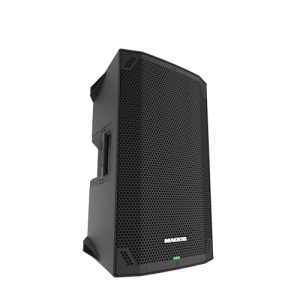
The Mackie DLM12 is the most powerful speaker here, packing 2000 watts into a compact cabinet. Its TruSource design pairs a 12-inch woofer with digital mixing and processing, giving a clean, high-output sound for larger venues and outdoor sets. The compact design makes it easier to transport than its output suggests, and the built-in digital mixer handles a DJ’s sources without a separate board. The DLM12 suits DJs who play big rooms and need headroom, since the extra power keeps the sound clean at high volume rather than pushing drivers to their limit. It is the premium pick for DJs wanting maximum output in a cabinet they can carry alone.
Watch out for: The high output needs a suitable power supply, so check the venue power before a big gig.
Behringer Eurolive B112D
- Best for: A lightweight DJ setup with manual EQ control.
- 1000 watts maximum output, 12-inch woofer, 1.35-inch aluminum high-frequency driver
- Frequency range 50Hz to 20kHz
- Dedicated two-band EQ with integrated sound processor
- Two-channel mixer with individual Mic/Line inputs
A lightweight DJ setup with manual EQ control.
The 1000-watt output suits small to mid-size rooms better than large venues.
The Behringer Eurolive B112D is the lightest DJ speaker here, and the only one with a dedicated two-band EQ on the cabinet. Its 1000-watt amplifier drives a 12-inch woofer and a 1.35-inch aluminum high-frequency driver, covering 50Hz to 20kHz for full-range dance music. The two-band EQ plus an integrated sound processor shapes the tone by hand, and the two-channel mixer takes a microphone and a line source at the same time. The trapezoidal cabinet mounts on a pole or works as a floor wedge, and the wireless-ready design accepts a digital wireless system. At 27.1 pounds it is the easiest cabinet here to carry upstairs.
Watch out for: The 1000-watt output suits small to mid-size rooms better than large venues.
Which One Fits Your Situation
A mobile DJ playing different rooms
Choose the Mackie Thump12v4 when every gig is a different room and you need DSP voicing to match it. DJ mode handles dance floors, live mode handles speeches and vocals, and Bluetooth streaming covers the gaps between sets. The app control lets you adjust the sound from the dance floor, and wireless linking gives you stereo without cables. Set the voicing mode during sound check.
A big room or an outdoor set
Choose the Mackie DLM12 when the venue is large or outdoors and you need headroom. The 2000-watt output keeps the sound clean at high volume, the compact cabinet still travels well, and the digital mixer covers your sources. It is the strongest pick in this guide for DJs who play loud rooms regularly. Bring a spare cable for every input you use on the night.
A lightweight rig with manual EQ
Choose the Behringer Eurolive B112D when you carry your own gear and want to shape the tone by hand. The dedicated two-band EQ adjusts bass and treble without an app, the 27-pound cabinet is easy to move alone, and the two-channel mixer handles a controller and a microphone. It suits small to mid-size rooms and practice rigs that also play gigs. Keep a spare cable for every input.
A small venue with a tight load-in
Choose the Behringer Eurolive B112D when the venue has stairs, a long walk from the car, or a small stage. The 27-pound cabinet is easy to carry alone, the two-band EQ shapes the tone without an app, and the two-channel mixer covers a controller and a microphone. It suits solo DJs who load in and out by themselves.
Common Mistakes
- Buying a speaker by wattage alone and ignoring driver size, cabinet design, and the room it must fill.
- Choosing a speaker without onboard EQ and discovering the room sounds boomy halfway through the first set.
- Forgetting to count mixer inputs and finding the controller and microphone do not both fit on the night.
- Picking a heavy cabinet that is hard to carry alone up stairs, across parking lots, and onto stages.
- Skipping a sound check and discovering the voicing mode is wrong after the first song has started.
Frequently Asked Questions
What is the difference between a DJ speaker and a regular PA speaker?
A DJ speaker is a powered speaker with onboard EQ or DSP voicing that shapes the sound for music playback, with modes that boost low end. A regular PA speaker may lack those voicing options and suit speech better. The speakers in this guide all include EQ or DSP controls aimed at DJ use and small venues.
Do I need a separate mixer with these speakers?
Not for a basic setup. Each speaker here has a built-in mixer with inputs for a DJ controller, microphones, and playback devices. A separate mixer helps only when you need more channels than the built-in mixer offers, such as multiple microphones plus several instruments. Count your inputs before the gig so nothing is left unplugged. Label each cable before the gig.
Can I link two speakers for stereo sound?
Yes, the Mackie Thump12v4 links two speakers wirelessly for stereo, zone, or dual mono playback without cables. The other models chain through a mix output with a cable. Check the connection options on the product page for your model before buying a pair. Check the link range before the gig. Stereo linking gives a wider soundstage for the dance floor.
How much power do I need for a wedding of 100 guests?
A pair of 1000-watt to 1400-watt speakers usually covers a wedding hall of that size, with the 12-inch woofers providing enough bass for dancing. Larger halls and outdoor venues need the 2000-watt class or a subwoofer alongside the main speakers. Match the output to the largest room you play. Add a subwoofer when the bass feels thin.
More from Amazon
Programs that pair well with the guide above. Offers and eligibility are set by Amazon and may change.
Free shipping on eligible items, Prime Video and more. Eligible new members can start with a free trial.
Start a Prime free trialAudiobooks and podcasts to listen to on the go. Eligible new members can start with a free trial.
Try Audible freeAd-free music streaming. Eligible new subscribers can start with a free trial.
Try Music Unlimited freeA free business account with business pricing and bulk-buying tools for work, shop or home office.
Create a business accountAs an Amazon Associate we earn from qualifying purchases.
Write Your Review
No reviews yet. Be the first to share your experience!