
Our Short List of 3

- Best for: Listeners who play rock LPs loudly in medium to large rooms with almost any amplifier.
- Brand: Klipsch
- Model: RP-600M II, Ebony finish
- Speaker type: Bookshelf, sold as a pair
- Woofer diameter listed: 6.5 inches

- Best for: Smaller rooms and shelf placement where rock records need control more than sheer volume.
- Brand: ELAC
- Model: Debut 2.0 B6.2, model number DB62-BK
- Tweeter: 1-inch cloth dome
- Woofer: 6.5-inch aramid fiber
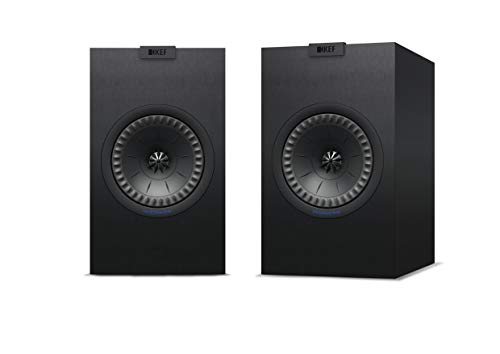
- Best for: Nearfield and small-room rock listening where vocal focus and instrument separation come first.
- Brand: KEF
- Model: Q150, Q150B in black
- Speaker type: Bookshelf, pair
- Driver: Uni-Q array, tweeter centered in the woofer
All 4 Picks at a Glance
| Product | Specs | Action |
|---|---|---|
| Klipsch Reference Premiere RP-600M II |
| Check price on Amazon |
| ELAC Debut 2.0 B6.2 |
| Check price on Amazon |
| KEF Q150 |
| Check price on Amazon |
 Klipsch RP-600M |
| Check price on Amazon |
Our Top Picks
- Klipsch Reference Premiere RP-600M II Ebony Bookshelf Speakers13 x 7.95 x 15.75 inches18 poundsCheck on Amazon
Rock on vinyl makes one demand that polite background music does not: it has to stay composed when the drums, bass guitar, and a wall of distorted guitars all arrive at once, often on an older pressing that was never quiet to begin with. The buyer’s real decision is which bookshelf speaker keeps that energy intact at the volumes you actually use, in the room you actually have, driven by the amplifier you already own or plan to buy next.
This guide is for listeners building or upgrading a turntable system for rock LPs, from a first pair beside a starter deck to a step up for a dedicated listening corner. All four picks are passive bookshelf speakers selected from their Amazon listing names and specifications, so an amplifier or receiver with a phono input or a separate phono stage remains part of the chain.
Quick Picks
As an Amazon Associate we earn from qualifying purchases.
| Product | Best for | Key spec from title |
|---|---|---|
| Klipsch Reference Premiere RP-600M II | Loud rock in larger rooms | 6.5-inch woofer, horn-loaded design |
| ELAC Debut 2.0 B6.2 | Balanced rock playback near walls | 1-inch cloth dome tweeter, 6.5-inch aramid fiber woofer |
| KEF Q150 | Focused listening at a desk or small room | 5.25-inch Uni-Q driver array |
| Klipsch RP-600M | Classic rock with an existing strong amplifier | 6.5-inch Cerametallic woofer, Tractrix horn tweeter |
How to Choose
Sensitivity Decides How Loud Rock Can Play
Rock records are cut with wide swings between quiet verses and full-band choruses, and a speaker’s sensitivity rating tells you how much of your amplifier’s power becomes sound. A more sensitive design, the Klipsch approach here, reaches lively volumes with modest wattage, which suits vintage receivers and smaller integrated amps. A less sensitive speaker is not worse; it simply asks for more power to reach the same level. Check the sensitivity figure on the Amazon listing and set it against your amplifier’s real output, especially if you listen across a room rather than at a desk two feet away.
Woofer Size and the Kick Drum Problem
Most of the weight in rock sits between the kick drum, the bass guitar, and the low end of rhythm guitars. A 6.5-inch woofer in a bookshelf cabinet moves more air than a 5.25-inch unit and usually gives those instruments more body without a subwoofer. The trade is cabinet size and how the speaker behaves close to a wall. Smaller drivers image precisely and suit small rooms, but they will not fake the chest thump of a big kit. Decide honestly whether you will add a subwoofer later, because that answer changes which size class makes sense today.
Port Placement Matters on a Real Shelf
Many buyers put bookshelf speakers exactly where the name suggests, on a shelf or against a wall, and port location decides whether that works. A front-firing port, like the ELAC design in this group, is more forgiving of tight placement because the bass energy exits toward the listener. Rear-ported cabinets need breathing room behind them or the low end turns boomy, which muddies bass guitar lines on dense rock mixes. Measure your shelf depth, leave the clearance the listing implies, and avoid pushing any rear-ported speaker flat against drywall just because it physically fits there.
Match the Speaker to Your Turntable Chain
Passive speakers are the last link, not the whole system. Your turntable needs a phono stage somewhere, either built into the turntable, the amplifier, or a separate box, and none of these speakers provides one. Rock LPs also expose weak links: a worn stylus or a lightweight platter will sound edgy through a revealing horn tweeter. Budget for the chain as a whole, confirm your amplifier’s impedance compatibility with the speaker you choose from the listing, and remember that speaker wire and sensible placement cost little yet change more than most accessory upgrades.
The 4 Best Options
Klipsch Reference Premiere RP-600M II
- Best for: Listeners who play rock LPs loudly in medium to large rooms with almost any amplifier.
- Brand: Klipsch
- Model: RP-600M II, Ebony finish
- Speaker type: Bookshelf, sold as a pair
- Woofer diameter listed: 6.5 inches
Listeners who play rock LPs loudly in medium to large rooms with almost any amplifier.
The horn presentation is forward, so confirm the return window if your room is small or highly reflective.
For rock fans who listen at real volume, this second-generation Reference Premiere model is the headline pick. Listing data describes a bookshelf speaker with a 6.5-inch woofer in the Ebony finish, sold as a pair, and Klipsch builds the design around a horn-loaded tweeter that gives electric guitars and cymbals an immediacy few soft-dome designs match. That efficiency also means a modest amplifier can drive a full room without straining, which suits older receivers commonly paired with turntables. In a medium or large room, this is the speaker here most likely to make a live rock recording feel live.
ELAC Debut 2.0 B6.2
- Best for: Smaller rooms and shelf placement where rock records need control more than sheer volume.
- Brand: ELAC
- Model: Debut 2.0 B6.2, model number DB62-BK
- Tweeter: 1-inch cloth dome
- Woofer: 6.5-inch aramid fiber
Smaller rooms and shelf placement where rock records need control more than sheer volume.
Sensitivity is moderate, so pair it with an amplifier that has honest power on tap for big choruses.
The ELAC takes the opposite route to a satisfying rock sound: balance first, fireworks second. Its Amazon title spells out the recipe, a 1-inch cloth dome tweeter with a 6.5-inch aramid fiber woofer in a two-way bass reflex cabinet, with response listed up to 35,000 Hz. That composure helps older or hotter rock pressings stay listenable, because the top end does not add extra glare to recordings that already have plenty. The front-firing port layout also makes this the easiest pick here to place on an actual bookshelf or close to a wall in a smaller listening space.
KEF Q150
- Best for: Nearfield and small-room rock listening where vocal focus and instrument separation come first.
- Brand: KEF
- Model: Q150, Q150B in black
- Speaker type: Bookshelf, pair
- Driver: Uni-Q array, tweeter centered in the woofer
Nearfield and small-room rock listening where vocal focus and instrument separation come first.
The smaller woofer gives up low-end weight, so plan on a subwoofer if your rock collection leans on deep bass lines.
The Q150 is the precision instrument of this group. Its listing describes a bookshelf pair in black built around KEF’s Uni-Q driver, where the tweeter sits at the center of the woofer, and search data for the listing gives a 5.25-inch Uni-Q driver with a frequency range starting at 51 Hz. That coincident layout pays off for rock when you listen fairly close: vocals stay locked in the center and guitar parts separate cleanly instead of smearing across the cabinet. Choose it for a desk system, a bedroom setup, or any chair-centered listening spot where imaging matters more than filling a hall.
Klipsch RP-600M
- Best for: Classic rock collections and owners of stronger amplifiers who want a bold, energetic presentation.
- Brand: Klipsch
- Model: RP-600M, Ebony, model number 1065804
- Speaker type: Bookshelf, pair
- Speaker size listed: 6.5 inches
Classic rock collections and owners of stronger amplifiers who want a bold, energetic presentation.
It is the earlier generation, so compare the exact listing against the RP-600M II before ordering to be sure which one you are getting.
The original RP-600M remains in this guide because plenty of turntable systems are built around a capable amplifier and a taste for classic rock played with punch. Listing data for the Ebony pair gives the model number 1065804 and confirms a bookshelf format with a 6.5-inch class woofer, and the design pairs that Cerametallic woofer with a titanium tweeter in a Tractrix horn. The result is a lively, forward sound that flatters crunching guitars and snare crack. If the newer generation is unavailable in your preferred finish, this is the same family character in an earlier cabinet.
Which One Fits Your Situation
You Listen Loud in a Living Room
Take the RP-600M II. Its horn-loaded efficiency turns modest amplifier power into genuine rock volume, and the 6.5-inch woofer gives drums and bass guitar enough body to carry a larger space. Place the pair on stands if you can, with the tweeters near ear height, and older live albums will reward you.
Your Speakers Must Sit on a Shelf
The ELAC Debut 2.0 B6.2 is the practical answer. Its front-firing port tolerates the wall behind it far better than rear-ported rivals, and its even balance keeps bright rock pressings from turning harsh at close range. It is also the least fussy about amplifier choice among the calmer designs here.
You Listen at a Desk or in a Bedroom
Choose the KEF Q150. The Uni-Q driver keeps the sound coherent at short distances where other speakers can fall apart into separate woofer and tweeter zones. Rock records with layered guitars benefit most, because each part keeps its own place. Add a small subwoofer later only if the low end feels missing.
You Already Own a Powerful Amplifier
The original RP-600M puts that power to work with a big, confident sound and is worth choosing when its listing is the one available in the finish you want. It shares the Klipsch family energy, so expect excitement over neutrality. Confirm the generation in the listing title before checkout to avoid ordering the wrong model by mistake.
Common Mistakes
- Buying passive speakers for a turntable that has no phono stage anywhere in the chain, then wondering why the sound is thin and quiet.
- Pushing rear-ported cabinets flat against a wall, which bloats bass guitar and hides the kick drum.
- Judging rock speakers with one acoustic track, when dense, loud mixes are what actually expose their limits.
- Pairing a low-sensitivity speaker with a very low power amplifier and blaming the records for a flat sound.
- Placing speakers at different heights or distances, which shifts vocals off center on every record you play.
Frequently Asked Questions
Do these speakers need an amplifier?
Yes. All four picks are passive bookshelf speakers, so each needs an amplifier or AV receiver to power it. Your turntable signal also needs a phono stage, which may live in the turntable, in the amplifier, or in a separate box. Check your current gear against those two requirements before ordering any pair in this guide.
Are bookshelf speakers enough for rock without a subwoofer?
For most rooms and listening levels, a 6.5-inch bookshelf pair covers rock’s core range, including kick drum and bass guitar fundamentals. Very deep bass and large rooms are the exceptions. The smaller KEF Q150 benefits most from a subwoofer, while the Klipsch and ELAC models stand alone more comfortably for typical home listening.
Does horn-loaded sound suit every rock record?
Horn designs bring energy and clarity to guitars and drums, which flatters most rock, but they can emphasize brightness on already hot pressings or in reflective rooms. If your space has bare walls and hard floors, the ELAC’s calmer balance may suit you better. Speaker placement and a little distance from side walls help either design.
How far from the wall should bookshelf speakers sit?
It depends on the port. Front-ported designs like the ELAC B6.2 can sit close to a wall or on a shelf with modest clearance. Rear-ported models generally sound cleaner with clear space behind the cabinet. Start with the placement your room allows, then adjust in small steps while a familiar rock record plays, listening for bass bloat.
More from Amazon
Programs that pair well with the guide above. Offers and eligibility are set by Amazon and may change.
Free shipping on eligible items, Prime Video and more. Eligible new members can start with a free trial.
Start a Prime free trialAudiobooks and podcasts to listen to on the go. Eligible new members can start with a free trial.
Try Audible freeAd-free music streaming. Eligible new subscribers can start with a free trial.
Try Music Unlimited freeA free business account with business pricing and bulk-buying tools for work, shop or home office.
Create a business accountAs an Amazon Associate we earn from qualifying purchases.
Write Your Review
No reviews yet. Be the first to share your experience!