

Key takeaways
- The best fingerstyle guitar strings compared: six sets by alloy, gauge and coating, with picks for warm, bright, light and comfortable playing.
For most acoustic fingerstyle players, Elixir Phosphor Bronze Nanoweb in the light 12-53 gauge is the best place to start on this list: it keeps a warm, even tone, gives a smooth feel under the fingertips and lasts longer than uncoated sets. “Fingerstyle” here means plucking the strings with your fingers or nails instead of a pick, which rewards clear trebles, even balance between bass and treble strings and a surface that does not squeak when your fretting hand slides. The other five sets cover a brighter alloy, a coated beginner-friendly set, a lighter 10-47 gauge, a heavier 12-54 gauge and one electric set for electric players.
Quick List
- Ernie Ball Earthwood Medium Light 12-54 – best for players who want a fuller, punchier phosphor bronze sound
- Elixir 80/20 Bronze Nanoweb Light 12-53 – best for bright, ringing tone and long-lasting coated strings
- Zager Easy Play Acoustic Strings – best for beginners and anyone sore from standard strings
- Martin Authentic Extra Light 10-47 80/20 Bronze – best for light-touch playing and easy fretting
- Ernie Ball Regular Slinky Nickel Wound 10-46 – best for electric guitar fingerstyle only (runner-up, not for acoustics)
- Elixir Phosphor Bronze Nanoweb Light 12-53 – best all-round warm fingerstyle set
Which One Is Right for You?
| If you… | Choose |
|---|---|
| Want warmth with a smooth, long-lasting coating | Elixir Phosphor Bronze Nanoweb Light 12-53 |
| Want sparkle and a bright top end on a mellow guitar | Elixir 80/20 Bronze Nanoweb Light 12-53 |
| Find standard strings painful or hard to fret | Zager Easy Play Acoustic Strings |
| Prefer very light gauges and quick runs on the neck | Martin Authentic Extra Light 10-47 |
| Play with a lot of volume and want a stronger low end | Ernie Ball Earthwood Medium Light 12-54 |
| Play fingerstyle on an electric guitar | Ernie Ball Regular Slinky Nickel Wound 10-46 |
Your guitar matters as much as the string. A bright, small-bodied guitar often pairs well with a warm phosphor bronze, while a dark, big-bodied dreadnought can use the extra shimmer of 80/20. If you are unsure, begin with a light gauge in the alloy that offsets your guitar’s natural character.
All 6 Picks in Detail
1. Ernie Ball Earthwood Medium Light Phosphor Bronze 12-54 – Best for a fuller, punchier sound
As an Amazon Associate we earn from qualifying purchases at no extra cost to you.
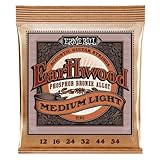
The Earthwood Medium Light set (part P02146) is a phosphor bronze acoustic set in a 12-54 gauge. The typical makeup of this gauge is a .012 high string up to a .054 low string, which is a little heavier on the bass side than a 12-53 set. That extra tension gives the low strings more punch, which suits fingerstyle patterns that lean on alternating bass notes. It is an uncoated set, so expect a bright, lively start and a normal decline in sparkle over a few weeks of regular playing. It suits players with a strong right hand and a guitar that needs a bit more drive.
Think about what you play. Travis-style patterns, with a steady thumb on the bass strings, benefit from the extra mass of the .054 low string, because each note rings out cleanly without a harsh attack. Melodic arrangements with lots of high-position work may feel a touch stiffer, though. If you tune down a step for blues or folk, this slightly heavier gauge also keeps the strings from feeling floppy, which is a practical reason to consider it.
- Alloy: phosphor bronze
- Gauge: 12-54 (medium light)
- Part number: P02146
- Coating: none stated, so treat as uncoated
- Best on: dreadnoughts and mid-sized guitars that like a fuller bass
Pros:
- Strong, defined bass strings
- Familiar gauge with wide availability
Cons:
- Slightly higher tension than 10-47 and 12-53 sets
- Uncoated, so it loses brightness sooner than Nanoweb strings
Compared with the Elixir phosphor bronze set, it trades coated longevity for a punchier attack.
2. Elixir 80/20 Bronze Nanoweb Light 12-53 – Best for bright, long-lasting tone

This is Elixir’s 80/20 bronze acoustic set with the Nanoweb coating, in a 6-string 12-53 light gauge. The 80/20 name describes the wrap wire, which is 80 percent copper and 20 percent zinc, and it is known for a bright, crisp top end. The Nanoweb coating is an ultra-thin layer that protects the strings from sweat and oils, and Elixir markets these as longest-lasting. For fingerstyle, that means a smooth feel under the fretting hand, less squeak on slides and consistent clarity on the trebles for longer. It suits players whose guitars sound a little dark or whose arrangements depend on shimmering high notes.
One reminder with bright strings: your picking-hand technique shows up more. Playing closer to the soundhole softens the edge, while playing nearer the bridge sharpens it, so a bright set gives you more tonal range to work with if you are willing to move your hand. Because the coating slows tarnish, the brightness stays more even from week to week, which is useful if you record or perform regularly and want predictable sound.
- Alloy: 80/20 bronze
- Gauge: 12-53 (light), six strings
- Coating: Nanoweb
- Tone: bright and focused
- Best on: darker-sounding guitars, solo fingerstyle and recording-friendly clarity
Pros:
- Bright, articulate trebles
- Coated for longer life and a smooth feel
Cons:
- Can sound edgy on an already bright guitar
- Coated sets generally cost more per set than plain strings
It shares its gauge and coating with the phosphor bronze set at number six, so the choice is purely about tone.
3. Zager Easy Play Acoustic Strings – Best for a gentle start
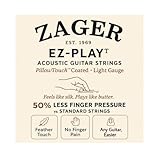
Zager sells these strings as an easy-on-the-fingers option that fits Martin, Taylor, Yamaha, Fender and Gibson guitars, with an anti-rust, warm and rich tone. On Zager’s own site they are described as coated, custom-light strings that need less finger pressure to form chords. The alloy is described inconsistently across sources, with some saying phosphor bronze and others 80/20, so check the package. Exact gauges are not published in the places we checked, so confirm them on the product page. These suit beginners, returning players and anyone with sore fingertips or limited hand strength who wants to enjoy long fingerstyle sessions.
Beginners often give up on guitar because of sore fingertips, and lighter-feeling strings can lower that barrier. Players who return to the guitar after years away, or who deal with stiff joints, also find them useful. As calluses build, you may want to move up to a standard light set; at that point the Elixir sets above are a natural next step. Because gauge numbers are not clearly published, ask the seller or check the package before pairing them with an unusually delicate or vintage instrument.
- Type: coated acoustic strings, per the manufacturer
- Feel: custom light, designed for lower finger pressure
- Alloy: confirm on listing (sources differ)
- Gauges: confirm on listing
- Fits: common acoustic brands named in the listing
Pros:
- Comfortable under the fingers
- Anti-rust coating for longer life
Cons:
- Gauge and alloy details are less clear than other sets
- Lighter tension can feel loose for players who dig in
Against the Martin extra light set, it is more about comfort and coating than about a specific published gauge.
4. Martin Authentic Extra Light 10-47 80/20 Bronze – Best for light-touch playing

The Martin Authentic set is an 80/20 bronze acoustic string in an extra light 10-47 gauge, with a listing that mentions superior performance. Extra light strings are easier to press and bend, which helps with fast fingerpicking passages, partial chord shapes and long practice sessions. The tradeoff is less volume and less low-end drive than a 12-53 set, and a little more risk of buzz if you strike hard. The 80/20 bronze adds a bright, clear voice that works well on mellower guitars. It suits players who prefer a light feel and a quick response.
Extra light sets pair well with guitars that have a high action or a long scale, where standard light strings feel stiff. They also make barre chords and partial capo shapes easier on long evenings. On the flip side, if you play hard with a lot of nail attack, the thinner strings can rattle against the frets; raise the action slightly or move up a gauge if that happens. The Martin name comes with a long history in acoustic guitars, so the set is a familiar reference point for many players.
- Alloy: 80/20 bronze
- Gauge: 10-47 (extra light)
- Coating: none stated, so treat as uncoated
- Typical set: .010 to .047, light on both treble and bass strings
- Best on: smaller guitars and players who value easy fretting
Pros:
- Very easy to fret and bend
- Bright, clear 80/20 tone
Cons:
- Less volume and punch than heavier sets
- Uncoated, so tone fades faster
It is the lightest acoustic set here, making it the natural counterpart to the 12-54 Earthwood.
5. Ernie Ball Regular Slinky Nickel Wound 10-46 – Best for electric fingerstyle (runner-up, not for acoustic guitars)

This listing does not match the acoustic fingerstyle topic: Regular Slinky Nickel Wound strings are electric guitar strings in a 10-46 gauge. They are made for magnetic pickups, and they should never be fitted to a steel-string acoustic, where they will sound thin and lack the projection the guitar needs. We include them as a runner-up for electric guitarists who finger-pick on an electric, as in country, blues or jazz fingerstyle playing. In that role, nickel wound strings give a smooth, warm response and a familiar feel.
There is nothing wrong with this set for the job it was built for: it is among the most widely used electric gauges, and plenty of fingerstyle players on solid-body or hollow-body electrics use it. But it simply is not a match for the acoustic fingerstyle focus of this page. If you own both an electric and an acoustic, buy each guitar the correct set, and keep the two clearly labeled so they are not mixed up when changing strings.
- Type: electric guitar strings
- Alloy: nickel wound
- Gauge: 10-46 (regular slinky)
- Use: electric guitars with magnetic pickups only
- Not suitable for: steel-string acoustic guitars
Pros:
- Familiar, versatile electric gauge
- Comfortable for fingerpicking on electrics
Cons:
- Not for acoustic guitars
- Does not suit the acoustic focus of this guide
Treat it as a separate category from every other set in this list.
6. Elixir Phosphor Bronze Nanoweb Light 12-53 – Best all-round warm set

This is the phosphor bronze counterpart to the 80/20 set, with the same Nanoweb coating and 12-53 light gauge. Phosphor bronze wrap wire adds a small amount of phosphorus and tin to the copper, and players generally describe the tone as warm, rich and full-bodied with a smooth top end. Elixir describes this set the same way: rich and full-bodied with sparkling clarity. For fingerstyle, that warmth gives a balanced sound across bass and trebles, and the thin coating keeps the surface smooth. It suits most steel-string guitars and most styles of fingerstyle playing.
It is the most universal of the sets here. Players who like a rounded, balanced voice and want strings to last through weeks of practice will find it a dependable default. Because the coating is thin, many players feel it is closer to uncoated strings than thicker coatings. If you cannot decide between this set and the 80/20 version, buy the phosphor bronze first and switch next time if you want more sparkle.
- Alloy: phosphor bronze
- Gauge: 12-53 (light), six strings
- Coating: Nanoweb
- Tone: warm, full-bodied, smooth highs
- Best on: most steel-string acoustics, from small-body to dreadnought
Pros:
- Balanced tone across the strings
- Long-lasting coating with a smooth feel
Cons:
- May sound too warm on a very dark guitar
- Coated strings cost more than uncoated sets
Versus the 80/20 version, it is the safer choice for general use and the 80/20 is the pick for extra sparkle.
Specs Compared
| Set | Guitar type | Alloy | Gauge | Coating |
|---|---|---|---|---|
| Ernie Ball Earthwood Medium Light (P02146) | Acoustic | Phosphor bronze | 12-54 | confirm on listing |
| Elixir 80/20 Bronze Nanoweb | Acoustic | 80/20 bronze | 12-53 | Nanoweb |
| Zager Easy Play | Acoustic | confirm on listing | custom light, confirm on listing | Coated (per manufacturer) |
| Martin Authentic Extra Light | Acoustic | 80/20 bronze | 10-47 | confirm on listing |
| Ernie Ball Regular Slinky | Electric only | Nickel wound | 10-46 | confirm on listing |
| Elixir Phosphor Bronze Nanoweb | Acoustic | Phosphor bronze | 12-53 | Nanoweb |
How We Chose These
This is a research-based comparison, not a playing test. We started with the six catalog listings and read the alloy, gauge and coating details in each title. We then checked the manufacturers’ published descriptions where they were available, mainly for Elixir and Zager, and used general acoustic guitar reference material for what alloys and gauges mean for fingerstyle. We looked for traits that matter to fingerpickers: clear trebles, balanced tension, a smooth surface for slides and reasonable lifespan. Where a gauge, alloy or coating was not stated, we marked it “confirm on listing” instead of guessing. One listing, the electric Slinky set, does not match the acoustic topic and is labelled as a runner-up.
What to Look For
Gauge: light versus extra light
Gauge is the thickness of the strings, measured in thousandths of an inch. A set labeled 12-53 means the thinnest string is .012 and the thickest is .053. Light (12-53) sets are the common starting point for acoustic fingerstyle because they balance volume, tone and playability. Extra light (10-47) sets are easier to fret and bend but sound a little thinner, while medium light (12-54) adds low-end weight at the cost of more finger effort. If you pick up your guitar after a break and your fingers hurt, drop a gauge; if the guitar sounds thin or buzzes under a firm touch, go up one.
Alloy: 80/20 bronze versus phosphor bronze
The wrap wire decides the voice. 80/20 bronze, about 80 percent copper and 20 percent zinc, is bright and crisp with a fast attack. Phosphor bronze adds small amounts of phosphorus and tin and sounds warmer and rounder, with strings that tend to stay lively a little longer. Neither is better, and opinions differ, but a simple rule works: darker guitar, choose 80/20; brighter guitar, choose phosphor bronze. Silk-and-steel and nylon sets also exist but are outside this list.
Coated versus uncoated strings
Coated sets such as Elixir Nanoweb and Zager’s Easy Play wrap a thin polymer around the windings to repel sweat and oils. That keeps the tone consistent for weeks longer and gives a smooth surface, which helps with the squeak of fretting-hand slides. Uncoated strings have a rawer, slightly brighter feel when new and are cheaper, but they fade sooner. If you play daily or sweat heavily, coated sets tend to pay off; if you change strings monthly anyway, uncoated can be fine.
Nails, fingertips and the right feel
Fingerstyle players who use nails will notice string surface and tension more than pick players. A smooth coating reduces nail wear and a lighter gauge reduces fingertip effort. If you play with the pads only, a slightly heavier gauge helps produce volume. Always match string tension to your guitar’s design: a vintage or lightly braced guitar may need lighter strings than a modern, sturdy one, so check the maker’s guidance before moving up a gauge.
Setting up and breaking in a new set.
New strings need a short settling period. After stringing, stretch each string gently by lifting it a few inches off the fretboard at several points, then retune and repeat until the pitch holds. Wind the strings neatly around the posts, with two to three wraps for the plain strings and one to two for the wound ones, to reduce slipping. Trim the ends so they do not poke fingers or the guitar body. If the guitar gets a different gauge, check the neck relief, action and intonation; a small change in tension can shift all three. Clean hands before playing add more life to the strings than almost any other habit.
A worked example and a change schedule
Suppose you play 45 minutes a day on a mid-sized guitar that sounds slightly dark, and you plan to record. A light 12-53 coated 80/20 set gives a bright sound that lasts several weeks of daily playing. As a rule of thumb, replace uncoated strings every 2 to 4 weeks of regular play and coated strings every 6 to 10 weeks, sooner if the tone goes dull, the strings feel gritty or the guitar stops holding its tuning. Wipe the strings after each session and change them all at once.
Questions
What gauge is best for fingerstyle guitar?
Light 12-53 is the most common choice because it balances volume and comfort. Extra light 10-47 is easier on the fingers, and 12-54 gives more bass at the cost of more effort.
Are coated strings better for fingerstyle?
Coated strings stay smooth and bright longer and cut down on slide squeak, which many fingerstylists like. The tradeoff is a slightly different feel and a higher cost per set.
Phosphor bronze or 80/20 bronze?
Phosphor bronze is warmer and rounder, and 80/20 is brighter and crisper. Choose based on whether your guitar sounds dark or bright to begin with, and remember that strings are cheap enough to try both over time.
Can I use electric strings on an acoustic guitar?
No. Electric strings are made for magnetic pickups and sound thin on a steel-string acoustic. Only use sets labeled for acoustic guitars on an acoustic.
How often should I change fingerstyle strings?
Uncoated sets typically need changing every few weeks of regular playing, and coated sets can last several weeks longer. Change them when the tone goes dull, they feel rough or the guitar no longer holds its tuning. Wiping the strings after each session helps both types last longer.
Will lighter strings damage my guitar?
Lighter strings put less tension on the neck and bridge, so they are generally gentle on a guitar. If your instrument was set up for a heavier set, you may need a small truss rod or action adjustment after a change.
Update History
- October 20, 2026 – Initial publication; product set drawn from current catalog listings.
- Check the product page for current specifications and availability before buying.
Sources
- Manufacturer product pages and published descriptions for Elixir and Zager strings
- Retailer listing titles and specification fields for all six sets
- General acoustic guitar string reference material on gauge, alloy and coating differences



Write Your Review
No reviews yet. Be the first to share your experience!