

Key takeaways
- Foam balls, furry muffs and fitted covers compared: five microphone wind screens for handheld, USB and lavalier mics, with fit notes and care basics.
A microphone wind screen is the foam or fur cover that slips over the head of a mic. It breaks up moving air before it hits the capsule, which softens the rumble of wind, tames breath blasts and popping consonants, and keeps dust, moisture and saliva off the grille. It is one of the smallest parts of a karaoke, worship, podcast or home recording setup, yet it solves problems that mixer tweaking cannot fully fix after the fact.
The catch is fit. A ball-shaped foam cover shaped for a handheld vocal mic will not stretch over a large USB condenser, and neither one helps a tiny clip-on lavalier. The five picks below are grouped by microphone type: a name-brand foam ball for handheld mics, a budget five-pack for shared karaoke mics, a fitted foam cover for Blue Yeti style USB microphones, and two lavalier options with furry outdoor muffs.
As an Amazon Associate, we earn from qualifying purchases.
Quick Answer
For a standard handheld vocal mic, the On-Stage ASWS58 foam ball is the straightforward default. Karaoke hosts and venues that share microphones should choose the five-pack of foam covers instead. Blue Yeti owners need the fitted YOUSHARES foam windscreen, and lavalier users who record outdoors get the most complete setup from the Cubilux foam and fur set.
On-Stage ASWS58 Foam Ball-Type Microphone Windscreen

On-Stage is a familiar name in music accessories, and its ASWS58 is the classic foam ball windscreen found on handheld vocal mics in churches, rehearsal rooms and karaoke bars everywhere. The foam ball is designed for normal sized handheld microphones similar in design to a Shure SM58, so it suits the dynamic vocal mics most home singers and hosts already own.
The flexible foam stretches over the mic head and stays put without clips or fasteners. On-Stage states that it reduces the occurrence of wind, breath sounds and popping noises, and it doubles as a hygiene layer when several singers share one microphone. Because it is a single cover rather than a multipack, it fits a one-mic household better than a venue that rotates singers all night.
The same design is also sold in red and blue for hosts who color-code their mics.
Specs
- Type: foam ball windscreen, single cover
- Fit: most standard handheld microphones, sized around Shure SM58 style heads
- Material: foam
- Color: black (also sold in red and blue)
- Model: ASWS58-B
- Not suited for: headset microphones
5 Pack Foam Mic Cover Handheld Microphone Windscreen
This five-pack covers the other common situation: several handheld mics in rotation and a fresh cover wanted for each singer. The listing presents the set as foam microphone covers for karaoke and DJ work, the shared-mic setting where a replaceable cover matters most. When one cover gets damp or worn, the next one from the pack goes on in seconds.
Foam covers in multipacks are also a sensible consumable for community halls, schools and houses of worship that lend mics out for events. Rather than handing over a bare grille, the host fits a clean cover and swaps it again afterwards. The black finish matches standard stage mics and does not draw attention on camera.
Because this is a generic listing, finer details are thinner than on the brand-name options. Shoppers with an unusually large or small mic head should check the measurements on the listing before ordering, since a loose foam ball can slide mid-performance.
Specs
- Pack count: 5 foam covers
- Fit: handheld microphones
- Material: foam
- Color: black
- Stated use: karaoke and DJ microphones
- Inside diameter and cover dimensions: confirm on the listing
YOUSHARES Foam Windscreen for Blue Yeti and Other Large Microphones

Large USB condensers such as the Blue Yeti have a wide, flat-topped head that no handheld foam ball will fit. This YOUSHARES cover is shaped for that format. The listing states that it is specially designed for the Blue Yeti and Blue Yeti Pro, and its title also names MXL, Audio-Technica and other large microphones, which makes it the natural pick for desktop recording and streaming setups built around a big USB mic.
The cover uses a sponge foam fill with a flocked outer surface that the maker describes as giving a velvet-like look and feel, a step up from plain cut foam for streamers whose mic sits on camera. It slips over the whole grille, so it also guards the capsule area against dust and moisture between sessions.
YOUSHARES notes the cover is easy to wash and dry, which suits a daily-use desk mic. Owners of smaller USB mics should measure first: a cover molded for the full-size Yeti body will sit loose on compact models, and the maker sells separate versions for those.
Specs
- Fit: Blue Yeti and Yeti Pro; listing also names MXL, Audio-Technica and other large microphones
- Material: sponge foam with a flocked surface, per the listing
- Color: black
- Care: washable, per the listing
- Exact dimensions: confirm on the listing
Cubilux Furry Windscreen and Foam Cover Set for Lavalier Microphones
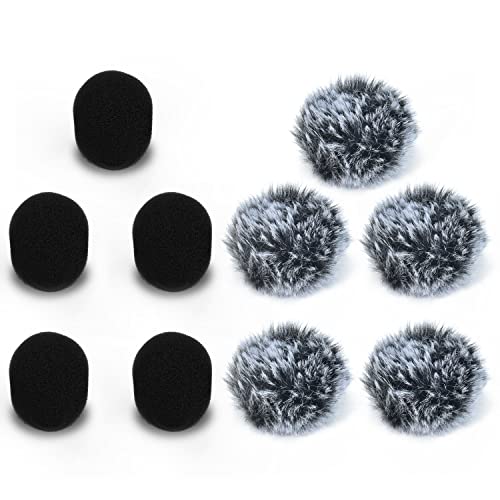
Lavalier mics need a different approach, because the capsule is tiny and often records outdoors. Cubilux answers with a combined set: five furry wind muffs and five foam covers sized for mini clip-on lavalier microphones. The foam covers handle indoor work such as online meetings, interviews and singing practice, where they block pop sounds close to the mouth.
The furry muffs, often called dead cats, are the outdoor half of the kit. The long fibers slow down moving air around the capsule, which is what produces the buffeting noise that ruins location audio. Cubilux positions the set for vlogging, interviews and recording both indoors and outdoors, so a creator can use foam at home and swap to fur before heading outside.
Buying both cover types in one box also removes the guesswork of matching aftermarket fur to a foam cover bought elsewhere: everything is made for the same mini lavalier format.
Specs
- Contents: 5 furry wind muffs and 5 foam covers
- Fit: mini clip-on lavalier lapel microphones
- Materials: faux fur and foam
- Stated use: vlogging, interviews, singing, online meetings, indoor and outdoor recording
- Exact caliber size: confirm on the listing
Ruittos Lavalier Microphone Wind Screen Furry Muffs, 5 Pack

The Ruittos set strips the idea down to fur only: five furry windscreen muffs in artificial fur, sized for lavalier capsules with a caliber of 10 millimeters, about 0.39 inches. That size covers most standard lapel clip microphones used with phones, cameras and wireless transmitters for interviews and field reporting.
A fur-only pack makes sense for creators who already own foam caps, or who record outside almost all the time and go through muffs faster than foam. The muffs push over the mic head and add wind protection without changing how the lavalier clips to clothing, and the pack leaves spares in the camera bag for a lost or rain-soaked cover.
The microphone itself is not included, and buyers with oversized lavalier heads should check the caliber figure first, since fur muffs rely on a snug push-on fit.
Specs
- Pack count: 5 furry muffs
- Caliber: 10 millimeters (0.39 inches)
- Material: artificial fur
- Fit: most lapel clip lavalier microphones
- Microphone included: no
How to Choose
Start with the microphone format, because it decides the shape of the screen. Ball-shaped foam covers fit handheld dynamic mics, molded foam covers fit large USB condensers, and small caps or muffs fit lavaliers. A screen that has to be forced on will tear, and one that sits loose will slide or muffle unevenly, so measure the mic head or check the stated caliber before buying.
Next, match the material to the location. Plain foam is the right tool indoors: it softens breath noise and plosives, keeps the grille sanitary and washes clean. Fur earns its place outdoors, where moving air is the main problem; a furry muff over a foam cap gives the strongest protection a slip-on cover can offer. Indoors, fur alone can dull high frequencies more than foam, so the combined Cubilux set suits mixed use best.
Finally, think about sharing. A single singer can use one quality cover for a long stretch, but karaoke hosts, churches and event spaces should buy multipacks and fit a fresh cover for each user.
Who Should Skip
Skip foam ball covers if the microphone is a headset model; the On-Stage listing states plainly that its windscreen is not designed for headset microphones, and the ball shape has nothing to grip on a boom arm capsule. Headset users need the small foam caps made for their specific model instead.
Skip slip-on covers for serious outdoor field recording with shotgun microphones. A furry muff helps in a light breeze, but strong wind calls for a full windshield system that encloses the mic in an air gap, which is a different and larger accessory.
Studio singers with a side-address condenser may be better served by a pop filter mounted in front of the mic, which stops plosives without touching the microphone. And if a mic already has an internal foam layer and is never shared or taken outdoors, an extra cover adds little.
FAQ
What is the difference between a wind screen and a pop filter?
A wind screen is a foam or fur cover that fits over the microphone head, while a pop filter is a mesh panel mounted in front of the mic. Wind screens travel with the microphone and also protect the grille, so they suit handheld and lavalier use. Pop filters stay on a stand and are mainly a studio vocal tool.
Can a foam microphone wind screen be washed?
Most plain foam covers can be washed gently and left to dry fully before reuse, and the YOUSHARES listing states that its cover is easy to wash and dry. Washing matters most for shared karaoke and worship mics. Furry muffs are usually spot-cleaned rather than soaked, so check the care notes on the listing.
Will a handheld foam cover fit a USB microphone?
Usually not. Handheld foam balls are shaped for the round head of a dynamic vocal mic, while large USB condensers such as the Blue Yeti have a wider, flatter head. That is why fitted covers like the YOUSHARES windscreen exist. Measure the mic head against the fit notes on the listing before ordering.
Do furry wind screens work better than foam outdoors?
For moving air, yes. The long fibers of a furry muff break up wind before it reaches the capsule, which plain foam cannot do as well once a breeze picks up. Indoors the advantage disappears, and foam is usually the cleaner-sounding choice, which is why combined sets include both types.
Final Verdict
The right wind screen is the one shaped for the microphone and the room it records in. Handheld singers are covered by the On-Stage ASWS58 or the five-pack foam set for shared mics, Blue Yeti owners should go straight to the fitted YOUSHARES cover, and lavalier users get the most flexibility from the Cubilux kit, with the Ruittos muffs as a fur-only refill. Match the fit first, then choose foam for indoors and fur for the outdoors.
More from Amazon
Programs that pair well with the guide above. Offers and eligibility are set by Amazon and may change.
Free shipping on eligible items, Prime Video and more. Eligible new members can start with a free trial.
Start a Prime free trialAudiobooks and podcasts to listen to on the go. Eligible new members can start with a free trial.
Try Audible freeAd-free music streaming. Eligible new subscribers can start with a free trial.
Try Music Unlimited freeA free business account with business pricing and bulk-buying tools for work, shop or home office.
Create a business accountAs an Amazon Associate we earn from qualifying purchases.

Write Your Review
No reviews yet. Be the first to share your experience!