

Key takeaways
- Compare the best saxophone mouthpieces for alto players, from the Yamaha 4C for students to Selmer, Meyer, Vandoren and JodyJazz classical and jazz picks.
- Top Pick: Yamaha 4C Alto Saxophone Mouthpiece, Standard Series
- Runner-up: Selmer S-80 C* Mouthpiece for Alto Saxophone (S402C1)
- Also consider: Meyer MR-402-5MM Rubber Alto Sax Mouthpiece
The mouthpiece is the smallest part of a saxophone setup and the one that shapes your sound the most. The stock piece that ships with many student horns is built to be forgiving rather than expressive, and it can hold back tone, response, and intonation as your embouchure develops. Upgrading the mouthpiece is usually the most noticeable change an alto player can make without replacing the instrument itself, and the piece will move with you if you later step up to a better horn.
The five mouthpieces below cover the main paths alto players take: a proven student standard, two classical benchmarks, and two jazz designs with different personalities. Each one suits a different stage and style of playing. Read the tip opening and chamber notes closely, because those details decide how a mouthpiece will feel with your current reed strength and embouchure, and they matter more than the brand name on the box.
As an Amazon Associate, we earn from qualifying purchases.
Quick answer
For most alto players, start with the Yamaha 4C if you are a student, the Selmer S-80 C or Vandoren V16 A5S+ if you want a step-up classical or jazz sound, the Meyer 5M for classic jazz warmth, and the JodyJazz HR C* for a free-blowing traditional jazz feel with a closer tip opening.
Yamaha 4C Alto Saxophone Mouthpiece, Standard Series
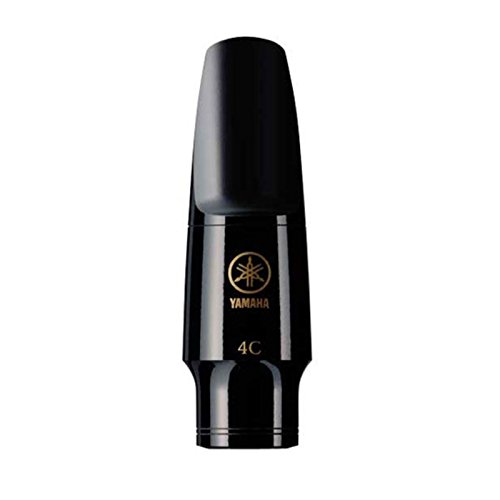
The Yamaha 4C is the mouthpiece most teachers hand to a beginning alto player, and it is the standard piece supplied with Yamaha student, intermediate, and professional alto saxophones. It is molded from phenol resin rather than hard rubber, which keeps it consistent from one piece to the next and helps it shrug off band room knocks. The design is based on Yamaha’s Custom series, with a slightly shorter facing that helps a developing embouchure produce a clear, centered tone.
If your horn came with an unmarked stock mouthpiece, the 4C is the predictable first upgrade: it responds easily across the range, keeps intonation steady, and works with the reeds most students already own. It is sold as the mouthpiece only, so plan on using your existing ligature and cap or adding one. Advanced players chasing a bigger sound will eventually outgrow it, but as a first serious mouthpiece it is hard to fault, and it stays useful as a backup.
Specs
- Instrument: Alto saxophone
- Model: YAC1286, Standard Series
- Material: Phenol resin (plastic)
- Design: Based on the Yamaha Custom series, with a slightly shorter facing
- Listed weight: 0.1 pounds, per the listing
- Included: Mouthpiece only; ligature and cap, confirm on the listing
Selmer S-80 C* Mouthpiece for Alto Saxophone (S402C1)

The Selmer S-80 C* is the long-standing benchmark for classical alto playing and the mouthpiece many advancing students move to after a student piece. It is made in Paris from hard rubber and is easy to recognize by its square chamber, an unusual design that produces a warm, focused, centered tone that sits well in concert bands, quartets, and solo repertoire.
The C* facing pairs a 1.70 mm tip opening with a medium long facing, a combination that favors control and clean articulation over raw volume. Response stays even from the low register to the palm keys, which makes it dependable for auditions and ensemble work where intonation has to blend. The S-80 is sold as the mouthpiece only in most listings, so budget for a ligature and cap if you do not already own a hard rubber size set. Players who want a brighter, freer jazz sound should look at the Meyer or the Vandoren V16 below instead.
Specs
- Instrument: Alto saxophone
- Model: S402C1, S-80 series, C* facing
- Material: Hard rubber (ebonite)
- Chamber: Square cross-section chamber
- Tip opening: 1.70 mm
- Facing: Medium long
- Included: Mouthpiece only; ligature and cap, confirm on the listing
Meyer MR-402-5MM Rubber Alto Sax Mouthpiece

The Meyer 5M is the classic jazz alto mouthpiece, the design generations of players have used to chase the warm, vocal sound of the great New York alto tradition. It is made from hard rubber with a medium chamber, a pairing that gives the tone a rich core with enough edge to carry in a small combo without turning harsh.
The 5M facing opens to 0.071 inches, a middle ground that gives intermediate players room to push more air and shape phrases while staying manageable with a medium strength reed. Articulation stays clear at soft dynamics, and the sound opens up when you lean on it, which is the flexibility jazz improvisers ask for. Listings for the MR-402-5MM have traditionally included a ligature and cap, but packaging can change, so confirm what is in the box on the listing before ordering. If you play mostly classical repertoire, the closer Selmer above will feel more at home.
Specs
- Instrument: Alto saxophone
- Model: MR-402-5MM, 5M facing
- Material: Hard rubber
- Chamber: Medium chamber
- Tip opening: 0.071 inches
- Included: Ligature and cap in most listings; confirm on the listing
Vandoren SM811S+ V16 Alto Saxophone Mouthpiece, A5S+

The Vandoren V16 series was built as a modern jazz standard, inspired by the alto sounds of the great players of the nineteen fifties onward. This A5S+ version pairs the A5 tip opening with the S+ small chamber, which focuses the sound and adds projection while keeping the warm, expressive V16 character, making it a strong fit for section playing and lead alto work.
The tip opening measures 1.88 mm and the facing is medium long, so this mouthpiece asks for a developed embouchure and rewards it with a wide dynamic range and a fast, even response. Vandoren machines its ebonite mouthpieces to tight tolerances, which makes the V16 a consistent choice when you cannot play test several pieces side by side. It is sold as the mouthpiece only, and Vandoren recommends its JAVA, V16, and ZZ reeds in strengths from 2.5 to 3.5 for this model. Classical players who want a rounder, darker sound should compare the Selmer S-80 above.
Specs
- Instrument: Alto saxophone
- Model: SM811S+, V16 series, A5 facing
- Material: Ebonite (hard rubber)
- Chamber: S+ small chamber
- Tip opening: 1.88 mm
- Facing: Medium long
- Recommended reeds: Vandoren JAVA, V16, or ZZ, strengths 2.5 to 3.5, per maker documentation
JodyJazz HR Alto Saxophone Mouthpiece, C
The HR* is JodyJazz’s traditional hard rubber alto mouthpiece, made in the United States and aimed at players who want a classic jazz sound without a fight. Its round, medium chamber produces a warm, full tone that fits straight-ahead jazz, big band section work, and bebop, with enough power on tap for more modern styles when you push it.
The C facing is the closest option in the HR alto range at 0.066 inches, which makes it the easiest blowing of the jazz pieces here and a sensible step for a student moving from a classical setup into jazz. JodyJazz checks its mouthpieces for response and finish before they ship, and the piece arrives with a deluxe mouthpiece pouch. A ligature is not included, so reuse a hard rubber alto ligature you already own or add one to the order. Players who want a wider tip opening from the same family can look at the larger HR* facings on the listing.
Specs
- Instrument: Alto saxophone
- Model: HR alto, C facing
- Material: Hard rubber
- Chamber: Round, medium chamber
- Tip opening: 0.066 inches
- Included: Deluxe mouthpiece pouch; ligature not included
How to choose
Start with tip opening, because it drives almost everything else. Closer openings, like the Selmer C at 1.70 mm and the JodyJazz C at 0.066 inches, are easier to control, pair well with harder reeds, and suit classical playing and newer embouchures. More open jazz facings, like the Vandoren A5S+ at 1.88 mm, move more air and project further, but they punish a weak embouchure with spread intonation. The Meyer 5M at 0.071 inches sits between those camps, suiting players crossing from school band into jazz.
Next, look at the chamber. A square or smaller chamber focuses the sound for ensemble blending, while a round or medium chamber warms the tone and adds flexibility for improvising. Material matters less than shape: phenol resin is durable and consistent for students, while hard rubber and ebonite are the traditional step-up choices. Finally, check what is in the box, since several of these mouthpieces ship without a ligature or cap.
Who should skip
Skip this entire guide if you play tenor, soprano, or baritone saxophone: every mouthpiece here is built for alto, and none will fit or play correctly on another horn. Beginners in their first months should also wait, because a step-up mouthpiece cannot fix an embouchure that is still forming, and the money is better spent on lessons and reeds until a teacher says you are ready. Players who want a bright metal mouthpiece for rock or fusion work will not find one here, since all five picks are resin or hard rubber designs. And if your current mouthpiece already gives you the response and sound your band asks for, there is no musical reason to change.
Frequently Asked Questions
What tip opening should a beginner choose on an alto mouthpiece?
Beginners do best with a closer tip opening, roughly the range of the Yamaha 4C class of student mouthpieces, paired with a softer reed. A closer opening needs less embouchure strength to control, keeps intonation steadier, and makes a clean tone easier while fundamentals are still developing. Move to a more open facing only when your teacher agrees you are ready for it.
What is the difference between classical and jazz saxophone mouthpieces?
Classical mouthpieces, like the Selmer S-80 C*, use closer tip openings and chambers shaped for a focused, centered tone that blends in an ensemble. Jazz mouthpieces, like the Meyer 5M and the Vandoren V16, usually open wider and use chambers that add flexibility, edge, and projection for improvising. Neither type is better in absolute terms; the right choice follows the music you play most.
Do these mouthpieces include a ligature and cap?
It varies by model. The Meyer listing has traditionally included a ligature and cap, the JodyJazz HR* includes a storage pouch but no ligature, and the Yamaha 4C and Selmer S-80 are generally sold as the mouthpiece only. Packaging changes over time, so check the includes list on the product page before ordering.
Can I use the same reeds when I switch mouthpieces?
Usually yes, at least at first. Keeping the same reed strength isolates the change so you can hear what the new mouthpiece itself does. After a few weeks you may find a half strength softer reed suits a more open facing, or a half strength harder reed steadies a closer one. Change one variable at a time.
Final verdict
For a student alto player, the Yamaha 4C is the safe, proven starting point. Classical players should choose the Selmer S-80 C for its square chamber focus and ensemble control. Jazz players have three distinct flavors here: the Meyer 5M for the classic warm alto sound, the Vandoren V16 A5S+ for a focused, projecting modern jazz voice, and the JodyJazz HR C* for a traditional feel with the easiest blowing facing of the group. Match the facing to your embouchure first and the style second.

More from Amazon
Programs that pair well with the guide above. Offers and eligibility are set by Amazon and may change.
Free shipping on eligible items, Prime Video and more. Eligible new members can start with a free trial.
Start a Prime free trialAudiobooks and podcasts to listen to on the go. Eligible new members can start with a free trial.
Try Audible freeAd-free music streaming. Eligible new subscribers can start with a free trial.
Try Music Unlimited freeA free business account with business pricing and bulk-buying tools for work, shop or home office.
Create a business accountAs an Amazon Associate we earn from qualifying purchases.





Write Your Review
No reviews yet. Be the first to share your experience!