
Our Short List of 3

- Best for: listeners who want a warm, smooth orchestral tone for long sessions in a bright or lively room.
- Tweeter: 1-inch cloth dome tweeter
- Woofer: 6.5-inch aramid fiber woofer
- Design: 2-way bass reflex, sold as a pair
- Response: up to 35,000 Hz

- Best for: listeners who want concert-hall dynamics and loud, clean climaxes from a modest amplifier.
- Tweeter: 1-inch titanium LTS vented tweeter
- Horn: 90-degree by 90-degree Tractrix horn
- Woofer: 6.5-inch Cerametallic woofer
- Frequency response: 44 to 25,000 Hz

- Best for: listeners who want fine orchestral detail and the deepest bass of the three picks in a medium or large room.
- Tweeter: 1-inch Pinnacle ring tweeter
- Woofer: 6.5-inch Turbine Cone woofer
- Frequency response: 39 Hz to 50 kHz
- Sensitivity: 86 dB
All 3 Picks at a Glance
| Product | Specs | Action |
|---|---|---|
| ELAC Debut 2.0 B6.2 Bookshelf Speakers |
| Check price on Amazon |
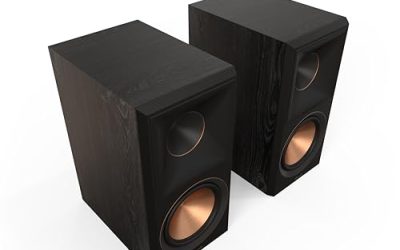
| Klipsch Reference Premiere RP-600M II Bookshelf Speakers |
| Check price on Amazon |
| Polk Audio Reserve R200 Large Bookshelf Speakers |
| Check price on Amazon |
Key takeaways
- The best speakers for symphonic music reveal strings, brass and hall ambience without strain. Compare three passive bookshelf speakers for classical listening.
Symphonic music asks more of a speaker than almost any other kind of listening. A full orchestra can move from a single oboe line to a brass and timpani climax, and a speaker has to follow that swing without hardening the strings or losing the quiet passages. Violins need air and texture, cellos need body without boom, and the hall ambience around the players matters as much as any single instrument. The wrong speaker flattens all of that into a tiring blur, while the right one keeps each section in its own space.
This guide is for living-room listeners who play classical recordings often, for collectors with vinyl or streaming libraries built around orchestral works, and for anyone upgrading from a soundbar to a stereo pair. The three picks below are passive bookshelf speakers chosen from their Amazon titles and specifications: the ELAC Debut 2.0 B6.2 for warm balance, the Klipsch Reference Premiere RP-600M II for dynamics, and the Polk Audio Reserve R200 for detail and low-end reach.
Quick Picks
As an Amazon Associate we earn from qualifying purchases
| Product | Best for | Key spec from title |
|---|---|---|
| ELAC Debut 2.0 B6.2 Bookshelf Speakers | Warm, forgiving orchestral tone | 1-inch cloth dome tweeter and 6.5-inch aramid fiber woofer |
| Klipsch Reference Premiere RP-600M II Bookshelf Speakers | Big dynamics from modest amplification | 1-inch titanium LTS tweeter with 90-degree Tractrix horn |
| Polk Audio Reserve R200 Large Bookshelf Speakers | Detailed strings and deep bass | 1-inch Pinnacle ring tweeter and 6.5-inch Turbine Cone woofer |
How to Choose
Dynamic range and headroom
An orchestra is the widest dynamic range most listeners will ever play at home, so a speaker that sounds fine on a pop track can run out of composure on a Mahler climax. Look for a design with enough power handling and a woofer large enough to move air without strain, and pair it with an amplifier that has real reserve rather than one at its limit. A speaker with higher sensitivity needs less amplifier power to reach the same volume, which keeps loud passages clean and quiet ones free of hiss. When a specification lists power handling, treat it as a ceiling for safe use, not a target, and leave headroom for the sudden peaks that define symphonic recordings.
Midrange clarity for strings and woodwinds
Most of an orchestra lives in the midrange, so this is where a speaker earns its place for symphonic listening. Violins, violas, cellos, clarinets and bassoons all sit in a narrow band of frequencies, and a speaker with a coloured or peaky midrange will make strings sound steely and woodwinds sound nasal. A soft-dome or ring-radiator tweeter crossed over smoothly to a well-damped woofer usually gives a more natural string tone than a very forward horn or metal dome pushed hard. Listen for whether a solo violin keeps its woody body at higher volumes, and whether a woodwind section still sounds like separate players rather than one blended reed.
Soundstage and imaging
A symphony is a spatial event, with first violins on one side, cellos and basses on the other, and woodwinds and brass arranged in rows behind them. A good speaker places those sections in a stable, believable layout instead of collapsing everything into a flat wall between the cabinets. Coaxial and well-matched two-way designs often image precisely because their drivers behave like a single point source, while wide-dispersion tweeters keep the image steady when you move off centre. Speaker placement matters as much as the design itself, so plan for stands that put the tweeters near ear height and leave space behind the cabinets for the rear port to breathe.
Room size, placement and amplifier matching
A bookshelf speaker that fills a small study can sound thin in a large open living room, so match the cabinet to the space before anything else. A 6.5-inch woofer in a medium cabinet is a sensible middle ground for most rooms, giving enough bass weight for timpani and double basses without needing a separate subwoofer. All three speakers in this guide are passive, which means they need a separate stereo amplifier or receiver, and an 8-ohm design is an easy load for most amplifiers. Check that your amplifier has enough clean power for your room, keep the speakers away from corners if the bass turns boomy, and give them a slight toe-in toward the listening seat.
The 3 Best Options
ELAC Debut 2.0 B6.2 Bookshelf Speakers
- Best for: listeners who want a warm, smooth orchestral tone for long sessions in a bright or lively room.
- Tweeter: 1-inch cloth dome tweeter
- Woofer: 6.5-inch aramid fiber woofer
- Design: 2-way bass reflex, sold as a pair
- Response: up to 35,000 Hz
listeners who want a warm, smooth orchestral tone for long sessions in a bright or lively room.
the bass is full rather than tight, so keep the speakers clear of the rear wall to avoid a boomy low end.
The ELAC Debut 2.0 B6.2 is the warmest and most forgiving speaker in this guide, and that character suits long symphonic sessions. Its cloth-dome tweeter keeps violins smooth rather than edgy, while the aramid-fiber woofer gives cellos and basses a rounded, full-bodied weight that flatters older recordings and bright rooms alike. The cabinet is a straightforward two-way bass-reflex design, and its broad, even balance means a full orchestra holds together at moderate volume without any one section jumping forward. For a listener who wants to relax into a symphony rather than analyse it, this is the easiest speaker here to live with.
Watch out for: the bass is full rather than tight, so keep the speakers clear of the rear wall to avoid a boomy low end.
Klipsch Reference Premiere RP-600M II Bookshelf Speakers
- Best for: listeners who want concert-hall dynamics and loud, clean climaxes from a modest amplifier.
- Tweeter: 1-inch titanium LTS vented tweeter
- Horn: 90-degree by 90-degree Tractrix horn
- Woofer: 6.5-inch Cerametallic woofer
- Frequency response: 44 to 25,000 Hz
listeners who want concert-hall dynamics and loud, clean climaxes from a modest amplifier.
the horn tweeter is revealing and forward, so bright recordings or a very reflective room can sound sharp at high volume.
The Klipsch RP-600M II is the most dynamic speaker in this guide, and its horn-loaded tweeter is the reason. The Tractrix horn controls dispersion so that brass fanfares and timpani strikes arrive with real impact, and the high sensitivity means even a modest amplifier can drive a full orchestra to realistic levels without strain. The Cerametallic woofer stays controlled through fast, complex passages, keeping the low strings and percussion distinct when the whole orchestra plays at once. This is the pick for a listener who wants the scale and excitement of a concert hall rather than a polite background sound.
Watch out for: the horn tweeter is revealing and forward, so bright recordings or a very reflective room can sound sharp at high volume.
Polk Audio Reserve R200 Large Bookshelf Speakers
- Best for: listeners who want fine orchestral detail and the deepest bass of the three picks in a medium or large room.
- Tweeter: 1-inch Pinnacle ring tweeter
- Woofer: 6.5-inch Turbine Cone woofer
- Frequency response: 39 Hz to 50 kHz
- Sensitivity: 86 dB
listeners who want fine orchestral detail and the deepest bass of the three picks in a medium or large room.
the lower sensitivity asks more of your amplifier, so pair it with a stereo amplifier that has comfortable power in reserve.
The Polk Reserve R200 is the most detailed speaker in this guide, and it is the strongest choice for hearing into a dense orchestral texture. Its ring tweeter extends well beyond the audible range, which helps violins and flutes keep their air and sparkle, while the Turbine Cone woofer reaches lower than the other two picks, giving timpani and double basses a firmer foundation. The larger cabinet suits a medium or large room, and the wall-mountable design is a useful option when floor space is tight. For a listener who values fine detail and a deep, stable low end, the R200 covers the most ground.
Watch out for: the lower sensitivity asks more of your amplifier, so pair it with a stereo amplifier that has comfortable power in reserve.
Which One Fits Your Situation
Small room or nearfield listening
The ELAC Debut 2.0 B6.2 fits a small room best, because its smooth treble stays pleasant at close range and its warm balance fills a compact space without sounding harsh. Place the pair on solid stands at ear height, keep them a short distance from the rear wall, and you will get a coherent orchestral image without needing a large amplifier or a large cabinet.
Large living room at realistic volume
The Klipsch RP-600M II suits a large room, because its high sensitivity and horn-loaded tweeter deliver the dynamic swings of a full orchestra without demanding a powerful amplifier. Brass and percussion keep their impact across a bigger space, and the efficient design means loud climaxes stay clean rather than compressed.
Listener who already owns a stereo amplifier
The Polk Reserve R200 rewards a listener with a capable stereo amplifier already in place, since its detail and low-end reach open up when the amplifier has power in reserve. Its ring tweeter and Turbine Cone woofer make the most of a good source, so it is a natural upgrade for a system that already has a solid amplifier and a turntable or streamer.
First serious classical system
The ELAC Debut 2.0 B6.2 is the safest first step for a first serious classical system, because it is forgiving of room placement, amplifier choice and older recordings. Its even balance lets a new listener enjoy the full range of a symphony without chasing upgrades, and it leaves budget and attention for the amplifier and stands that complete the setup.
Common Mistakes
- Choosing a speaker for bass quantity alone, when midrange clarity is what carries strings and woodwinds.
- Placing bookshelf speakers directly against the wall, which muddies the bass and collapses the soundstage.
- Pairing a low-sensitivity speaker with a weak amplifier, so loud passages distort instead of opening up.
- Skipping stands and putting the speakers on a low shelf, which aims the tweeters below ear height.
- Judging a speaker on one familiar recording instead of several, including a quiet chamber piece and a full-orchestra climax.
Frequently Asked Questions
Do I need a subwoofer for symphonic music?
Most listeners do not need a subwoofer with these speakers, since a 6.5-inch woofer already covers timpani and double basses in a typical room. A subwoofer adds the lowest organ pedals and hall rumble, but it can blur the bass if set up poorly. Start with the main pair alone, and add a subwoofer only if the lowest notes still feel missing after proper placement.
Do passive speakers need a separate amplifier?
Yes, passive speakers need a separate stereo amplifier or receiver, because they contain no amplifier of their own. All three speakers here connect with ordinary speaker cable to the amplifier’s speaker terminals, and an 8-ohm design is an easy load for most amplifiers. Choose an amplifier with enough clean power for your room, and check that it has the inputs you need for a turntable, streamer or CD player.
Are floorstanding speakers better than bookshelf speakers for classical music?
Floorstanding speakers usually play deeper and louder, but a good bookshelf speaker on proper stands can image more precisely in a smaller room. For symphonic music in a medium room, a quality bookshelf pair with a 6.5-inch woofer covers the orchestra convincingly, and it leaves the option of adding a subwoofer later. Choose floorstanders when the room is large and you want the deepest bass without extra boxes.
Can I use these speakers for movies and other music too?
Yes, all three speakers work well beyond classical music, since the qualities that suit an orchestra also suit jazz, acoustic music and film soundtracks. The Klipsch is the liveliest for action films, the Polk is the most detailed for vocals and acoustic instruments, and the ELAC is the most forgiving across mixed genres. A pair of good bookshelf speakers is a general-purpose stereo foundation, not a single-genre tool.
More from Amazon
Programs that pair well with the guide above. Offers and eligibility are set by Amazon and may change.
Free shipping on eligible items, Prime Video and more. Eligible new members can start with a free trial.
Start a Prime free trialAudiobooks and podcasts to listen to on the go. Eligible new members can start with a free trial.
Try Audible freeAd-free music streaming. Eligible new subscribers can start with a free trial.
Try Music Unlimited freeA free business account with business pricing and bulk-buying tools for work, shop or home office.
Create a business accountAs an Amazon Associate we earn from qualifying purchases.
Write Your Review
No reviews yet. Be the first to share your experience!