
Our Short List of 3

- Best for: Amplified Jeep systems that need volume headroom.
- Size: 5.25 inches
- Design: 2-way coaxial, pair
- Woofer: polypropylene cone
- Tweeter: 0.5-inch PEI balanced dome
- Best for: A clean factory-power swap with flexible mounting.
- Size: 5.25 inches
- Design: 2-way coaxial, pair
- Woofer: mineral-filled polypropylene cone
- Tweeter: PEI dome with built-in crossover
- Best for: Shallow Jeep openings and stock head units.
- Size: 5.25 inches
- Design: 2-way coaxial, pair
- Woofer: polypropylene cone
- Tweeter: 1-inch PEI balanced dome
All 3 Picks at a Glance
| Product | Specs | Action |
|---|---|---|
| Kicker 46CSC54 |
| Check price on Amazon |
| Rockford Fosgate P152 |
| Check price on Amazon |
| Kenwood KFC-1366S |
| Check price on Amazon |
Key takeaways
- Compare the best 5.25 speakers for Jeep sound bars and dashes, with marine-rated, factory-power and amplified picks matched to open-top driving.
A Jeep cabin is one of the hardest places in any vehicle for a small speaker to sound good. Wind rush, tire roar, a soft top that seals loosely and long stretches with the roof panels off all push volume upward, and a 5.25-inch driver has limited cone area to fight that noise. The real decision is matching sensitivity, weather resistance and power handling to where the speakers will live, whether that is an overhead sound bar exposed to dust and rain or a sheltered dash location.
This shortlist suits four kinds of Jeep owners: drivers replacing tired factory speakers on head-unit power alone, open-top owners who need marine-rated hardware, listeners planning a small amplifier later, and anyone who wants a shallow pair that drops into tight factory openings. Every pick is a 5.25-inch coaxial pair whose listing states that size, drawn from established car audio brands.
Quick Picks
As an Amazon Associate we earn from qualifying purchases.
| Product | Best for | Key spec from title |
|---|---|---|
| Polk Audio DB522 | Open-top and wet-weather use | Marine certified 5.25-inch coaxial pair |
| Kicker 46CSC54 | Amplified systems | 75 watts RMS handling per speaker |
| Rockford Fosgate P152 | Factory-power upgrades | Grilles and OEM adapter plate included |
| Kenwood KFC-1366S | Shallow factory openings | 1.75-inch mounting depth |
How to Choose
Sensitivity for Noisy Cabins
Sensitivity decides how loud a small speaker plays on the modest output of a factory head unit, and few cabins punish low sensitivity like a Jeep at highway speed with the top down. A rating around ninety decibels or higher squeezes more volume from each watt, which matters when the amplifier budget is zero. Lower-sensitivity pairs are not automatically worse, but they usually need external power to reach the same level. Compare sensitivity figures alongside impedance, and treat the rating as a guide to pairing rather than a promise about sound quality on its own.
Weather Resistance Where It Matters
Speaker location inside a Jeep changes the durability brief completely. A pair mounted in an overhead sound bar sits close to open sky, trail dust and the occasional rain shower that arrives before the top goes back up, so marine certification, sealed cones and rust-resistant hardware earn their place there. Dash and kick-panel locations stay far drier, and a standard car speaker usually survives well in those spots. Match the rating to the exposure instead of paying for protection a sheltered mounting point will never need.
Power Handling and Amplifier Plans
Continuous power handling, usually labelled RMS, tells you how much clean amplifier output a speaker can use all day, while peak figures describe brief moments only. Factory head units deliver modest continuous power, so almost any pair here works on deck power, but an added amplifier changes the ranking: higher-handling models stay composed when volume climbs to overcome road noise. Decide honestly whether an amplifier is coming. Buying for a system that never gets built wastes money, while under-buying forces a second purchase later.
Mounting Depth and Cutout Fit
A 5.25-inch label describes the driver class, not a guaranteed fit. Cutout diameter, mounting depth, basket shape and tweeter protrusion all vary between brands, and Jeep sound bars and older dash openings leave little spare room behind the panel. Measure the existing speaker and the depth available before ordering, then compare those numbers against the listing figures for the pair you want. Slotted mounting holes and included adapter plates forgive small mismatches, but no adapter fixes a basket that is simply too deep for the cavity.
The 4 Best Options
Polk Audio DB522
The DB522 is the natural sound bar candidate in this group because Polk builds the DB Plus series to a marine certified standard, with a polypropylene woofer cone and a three-quarter-inch silk dome tweeter. That construction suits a Jeep that regularly runs open, where speakers collect dust and face sudden weather. Its listed frequency response starts low for the class, which helps voices and guitars hold together at volume, and the compact basket fits the shallow enclosures typical of overhead bars.
Specs
- Size: 5.25 inches
- Design: 2-way coaxial, pair
- Woofer: polypropylene cone
- Tweeter: 0.75-inch silk dome
- Frequency response: 55 Hz to 22 kHz
- Weather rating: marine certified
- Sensitivity: not stated
- Impedance: not stated
Best for: Jeep owners whose speakers live in an exposed sound bar.
Watch out for: The listing gives no sensitivity figure, so output on weak factory power is harder to predict.
ASIN: B01EZWFNKA
Kicker 46CSC54
- Best for: Amplified Jeep systems that need volume headroom.
- Size: 5.25 inches
- Design: 2-way coaxial, pair
- Woofer: polypropylene cone
- Tweeter: 0.5-inch PEI balanced dome
Amplified Jeep systems that need volume headroom.
On factory power alone, much of its handling advantage goes unused.
Kicker’s CS-series pair is the pick for a Jeep that already runs an amplifier, or will soon. The listed handling of seventy-five watts continuous per speaker is the strongest in this group, and the ninety-decibel sensitivity means that power turns into real volume against wind noise. A rigid polypropylene cone with an extended voice coil design aims for cleaner low-end output from a small driver, while the half-inch PEI tweeter sits with zero protrusion, which helps behind shallow factory grilles in tight dash and bar locations.
Rockford Fosgate P152
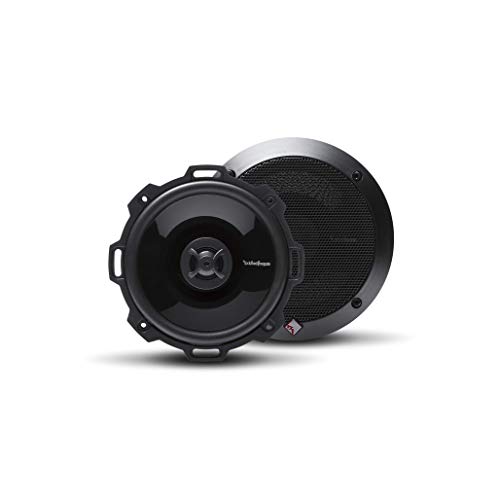
- Best for: A clean factory-power swap with flexible mounting.
- Size: 5.25 inches
- Design: 2-way coaxial, pair
- Woofer: mineral-filled polypropylene cone
- Tweeter: PEI dome with built-in crossover
A clean factory-power swap with flexible mounting.
Sensitivity is the lowest here, so top-down highway volume is limited without an amplifier.
The Punch P152 is a straightforward factory replacement pair that brings useful hardware to the install itself. Grilles, mounting hardware and an OEM adapter plate come in the box, and the FlexFit basket uses slotted holes that allow small adjustments when factory screw positions do not line up exactly, a common annoyance in older Jeep interiors. Power needs are modest at forty watts continuous, so a stock head unit drives it comfortably, and the mineral-filled polypropylene cone with a butyl rubber surround suits daily use.
Kenwood KFC-1366S
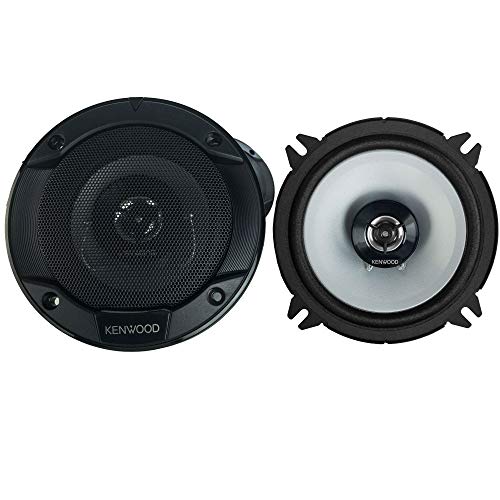
- Best for: Shallow Jeep openings and stock head units.
- Size: 5.25 inches
- Design: 2-way coaxial, pair
- Woofer: polypropylene cone
- Tweeter: 1-inch PEI balanced dome
Shallow Jeep openings and stock head units.
It carries no marine rating, so keep it in sheltered locations rather than an exposed bar.
Kenwood’s Sport-series pair earns its place on depth. The listed mounting depth of about one and three-quarter inches is the shallowest in this group, which matters in older Jeep dash openings and slim sound bar pods where a deeper basket fouls the enclosure. A polypropylene cone and a one-inch PEI balanced dome tweeter cover the basics, the ninety-one-decibel sensitivity is the highest listed here, and the thirty-watt rated power matches what factory head units actually deliver, making it an easygoing upgrade for a stock system.
Which One Fits Your Situation
Your Sound Bar Gets Rained On
Choose the Polk DB522. Marine certification is the deciding factor when speakers sit overhead in a Jeep that runs without a top, because dust, spray and sudden showers reach that location first. Its cone and tweeter materials suit that exposure, and the low listed frequency response helps music stay full when the cabin fills with wind noise on the road.
You Already Run an Amplifier
Take the Kicker 46CSC54. Its continuous handling is roughly double the factory-oriented pairs here, and the high sensitivity converts amplifier output into volume efficiently. In a loud open cabin that headroom keeps vocals clear without pushing the system into strain, and the flush tweeter keeps the install tidy behind factory grilles.
You Want a Simple Factory Swap
The Rockford Fosgate P152 fits this job. Included grilles, hardware and an adapter plate reduce the small parts hunting that older Jeep interiors often demand, the slotted basket forgives imperfect hole alignment, and its modest power rating pairs naturally with a stock head unit for daily driving, commuting and trail weekends alike, without extra wiring.
Your Mounting Space Is Very Shallow
Pick the Kenwood KFC-1366S. The shallow mounting depth solves the fit problem that rules out deeper pairs in slim pods and older dash cavities, and its high sensitivity keeps volume healthy on factory power. Keep this pair in a sheltered spot, since the listing states no weather rating for exposed mounting locations.
Common Mistakes
- Assuming every 5.25-inch speaker fits every Jeep opening without checking cutout diameter and mounting depth first.
- Putting a non-rated speaker in an exposed sound bar where rain and trail dust reach it directly.
- Judging power by peak figures alone instead of the continuous RMS rating that reflects daily use.
- Mixing one new pair with tired factory speakers and blaming the new pair for the uneven result.
- Skipping polarity checks during installation, which leaves bass thin even when the speakers themselves are capable.
Frequently Asked Questions
Will 5.25-inch speakers fit my Jeep sound bar?
Many Jeep sound bars and several dash locations were built around this size, but model years and aftermarket bars vary. Remove one existing speaker, measure its cutout and the depth behind it, then compare those figures with the listing dimensions for the pair you want before ordering anything.
Do I need an amplifier for these speakers?
No. Every pair here can run from a factory head unit, and the higher-sensitivity models are chosen with that in mind. An amplifier mainly buys extra clean volume for top-down highway driving, where wind and tire noise compete hardest with a small driver.
Are marine certified speakers worth it in a Jeep?
They are worth it where the speakers are exposed, mainly overhead sound bars in Jeeps that run open or with a soft top. For dash or kick-panel locations that stay dry, a standard car speaker is usually sufficient and the extra protection adds little.
Should I replace all the speakers at once?
Replacing the pair you listen to most, usually the front or sound bar set, gives the clearest improvement first. Matching the second pair later keeps tonal balance consistent, which matters in a small cabin where every speaker sits close to the listeners.
More from Amazon
Programs that pair well with the guide above. Offers and eligibility are set by Amazon and may change.
Free shipping on eligible items, Prime Video and more. Eligible new members can start with a free trial.
Start a Prime free trialAudiobooks and podcasts to listen to on the go. Eligible new members can start with a free trial.
Try Audible freeAd-free music streaming. Eligible new subscribers can start with a free trial.
Try Music Unlimited freeA free business account with business pricing and bulk-buying tools for work, shop or home office.
Create a business accountAs an Amazon Associate we earn from qualifying purchases.

Write Your Review
No reviews yet. Be the first to share your experience!