

Key takeaways
- Burn only dry, seasoned firewood; wet wood creates more smoke, soot, and creosote.
- Remove cold ash regularly, but leave a thin insulating layer in a traditional firebox if the manufacturer permits it.
- Inspect the chimney and spark screen for soot, cracks, or blockage before the burning season.
- Store firewood off the ground and away from the fireplace, siding, and doors.
- Expect grates, spark screens, firebrick, and chimney caps to wear before the main body.
The best outdoor fireplaces depend on your patio size, fuel access, heating expectations, and willingness to manage smoke: choose a wood-burning fireplace for the highest traditional heat and atmosphere, propane for simple placement and clean operation, or natural gas for frequent use when a permanent gas line is available.
Our top picks

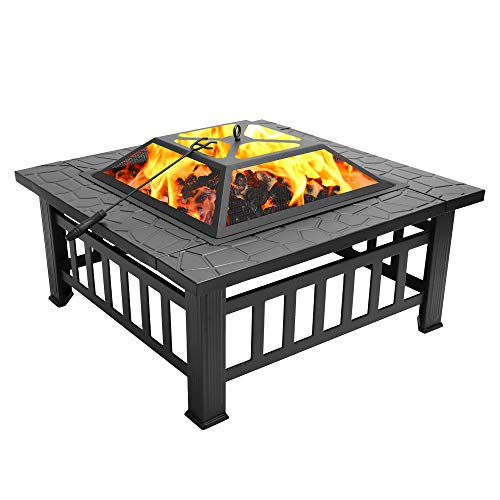

As an Amazon Associate we earn from qualifying purchases at no extra cost to you. Ratings are shown as listed on Amazon.
Best Outdoor Fireplaces at a Glance
| Fireplace type | Typical heat output | Best patio size | Typical fuel cost | Installation difficulty | Main drawback |
|---|---|---|---|---|---|
| Wood-burning | 30,000–100,000+ BTU/h, depending on fire size and design | 200 square feet or larger | About $5–$15 per evening in firewood | Low to high, depending on chimney and local code | Smoke, ash, sparks, and regular cleaning |
| Propane | 30,000–50,000 BTU/h for compact units; up to about 100,000 BTU/h for larger models | 100–300 square feet | About $3–$12 per evening | Low | Fuel tanks require storage and refilling |
| Natural gas | 40,000–150,000 BTU/h | 150–400 square feet | Often about $1–$5 per evening after installation | High; professional gas work is usually required | Fixed location and substantial installation cost |
BTU figures are useful for comparing burners, but they do not equal the heat you feel. An open wood fire loses much of its heat upward, while a gas fireplace with a reflector, firebox, or ceramic logs can direct more warmth toward nearby seating. Outdoor fireplaces are also affected by wind, humidity, ceiling height, and the distance between the flame and the people using it.
Wood-Burning Outdoor Fireplaces: Best for Maximum Atmosphere
A wood-burning fireplace is the strongest choice when crackling logs, visible flames, and a traditional masonry or chiminea appearance matter more than convenience. Wood can produce the highest short-term heat output, especially in a large firebox with a properly designed chimney. It is also the least predictable option: heat varies with the type and dryness of the wood, and wind can push smoke toward guests.
Materials and ventilation
Look for a firebox made from heavy-gauge steel, cast iron, refractory cement, firebrick, or high-temperature ceramic. Thin decorative steel can discolor, warp, or rust after repeated heating cycles. A stainless-steel chimney resists corrosion better than ordinary painted steel, while a firebrick-lined chamber holds heat and protects the outer shell.
Wood-burning fireplaces need a functioning chimney or flue that carries smoke upward. A spark arrestor at the chimney outlet helps reduce flying embers, but it does not make the fireplace safe beneath a combustible roof. Never place a wood fireplace in an enclosed porch, garage, tent, or poorly ventilated structure. Check local rules before buying because some municipalities restrict outdoor wood fires or require specific clearances.
Ownership realities
- Burn only dry, seasoned firewood; wet wood creates more smoke, soot, and creosote.
- Remove cold ash regularly, but leave a thin insulating layer in a traditional firebox if the manufacturer permits it.
- Inspect the chimney and spark screen for soot, cracks, or blockage before the burning season.
- Store firewood off the ground and away from the fireplace, siding, and doors.
- Expect grates, spark screens, firebrick, and chimney caps to wear before the main body.
Wood is the better choice for a large open yard, frequent entertaining, and buyers who accept cleanup. It is a poor fit for a small patio, smoke-sensitive neighbors, or anyone wanting instant heat at the press of a button.
Propane Fireplaces: Best for Flexible, Low-Commitment Heating
Propane fireplaces offer the easiest compromise between portability and useful heat. Most use a standard refillable cylinder, while larger fireplaces may connect to a 20-pound, 30-pound, or 40-pound tank. They light quickly, produce no ash, and can be moved when the patio layout changes.
How long does a propane tank last?
A rough calculation helps prevent disappointing runtime. A standard 20-pound propane cylinder contains approximately 430,000 BTU of usable fuel. At a 40,000 BTU/h burner setting, the theoretical runtime is:
430,000 BTU ÷ 40,000 BTU/h = about 10.75 hours.
Real runtime is usually lower because tanks are not emptied completely, cold weather reduces vaporization, and some fireplaces have pilot lights or higher maximum settings. At six hours of use per week, that example may consume a cylinder every one to two weeks. A larger tank or fixed propane supply is more practical for frequent use.
What to check before buying
- Choose a stainless-steel burner and a powder-coated or weather-resistant enclosure.
- Confirm whether the included hose and regulator match your intended tank.
- Look for an automatic safety shutoff, flame-failure protection, and an accessible control valve.
- Check whether the burner is rated for glass media, lava rock, or ceramic logs; not every filler is interchangeable.
- Measure the tank compartment before purchasing, especially for narrow fire tables.
Propane is usually the best outdoor fireplace fuel for renters, occasional users, and patios where a gas line is unavailable. Its main weaknesses are the visible tank, refill logistics, and reduced convenience during long gatherings when a cylinder runs low.
Natural-Gas Fireplaces: Best for Frequent, Permanent Use
Natural gas makes sense when the fireplace will remain in one location and the property already has a suitable gas line. It avoids tank swaps and generally costs less per hour than propane, but the installed price can be much higher because gas piping, shutoff valves, regulators, and permits may be required.
Use a licensed professional for gas-line work. The correct appliance must match the gas type and supply pressure, and the installation must follow local fuel-gas and building codes. A natural-gas fireplace cannot normally be moved around the yard like a portable propane unit.
Natural gas burns cleanly, but it still consumes oxygen and produces combustion gases. Use only equipment specifically listed for outdoor operation, maintain the manufacturer’s clearance requirements, and never operate it in an enclosed or partially enclosed area. A covered patio may be acceptable only when the appliance instructions and local regulations permit it; a roof alone does not guarantee adequate ventilation.
Choosing by Patio Size and Situation
| Your situation | Best choice | Why |
|---|---|---|
| Small patio under 120 square feet | Compact propane unit, around 30,000–40,000 BTU/h | Lower smoke risk and easier control; avoid oversized flames that overwhelm the seating area. |
| Medium patio of 120–250 square feet | Propane or natural gas, around 40,000–60,000 BTU/h | Enough warmth for a conversation area without requiring a large footprint. |
| Large yard or open entertaining area | Wood-burning fireplace or 60,000–100,000 BTU/h gas model | Greater heat potential and better performance when wind disperses warmth. |
| Weekly or daily use | Natural gas, if a permanent installation is practical | Continuous fuel supply avoids repeated tank refills and storage. |
| Occasional use or rented property | Portable propane | Minimal installation and easier relocation or storage. |
| Maximum flame character and cooking potential | Wood-burning | Offers the most natural fire experience, but requires fuel, tending, and ash management. |
Materials, Weather Resistance, and Assembly
Prioritize 304 stainless steel for exposed burners and hardware; 316 stainless steel is more resistant to salt air and is worth considering near the coast. Powder-coated steel can look attractive and cost less, but scratches must be repaired before moisture reaches the underlying metal. Cast aluminum resists rust and keeps weight manageable, although it may not tolerate the same direct heat as a steel firebox.
Concrete-look enclosures are often made from glass-fiber-reinforced concrete rather than solid concrete. They can be durable, but freeze-thaw cycles and standing water may cause cracks. Use a fitted cover only after the unit is completely cool and dry. A cover that traps condensation can accelerate corrosion.
Assembly commonly takes one to three hours for a gas fire table and longer for a chimney-style wood fireplace. The difficult parts are usually leveling the base, routing the gas hose without kinks, installing fire media correctly, and keeping required clearances. Do not modify a burner, drill ventilation openings, or substitute connectors to make parts fit.
Safety and Clearance Checklist
- Place the fireplace on a stable, noncombustible, level surface.
- Keep furniture, curtains, umbrellas, plants, and decorations outside the stated clearance zone.
- Follow the manual’s overhead-clearance rule; do not assume a patio roof is safe.
- Keep a charged fire extinguisher and a water source nearby.
- Supervise children and pets, and assume metal surfaces remain hot after the flame is off.
- Turn off gas at the appliance and supply valve when finished, if the instructions require both.
- Never leave a wood fire unattended, and fully extinguish it before going indoors.
Final Recommendation
For most buyers, the best outdoor fireplaces are selected by use pattern rather than appearance alone. Choose wood-burning when the fire itself is the centerpiece and you have room for smoke, fuel storage, and maintenance. Choose propane when flexibility, simple assembly, and clean shutdown matter most. Choose natural gas when you use the fireplace often enough to justify professional installation and a permanent location. Whichever fuel you select, size the heat output to the seating area, verify ventilation and clearances first, and treat weather resistance as an ongoing maintenance responsibility rather than a claim that the fireplace can be left uncovered indefinitely.

Write Your Review
No reviews yet. Be the first to share your experience!