

Key takeaways
- Choose the HX Stomp XL when portability is the priority, the GX-100 when touchscreen editing and effects quality matter most, the Helix LT when you need the most balanced all-in-one stage system, the FM3 Mk II Turbo when amplifier detail is the deciding factor, and…
The best multi effects pedals for most guitarists are the Line 6 Helix LT for complete stage control, the Line 6 HX Stomp XL for compact rigs, the Boss GX-100 for fast editing, the Fractal FM3 Mk II Turbo for high-end amp modeling, and the Neural DSP Quad Cortex for premium capture-based flexibility.
A multi-effects unit should be judged as a complete rig rather than a collection of effect names. Amp modeling, cabinet simulation, preset transitions, editing speed, input and output options, foot control, and reliability matter more than whether a specification sheet lists 250 or 300 effects. The right choice depends on how often you play, how much space you have, and whether the pedal must replace an amplifier, pedalboard, and recording interface.
Our top picks


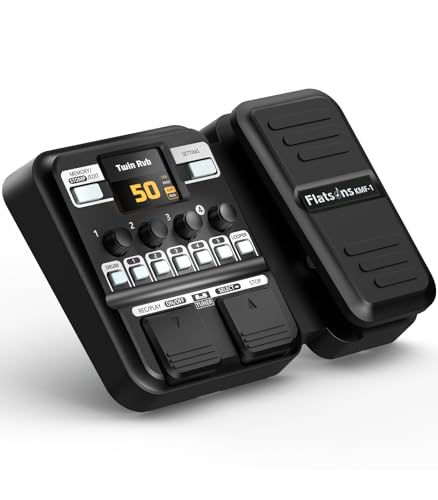

As an Amazon Associate we earn from qualifying purchases at no extra cost to you. Ratings are shown as listed on Amazon.
Quick comparison of the leading choices
| Unit | Best for | Approx. size and weight | Core strengths | General market range |
|---|---|---|---|---|
| Line 6 HX Stomp XL | Small touring and fly rigs | 14.5 x 5.8 x 2.6 in; about 2.5 lb | Eight footswitches, snapshots, compact Helix ecosystem | About $700–$800 |
| Boss GX-100 | Fast touchscreen editing | 18.3 x 8.0 x 3.0 in; about 7.7 lb | Touchscreen, expression pedal, strong effects, amp control | About $600–$750 |
| Line 6 Helix LT | Full pedalboard replacement | 20.9 x 11.7 x 3.6 in; about 12.5 lb | Dual signal paths, scribble strips, extensive I/O | About $1,000–$1,200 |
| Fractal FM3 Mk II Turbo | Detailed amp and cabinet modeling | 14.6 x 9.2 x 2.5 in; about 7 lb | Deep modeling, powerful scenes, high-quality outputs | About $1,500–$1,700 |
| Neural DSP Quad Cortex | Premium capture and touring flexibility | 11.1 x 7.5 x 2.8 in; about 4.6 lb | Touchscreen, captures, compact design, extensive routing | About $1,600–$1,900 |
Dimensions and weights are approximate manufacturer figures and can vary slightly by revision or regional documentation. Prices are broad new-market ranges, not fixed quotes.
Best overall: Line 6 Helix LT
The Helix LT remains the most balanced choice for guitarists who want one unit to manage rehearsals, live performances, recording, and direct-to-PA work. Its amp and cabinet models cover clean American-style sounds, British crunch, modern high gain, bass, and acoustic-oriented processing. The models are not merely useful for home practice; they provide enough control over microphones, cabs, power-amp behavior, and signal routing for serious recording.
Its main advantage is workflow. The large color display, physical controls, signal-chain view, snapshots, and scribble strips make it possible to build a preset without constantly reaching for a computer. Snapshots allow different combinations of delay, reverb, gain, and modulation inside one song preset, reducing the gap between traditional pedalboard control and preset-based systems.
The LT offers stereo outputs, balanced XLR connections, effects-loop connectivity, USB audio, MIDI, and multiple expression and control options. That makes it suitable for a guitarist who needs separate feeds to a front-of-house mixer, stage monitor, amplifier, or external effects loop. It is relatively large, however, and its interface can feel excessive if you only need three or four sounds.
Best compact option: Line 6 HX Stomp XL
The HX Stomp XL is the strongest choice when space, weight, and ecosystem compatibility matter more than having a large number of simultaneous blocks. It uses the same broad Helix family of amp, cabinet, and effect models, but places them in a much smaller enclosure with eight footswitches.
The practical limitation is processing capacity. Complex dual-amp presets with several stereo effects may require compromises, whereas a conventional guitar rig using one amp, a drive section, modulation, delay, and reverb fits more comfortably. The unit works especially well with an existing tube amp, because its effects-loop and routing options let it function as a high-quality effects processor rather than forcing you to use its amp modeling.
Choose it for fly dates, apartment rigs, backup systems, and pedalboards where every inch matters. Add an external expression pedal or MIDI controller if you need more continuous control than its built-in switches provide.
Best for quick editing: Boss GX-100
The Boss GX-100 is appealing to players who dislike menu-heavy editing. Its touchscreen makes it easy to select blocks, change their order, and reach common parameters, while the physical controls retain the immediate feel of a conventional pedalboard. The built-in expression pedal is useful for volume, wah, pitch, or morph-style assignments without adding another accessory.
Boss amp models are convincing and practical, while the company’s effects library is one of the unit’s major strengths. Delays, reverbs, modulation, pitch effects, and distortion sounds are easy to integrate into usable patches. The GX-100 also provides an effects loop, USB connectivity, MIDI, and outputs suited to amplifier or direct operation.
It is a particularly sensible option for players who change sounds frequently but do not want to learn a deep programming system. Its display and switching layout are less spacious than a Helix floorboard, so players who need many labeled song-specific controls may eventually prefer a larger unit.
Best for modeling depth: Fractal FM3 Mk II Turbo
The FM3 Mk II Turbo is aimed at guitarists who care more about detailed amplifier behavior and cabinet options than about having a large number of physical switches. Fractal’s modeling system offers extensive control over preamp, power amp, speaker, microphone, room, and time-based parameters. It is capable of highly refined clean, edge-of-breakup, and high-gain sounds.
Scenes make it possible to change blocks and parameters within a preset, and the unit supports external controllers for a larger stage layout. Its three onboard switches are useful, but many performing guitarists will want an additional foot controller. Editing from the front panel is possible, though the computer editor is often the faster route for complex patches.
The FM3 is a strong studio and professional-stage choice, but it rewards patience. Beginners may spend more time learning its architecture, and the total cost rises when a controller, expression pedal, or dedicated case is added.
Best premium capture-based unit: Neural DSP Quad Cortex
The Quad Cortex combines conventional digital modeling with captures of amplifiers, pedals, and other hardware. Its touchscreen interface is among the easiest ways to create and rearrange a signal chain, and its compact footprint makes it attractive for musicians who need extensive sounds without carrying a large floorboard.
Captures can be valuable when a guitarist already has a favorite amplifier or pedal sound and wants to reproduce that character in a portable rig. The unit also provides multiple inputs and outputs, USB audio, MIDI, and flexible routing for parallel processing or separate stage and recording feeds.
The trade-off is cost and a different approach to sound design. A capture can reproduce a specific setup very well, but it may offer less broad adjustment than a full amplifier model. Players who enjoy designing sounds from circuit-style parameters may find a Fractal or Helix system more satisfying.
Decision matrix: which type of guitarist are you?
| Your situation | Best starting point | Why |
|---|---|---|
| Under roughly $800 and new to modeling | Boss GX-100 or HX Stomp XL | Manageable editing, strong effects, and enough routing for growth |
| Small apartment or frequent air travel | HX Stomp XL | Low weight and easy integration with headphones, monitors, or an amp |
| One unit for a full cover-band set | Helix LT | Many labeled controls, snapshots, scenes, and broad I/O |
| Recording-focused guitarist seeking maximum amp detail | Fractal FM3 Mk II Turbo | Deep cabinet, microphone, and amplifier adjustment |
| Existing favorite amps and pedals to capture | Quad Cortex | Capture workflow and compact premium hardware |
What to check before buying
Amp modeling and monitoring
Modeling quality depends on the complete monitoring chain. A patch that sounds excellent through studio monitors may be too bright through a guitar speaker, while a conventional amplifier usually requires cabinet simulation to be disabled. Confirm that the unit can store separate output settings or use distinct signal paths for the front-of-house system and your stage monitor.
Presets versus snapshots or scenes
Preset changes can create brief gaps or different reverb tails depending on the unit and patch. Snapshots and scenes usually provide smoother song control because they change parameters inside one preset. For live use, count the number of sounds you need per song and verify how many footswitches, labels, and simultaneous assignments are available.
I/O and control
At minimum, look for the connections required by your real rig: guitar input, stereo outputs, headphones, USB, MIDI, and an effects loop if you use an amplifier. Balanced outputs are valuable for long cable runs to a mixer. An expression input may save money, but built-in pedals and external controllers add weight and floor space.
A practical setup method
- Choose the final output first: guitar amp, powered FRFR speaker, headphones, or a mixing console.
- Build one simple preset with an amp, cabinet, noise gate if needed, delay, and reverb.
- Set the clean sound before adding distortion; this gives every later effect a stable reference.
- Create snapshots or scenes for rhythm, lead, ambient, and mute functions rather than making a separate preset for every minor change.
- Test at rehearsal volume and save a backup through the editor or USB connection.
A common mistake is programming at bedroom volume and adding excessive bass or treble. Another is placing a noise gate too aggressively, which can cut sustained notes and make clean playing feel unnatural. Keep an unedited backup preset before changing global output settings.
Ownership, durability, and long-term value
Footswitches, expression-pedal mechanisms, jacks, and displays are the parts most exposed to wear. Use a case for transport, avoid placing drinks near the unit, and clean switches and enclosure surfaces with a soft, dry cloth. Do not spray cleaner into switches or connectors. Firmware updates can improve features, but back up presets first and avoid updating immediately before an important performance.
Budget for accessories: a protective case, suitable cables, an expression pedal or MIDI controller, and a reliable power solution may add $100–$400 to a compact rig. A $750 unit used for 150 rehearsals and performances over three years costs about $5 per use before accessories; a $1,600 unit used 300 times costs about $5.33 per use. Frequency of use can matter more than the initial price.
Final verdict
Choose the HX Stomp XL when portability is the priority, the GX-100 when touchscreen editing and effects quality matter most, the Helix LT when you need the most balanced all-in-one stage system, the FM3 Mk II Turbo when amplifier detail is the deciding factor, and the Quad Cortex when premium captures and compact touring flexibility justify the cost. The best multi effects pedals are not the ones with the longest feature list; they are the units whose control layout, outputs, and editing workflow match the way you actually play.

Write Your Review
No reviews yet. Be the first to share your experience!