

Key takeaways
- Closed-cell foam: Resists absorbing water and is easy to wipe clean. It is common in chest protectors and can feel firm at first.
- Layered foam: Combines different densities for impact management and flexibility. It usually provides a better balance for frequent players.
- Memory or comfort foam: Improves pressure distribution and fit but may compress over time, particularly under the knees and shoulders.
- Mesh liners: Improve airflow and drying speed. Removable liners are more useful than permanently sewn-in padding because they can be washed.
- Molded plastic shells: Protect the shins and knees from direct contact with the ground and foul balls. Thicker plastic is not automatically better if it restricts movement.
Best Catchers Gear Sets for Youth & Adult Players
The best catchers gear is a properly sized, NOCSAE-compliant set with dense but flexible padding, secure straps, and separate size options for the helmet, chest protector, and leg guards. For most youth players, a complete set from a specialist baseball brand is the most practical starting point; older players should prioritize certified protection, breathable materials, replaceable parts, and a close fit over the lowest price.
Quick Picks by Player and Situation
| Player situation | Best choice | Why it fits the situation | Typical market range |
|---|---|---|---|
| First youth set, occasional games | Complete youth set with molded plastic shells and adjustable straps | Affordable, easy to size, and usually includes helmet, chest protector, and leg guards | $120–$220 |
| Competitive youth or middle-school catcher | Certified intermediate set with layered foam and removable knee padding | Better mobility, impact management, and comfort during frequent practices | $200–$400 |
| High-school player | Adult-small or intermediate system with a NOCSAE-compliant chest protector | Offers a closer fit without the bulk of many full adult sets | $250–$500 |
| College, travel, or adult league | Modular adult set with high-density foam and replaceable harnesses | Designed for repeated use, easier cleaning, and long-term adjustment | $350–$700+ |
| Multiple catchers sharing equipment | Durable adult or intermediate set with washable liners and broad adjustment ranges | More likely to tolerate repeated fitting, laundering, and daily transport | $300–$650 |
Best Catchers Gear Sets by Use Case
Best budget option: a basic youth complete set
A basic youth set is suitable when a player is learning the position, plays fewer than two games per week, or may outgrow the equipment within a season. Look for a helmet with multiple adjustment points, a chest protector with vertical and shoulder adjustment, and leg guards with at least two shin-strap positions.
Our top picks
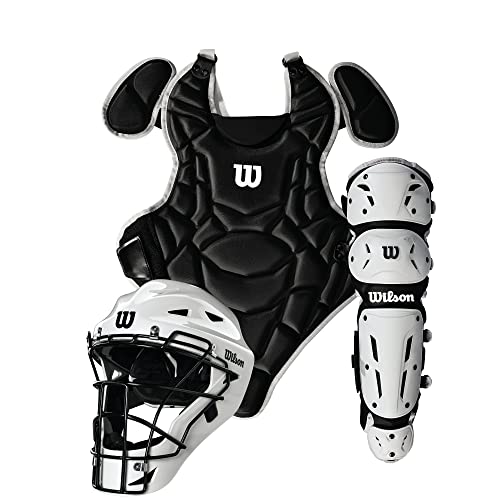
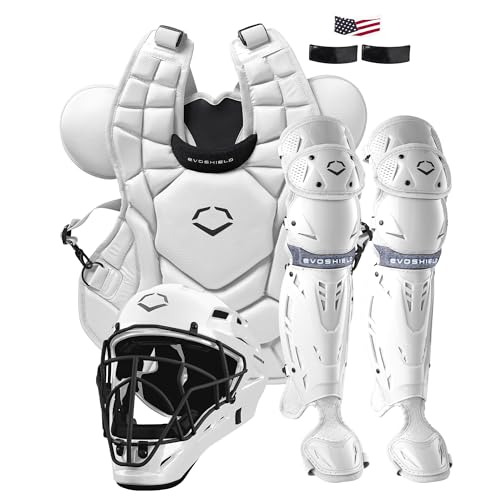
As an Amazon Associate we earn from qualifying purchases at no extra cost to you. Ratings are shown as listed on Amazon.
Sets from established baseball brands such as Rawlings, Easton, All-Star, Mizuno, and Wilson commonly occupy this category. The main compromise is padding thickness and ventilation: entry-level foam may feel warmer and can compress sooner, especially around the knees and collarbone.
Best for developing players: an intermediate set
Intermediate gear is often the best value for a serious youth catcher. It typically uses layered foams instead of one soft slab, allowing the protector to remain flexible while absorbing repeated impacts. Look for a removable or washable liner, reinforced knee areas, and leg guards that allow the foot to move naturally when blocking or rising from a crouch.
Rawlings Velo, Easton Gametime, All-Star System 7, and Mizuno Samurai product families are examples of established lines that have included youth, intermediate, or adult variations. Always check the exact model label and size rather than assuming that every version has the same certification or dimensions.
Best for high-school and adult players: a modular certified system
Frequent players benefit from buying each component for fit rather than accepting a one-size-fits-all bundle. An adult-small chest protector may fit a narrow high-school player better than an adult-large set, while a larger athlete may need adult leg guards but a different helmet size.
Higher-end systems from brands such as All-Star, Easton, Rawlings, Mizuno, and Wilson generally offer denser foam, stronger harnesses, better ventilation, and more durable hardware. Modular gear costs more initially, but replacing a worn harness or knee insert is less expensive than replacing the entire set.
Sizing: Measure the Player, Not the Age Label
Age categories are useful shorthand, but body length and circumference determine fit. A common approximate range is shown below; manufacturer charts take priority because shell shapes differ.
| Component | Typical youth range | Typical intermediate range | Typical adult range | What to measure |
|---|---|---|---|---|
| Catcher’s helmet | Hat size about 6 1/4–7 | About 6 5/8–7 1/4 | About 6 7/8–7 5/8+ | Head circumference above the eyebrows and around the widest rear point |
| Chest protector | About 13–15 inches | About 14–16 inches | About 16–18 inches | Neck-to-waist length and shoulder width; follow the brand’s torso chart |
| Leg guards | About 12–14 inches | About 14–16 inches | About 15–18 inches | Top of kneecap to the ankle or instep, depending on the chart |
For the helmet, a secure fit should not rock when the player shakes their head, but it should not create a painful pressure point. The mask must stay centered, and the jaw area should not be exposed when the player looks down.
The chest protector should cover the sternum, collarbone area, and upper abdomen without restricting breathing or arm movement. If the bottom edge rides up when the player crouches, it is probably too long or adjusted incorrectly. If it leaves a visible gap beside the armpit or below the ribs, it is too small or poorly shaped.
Leg guards should center the knee cup directly over the kneecap. The shin shell should not rotate toward the outside of the leg, and the lower flap should cover the ankle without catching on the cleat. Have the player squat, block, stand, and jog before accepting the fit.
Padding Materials and What They Mean
- Closed-cell foam: Resists absorbing water and is easy to wipe clean. It is common in chest protectors and can feel firm at first.
- Layered foam: Combines different densities for impact management and flexibility. It usually provides a better balance for frequent players.
- Memory or comfort foam: Improves pressure distribution and fit but may compress over time, particularly under the knees and shoulders.
- Mesh liners: Improve airflow and drying speed. Removable liners are more useful than permanently sewn-in padding because they can be washed.
- Molded plastic shells: Protect the shins and knees from direct contact with the ground and foul balls. Thicker plastic is not automatically better if it restricts movement.
Padding should feel firm enough to hold its shape but not so rigid that the catcher cannot turn, block, or recover. More padding also adds weight and heat. For many youth players, ventilation and mobility prevent more practical problems than simply choosing the thickest available protector.
NOCSAE Certification: What to Check Before Buying
NOCSAE is the National Operating Committee on Standards for Athletic Equipment. Its standards are performance requirements for protective equipment; they are not a guarantee that every product in a brand’s catcher’s gear range is certified.
- Helmet: Look for the applicable NOCSAE certification label inside or on the helmet, commonly associated with the standard for baseball and softball batting and catching helmets.
- Chest protector: Many leagues require a protector tested to the NOCSAE standard for chest protection against commotio cordis risk. The required label should be permanently attached and readable.
- Leg guards: Leg guards may not carry the same NOCSAE requirement as the helmet and chest protector. They still need intact shells, secure straps, and full knee and shin coverage.
- League rules: Youth organizations, high-school associations, and adult leagues can impose different certification dates or labeling rules. Confirm the current rule before purchasing.
Do not rely on phrases such as “pro style,” “impact resistant,” or “game ready” as substitutes for a certification label. A used chest protector with a missing label may be rejected even if it appears undamaged. Never modify a helmet or drill holes in certified protective equipment.
Ownership Costs and Common Wear Points
The knee padding, elastic harnesses, mask hardware, and helmet sweat liner usually show wear before the hard shells. Elastic loses tension, hook-and-loop closures collect dirt, and foam can flatten where the catcher spends the most time in a crouch.
For example, suppose a $300 set is used for 60 practices and 30 games in one season: 90 uses total. That equals about $3.33 per use in the first season. If careful maintenance allows the set to last three seasons at the same usage rate, the equipment cost falls to about $1.11 per use, before replacement parts. A $450 modular set can therefore be economical for a player who practices several times each week, but excessive for a player who rarely catches.
Maintenance routine
- After each use, remove the helmet and chest-protector liners if the design allows it.
- Wipe shells and mask hardware with mild soap and water; avoid bleach, solvents, and high heat.
- Air-dry every component fully before placing it in a closed equipment bag.
- Inspect straps, rivets, buckles, stitching, and knee padding weekly during the season.
- Replace cracked shells, loose hardware, badly stretched straps, or compressed padding rather than improvising repairs.
Do not leave wet gear in a car overnight. Persistent moisture damages fabric, encourages odor, and can make foam and adhesives deteriorate faster. Do not buy a larger size “to allow room to grow” if the helmet shifts or the chest protector leaves gaps; protective equipment must fit correctly now.
Final Buying Recommendation
Choose a youth complete set for occasional introductory use, an intermediate layered-foam set for a developing player, and a modular adult or adult-small system for frequent competition. Before paying, verify the current NOCSAE labels, measure the player’s head and torso, test the crouched position, and confirm that replacement straps or liners are available. The best catchers gear is not the heaviest or most expensive set—it is the certified system that stays centered, covers the right areas, permits normal movement, and can withstand the player’s actual schedule.





Write Your Review
No reviews yet. Be the first to share your experience!