

Key takeaways
- Find the best tube integrated amplifiers with a phono input for dedicated listening rooms, with true valve sound and direct vinyl connection.
The best tube integrated amplifiers with a phono input for dedicated listening rooms offer something no solid-state amplifier can copy exactly: the sound of vacuum tubes driving the music. Tubes add a warmth, a harmonic richness, and a sense of space that many vinyl listeners prefer, and a built-in phono stage lets the turntable connect directly to the amplifier with no extra box in the chain.
Tube integrated amplifiers are a specialist purchase. They need careful speaker matching, they generate heat, and their tubes wear over time. In return, they give a dedicated room a sound that many listeners describe as more natural and more engaging than solid-state alternatives, especially with vinyl as the source.
One honest note before the pick: true tube integrated amplifiers with a built-in phono stage are thin on Amazon US. Many well-known tube amplifiers have line inputs only, with no phono stage at all, and several famous names are sold through dealers rather than Amazon. The amplifier below is the one tube integrated amplifier with a phono input that could be confirmed as listed on Amazon US, and this guide is built around it rather than filling the list with amplifiers that do not meet the brief.
How to Choose a Tube Integrated Amplifier With a Phono Input
True tube design. Confirm the amplifier is a genuine tube design, with tubes in both the preamp and power stages, rather than a hybrid with a tube preamp and a solid-state power stage. The output tube type — KT88, EL34, 300B, and others — shapes the sound and the power.
Phono input type. A built-in phono stage should suit moving-magnet cartridges, which cover the large majority of turntables. Moving-coil cartridges need a separate phono stage with higher gain, so check your cartridge before choosing.
Power and speaker matching. Tube amplifiers produce modest power, often between 20 and 45 watts, and they suit efficient speakers best. Check speaker sensitivity and impedance: efficient speakers above 90 dB work well, while inefficient speakers will not play loudly enough.
Triode and ultralinear modes. Some tube amplifiers offer switchable modes. Triode mode gives a warmer, more intimate sound at lower power, while ultralinear mode gives more power and a firmer grip on the speakers. A switchable amplifier lets you choose per recording.
Tube replacement and bias. Output tubes wear and need replacement, and some amplifiers need bias adjustment when tubes are changed. Check whether the amplifier has auto-bias or manual bias, and whether the tube types are common and easy to find.
Ventilation and placement. Tube amplifiers generate significant heat and need open space above and around them. In a dedicated room, give the amplifier an open shelf, away from the turntable, so heat does not affect the record or the cartridge.
Balanced inputs. Some tube amplifiers offer balanced XLR inputs alongside RCA inputs. Balanced inputs suit preamplifiers and DACs with balanced outputs, and they help over longer cable runs.
Top Picks
MUZISHARE X7 KT88 x4 Vacuum Tube Integrated Amplifier, Push-Pull Power Amp, MM Phono, Balanced XLR, Remote
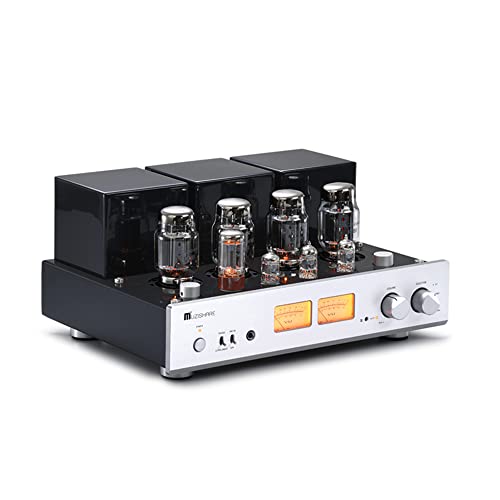
The MUZISHARE X7 is a true tube integrated amplifier built around four KT88 output tubes in a push-pull design, with a moving-magnet phono stage, balanced XLR inputs, and a remote control. It offers switchable triode and ultralinear modes, so the listener can choose between warmth and power, and it suits a dedicated room with efficient speakers.
- Power: 25 watts in triode mode, 45 watts in ultralinear mode
- Design: KT88 push-pull tube amplifier, four KT88 output tubes
- Phono: moving-magnet phono input
- Inputs: balanced XLR and RCA line inputs
- Modes: triode and ultralinear, switchable
- Extras: remote control included
Best for: vinyl listeners who want a genuine KT88 tube amplifier with a phono stage and balanced inputs in a dedicated room. One point to note: the listing is supplied by third-party sellers rather than Amazon directly, so confirm the seller, the listing details, and the included accessories before ordering.
Comparison Table
| Amplifier | Output tubes | Power | Phono input | Balanced XLR |
|---|---|---|---|---|
| MUZISHARE X7 | KT88 x4, push-pull | 25 watts triode, 45 watts ultralinear | MM phono | Yes |
Which One Is Right for You?
With a single confirmed pick, the question is not which tube amplifier to choose but whether a tube amplifier suits your system. The MUZISHARE X7 is the right choice if you have efficient speakers, a moving-magnet turntable, and a dedicated room where the amplifier can breathe. It is not the right choice if your speakers are inefficient, your room is large, or you want a maintenance-free amplifier.
If your speakers are below 88 dB sensitivity, or your room is large, a hybrid amplifier with a tube preamp and a solid-state power stage will drive them more easily, and a separate phono stage can be added. If your speakers are efficient and you value the tube sound above all, the X7 is a genuine route to it with vinyl built in.
Frequently Asked Questions
Why are there so few tube integrated amplifiers with a phono input on Amazon US?
Tube amplifiers are a specialist product, and many makers sell through dealers rather than Amazon. Of those that are listed, many have line inputs only and expect the buyer to add a separate phono stage. A built-in phono stage adds cost and complexity to a tube design, so it appears on fewer models.
What is the difference between triode and ultralinear mode?
Triode mode connects the output tubes in a way that gives a warmer, more intimate sound at lower power. Ultralinear mode gives more power and a firmer grip on the speakers, with a cleaner, more extended sound. The MUZISHARE X7 lets you switch between the two and choose per recording or per mood.
How often do tubes need replacing?
Preamp tubes last a long time, often years of regular use. Output tubes wear faster, typically after a few thousand hours, and their sound softens as they age. Keep a spare set of the correct type, and follow the manual for bias adjustment when changing output tubes.
Do tube amplifiers need a warm-up time?
Yes. Tubes sound their best after warming up for 15 to 30 minutes, as the cathodes reach operating temperature. Many listeners switch the amplifier on before a session and let it settle while choosing a record.
Disclosure: As an Amazon Associate, we may earn from qualifying purchases.
More from Amazon
Programs that pair well with the guide above. Offers and eligibility are set by Amazon and may change.
Free shipping on eligible items, Prime Video and more. Eligible new members can start with a free trial.
Start a Prime free trialAudiobooks and podcasts to listen to on the go. Eligible new members can start with a free trial.
Try Audible freeAd-free music streaming. Eligible new subscribers can start with a free trial.
Try Music Unlimited freeA free business account with business pricing and bulk-buying tools for work, shop or home office.
Create a business accountAs an Amazon Associate we earn from qualifying purchases.
Write Your Review
No reviews yet. Be the first to share your experience!