
Our Short List of 3
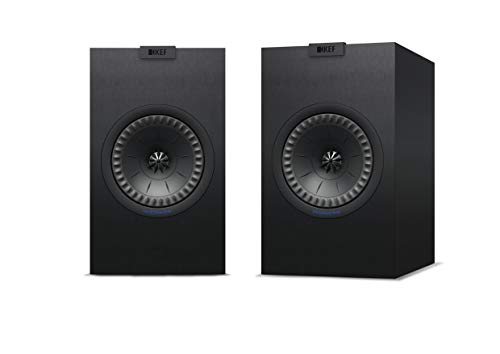
- Best for: listeners who want precise imaging and a focused soundstage in a small or medium room.
- Driver: 5.25-inch Uni-Q driver array with 1-inch vented aluminium dome tweeter
- Frequency response: 51 Hz to 28 kHz
- Sensitivity: 86 dB
- Amplifier requirements: 10 to 100 watts

- Best for: listeners who want one pair for both stereo music and a receiver-based home theatre.
- Tweeter: 1-inch Terylene tweeter
- Woofer: 6.5-inch woofer
- Power Port technology for smooth bass airflow
- Hi-Res Audio Certified

- Best for: listeners who want lively, dynamic sound from a modest amplifier in a medium room.
- Tweeter: 1-inch titanium LTS tweeter on a 90 x 90-degree Hybrid Tractrix horn
- Woofer: 5.25-inch Cerametallic woofer
- Frequency response: 50 Hz to 25 kHz
- Sensitivity: 92 dB
All 3 Picks at a Glance
| Product | Specs | Action |
|---|---|---|
| KEF Q150 Bookshelf Speakers |
| Check price on Amazon |
| Polk Audio Signature Elite ES20 Bookshelf Speakers |
| Check price on Amazon |
| Klipsch Reference Premiere RP-500M II Bookshelf Speakers |
| Check price on Amazon |
Key takeaways
- The best amp speakers are passive speakers built to pair with a stereo amplifier. Compare three bookshelf pairs for clear, room-filling home listening.
Buying speakers for an amplifier differs from buying speakers with one built in. This guide reads “best amp speakers” in one specific way: passive home speakers designed to be driven by a separate stereo amplifier or receiver, connected with ordinary speaker cable. They contain no amplifier of their own, no power cord, and no wireless streaming. That matters, because a powered speaker would duplicate the amplifier you already own, while a guitar cabinet speaker is voiced for an instrument and sounds wrong on recorded music.
This guide is for listeners who already own a stereo amplifier or are building an amplifier-and-speakers system, for vinyl and CD listeners who want a stereo pair, and for anyone replacing a soundbar with separates. The three picks below are passive bookshelf speakers chosen from their Amazon titles and specifications: the KEF Q150 for precise imaging, the Polk Audio Signature Elite ES20 for home theatre as well as music, and the Klipsch Reference Premiere RP-500M II for lively dynamics.
Quick Picks
As an Amazon Associate we earn from qualifying purchases
| Product | Best for | Key spec from title |
|---|---|---|
| KEF Q150 Bookshelf Speakers | Precise imaging in a small or medium room | 5.25-inch Uni-Q driver array, 2-way design |
| Polk Audio Signature Elite ES20 Bookshelf Speakers | Music and home theatre from one pair | 1-inch tweeter and 6.5-inch woofer with Power Port |
| Klipsch Reference Premiere RP-500M II Bookshelf Speakers | Lively dynamics from a compact cabinet | 1-inch titanium tweeter on a Tractrix horn |
How to Choose
Sensitivity and amplifier power
Sensitivity decides how loud a speaker plays from a given amount of amplifier power, so it is the first figure to check when matching speakers to an amplifier. A speaker rated at 92 dB needs far less power to reach the same volume as one rated at 86 dB, which means a modest amplifier can drive the efficient speaker cleanly while it strains with the less sensitive one. Check the amplifier power range the speaker maker recommends, and make sure your amplifier sits comfortably inside it rather than at either edge. A speaker that asks for more power than the amplifier can deliver will sound compressed and harsh at volume, while an amplifier with generous headroom keeps loud passages clean.
Impedance and amplifier load
Impedance describes the electrical load a speaker presents to the amplifier, and an easy load keeps the amplifier running cool and in control. Most stereo amplifiers are happiest with 8-ohm speakers, and all three picks here are 8-ohm designs or compatible with 8-ohm amplifier outputs. Some speakers dip well below their nominal impedance at certain frequencies, which asks more of the amplifier, so a speaker with a low minimum impedance needs an amplifier with a solid power supply. Check that the amplifier is rated for the speaker impedance, keep speaker cables short and of adequate thickness, and avoid running two pairs of low-impedance speakers from one set of terminals at once.
Woofer size and room size
The woofer sets how much bass a speaker produces and how large a room it can fill, so match the cabinet to the space before anything else. A 5.25-inch woofer in a compact cabinet suits a small or medium room and a desk or shelf setup, where it keeps the bass tight and the image focused. A 6.5-inch woofer moves more air and reaches lower, which suits a larger living room and listeners who want fuller bass without a separate subwoofer. A bigger woofer in a small room can sound boomy if the speakers sit close to a wall, so plan placement as carefully as the purchase itself.
Placement and rear ports
Two of the speakers in this guide use rear-firing ports, and a rear port needs breathing room behind the cabinet to work properly. Placing a rear-ported speaker flush against the wall chokes the port and muddies the bass, so leave a gap of several inches and listen for the point where the low end tightens up. Put the pair on solid stands with the tweeters near ear height, angle them slightly toward the listening seat, and keep them away from corners if the bass turns heavy. A small change in placement often improves the sound more than a change in equipment.
The 3 Best Options
KEF Q150 Bookshelf Speakers
- Best for: listeners who want precise imaging and a focused soundstage in a small or medium room.
- Driver: 5.25-inch Uni-Q driver array with 1-inch vented aluminium dome tweeter
- Frequency response: 51 Hz to 28 kHz
- Sensitivity: 86 dB
- Amplifier requirements: 10 to 100 watts
listeners who want precise imaging and a focused soundstage in a small or medium room.
the 86 dB sensitivity asks more of your amplifier than the other two picks, so pair it with a stereo amplifier that has comfortable power in reserve.
The KEF Q150 is the most precise speaker in this guide, and its Uni-Q driver array is the reason. The tweeter sits inside the midrange driver, so the sound behaves like it comes from a single point, which gives a stable, focused image that holds together even when you move off centre. Its 5.25-inch driver keeps the cabinet compact enough for a shelf or a stand in a small or medium room, and the two-way bass-reflex design delivers clean bass without a separate subwoofer. For a listener who values a clear, believable soundstage above sheer volume, this is the most refined pick here.
Watch out for: the 86 dB sensitivity asks more of your amplifier than the other two picks, so pair it with a stereo amplifier that has comfortable power in reserve.
Polk Audio Signature Elite ES20 Bookshelf Speakers
- Best for: listeners who want one pair for both stereo music and a receiver-based home theatre.
- Tweeter: 1-inch Terylene tweeter
- Woofer: 6.5-inch woofer
- Power Port technology for smooth bass airflow
- Hi-Res Audio Certified
listeners who want one pair for both stereo music and a receiver-based home theatre.
the larger cabinet needs more shelf or stand space than the compact picks, so measure before buying.
The Polk Audio Signature Elite ES20 is the most versatile speaker in this guide, because it serves a home theatre as well as it serves a stereo music system. Its 6.5-inch woofer reaches lower than the other two picks, and the Power Port design smooths the airflow from the vent so the bass stays clean at higher volumes. The Hi-Res Audio certification and compatibility with Dolby Atmos and DTS:X make it a natural fit for a receiver-based system that plays films in the evening and music during the day. For a listener who wants one pair to cover every kind of listening, the ES20 covers the most ground.
Watch out for: the larger cabinet needs more shelf or stand space than the compact picks, so measure before buying.
Klipsch Reference Premiere RP-500M II Bookshelf Speakers
- Best for: listeners who want lively, dynamic sound from a modest amplifier in a medium room.
- Tweeter: 1-inch titanium LTS tweeter on a 90 x 90-degree Hybrid Tractrix horn
- Woofer: 5.25-inch Cerametallic woofer
- Frequency response: 50 Hz to 25 kHz
- Sensitivity: 92 dB
listeners who want lively, dynamic sound from a modest amplifier in a medium room.
the horn tweeter is forward and revealing, so bright recordings or a very reflective room can sound sharp at high volume.
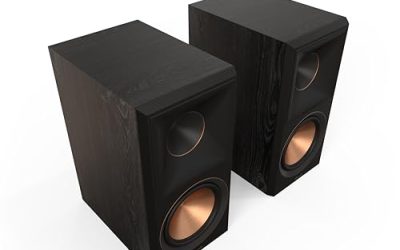
The Klipsch Reference Premiere RP-500M II is the liveliest speaker in this guide, and its horn-loaded tweeter is the reason. The 90-degree by 90-degree Hybrid Tractrix horn controls dispersion so that voices and instruments arrive with energy and clarity, and the 5.25-inch Cerametallic woofer stays controlled through fast, complex passages. Klipsch quotes 92 dB sensitivity, an in-room figure, so a modest amplifier can drive this pair to satisfying volume without strain. The rear-firing Tractrix port adds low-end weight to a cabinet that stays compact enough for a stand or a shelf.
Watch out for: the horn tweeter is forward and revealing, so bright recordings or a very reflective room can sound sharp at high volume.
Which One Fits Your Situation
Small room or desk setup
The KEF Q150 fits a small room best, because its compact cabinet and single-point Uni-Q driver keep the image focused at close range. Place the pair on solid stands at ear height, keep them a short distance from the rear wall, and you will get a coherent stereo picture without needing a large amplifier or a large cabinet.
Listener with a modest amplifier
The Klipsch RP-500M II suits a modest amplifier best, because its horn-loaded design and quoted 92 dB sensitivity let it play loud on less power. A small integrated amplifier that would strain with a less sensitive speaker drives this pair cleanly, which makes it the easiest match for an amplifier bought years ago or a compact unit on a desk.
Music and films from one system
The Polk Audio Signature Elite ES20 fits a shared music and film system best, because its 6.5-inch woofer and Power Port give it the deepest bass here, and its compatibility with Dolby Atmos and DTS:X suits a receiver-based home theatre. One pair covers evening films and daytime music without a separate set of speakers for each job.
First amplifier-and-speakers system
The KEF Q150 is the safest first step for a newcomer building a first amplifier-and-speakers system, because its even balance forgives room placement, amplifier choice, and older recordings. Its clear imaging shows what a proper stereo pair can do, and it leaves attention for the amplifier and stands that complete the setup.
Common Mistakes
- Buying powered speakers when you already own an amplifier, which pays for a second amplifier you do not need.
- Choosing a guitar cabinet speaker for recorded music, when its voicing is shaped for an instrument and sounds wrong on a stereo.
- Pairing a low-sensitivity speaker with a weak amplifier, so loud passages distort instead of opening up.
- Pushing a rear-ported speaker flush against the wall, which muddies the bass and collapses the soundstage.
- Judging a speaker on one familiar recording instead of several, including a quiet acoustic track and a loud, full-range one.
Frequently Asked Questions
Do amp speakers need a separate amplifier?
Yes, the speakers here are passive, which means they contain no amplifier of their own and need a stereo amplifier or receiver. Each speaker connects with speaker cable to the amplifier speaker terminals, and all three picks are 8-ohm designs that suit most stereo amplifiers. Choose an amplifier with enough power for your room, and check that it has the inputs you need for a turntable, streamer, or CD player.
Can I use these speakers with a home theatre receiver?
Yes, all three speakers work with a home theatre receiver as well as a stereo amplifier. The Polk ES20 is the best fit for a receiver system, since it is compatible with Dolby Atmos and DTS:X and its 6.5-inch woofer gives films a fuller low end. The KEF and Klipsch picks work as left and right speakers in a surround setup, while the receiver handles bass management.
What amplifier power do I need for these speakers?
It depends on the speaker. The KEF Q150 asks for 10 to 100 watts, the Klipsch RP-500M II handles 75 watts continuous and 300 watts peak, and the Polk ES20 takes amplifiers up to 150 watts. Sensitivity matters as much as wattage: the Klipsch plays louder than the KEF, so a modest amplifier suits the Klipsch, while the KEF benefits from more headroom.
Are floorstanding speakers better than bookshelf speakers for an amplifier?
Floorstanding speakers play deeper and louder, but a good bookshelf speaker on stands can image more precisely in a smaller room. For a stereo amplifier in a small or medium room, a bookshelf pair with a 5.25-inch or 6.5-inch woofer covers music well, and it leaves the option of adding a subwoofer later. Choose floorstanders when the room is large and you want the deepest bass without extra boxes.
More from Amazon
Programs that pair well with the guide above. Offers and eligibility are set by Amazon and may change.
Free shipping on eligible items, Prime Video and more. Eligible new members can start with a free trial.
Start a Prime free trialAudiobooks and podcasts to listen to on the go. Eligible new members can start with a free trial.
Try Audible freeAd-free music streaming. Eligible new subscribers can start with a free trial.
Try Music Unlimited freeA free business account with business pricing and bulk-buying tools for work, shop or home office.
Create a business accountAs an Amazon Associate we earn from qualifying purchases.
Write Your Review
No reviews yet. Be the first to share your experience!