

Key takeaways
- Your first audio interface will probably outlast your first three microphones. That is the real decision behind "best audio interfaces for.
Your first audio interface will probably outlast your first three microphones. That is the real decision behind “best audio interfaces for beginners”: picking a box that handles one input today, leaves room for a second tomorrow, and does not demand a degree in routing to get a clean recording. The built-in sound card in a laptop was never designed for XLR microphones or guitar cables, so a small USB interface becomes the bridge between the instrument and the recording software.
This guide is for new singers, guitarists, podcasters, and streamers who want a simple path from “plugged in” to “recording”. It compares eight options from the listed specs, ranging from single-input boxes to two-input models and one bundle that includes a microphone. A tabletop mixer in the product feed was set aside since it is a different tool. Everything below is judged from the product titles only, so the listing should be checked for operating system support and included software.
Quick Picks
Our top picks





As an Amazon Associate we earn from qualifying purchases at no extra cost to you.
| Product | Best for | Key spec from the title |
|---|---|---|
| Focusrite Scarlett Solo 3rd Gen | One mic or one guitar on a tight budget | 1 XLR preamp, 1 Hi-Z input, 24-bit/192kHz, 56dB gain range |
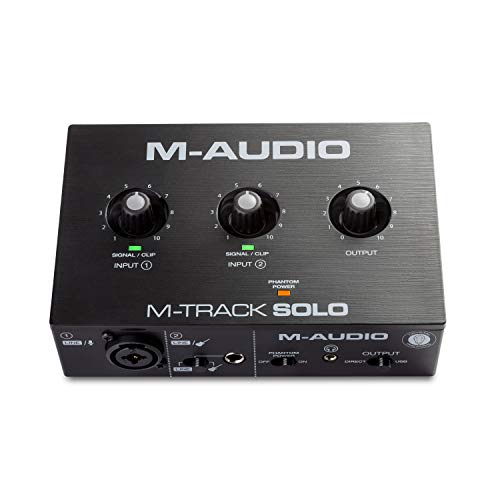
| M-Audio M-Track Solo | Simple setup with included software | XLR, line, and DI inputs |
| Focusrite Scarlett Solo 4th Gen | Newer single-input design | 1 XLR preamp, 1 Hi-Z, 120dB dynamic range, Air Modes |
| Focusrite Scarlett 2i2 4th Gen | Vocal plus guitar, or two guests | 2 mic preamps, 2 Hi-Z inputs, Auto Gain, Clip Safe |
| Focusrite Scarlett Solo Studio 4th Gen | Complete starter bundle | Includes a CM25 MkIII microphone |
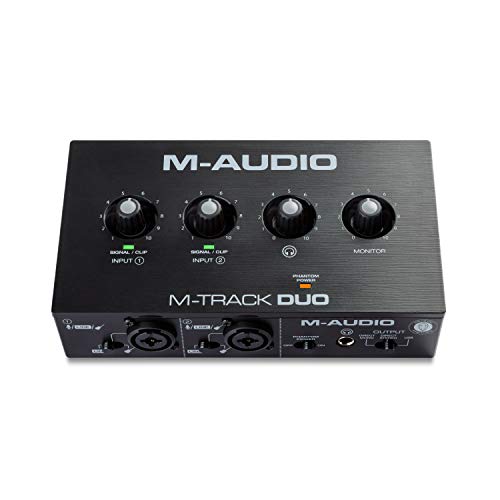
| M-Audio M-Track Duo | Two inputs without a big spend | Dual XLR, line, and DI inputs |
| MAONO E2 Gen2 Bundle | Podcasters who want loopback and Bluetooth | Dual XLR input, loopback, Bluetooth |
| Kmise USB Audio Interface | Guitarists on a very tight budget | 48V phantom power, studio-quality sound claim |
How to Choose
Match the number of inputs to the real plan
A single-input interface is enough for a solo singer, a guitarist who records one instrument at a time, or a podcast host. The moment a second voice, a guitar plus a vocal, or a stereo keyboard enters the picture, a two-input box saves the headache of swapping cables. Titles that read “1 XLR Mic Preamp, 1 Hi-Z Instrument Input” mean one microphone or one guitar-level source per pass; “2 Mic Preamps, 2 Hi-Z” means two simultaneous sources.
Know what XLR, Hi-Z, and phantom power do
XLR inputs take professional microphones. Hi-Z or DI inputs are meant for guitars and basses plugged in directly with an instrument cable. Condenser microphones require 48V phantom power, a feature named in the Kmise title and common on the others. Dynamic microphones do not need it. Check the listing before buying a condenser mic to confirm phantom power is available and that it can be switched on without a manual workaround.
Check sample rate, dynamic range, and gain
Titles often list 24-bit/192kHz. For a beginner, 24-bit recording at a common sample rate is plenty, so higher numbers are not a reason to pay more. Dynamic range figures such as the 120dB in the fourth-generation Focusrite models describe noise performance on paper. Gain range matters in practice: quiet dynamic microphones need more gain than a hot condenser. The 56dB figure on the Solo 3rd Gen gives a concrete number to compare.
Look at convenience features and what comes in the box
Auto Gain and Clip Safe, named in the 2i2 4th Gen title, are designed to help set levels and avoid distortion, which is useful for a first session. Air modes alter the tone of the preamp. Bundles add a microphone, which cuts down the shopping list but may mean a basic microphone paired with a better interface. Verify the connection type on the listing, since USB-C is common but cables and adapters vary.
One more point worth weighing is monitoring. A headphone output with its own volume knob lets a beginner hear the performance without delay from the computer, and a direct-monitor switch, where present, routes the input straight to the headphones. Neither is guaranteed by a title, so look for them in the feature list before committing, and budget for a pair of closed-back headphones and a sturdy XLR cable alongside the interface.
The 8 Best Options
Focusrite Scarlett Solo 3rd Gen
The Solo 3rd Gen pairs one XLR microphone preamp with one Hi-Z instrument input, 24-bit/192kHz conversion, and a 56dB gain range. It suits a singer or guitarist who records one source at a time and wants a well-known name with a USB-C connection. The Air Mode feature in the title is intended to brighten vocals and acoustic instruments.
- Strength: Both a microphone preamp and an instrument input fit in a small box.
- Strength: The title lists a concrete 56dB gain range, easy to compare.
- Trade-off: Only one input is usable at once, so duets need a bigger model.
Skip it if the plan includes two microphones or a vocal plus guitar recorded together.
M-Audio M-Track Solo
This interface provides XLR, line, and DI inputs and ships with a professional software suite for recording, streaming, and podcasting. It is a straightforward starter for anyone who wants to plug in a microphone or guitar and start capturing audio. The included software suite can save the cost of buying a recording program separately.
- Strength: Three input types cover microphone, line source, and direct guitar.
- Strength: Software suite means a ready-to-use recording environment.
- Trade-off: The title offers no gain range or dynamic range figure to compare.
Skip it if a second simultaneous input is needed from day one.
Focusrite Scarlett Solo 4th Gen
The newer Solo keeps the single XLR preamp and Hi-Z instrument input, still at 24-bit/192kHz, and lists a 120dB dynamic range along with Air Modes in the plural. It is aimed at buyers who want the current generation of a popular beginner design for vocals, guitar, or streaming.
- Strength: A listed 120dB dynamic range points to a quiet design on paper.
- Strength: Air Modes plural suggests more than one tonal option.
- Trade-off: Still a one-input interface, so growth requires a replacement.
Skip it if a two-person podcast or band tracking is on the horizon.
Focusrite Scarlett 2i2 4th Gen
Two mic preamps, two Hi-Z instrument inputs, Auto Gain, Clip Safe, Air Modes, and 24-bit/192kHz make this the most flexible option on the list. It suits a vocalist who also plays guitar, a two-host podcast, or a songwriter who wants room to grow without another purchase.
- Strength: Two preamps allow simultaneous recording of two sources.
- Strength: Auto Gain and Clip Safe are designed to help new users set levels.
- Trade-off: It occupies more desk space and typically costs more than a solo box.
Skip it if only one microphone will ever be connected.
Focusrite Scarlett Solo Studio 4th Gen Bundle
This package combines the Solo 4th Gen interface with a CM25 MkIII microphone and other accessories listed on the page. It targets complete beginners who have no microphone, no cable, and no idea where to start. One purchase gets the main pieces together, so the gear arrives as a matching kit.
- Strength: A microphone is included, so the first recording can happen right away.
- Strength: The interface itself carries the 120dB dynamic range and Air Modes from the Solo 4th Gen.
- Trade-off: Bundled microphones are rarely the part that buyers keep when they upgrade.
Skip it if a favorite microphone is already on hand, since the interface alone costs less.
M-Audio M-Track Duo
The Duo offers dual XLR, line, and DI inputs along with the same professional software suite as the Solo. It is aimed at beginners who expect to record two sources at once but do not need premium preamps. Podcast co-hosts or a guitar and a microphone are natural uses.
- Strength: Two inputs open up duets, interviews, and layered ideas.
- Strength: Software suite included for recording, streaming, and podcasting.
- Trade-off: The listing does not show gain range or dynamic range to compare against rivals.
Skip it if a single microphone is the only goal.
MAONO E2 Gen2 Podcast Equipment Bundle
Described as an audio interface and mixer bundle, it lists dual XLR inputs, loopback, Bluetooth, and streaming and recording uses for podcast studios and creators. It is meant for people who want a podcast-focused kit with phone or caller audio features.
- Strength: Loopback and Bluetooth support streaming and call-in style shows.
- Strength: Dual XLR inputs handle two voices.
- Trade-off: Podcast orientation means it is less obviously tuned for guitar tracking.
Skip it if guitars and keyboards are the main sources.
Kmise USB Audio Interface
A computer recording interface with 48V phantom power and a note that it works for guitarists. It is positioned for beginners on a tight budget who want a condenser-ready input. Details beyond the title should be confirmed on the listing.
- Strength: Phantom power opens the door to condenser microphones.
- Strength: Guitar compatibility is called out directly.
- Trade-off: Less brand support and documentation than the established names in this guide.
Skip it if a long software suite or polished support ecosystem matters.
Which One Fits Your Situation
You sing and play acoustic guitar, but never at the same time
The Focusrite Scarlett Solo 4th Gen covers either source with one XLR and one Hi-Z input, and its Air Modes are meant to flatter vocals.
You want to record vocals and guitar together
The Focusrite Scarlett 2i2 4th Gen offers two preamps and two Hi-Z inputs, so no cable swapping is needed.
You are starting from zero gear
The Scarlett Solo Studio 4th Gen bundle includes a CM25 MkIII microphone, which shortens the shopping list.
You host a two-person podcast on a limited budget
The M-Audio M-Track Duo or the MAONO E2 Gen2 bundle gives two XLR inputs, with the MAONO adding loopback and Bluetooth for remote guests.
Common Mistakes
- Choosing by sample rate alone; 192kHz on a title does not make a beginner recording sound better.
- Forgetting that condenser microphones need phantom power.
- Buying a single-input box and then needing two inputs within a month.
- Ignoring operating system and port details, such as USB-C versus older connectors.
- Monitoring through laptop speakers instead of closed-back headphones, which hides noise and clipping.
Related guides
- Bluetooth Turntables For Vinyl Beginners
- Condenser Microphones For Home Studios
- Audio Interfaces For Home Studios
Frequently Asked Questions
Do beginners need an audio interface at all?
For USB microphones, no. For XLR microphones or guitars, yes, because the computer needs a way to convert and power those signals. An interface also usually gives lower latency while monitoring.
Is a bundle better than buying separately?
Bundles are convenient and sometimes cost less than the parts, but the included microphone is often entry-level. Buyers who already own a microphone should buy the interface alone.
What does Hi-Z mean?
Hi-Z is a high-impedance input designed for electric guitars and basses connected directly with an instrument cable. It helps preserve the instrument tone before it reaches the recording software.
Will an interface work in 2026 on new computers?
Most USB-C interfaces work with current Mac and Windows systems, but driver and software support differs. Read the compatibility notes on the listing and the maker’s page before purchasing.
More from Amazon
Programs that pair well with the guide above. Offers and eligibility are set by Amazon and may change.
Free shipping on eligible items, Prime Video and more. Eligible new members can start with a free trial.
Start a Prime free trialAudiobooks and podcasts to listen to on the go. Eligible new members can start with a free trial.
Try Audible freeAd-free music streaming. Eligible new subscribers can start with a free trial.
Try Music Unlimited freeA free business account with business pricing and bulk-buying tools for work, shop or home office.
Create a business accountAs an Amazon Associate we earn from qualifying purchases.

Write Your Review
No reviews yet. Be the first to share your experience!