

Key takeaways
- Find the best sealed bookshelf speakers for nearfield listening, with tight bass, clear mids, and desk-friendly placement for small rooms and desktop setups.
Nearfield listening changes what matters in a bookshelf speaker. At a desk, the speakers sit only a few feet from your ears, so a boomy low end or a smeared stereo image is easy to hear and hard to ignore. A sealed cabinet helps because it rolls off bass gradually instead of boosting it around a port tuning frequency, keeping vocals and acoustic instruments natural close to a wall or on a crowded desk. The real decision is choosing a cabinet, driver size, and amplifier match that stay controlled at short range.
This guide is for desktop listeners, small-room music lovers, and home-studio users who sit close to their speakers and want a tidy, predictable setup. It also suits buyers who plan to add a subwoofer later. The four products below were chosen from their names and listed specifications on Amazon: the compact NHT SuperZero 2.1, the larger NHT SuperOne 2.1, the Dayton Audio Classic B65 pair, and the KLH Model Three.
Quick Picks
As an Amazon Associate we earn from qualifying purchases.
| Product | Best for | Key spec from title |
|---|---|---|
| NHT SuperZero 2.1 Premium Home Theater Bookshelf Speaker | The smallest desk where space is tight | Sealed Box Mini-Monitor, Single Unit |
| NHT SuperOne 2.1 Premium Home Theater Bookshelf Speaker | A fuller nearfield sound without a subwoofer | Sealed Box Mini-Monitor, Single Unit |
| Dayton Audio Classic B65 Bookshelf Speaker Pair | A complete stereo pair for a first desktop system | 6.5-inch Woofer and 1-inch Tweeter, Pair |
| KLH Model Three 2-Way 8-Inch Acoustic Suspension Bookshelf Speaker | A large, room-filling sealed speaker for a bigger desk or shelf | 8-inch Acoustic Suspension Bookshelf Speaker |
How to Choose
Sealed cabinet and bass behaviour
A sealed, or acoustic-suspension, cabinet has no port, so air trapped inside the box acts as a spring behind the woofer. That usually gives a gentler bass roll-off than a ported speaker, which means less boom when the cabinet sits near a wall, in a bookshelf cubby, or on a desk against a hard surface. The trade-off is real: a sealed speaker of the same size generally reaches less deep than a ported one, so a small sealed monitor may need a subwoofer for film effects or bass-heavy music. Check the listing for the words sealed, sealed box, or acoustic suspension, and look for a cabinet with no visible round or slot opening.
Driver size and listening distance
Driver size sets how much air a speaker can move and how large it will feel on a desk. A 4-inch or 4.5-inch woofer, as in the smallest pick here, suits a listening distance of about two to four feet and keeps the cabinet narrow enough to flank a monitor. A 5.25-inch or 6.5-inch woofer adds body to voices, guitars, and piano, and it works well when you sit a little farther back or use the speakers in a small room as well as at a desk. An 8-inch woofer moves more air still, but it needs a wider shelf or stand and a stronger amplifier, so match the woofer to your distance first.
Sensitivity, impedance, and amplifier power
Sensitivity and impedance decide how much amplifier power you need, and nearfield listening does not remove that question. A speaker rated around 86 dB needs more power to reach the same volume as one rated around 90 dB, so a low-sensitivity sealed speaker pairs best with an amplifier that can deliver clean power without straining. An 8-ohm speaker is an easier load for most stereo amplifiers and receivers, while a 4-ohm speaker asks more of the amplifier and needs one rated for that load. Use the power handling figure as a guide to the amplifier range, and confirm your amplifier is comfortable with the listed impedance before you buy.
Desk placement, stands, and the wall behind
Placement shapes a nearfield system as much as the speaker itself. Sealed speakers tolerate a wall behind them better than rear-ported models, yet they still sound best with a little breathing room and with the tweeters aimed at ear height. On a desk, that often means raising the cabinets on small stands or isolation pads so the tweeters point at your ears rather than at your chest, and angling each speaker slightly inward toward your chair. Keep the two speakers and your head in a rough triangle, with equal distance from each speaker to your seat, and measure depth and width before ordering.
The 4 Best Options
NHT SuperZero 2.1 Premium Home Theater Bookshelf Speaker

The SuperZero 2.1 is the pick for a listener who wants a genuinely small sealed monitor and is happy to let a subwoofer handle the lowest notes later. Its narrow cabinet fits beside a computer monitor, on a crowded shelf, or on a small stand without crowding the workspace, and its sealed design keeps the midrange clean when the speaker sits close to a wall. It suits acoustic music, vocals, podcasts, and editing work, where clarity matters more than deep bass. Because it is sold as a single unit, remember to order two for a stereo pair, and plan on a capable amplifier.
Specs
- Sealed, acoustic suspension design
- 4.5-inch long-throw pulp cone woofer
- 1-inch silk dome tweeter
- Built-in 12dB/octave crossover
- Cabinet size: 9 inches high x 5.5 inches wide x 5 inches deep
- Single unit, gloss black
Best for: A very small desk or shelf where a compact sealed monitor and clear midrange matter most.
Watch out for: It is sold as a single unit, so order two for stereo, and its small woofer gives limited deep bass, so plan on a subwoofer if you want full low-end weight.
NHT SuperOne 2.1 Premium Home Theater Bookshelf Speaker

The SuperOne 2.1 steps up from its smaller sibling with a larger woofer and a broader sound, making it a better fit when you want a sealed nearfield speaker that can also fill a small room. Voices gain weight, piano and guitar sound fuller, and the speaker holds together at higher volumes than a mini-monitor. It still uses a sealed enclosure, so placement against a wall or inside a shelf stays more forgiving than with a rear-ported design. It is a sensible choice for a listener who wants one pair to serve both a desk and a small listening room, without adding a subwoofer straight away.
Specs
- Sealed enclosure
- 6.5-inch long-throw pulp cone woofer
- 1-inch silk dome tweeter
- Frequency response: 56 Hz to 20 kHz
- Power handling: 125 W
- Sensitivity: 86 dB
- Nominal impedance: 8 ohms
- Single unit, gloss black
Best for: A listener who wants a fuller sealed nearfield sound from a single pair, for desk use and small-room listening.
Watch out for: It is sold as a single unit, so order two for stereo, and its 86 dB sensitivity means it needs an amplifier with enough clean power to reach comfortable listening levels.
Dayton Audio Classic B65 Bookshelf Speaker Pair

The Dayton Audio Classic B65 is the straightforward choice for a first desktop stereo system, because it arrives as a pair and pairs a 6.5-inch woofer with a 1-inch tweeter in a sealed cabinet. That combination gives voices and instruments a solid foundation at nearfield distance, while the sealed acoustic-suspension design keeps bass controlled on a desk or shelf. It suits music, television sound, and everyday listening in a small room, and its wood finish fits a home setup without drawing attention to itself. As a passive pair, it needs a separate amplifier or receiver, so factor that into the system before you buy.
Specs
- Acoustic suspension sealed cabinet
- 6.5-inch woofer
- 1-inch silk dome tweeter
- Passive 2-way design
- 60 W RMS power handling
- Sold as a pair
- Wood finish
Best for: A first desktop or small-room stereo system where a complete sealed pair and a 6.5-inch woofer are the priority.
Watch out for: It is a passive pair, so you need a separate amplifier or receiver, and its cabinet is larger than a mini-monitor, so measure your desk or shelf depth before ordering.
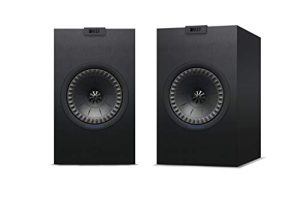
KLH Model Three 2-Way 8-Inch Acoustic Suspension Bookshelf Speaker

The KLH Model Three is the largest speaker in this guide, built around an 8-inch woofer in a sealed acoustic-suspension cabinet. That size gives it more low-end presence than the smaller sealed picks, which suits a listener with a wide desk, a deep shelf, or a pair of stands in a small to medium room. Its sealed design also helps when the cabinet must sit closer to a wall than a ported speaker would like. It is best approached as a serious two-channel speaker rather than a compact desktop accessory, so check the cabinet footprint and your amplifier before committing.
Specs
- Acoustic suspension sealed enclosure
- 8-inch woofer
- 2-way design
- Sold as a single unit
Best for: A larger desk, shelf, or stand setup where a bigger sealed speaker and stronger low-end presence are wanted.
Watch out for: It is sold as a single unit, so order two for stereo, and its 8-inch woofer means a wider and deeper cabinet, so confirm shelf space and amplifier power first.
Which One Fits Your Situation
Your desk is small and you sit very close
Choose the NHT SuperZero 2.1. Its narrow 5.5-inch-wide cabinet leaves room for a monitor and keyboard, and its sealed design keeps the sound clean when the speaker sits near a wall. Add a subwoofer later if you miss the lowest notes, rather than forcing a larger cabinet onto a desk that cannot hold it.
You want one pair for a desk and a small room
Choose the NHT SuperOne 2.1. Its 6.5-inch woofer and 56 Hz to 20 kHz frequency response give it more body than a mini-monitor, so it works at a desk and across a small room. Its sealed cabinet also makes shelf and wall-adjacent placement more forgiving than a rear-ported alternative, which helps when one pair must serve two spaces.
You are building a first desktop stereo system
Choose the Dayton Audio Classic B65 pair. It arrives as a complete pair with a 6.5-inch woofer and a 1-inch tweeter, so you do not need to order two single units. Pair it with a suitable amplifier or receiver, place the speakers in a triangle with your chair, and you have a simple sealed system for music and television sound.
You have space, stands, and a stronger amplifier
Choose the KLH Model Three. Its 8-inch woofer in a sealed acoustic-suspension cabinet suits a wide desk, a deep shelf, or stands in a small to medium room. It is the pick when low-end presence and a larger cabinet are welcome, rather than a problem to work around, and when you have the amplifier to drive it.
Common Mistakes
- Buying a ported speaker by accident: check the listing and the cabinet for a port, and look for the words sealed, sealed box, or acoustic suspension before you order.
- Ordering one single-unit speaker and expecting a pair: the NHT picks and the KLH Model Three are sold individually, so order two for stereo.
- Pairing a low-sensitivity sealed speaker with a weak amplifier: an 86 dB speaker needs clean power to sound its best, so match the amplifier to the listed sensitivity and impedance.
- Placing the tweeters below ear level: raise desktop speakers on stands or pads and angle them toward your ears, or the stereo image will sound low and unfocused.
- Expecting deep bass from a small sealed monitor: a compact sealed cabinet trades low-end extension for control, so add a subwoofer if you want full bass weight.
Frequently Asked Questions
Are sealed bookshelf speakers better for nearfield listening?
Sealed speakers often suit nearfield listening because their bass rolls off gradually and they are less sensitive to wall placement than rear-ported models. That helps when speakers sit on a desk or close to a wall. The trade-off is less deep bass from a small cabinet, so a subwoofer can help if you want the lowest notes.
Do sealed bookshelf speakers need a subwoofer?
Not always, but many small sealed speakers benefit from one. A 4.5-inch or 6.5-inch sealed woofer gives tight, controlled bass, yet it cannot move as much air as a larger driver or a ported cabinet. If you listen mainly to vocals and acoustic music, you may be happy without one; for film effects and bass-heavy music, a subwoofer fills the gap.
How far should sealed bookshelf speakers sit from a wall?
Sealed speakers can sit closer to a wall than rear-ported speakers, often with only a few inches of clearance, because there is no rear port to load against the wall. Still, leave a small gap where you can, keep the two speakers the same distance from the wall, and angle them toward your listening position for the clearest stereo image.
What amplifier do I need for passive sealed bookshelf speakers?
You need an amplifier or receiver that matches the speaker impedance and can deliver enough clean power for the listed sensitivity. An 8-ohm speaker is an easier load for most amplifiers, while a lower-sensitivity speaker needs more power to reach the same volume. Check the power handling, sensitivity, and impedance on the listing, then confirm your amplifier is rated for that load.
More from Amazon
Programs that pair well with the guide above. Offers and eligibility are set by Amazon and may change.
Free shipping on eligible items, Prime Video and more. Eligible new members can start with a free trial.
Start a Prime free trialAudiobooks and podcasts to listen to on the go. Eligible new members can start with a free trial.
Try Audible freeAd-free music streaming. Eligible new subscribers can start with a free trial.
Try Music Unlimited freeA free business account with business pricing and bulk-buying tools for work, shop or home office.
Create a business accountAs an Amazon Associate we earn from qualifying purchases.
Write Your Review
No reviews yet. Be the first to share your experience!