

Key takeaways
- Compare clarinet mouthpieces for Bb clarinet, from student resin models to Vandoren ebonite facings, with tip openings, reed matches, and fit tips.
- Top Pick: Yamaha 4C Clarinet Mouthpiece, Standard Series
- Runner-up: Yamaha YAC1267 Standard Series 5C Mouthpiece for Bb Clarinet
- Also consider: Vandoren CM301 5RV Bb Clarinet Mouthpiece
The mouthpiece is the part of a clarinet setup that players change most often, and for good reason. The instrument itself can stay the same for years, while a different tip opening, facing length, or beak shape changes how the reed responds, how much resistance you feel, and how easily each register speaks. Most clarinets ship with a basic stock mouthpiece that works for the first months of lessons but leaves little room to grow once practice becomes regular.
This guide compares five mouthpieces that cover the usual upgrade path for Bb clarinet: two Yamaha Standard Series resin models aimed at students, and three Vandoren ebonite models that advancing players use in band, orchestra, and chamber settings. Each pick lists its published tip opening, facing, beak style, and recommended reed strengths, so you can match a mouthpiece to the reeds you already play instead of guessing.
As an Amazon Associate, we earn from qualifying purchases.
Quick answer
If you want one safe recommendation, start with the Yamaha 4C for a first upgrade from a stock mouthpiece, or the Vandoren 5RV if you already play comfortably on medium reeds and want an ebonite step-up. Choose by tip opening first: closer facings pair with firmer reeds, while more open facings like the B45 pair with softer reeds and reward a developed embouchure.
Yamaha 4C Clarinet Mouthpiece, Standard Series
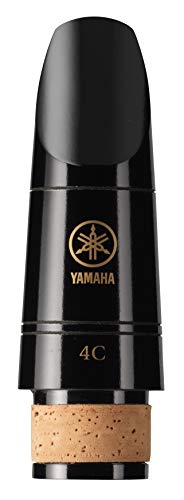
The 4C is Yamaha’s standard student mouthpiece, and it is the model fitted to many of the company’s student and intermediate clarinets. It is molded from phenol resin rather than hard rubber, which keeps it durable for school use and easy to clean. Yamaha bases the design on its Custom series mouthpieces, with a slightly shorter facing that helps newer players keep control of the reed.
The published tip opening is 1.05 mm with a 19 mm facing length, a middle-of-the-road combination that works with the softer reeds most beginners start on. Because the facing is consistent from piece to piece, teachers often treat it as a known quantity for first and second year players. If your current setup is an unmarked stock mouthpiece that came in the case, the 4C is the simplest like-for-like upgrade.
Specs
- Instrument: Bb clarinet
- Material: Phenol resin
- Model: YAC 1266
- Tip opening: 1.05 mm
- Facing length: 19 mm
- Series: Yamaha Standard Series
- Design: Based on Yamaha Custom series, with a shorter facing
Yamaha YAC1267 Standard Series 5C Mouthpiece for Bb Clarinet

The 5C sits one step up in the same Standard Series line. Like the 4C, it is made from phenol resin, and its design is based on Yamaha’s top grade Custom mouthpieces, so the look and feel stay familiar if you are moving within the Yamaha family. Players generally look at the 5C when the 4C starts to feel limiting and they want a second option from the same line with a different response.
Yamaha does not headline the same figures for this model in every listing, so confirm the exact tip opening and facing length on the listing before ordering, and compare them against the 4C figures above. Either Yamaha model suits school band use and home practice, and either works well as a dependable spare that lives in the case next to the instrument.
Specs
- Instrument: Bb clarinet
- Material: Phenol resin
- Model: YAC1267
- Series: Yamaha Standard Series
- Design: Based on Yamaha Custom series mouthpieces
- Tip opening and facing length: confirm on the listing
Vandoren CM301 5RV Bb Clarinet Mouthpiece

The 5RV is Vandoren’s long-running reference mouthpiece for Bb clarinet, made from ebonite with a traditional beak. Its tip opening of 106.5 in hundredths of a millimeter and its medium-short facing put it on the closer, more controlled side of the Vandoren range, and Vandoren recommends its Traditional reeds in strengths 3 to 4 for this facing.
That combination suits advancing students moving from a resin student mouthpiece to their first ebonite piece, and it is a common choice for concert band and lesson use. The closer tip asks for a firmer reed than many beginners use, so treat a reed change as part of the upgrade rather than reusing very soft reeds that were matched to a stock mouthpiece.
Specs
- Instrument: Bb clarinet
- Material: Ebonite
- Model: CM301
- Tip opening: 106.5 (1/100 mm)
- Facing length: Medium-short
- Beak: Traditional
- Recommended reeds: Vandoren Traditional, strength 3 to 4
Vandoren CM308 B45 Traditional Bb Clarinet Mouthpiece

The B45 is the most open mouthpiece in this group, with a tip opening of 119.5 and a medium-long facing on a traditional beak. Vandoren describes it as a universal mouthpiece appreciated by most clarinetists, and it shows up across classical, band, and lighter jazz playing because the wider opening leaves more room to shape the sound from note to note.
The trade-off is reed matching: Vandoren recommends softer reeds, strengths 2.5 to 3.5 in its Traditional cut, and players coming from a close student facing may need a short adjustment period before articulation feels settled. At 0.8 ounces it is light in the hand, and the ebonite body is the hard rubber used across the Vandoren traditional range. Confirm whether a ligature and cap are included before ordering, since this model is often sold on its own.
Specs
- Instrument: Bb clarinet
- Material: Ebonite
- Model: CM308
- Tip opening: 119.5 (1/100 mm)
- Facing length: Medium-long
- Beak: Traditional
- Recommended reeds: Vandoren Traditional, strength 2.5 to 3.5
- Weight: 0.8 ounces
Vandoren CM4158 M13 Lyre 13 Series Profile 88 Bb Clarinet Mouthpiece

The M13 Lyre is the close-facing specialist of the group. Its tip opening is 102 with a medium-long facing, and it belongs to Vandoren’s 13 Series, which is pitched for A=440 playing. The Profile 88 beak changes the exterior angle compared with a traditional beak, which some players find more comfortable in the mouth; the facing itself is designed for a focused, centered response.
Vandoren recommends firm reeds for this mouthpiece, strengths 3.5 to 5, which makes it a better fit for experienced players with a settled embouchure than for beginners. It is a popular direction for orchestral and chamber players who want a darker, more contained setup, and it is slightly more open than the standard M13 while keeping the same general character.
Specs
- Instrument: Bb clarinet
- Material: Ebonite
- Model: CM4158
- Tip opening: 102 (1/100 mm)
- Facing length: Medium-long
- Beak: Profile 88
- Series: 13 Series, pitched at A=440
- Recommended reeds: Vandoren, strength 3.5 to 5
- Weight: 0.8 ounces
How to choose
Start with tip opening and reed strength as a pair, because the two work together. A closer tip opening, like the M13 Lyre at 102 or the 5RV at 106.5, generally pairs with a firmer reed and gives a more contained, controlled feel. A more open tip, like the B45 at 119.5, pairs with a softer reed and leaves more room to bend and shape the sound, at the cost of demanding more from the embouchure. If you change the mouthpiece without reconsidering the reed, the new setup can feel worse than the old one for reasons that have nothing to do with quality.
Next, look at facing length. Shorter facings tend to respond quickly and suit players who articulate a lot, while longer facings smooth out the feel and can help sustained playing feel steadier. Beak shape is a comfort decision: traditional and Profile 88 versions of the same facing differ in the exterior angle where your teeth rest, not in the published facing numbers, so choose the angle that lets you hold the clarinet at a natural position.
Finally, check the practical details. The 13 Series models are pitched for A=440, which matches most school and community ensembles. Confirm whether the listing includes a ligature and cap, confirm the mouthpiece is the Bb version rather than an Eb, alto, or bass model, and if a teacher is guiding the upgrade, ask which facing they want you on before ordering, since many teachers have a preferred reference model.
Who should skip
Skip this upgrade round if you are in your first weeks of lessons. A stock mouthpiece, fresh reeds, and regular instruction will do more for your sound at that stage than any facing change. Also skip it if the real problem is the instrument: leaking pads, a warped reed, or a chipped stock mouthpiece tip can all feel like a mouthpiece problem, and a repair check costs less than guessing.
These five picks are all Bb clarinet mouthpieces, so Eb, alto, and bass clarinet players should look at the ranges made for their instruments instead. And if your main frustration is tone quality, remember that no mouthpiece corrects embouchure habits on its own; the picks here reward players who already practice consistently.
FAQ
What tip opening should a beginner choose?
A middle opening is the safest starting point. The Yamaha 4C, at 1.05 mm, is built for exactly that stage and pairs with the softer reeds beginners already use. Very open facings such as the B45 ask for more embouchure control, and very close facings such as the M13 Lyre expect firm reeds that most beginners are not playing yet.
Do I need a new ligature when I change mouthpieces?
Not always. Most standard ligatures for Bb clarinet fit the resin and ebonite bodies in this guide, but outside diameters vary slightly between models, so check the fit before a rehearsal rather than during one. If the listing shows the mouthpiece sold on its own, confirm cap and ligature inclusion on the listing and budget for them if they are missing.
What is the difference between Profile 88 and traditional beaks?
The difference is the exterior angle of the beak, the part your upper teeth rest on. Vandoren offers several facings in both shapes with the same published tip opening and facing length, so the choice is about playing position and comfort. Players who like a slightly different clarinet angle often prefer Profile 88; players used to the classic shape usually stay with traditional.
How long does a clarinet mouthpiece last?
A resin student mouthpiece can last through years of school use if it is stored with a cap and kept off hard surfaces. Ebonite mouthpieces also last for years, though the facing rails can wear or chip if the mouthpiece is dropped or stored loose in a case. Replace a mouthpiece when the tip or rails are visibly damaged, or when a teacher confirms the facing no longer plays evenly.
Final verdict
For most students, the Yamaha 4C is the right first upgrade: consistent, durable, and matched to beginner reeds. The Yamaha 5C is the natural second look inside the same line. Advancing players stepping into ebonite should start with the Vandoren 5RV for a controlled classical feel, choose the B45 if they want the most open and flexible option here, and consider the M13 Lyre if they play firm reeds in orchestral or chamber settings and prefer the Profile 88 beak. Match the reed to the facing, and any of the five will be a clear step up from a stock mouthpiece.
More from Amazon
Programs that pair well with the guide above. Offers and eligibility are set by Amazon and may change.
Free shipping on eligible items, Prime Video and more. Eligible new members can start with a free trial.
Start a Prime free trialAudiobooks and podcasts to listen to on the go. Eligible new members can start with a free trial.
Try Audible freeAd-free music streaming. Eligible new subscribers can start with a free trial.
Try Music Unlimited freeA free business account with business pricing and bulk-buying tools for work, shop or home office.
Create a business accountAs an Amazon Associate we earn from qualifying purchases.



Write Your Review
No reviews yet. Be the first to share your experience!