

Our Top Picks
 Ernie Ball Regular Slinky Nickel Wound Electric Guitar3-Pack4.5 x 1 x 6 inches0.2 poundsCheck on Amazon
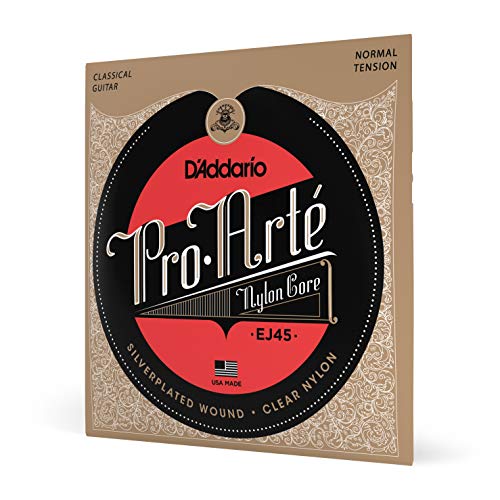 D'Addario Pro-Arte Nylon Classical Guitar StringsNormal Tension6 x 14 x 10 inches0 poundsCheck on Amazon
- Top Pick: Elixir Phosphor Bronze NANOWEB Light 12-53
- Runner-up: Elixir 80/20 Bronze NANOWEB Light 12-53
- Also consider: Martin MSP4100 SP Phosphor Bronze Light
The best guitar strings for most players are the Elixir Phosphor Bronze NANOWEB Light set. It delivers a rich, full-bodied acoustic tone, a smooth coated feel, and a much longer useful life than uncoated strings. If you want a brighter acoustic voice, the Elixir 80/20 Bronze NANOWEB set is the direct alternative. For a lower-cost uncoated set, the Martin MSP4100 covers the same light-gauge ground. Electric players should look at the Ernie Ball Regular Slinky three-pack, and classical players should start with the D’Addario EJ45 Pro-Arte nylon set.
As an Amazon Associate, we earn from qualifying purchases.
Table of Contents
- How to Choose Guitar Strings
- 1. Elixir Phosphor Bronze NANOWEB Light 12-53
- 2. Elixir 80/20 Bronze NANOWEB Light 12-53
- 3. Martin MSP4100 SP Phosphor Bronze Light
- 4. Ernie Ball Regular Slinky 3-Pack 10-46
- 5. D’Addario EJ45 Pro-Arte Nylon Normal Tension
- Frequently Asked Questions
- Conclusion
- Product and ASIN Reference
How to Choose Guitar Strings
Start with the guitar, not the brand. Steel-string acoustics take steel-core strings with bronze windings. Electric guitars take nickel or nickel-plated steel strings that respond to magnetic pickups. Classical guitars take nylon strings with a tie-end design. Fitting the wrong type is the most common buying mistake, and steel strings can damage a classical guitar, because they pull far harder than a nylon-string top is built to handle.
Material decides the tone. Phosphor bronze is the warm, balanced default for acoustic guitars, with full lows and clear highs. Eighty-twenty bronze, an alloy of copper and zinc, sounds brighter and crisper. Nickel-plated steel is the standard electric voice: bright, balanced, and responsive to bends. Nylon is the classical voice: soft, warm, and mellow, with far less finger pressure needed.
Gauge is the second decision. Light acoustic gauges, usually 12-53, are easier to fret and bend, and they suit fingerstyle players, beginners, and smaller-bodied guitars. Medium gauges, usually 13-56, give more volume but demand more hand strength. On electric guitars, 10-46 is the standard gauge that balances bendability with tuning stability.
Coating is the third decision. Coated strings carry an ultra-thin polymer layer that keeps sweat, dirt, and oils out of the windings, so they keep their tone for weeks instead of days. They cost more per set but often last two to three times longer, which makes them good value for players who practise daily. Uncoated strings sound slightly more open when new and cost less, but they lose their sparkle faster, especially in humid rooms. Tension matters on classical guitars: normal tension is the standard choice, hard tension gives more volume, and light tension is easier on the fingers. Before you buy, confirm the set fits a six-string guitar and check whether the listing is a single set or a multi-pack.
1. Elixir Phosphor Bronze NANOWEB Light 12-53
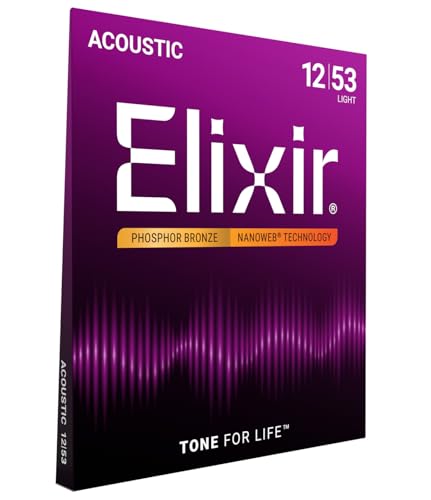
The Elixir Phosphor Bronze NANOWEB set is the best all-round acoustic guitar string in this roundup, and the set to buy first if you play a steel-string acoustic. Phosphor bronze gives a rich, full-bodied tone with sparkling high-end clarity, while the ultra-thin NANOWEB coating protects the whole string, including the gaps between the windings where dirt and sweat collect. The result is a set that keeps its tone far longer than uncoated strings and feels smooth under the fingers, with less squeak when you shift positions.
This is the premium pick. The light 12-53 gauge is the most popular acoustic gauge: easy to fret, comfortable for long sessions, and loud enough for most guitars. The plain steel strings carry an anti-rust plating, so the whole set ages evenly. The 16052 part number identifies the single light set rather than a multi-pack.
The phosphor bronze voice suits singer-songwriters and fingerstyle players: warm without being muddy, with chord voicings that stay clear when you strum hard. Players who find 80/20 bronze too bright will usually prefer this set. The main drawback is the price tier, but a set that lasts three times longer costs less per week of good tone.
Specs:
– Brand: Elixir
– Model: 16052, Phosphor Bronze with NANOWEB Coating, Light
– Gauge: .012, .016, .024, .032, .042, .053
– Material: Phosphor bronze wrap wire, coated
– Core: Steel with anti-rust plating on plain strings
– Strings per set: 6
– Total tension: 162 lbs
– Guitar type: Steel-string acoustic
– ASIN: B000A6ASSS
2. Elixir 80/20 Bronze NANOWEB Light 12-53

If the phosphor bronze set above sounds too warm for your guitar, the Elixir 80/20 Bronze NANOWEB set is the brighter alternative, and the second premium pick in this roundup. The 80/20 bronze wrap wire, an alloy of 80 percent copper and 20 percent zinc, produces a crisp, bright tone with an expressive, vibrant presence. On a dark-sounding dreadnought or a guitar with a heavy low end, this set lifts the trebles and adds clarity to strummed chords.
Everything else mirrors its phosphor bronze sibling: the same NANOWEB coating, the same light 12-53 gauge, and the same anti-rust plating on the plain steel strings. The coating gives a traditionally textured feel, closer to an uncoated string than the slicker POLYWEB coating. The 11052 part number identifies the single light set.
The choice between the two Elixir sets comes down to your guitar and your ear. Phosphor bronze is warmer and fuller; 80/20 bronze is brighter and more focused. A bright, small-bodied guitar often sounds better with phosphor bronze, while a warm, large-bodied guitar often sounds better with 80/20 bronze. The gauges are identical, so only the tone changes. This set also suits recording, since the bright tone cuts through a mix and the coating keeps it consistent across sessions.
Specs:
– Brand: Elixir
– Model: 11052, 80/20 Bronze with NANOWEB Coating, Light
– Gauge: .012, .016, .024, .032, .042, .053
– Material: 80/20 bronze wrap wire (80 percent copper, 20 percent zinc), coated
– Core: Steel with anti-rust plating on plain strings
– Strings per set: 6
– Guitar type: Steel-string acoustic
– ASIN: B0002E1O2C
3. Martin MSP4100 SP Phosphor Bronze Light

The Martin MSP4100 is the budget pick in this roundup, and the best choice if you want a quality uncoated phosphor bronze set at the lowest cost. Martin builds this set from a 92/8 phosphor bronze alloy, which gives the brilliance, clarity, and longevity the company is known for, with a warm, balanced voice that suits most acoustic guitars. There is no coating here, so the tone is open and natural from the first strum.
The light gauge runs .012 to .054, with a slightly heavier low E string than the Elixir light sets, adding a little more low-end weight for dreadnoughts and jumbo guitars. A bronze flashing on the wrap wire adds durability without changing the tone, and the tin-plated core wire helps tuning stability. At 164.8 lbs total tension, it is close to the Elixir light sets, so switching between them needs no setup change on most guitars.
This is the set for players who like changing strings often: the lower cost makes frequent changes affordable, and it gives the direct, textured feel of bare wire for players who dislike coated strings. The trade-off is longevity. Expect the sparkle to fade within two to three weeks of daily playing. Wipe them after playing and wash your hands before you play to get the most from them.
Specs:
– Brand: Martin
– Model: MSP4100, SP Phosphor Bronze, Light
– Gauge: .012, .016, .025, .032, .042, .054
– Material: 92/8 phosphor bronze wrap wire, uncoated
– Core: Tin-plated steel
– Strings per set: 6
– Total tension: 164.8 lbs
– Guitar type: Steel-string acoustic
– ASIN: B0002D0CA8
4. Ernie Ball Regular Slinky 3-Pack 10-46
The Ernie Ball Regular Slinky is the electric guitar string in this roundup, and this three-pack is the mid-range value pick. Regular Slinky 10-46 is the industry-standard electric gauge, played by generations of guitarists across rock, blues, pop, and metal. The wound strings use nickel-plated steel wire wrapped around a hex-shaped steel core, while the plain strings use specially tempered tin-plated high-carbon steel. The result is a bright, well-balanced tone with crisp highs, defined mids, and controlled lows.
The 10-46 gauge is the right starting point for most electric players. The high strings bend easily, the low strings stay tight under rhythm playing, and the set holds tuning well. Lighter sets bend further but can feel slack; heavier sets stay firmer but demand more finger strength. If you are unsure which electric gauge to buy, 10-46 is the safe answer.
This listing is a three-pack: three individually wrapped sets, so one purchase covers three string changes. The part number is P03221, which identifies the three-pack; the single set carries a different part number. The tone suits almost any electric style, from clean rhythm to crunch and lead playing, and the strings respond well to bending and vibrato. They are uncoated, so they will not last as long as coated electric strings, but for most electric players that is an acceptable trade.
Specs:
– Brand: Ernie Ball
– Model: P03221, Regular Slinky, 3-Pack
– Gauge: .010, .013, .017, .026, .036, .046
– Material: Nickel-plated steel wrap wire, uncoated
– Core: Hex-shaped steel core, tin-plated high-carbon steel plain strings
– Strings per set: 6, three sets per pack
– Guitar type: Electric guitar
– ASIN: B00CAV0TRQ
5. D’Addario EJ45 Pro-Arte Nylon Normal Tension
The D’Addario EJ45 is the classical guitar string in this roundup, and the mid-range pick for nylon-string players. It is the best-selling classical set D’Addario makes, and the default recommendation for students and teachers for decades. The treble strings are clear nylon, laser sorted for consistent diameter and intonation, while the bass strings use a multi-filament nylon core wound with silver-plated copper, giving a warm, balanced classical tone with sweet, mellow highs.
Normal tension is the standard choice for classical guitars, balancing volume with comfortable resistance for students, fingerstyle players, and performers alike. The tie-end design fits traditional classical bridges, and the set is made in the USA.
The EJ45 is the set to buy if you are learning classical guitar or returning to it after a break. The clear nylon trebles give the traditional classical voice, with a soft attack and a singing sustain that steel strings cannot match. The silver-plated copper basses add warmth and projection, and the set is consistent from pack to pack, which matters when you are building technique.
Nylon strings take longer to settle than steel strings: a new set will stretch and drift out of tune for the first few days, so expect to retune often until the strings stabilise. That is normal for nylon, not a fault in the set. Also, never fit steel strings to a classical guitar: the higher tension can lift the bridge or warp the neck. If you are unsure whether your guitar is classical, check for a slotted headstock, a wide flat fretboard, and a tie-block bridge.
Specs:
– Brand: D’Addario
– Model: EJ45, Pro-Arte Nylon, Normal Tension
– Gauge: Trebles .0280, .0322, .0403; basses .029, .035, .043
– Material: Clear nylon trebles; silver-plated copper wound basses
– Core: Multi-filament nylon core on bass strings
– Strings per set: 6, tie-end
– Guitar type: Classical guitar
– ASIN: B000EEL6J6
Frequently Asked Questions
How often should I change my guitar strings?
Uncoated acoustic strings usually lose their brightness after two to four weeks of daily playing. Coated strings can keep a good tone for six to eight weeks or longer. Electric strings are often changed every two to four weeks by regular players. Classical nylon strings last longer, often two to three months. If your strings sound dull, feel rough, or will not hold tuning, it is time to change them.
What gauge of guitar strings should a beginner choose?
Beginners should start with a light gauge. On a steel-string acoustic, light means 12-53. On an electric guitar, it means 10-46 or 9-42. On a classical guitar, normal tension is the standard starting point. Light gauges need less finger pressure, which makes chords easier to hold and reduces soreness while your fingertips build calluses. You can move to a heavier gauge later once your hands are stronger.
Are coated guitar strings worth the extra cost?
For most players, yes. Coated strings cost more per set, but they keep their tone two to three times longer than uncoated strings, so the cost per week of good tone is usually lower. They are especially worthwhile if you play daily, live in a humid climate, or have hands that corrode strings quickly. If you change strings every week for a fresh sound, or you prefer the raw feel of bare wire, uncoated strings are the better choice.
Can I put steel strings on a classical guitar?
No. Classical guitars are built for the much lower tension of nylon strings. Steel strings pull far harder and can lift the bridge, warp the neck, or crack the top. If your guitar has a slotted headstock, a wide flat fretboard, and a tie-block bridge, it is a classical guitar and needs nylon strings such as the D’Addario EJ45 in this roundup.
Conclusion
The best guitar strings are the ones that match your guitar, your gauge, and your playing habits. For most acoustic players, the Elixir Phosphor Bronze NANOWEB Light set is the strongest single choice, with a rich tone and a long useful life. If your guitar sounds dark, the Elixir 80/20 Bronze set adds brightness without changing the feel. If you prefer uncoated strings or change them often, the Martin MSP4100 gives you the classic phosphor bronze sound at the lowest cost. Electric players should start with the Ernie Ball Regular Slinky 10-46 gauge, and classical players with the D’Addario EJ45 normal tension set. Pick the set that fits your instrument, note the exact gauge and part number, and keep a spare set in your case.
More from Amazon
Programs that pair well with the guide above. Offers and eligibility are set by Amazon and may change.
Free shipping on eligible items, Prime Video and more. Eligible new members can start with a free trial.
Start a Prime free trialAudiobooks and podcasts to listen to on the go. Eligible new members can start with a free trial.
Try Audible freeAd-free music streaming. Eligible new subscribers can start with a free trial.
Try Music Unlimited freeA free business account with business pricing and bulk-buying tools for work, shop or home office.
Create a business accountAs an Amazon Associate we earn from qualifying purchases.







Write Your Review
No reviews yet. Be the first to share your experience!