

Our Top Picks
 Audio-Technica AT2020 Cardioid Condenser Studio XLR Microphone09.6 x 9.6 x 2.6 inches1.3 poundsCheck on Amazon
 Audio-Technica AT2035 Cardioid Condenser Microphone3.809.75 x 9.75 x 2.75 inches0.9 poundsCheck on Amazon

An XLR condenser microphone is the traditional centerpiece of a home recording setup, and it earns that spot because of what the capsule hears. Compared with a dynamic microphone, a large-diaphragm condenser captures more detail in a voice, more shimmer on an acoustic guitar, and more of the small articulations that make a sung or spoken performance feel close and present. If you already own an audio interface or a mixer with a microphone preamp, an XLR condenser is the natural next step up from a starter USB mic.
The catch is that these microphones are a system, not a single purchase. Every pick below needs 48V phantom power from an interface or mixer, a balanced XLR cable, and a stand or boom arm, and a sensitive condenser will faithfully record an untreated room along with the performance. The five models here span the realistic range for home studios: two Audio-Technica workhorses, two exceptionally quiet Rode designs, and the MXL model that introduced many home recordists to condensers.
As an Amazon Associate, we earn from qualifying purchases.
Quick Answer
For most home studios, the Audio-Technica AT2035 is the easiest recommendation: it pairs low self-noise with a pad, a high-pass filter, and an included shock mount. The AT2020 costs less and covers the basics well, the Rode NT1-A and NT1 Signature Series are the quietest options here, and the MXL 990 is the classic first condenser with a shock mount and case in the box.
1. Audio-Technica AT2020 Cardioid Condenser Studio XLR Microphone
The AT2020 is the benchmark affordable side-address condenser, and it stays in roundups because its basics are right. The custom-engineered low-mass diaphragm gives it an extended frequency response and fast transient response, so consonants, fingerpicked guitar, and piano attacks come through clearly. Its cardioid pattern rejects sound from the sides and rear, helping isolate a singer from room noise.
It also handles loud sources gracefully. A maximum input rating of 144 dB SPL means close-miked guitar cabinets, brass, and forceful singers are unlikely to overload it. What you do not get is accessories or switches: there is no pad, no high-pass filter, and the box holds the microphone with a basic stand mount and pouch, so a shock mount and pop filter are separate purchases. Its self-noise of 20 dB SPL is higher than the step-up models here, which matters for very quiet sources. As a first XLR condenser, it remains the safe, proven starting point.
Specs
- Polar pattern: cardioid
- Frequency response: 20 to 20,000 Hz
- Maximum SPL: 144 dB SPL
- Self-noise: 20 dB SPL
- Phantom power: 48V DC
- Weight: 345 g (12.1 oz)
2. Audio-Technica AT2035 Cardioid Condenser Microphone
The AT2035 takes the AT2020 formula and fixes its two main gaps: noise and control. Its larger diaphragm and lower self-noise of 12 dB make it better suited to quiet singers, spoken word, and fingerstyle guitar, where the AT2020’s hiss floor can become audible in sparse arrangements. The voicing is smooth and natural rather than hyped, which makes it forgiving on a wide range of voices.
Two switches on the body do real work in a home studio. The 80 Hz high-pass filter trims rumble from footsteps, traffic, and air conditioning before it reaches the recording, and the 10 dB pad lets the microphone handle very loud sources. A custom shock mount is included in the box, along with a protective pouch, so the AT2035 is closer to a complete package than its sibling. For a single microphone that has to cover vocals, podcasting, and instruments, this is the most complete pick here.
Specs
- Polar pattern: cardioid
- Frequency response: 20 to 20,000 Hz
- Self-noise: 12 dB
- Switches: 80 Hz high-pass filter, 10 dB pad
- Included: custom shock mount, protective pouch
- Phantom power: 48V DC
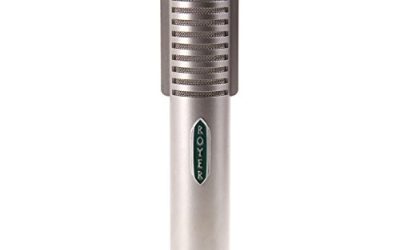
3. Rode NT1-A Large-Diaphragm Condenser Microphone

The NT1-A built its reputation on one number: self-noise of only 5 dB (A), which made it famous as one of the quietest studio microphones available at any level. In practice that means the microphone itself contributes almost no hiss, so quiet vocals, whispered passages, and delicate acoustic instruments sit on a clean background even before processing. The 1-inch gold-sputtered capsule delivers the detailed, present top end that suits modern vocal production.
Unlike the Audio-Technica picks, the NT1-A arrives as a working kit. The box includes the Rode SM6 shock mount with an integrated pop filter and a dust cover, and internal capsule shock mounting further isolates the capsule from stand-borne vibration. The trade-offs are character and flexibility: the NT1-A has a brighter voicing that flatters some voices and can sound edgy on others, and there are no pad or filter switches on the body. It is a single-purpose vocal and instrument microphone that does that job with an unusually quiet floor.
Specs
- Capsule: 1-inch gold-sputtered condenser
- Polar pattern: cardioid
- Self-noise: 5 dB (A)
- Frequency range: 20 Hz to 20 kHz
- Impedance: 100 ohms
- Included: SM6 shock mount with pop filter, dust cover
4. Rode NT1 Signature Series Large-Diaphragm Condenser Microphone
The NT1 Signature Series is the current edition of the original NT1, the microphone Rode describes as the world’s most popular studio microphone, and it refines the NT1-A formula rather than replacing it. The HF6 1-inch true condenser capsule is tuned for a warm, silky character with a smooth frequency response, and its self-noise drops to 4 dB, the lowest figure in this roundup. High SPL handling means it can move from a close vocal to a loud guitar cabinet or drum source without distress.
It also ships as a complete studio package: a studio-grade shock mount, a pop filter, and an XLR cable are in the box, so the only remaining requirements are an interface with phantom power and a stand. The tight cardioid pattern keeps the focus on the source in front of it, which helps in the reflective rooms most home studios work in. Choose it over the NT1-A if you prefer a smoother, less bright top end and the quietest possible noise floor; choose the NT1-A if its brighter presence suits your voice.
Specs
- Capsule: HF6 1-inch true condenser
- Polar pattern: cardioid
- Self-noise: 4 dB
- Signal-to-noise ratio: 78 dB
- Weight: 313 g (11 oz)
- Included: shock mount, pop filter, XLR cable
5. MXL 990 Condenser Microphone (Champagne)

The MXL 990 holds a genuine place in home recording history: it was the first high-quality condenser microphone priced within reach of working musicians, and it introduced a generation of bedroom studios to the format. The FET preamp and gold-sputtered diaphragm give it a silky top end with tight lows and smooth midrange, a voicing that flatters vocals and acoustic guitar in quiet rooms.
Value is the story here. The box includes the MXL90 shock mount, a hard mounting adapter, and a carrying case, which is unusual at the entry level and removes the accessory spending the AT2020 requires. The compromises are noise and features: equivalent noise of 20 dB (A-weighted) means very soft sources may carry audible hiss, and there are no pads or filters. As a first condenser for a singer-songwriter recording in a reasonably quiet space, it remains a sensible, well-understood choice with decades of recordings behind it.
Specs
- Polar pattern: cardioid
- Frequency response: 30 Hz to 20 kHz
- Equivalent noise: 20 dB (A-weighted)
- Maximum SPL: 130 dB
- Phantom power: 48V
- Included: shock mount, stand adapter, carrying case
How to Choose
Start with the chain you already own. Every microphone here needs an audio interface or mixer that supplies 48V phantom power, plus a balanced XLR cable; if you have neither, budget for them alongside the microphone. Next, weigh self-noise against what you record. Quiet sources such as soft vocals, spoken word, and fingerstyle guitar reward the low figures of the AT2035, NT1-A, and NT1 Signature Series, while loud singers and amplifiers care more about maximum SPL and the pad on the AT2035.
Then consider what is in the box. The Rode models and the MXL 990 include shock mounts, and the NT1 Signature Series adds a cable, while the AT2020 leaves mounting hardware to you. Room treatment matters more than any single specification: all five are cardioid condensers that will reveal an echoing room, so singing closer to the microphone and adding soft furnishings behind you helps more than stepping up a model. Finally, match voicing to voice: brighter microphones like the NT1-A add presence to dull voices, while smoother options suit voices that already carry plenty of top end.
Who Should Skip
Skip this entire category if you record in a noisy, untreated room and cannot change it: a condenser will capture the television next door and the echo off bare walls, and a dynamic microphone will usually serve you better. Skip it as well if you do not own, and do not plan to buy, an interface or mixer with phantom power, because none of these microphones plugs straight into a computer. Karaoke singers who want to plug into a party speaker should look at dynamic or karaoke microphones instead, and anyone recording outdoors or on the move will find the size, mounting needs, and fragility of large-diaphragm condensers working against them.
FAQ
Do XLR condenser microphones need phantom power?
Yes. All five microphones in this roundup require 48V phantom power, which most audio interfaces and mixers supply over the same XLR cable that carries the audio signal. Check that your interface has a phantom power switch before ordering, because a condenser connected without it will produce little or no signal.
Can I plug an XLR condenser microphone straight into my computer?
Not directly. A computer has no XLR input and cannot supply phantom power, so you need an audio interface, or a mixer with a USB output, between the microphone and the computer. That interface also provides the gain control and headphone monitoring that a home recording setup depends on.
What is the difference between the AT2020 and the AT2035?
The AT2035 is the step-up model. It has lower self-noise, adds a switchable 80 Hz high-pass filter and a 10 dB pad for loud sources, and includes a custom shock mount in the box. The AT2020 covers the same cardioid condenser basics for less, but ships with a simple stand mount and no switches.
Is a shock mount necessary for home recording?
It is strongly recommended. A shock mount suspends the microphone so that desk bumps, foot taps, and stand vibrations do not travel into the recording as low thumps. The AT2035, both Rode models, and the MXL 990 include one; AT2020 owners should plan to buy one separately, along with a pop filter for close vocal work.
Final Verdict
For a single recommendation, the Audio-Technica AT2035 offers the most complete package for home recording: low noise, useful switches, and a shock mount included. The AT2020 remains the dependable budget starting point, the Rode NT1-A and NT1 Signature Series are the picks when the quietest noise floor matters, and the MXL 990 is the classic first condenser with accessories in the box. Match the microphone to your room and your voice, and any of the five will anchor a home studio for years.
Product and ASIN Reference
| Product | ASIN |
|---|---|
| Audio-Technica AT2020 Cardioid Condenser Studio XLR Microphone | B0006H92QK |
| Audio-Technica AT2035 Cardioid Condenser Microphone | B002T45X1G |
| Rode NT1-A Large-Diaphragm Condenser Microphone | B002QAUOKS |
| Rode NT1 Signature Series Large-Diaphragm Condenser Microphone (Black) | B0CKVD62NX |
| MXL 990 Condenser Microphone (Champagne) | B0002GIRP2 |
More from Amazon
Programs that pair well with the guide above. Offers and eligibility are set by Amazon and may change.
Free shipping on eligible items, Prime Video and more. Eligible new members can start with a free trial.
Start a Prime free trialAudiobooks and podcasts to listen to on the go. Eligible new members can start with a free trial.
Try Audible freeAd-free music streaming. Eligible new subscribers can start with a free trial.
Try Music Unlimited freeA free business account with business pricing and bulk-buying tools for work, shop or home office.
Create a business accountAs an Amazon Associate we earn from qualifying purchases.
Write Your Review
No reviews yet. Be the first to share your experience!