

Key takeaways
- Compare the best USB condenser microphones for home recording, from the Blue Yeti to the Rode NT-USB, with specs on patterns, monitoring and mounts.
A USB condenser microphone is the simplest way to get a home recording setup that sounds noticeably better than a laptop or headset mic. There is no audio interface to buy, no phantom power supply to wire in, and no mixer to learn: you plug the microphone into a computer, open your recording software, and start tracking vocals, acoustic guitar, piano, or a spoken intro for a song. For singers and home musicians who record at a desk, that simplicity is the whole point.
The trade-off is that condenser capsules are sensitive. They capture the detail of a voice or an instrument, but they also capture the room, the keyboard, and the refrigerator in the next room. The five microphones below differ in the ways that matter at a desk: polar patterns, headphone monitoring, gain control, included stands and mounts, and bundled software.
As an Amazon Associate, we earn from qualifying purchases.
Quick Answer
For most home recording, the Logitech for Creators Blue Yeti is the safest pick because its four polar patterns cover solo vocals, duets, and room recording with one microphone. The Rode NT-USB is the cleaner choice for a single singer who wants a focused cardioid sound with a pop filter and tripod included. The Elgato Wave:3 adds the strongest software mixing, while the HyperX QuadCast and TONOR TC-777 suit smaller desks and simpler setups.
1. Logitech for Creators Blue Yeti USB Microphone
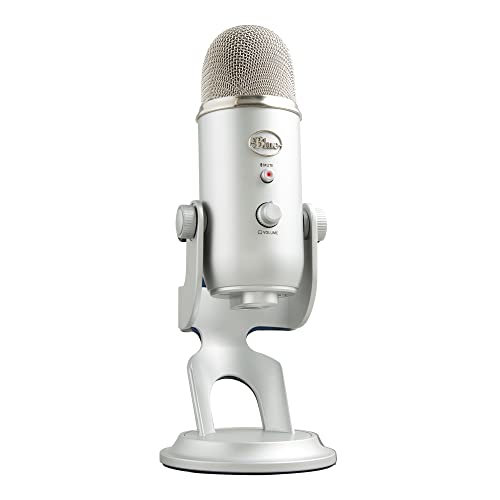
The Blue Yeti is the microphone that defined this category, and it still earns its place in a home recording roundup because of one feature none of the other picks match at this level: four selectable polar patterns from a three-capsule condenser array. Cardioid is the pattern you will use for most solo vocal and instrument takes. Stereo opens up the image for an acoustic guitar or a small ensemble, bidirectional records two people facing each other across the mic, and omnidirectional captures a whole room or group.
Controls sit on the microphone body rather than in software. A gain dial sets input level before the signal reaches your recording program, there is a mute button for breaks between takes, and the headphone output provides zero-latency monitoring so you hear yourself as you sing. It connects over USB Type-A and ships with a desktop stand, so it works the day it arrives. The stand is also its weak point: it sits low and picks up desk vibration, so many owners eventually move it to a boom arm. As a first serious home recording microphone, it remains the most flexible option here.
Specs
- Capsule: three-capsule condenser array
- Polar patterns: cardioid, bidirectional, omnidirectional, stereo
- Controls: gain dial, mute button, headphone volume
- Monitoring: zero-latency headphone output
- Connection: USB Type-A
- Frequency range: 20 Hz to 20 kHz, per the listing
- Included: desktop stand, USB cable
- Item weight: 3.2 pounds, per the listing
- Model number: 988-000103
2. Rode NT-USB USB Condenser Microphone

The Rode NT-USB takes the opposite approach to the Yeti: instead of patterns and extras, it concentrates on one job, recording a single source in front of the microphone, and it includes the two accessories a vocalist actually needs. The box contains a pop filter for softening plosive bursts on sung consonants and a tripod stand, so a singer can set up on a desk and record without buying anything else.
Rode builds this model around a studio-style condenser capsule aimed at vocal and instrument recording. Because it is a single-pattern design, placement matters more than it does with the Yeti: you position the singer or the guitar, set the level in your software, and record. For home musicians who mostly track one voice or one instrument at a time, that focus is a strength rather than a limitation.
Specs
- Capsule: condenser, studio-style
- Polar pattern: cardioid
- Connection: USB
- Included: pop filter, tripod stand
- Model: NT-USB
- Monitoring: confirm on the listing
- Mounting: tripod included; thread mount for stands, confirm size on the listing
- Finish and dimensions: confirm on the listing
3. HyperX QuadCast USB Condenser Microphone

The HyperX QuadCast was designed for streamers, but its feature set translates directly to a home recording desk. It offers four polar patterns, like the Yeti, so it can handle a solo vocal in cardioid, a two-person session in bidirectional, or a wider stereo image. Where it improves on the typical desktop setup is vibration control: the microphone hangs in an anti-vibration shock mount, which reduces the low thumps that travel through a desk when you shift in your chair or tap a foot along to the track.
The built-in pop filter sits inside the grille rather than on a separate arm, which keeps the setup tidy, and the gain control dial on the bottom is easy to reach mid-session. A red LED shows whether the microphone is live, and tapping the top mutes it, which is handy between takes. For a home studio that shares space with a work desk, the QuadCast is a practical middle ground: multi-pattern flexibility, built-in shock mounting, and no separate accessories required.
Specs
- Capsule: condenser
- Polar patterns: four selectable patterns
- Mount: anti-vibration shock mount included
- Pop filter: built in
- Controls: gain control dial, tap-to-mute top sensor
- Indicator: red LED status light
- Connection: USB
- Model: 4P5P6AA
- Headphone output: confirm on the listing
4. Elgato Wave:3 USB Condenser Microphone

The Elgato Wave:3 is the pick for home recordists who want to shape their sound inside software. It is a cardioid condenser with a 24-bit, 96 kHz converter, a higher resolution than most USB microphones offer, and Elgato pairs it with the free Wave Link mixer application. Wave Link lets you balance the microphone against backing tracks, a keyboard, and other sources, and create separate mixes for what you hear and what you record.
Its signature feature is Clipguard, a technology that routes the signal through a second, lower-sensitivity path when a loud moment would otherwise distort, so a sudden high note or laugh does not ruin a take. That protection matters for singers, whose volume can swing far more than a podcaster’s. The microphone connects over USB-C and has a compact footprint that suits smaller desks, though it lacks the pattern switching of the Yeti and QuadCast. If your home recording is mostly one voice or one instrument and you like the idea of mixing on screen, the Wave:3 is the most capable option in this group.
Specs
- Capsule: cardioid condenser
- Conversion: 24-bit, 96 kHz
- Distortion protection: Clipguard technology
- Software: Wave Link mixer, included free
- Connection: USB-C
- Model: 10MAB9901
- Polar patterns: cardioid only
- Stand and mount details: confirm on the listing
5. TONOR TC-777 USB Condenser Microphone

The TONOR TC-777 is the straightforward, low-fuss entry in this roundup. It is a cardioid condenser microphone that connects over USB with plug-and-play setup, and it arrives with the two accessories a beginner needs most: a tripod stand and a pop filter. That makes it a sensible first microphone for a singer recording demos at home, a student tracking practice sessions, or anyone upgrading from a laptop microphone for the first time.
You give up the extras found on the models above. There is no pattern switching, no bundled mixing software, and level control happens in your recording program rather than on the microphone body. In exchange, the setup could not be simpler: unfold the tripod, plug in the cable, select the microphone in your software, and record. Cardioid pickup keeps the focus on the singer or instrument in front of it and rejects some of the sound arriving from behind, which helps in untreated rooms. For a spare microphone, a travel kit, or a first step into home recording, the TC-777 covers the essentials without asking you to learn a control panel.
Specs
- Capsule: condenser
- Polar pattern: cardioid
- Connection: USB, plug and play
- Included: tripod stand, pop filter
- Model: TC-777
- Compatibility: laptops and desktop computers, per the listing
- On-mic controls: confirm on the listing
- Cable length: confirm on the listing
How to Choose a USB Condenser Microphone for Home Recording
Start with polar patterns. If you record only yourself, a cardioid-only microphone such as the NT-USB, Wave:3, or TC-777 is enough, and you will never touch the extra patterns. If you record duets, lessons, or a small group around one microphone, the four-pattern Yeti or QuadCast saves you from buying a second mic later.
Next, think about monitoring and levels. A headphone output lets you hear yourself without delay, which singers strongly prefer, and an on-mic gain dial makes it easier to avoid clipped, distorted takes. Software matters too: if you record over backing tracks, a mixer app like Wave Link simplifies balancing levels. Finally, consider your room. Condensers hear everything, so a shock mount and a pop filter help, and recording close to the microphone with the gain turned down rather than up will make even a modest room produce usable takes.
Who Should Skip a USB Condenser Microphone
Skip this category if you already own an audio interface and want to build around XLR microphones, which offer a wider upgrade path. Also skip it if your recording space is genuinely noisy, with traffic, air conditioning, or other voices you cannot control: a dynamic microphone will reject far more of that background sound. And if you plan to record a full band at once with several microphones, a USB setup, which usually supports one microphone per computer, is the wrong foundation.
Frequently Asked Questions
Can a USB condenser microphone record singing well?
Yes. Condenser capsules capture the detail and range of a singing voice, which is why they are the standard choice for vocal recording. Sing close to the microphone, use a pop filter, and keep the input level low enough that loud notes do not distort.
Do I need an audio interface with a USB microphone?
No. A USB microphone has its converter built in and connects directly to your computer, which is the main advantage of this category. You only need an interface if you switch to XLR microphones or want to record several microphones at the same time.
What is the difference between cardioid and the other polar patterns?
Cardioid picks up sound mainly from the front and rejects sound from behind, which suits a single singer or instrument. Omnidirectional hears in every direction, bidirectional hears front and back for two people facing each other, and stereo captures a left-right image of a wider source.
How do I reduce room echo when recording at home?
Record close to the microphone so your voice is much louder than the room reflections, lower the gain, and add soft materials around your recording spot, such as blankets, cushions, or a closet full of clothes. A shock mount and pop filter also clean up common desk-recording problems.
Final Verdict
For a single microphone that covers the widest range of home recording, choose the Blue Yeti. For a focused vocal setup with accessories included, the Rode NT-USB is the cleaner pick, while the Elgato Wave:3 suits singers who want software mixing and distortion protection. The HyperX QuadCast brings pattern flexibility with a proper shock mount, and the TONOR TC-777 is the simple starter option.
Product and ASIN Reference
| Product | ASIN |
|---|---|
| Logitech for Creators Blue Yeti USB Microphone (Silver) | B002VA464S |
| Rode NT-USB USB Condenser Microphone | B00KQPGRRE |
| HyperX QuadCast USB Condenser Microphone | B07NZZZ746 |
| Elgato Wave:3 USB Condenser Microphone | B088HHWC47 |
| TONOR TC-777 USB Condenser Microphone | B07WLWN2ZT |
More from Amazon
Programs that pair well with the guide above. Offers and eligibility are set by Amazon and may change.
Free shipping on eligible items, Prime Video and more. Eligible new members can start with a free trial.
Start a Prime free trialAudiobooks and podcasts to listen to on the go. Eligible new members can start with a free trial.
Try Audible freeAd-free music streaming. Eligible new subscribers can start with a free trial.
Try Music Unlimited freeA free business account with business pricing and bulk-buying tools for work, shop or home office.
Create a business accountAs an Amazon Associate we earn from qualifying purchases.
Write Your Review
No reviews yet. Be the first to share your experience!