

Key takeaways
- Compare the best guitar practice amps for home use, from smart app amps to battery minis, with headphone outputs, built-in effects and quiet tone.
A practice amp has a different job from a stage amp. It needs to sound convincing at conversation volume, fit on a desk or in a corner, and make short daily sessions easy to start. The best guitar practice amps do that with low wattage, headphone outputs for silent playing, aux or Bluetooth inputs for backing tracks, and enough built-in tones that a pedalboard stays optional.
The category splits into three shapes. Smart modeling amps pair with a phone app and pack dozens of amp models and effects into one box. Compact analog combos skip the app and offer simple knobs, a real speaker, and honest clean and dirty channels. Battery minis trade volume for total freedom to play anywhere. The five picks below cover each shape, with the connection and control details that decide how well an amp fits a home routine.
As an Amazon Associate, we earn from qualifying purchases.
Quick Answer
For most home players, a smart amp like the Positive Grid Spark 40 or Yamaha THR10II gives the widest range of tones plus app-guided practice tools. Players who want simple knobs and no phone should look at the Fender Mustang LT25 or Orange Crush 20, while the Boss Katana Mini is the grab-and-go battery option for quiet rooms and travel.
Positive Grid Spark 40 Smart Guitar Practice Amp

The Spark 40 is the practice amp that behaves most like a full rig. Its library holds 33 amp models and 43 effects, controlled from the Spark app, so a single desktop box covers clean practice, crunchy rhythm work, and high-gain leads without extra pedals. The app adds practice tools that most small amps lack: Smart Jam builds backing tracks that respond to your playing, and Auto Chords displays the chords of songs as they play.
Because it also works as a Bluetooth speaker, the Spark 40 doubles as the room’s music player between sessions, which makes it easy to leave out and switched on. It covers electric, bass, and acoustic guitar voices, so one amp serves several instruments. A headphone output handles silent practice, and onboard controls manage the essentials when a phone is not nearby.
Specs
- Output: 40 watts
- Amp models: 33, with 43 effects
- Instruments: electric, acoustic, and bass guitar
- Connectivity: Bluetooth audio, Spark app, headphone output
- Practice tools: Smart Jam backing tracks, Auto Chords display
- Weight: confirm on the listing
Yamaha THR10II Desktop Guitar Amp

Yamaha designed the THR series from the start as a desktop practice line rather than a shrunken stage amp, and the THR10II shows it. Two small stereo speakers are voiced more like a home audio system than a traditional combo, so backing tracks and guitar blend naturally at low volume. The amp carries 15 guitar amp models and eight effects, spanning clean, crunch, and high-gain voices plus settings for bass, acoustic-electric, and flat response.
Bluetooth handles both music playback and editing through the THR Remote app, and a USB connection supports recording to a computer. This is the wired model, so it runs from its power supply rather than a battery; Yamaha sells a separate wireless version for players who need cordless operation. For a desk or shelf where the amp stays put, the THR10II is a tidy, complete practice station.
Specs
- Output: 20 watts (10 watts plus 10 watts stereo)
- Speakers: two 3-inch speakers
- Amp models: 15 guitar amps, with 8 effects
- Connectivity: Bluetooth, THR Remote app, USB, aux input, headphone output
- Power: AC power supply (no built-in battery on this model)
- Extra voices: bass, acoustic-electric, and flat settings
Fender Mustang LT25 Guitar Amp

The Mustang LT25 takes the modeling idea and removes the phone from the equation. Everything happens on the amp itself: 30 presets cover a greatest-hits range of electric guitar tones, and a 1.8-inch color display makes browsing and editing them straightforward. With 25 watts through an 8-inch Fender Special Design speaker, it has more clean headroom than the desktop minis while staying firmly in home-volume territory.
A USB connection turns the LT25 into a basic recording interface, and a headphone output covers late-night sessions. The wooden cabinet gives it a more traditional combo feel than the plastic desktop units, and the simple control layout suits students and returning players who want to turn knobs rather than open an app. Fender backs it with a two-year warranty, according to the listing.
Specs
- Output: 25 watts
- Speaker: 8-inch Fender Special Design
- Presets: 30 built-in presets
- Display: 1.8-inch color display
- Connectivity: USB audio interface, headphone output
- Dimensions: 12.75 x 14.5 x 8.25 inches
- Weight: 15.23 pounds
Orange Crush 20 Guitar Combo Amp

The Crush 20 is the analog purist’s pick. There is no app, no preset library, and no screen: just two footswitchable channels, Clean and Dirty, a three-band EQ, and a high-gain preamp voiced for rock and metal practice. The all-analog signal path responds to picking dynamics in a way that helps players develop touch, and the 8-inch Voice of the World speaker gives it a fuller low end than most amps this size.
The headphone output carries Orange’s CabSim circuit, which voices the signal like a mic’d cabinet so silent practice still sounds like an amp rather than a dry direct feed. An aux input covers backing tracks from a phone, and a rear footswitch jack lets you change channels hands-free if you add a footswitch later. It is a simple amp, deliberately, and that is its appeal.
Specs
- Output: 20 watts, all-analog design
- Speaker: 8-inch Voice of the World
- Channels: 2 (Clean and Dirty), footswitchable
- EQ: 3-band (bass, middle, treble)
- Connectivity: aux input, CabSim headphone output, footswitch jack (footswitch sold separately)
- Dimensions: 14.67 x 12.8 x 7.75 inches
- Weight: 15.8 pounds
Boss Katana Mini Guitar Amp
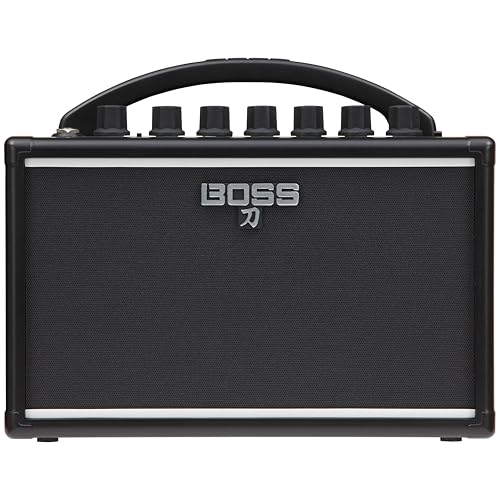
The Katana Mini shrinks the Katana formula into a battery-powered box that weighs little more than a hardback book. Despite the size, it uses a multi-stage analog gain circuit and offers three amp types: Clean, Crunch, and the high-gain Brown sound the Katana line is known for. A traditional three-band EQ and an onboard tape-style delay round out a control set that takes seconds to learn.
Six AA batteries power it for go-anywhere practice, and an optional AC adapter covers home use. An aux input feeds in backing tracks, while the phones and recording output includes cabinet voicing for direct listening or simple recording. The 4-inch speaker will not fill a room like the bigger combos here, but for a desk, a porch, or a hotel room, the Katana Mini delivers real amp character with zero setup.
Specs
- Output: 7 watts
- Speaker: 4-inch
- Amp types: Clean, Crunch, and Brown
- EQ and effects: analog 3-band EQ, tape-style delay
- Power: 6 AA batteries or optional AC adapter (sold separately)
- Connectivity: aux input, phones/recording output with cabinet voicing
- Weight: confirm on the listing
How to Choose a Guitar Practice Amp
Start with volume and space. A 3 to 10 watt mini suits a desk or shared room, while a 20 to 40 watt combo gives cleaner headroom and a bigger speaker for a dedicated music corner. Every amp here is built for home levels, so the real choice is features, not loudness.
Next, decide how you feel about apps. Smart amps like the Spark 40 and THR10II reward phone users with deep editing, backing tracks, and chord displays. Knob-driven amps like the Mustang LT25 and Crush 20 trade that depth for immediacy: plug in, turn, play. Neither approach is better, but mismatching the amp to your habits means features go unused.
Check the practice connections before buying. A headphone output matters if anyone sleeps nearby. Aux or Bluetooth input matters if you play along with songs or lessons. USB recording matters if you want to capture ideas. Finally, consider power: battery models like the Katana Mini remove the last excuse not to practice, while mains-powered amps never need fresh cells mid-session.
Who Should Skip These Amps
Players preparing for band rehearsals or small gigs should skip this category and look at 50 watt or larger combos with 12-inch speakers; practice amps are voiced and powered for one room. Musicians who record seriously may also outgrow the basic USB interfaces here and prefer a dedicated audio interface with a software amp suite.
Tone purists set on a single all-tube sound will not find it in this list either, since these amps use modeling or solid-state analog circuits chosen for low-volume flexibility. And if you already own a good amp with a headphone output and an effects loop, a dedicated practice amp adds convenience rather than new capability.
Frequently Asked Questions
What wattage is right for a home practice amp?
For most homes, anything from 3 to 40 watts works, because practice amps are designed to sound full at low volume rather than to be loud. Small battery minis near 5 watts suit desks and travel, while 20 to 40 watt combos add clean headroom and larger speakers for a dedicated practice space.
Can I practice silently with a practice amp?
Yes. All five amps here include a headphone output, and several add cabinet voicing so the headphone signal sounds like a real speaker rather than a dry direct tone. Headphones also make the built-in effects and stereo playback on the desktop models easier to appreciate at night.
Do practice amps work for bass or acoustic guitar?
Some do. The Spark 40 includes amp models voiced for bass and acoustic guitar, and the THR10II offers bass, acoustic-electric, and flat settings alongside its guitar amps. The Mustang LT25, Crush 20, and Katana Mini are electric-guitar amps, so bass players should choose one of the multi-instrument models instead.
Do I need the app to use a smart practice amp?
No. The Spark 40 and THR10II both play and sound good straight from their onboard controls. The apps unlock deeper editing, saved preset libraries, and practice tools such as backing tracks and chord displays, so they add value over time without being required for a quick session.
Final Verdict
The right practice amp is the one that removes friction from daily playing. Choose the Spark 40 for the deepest app-driven toolkit, the THR10II for a polished desktop station with stereo playback, the Mustang LT25 for preset variety without a phone, the Crush 20 for simple analog rock tones, or the Katana Mini when practice needs to happen anywhere. Any of the five will serve a home routine well; match the feature set to your habits and space.
Product and ASIN Reference
| Product | ASIN |
|---|---|
| Positive Grid Spark 40 Smart Guitar Practice Amp | B08HQCG79H |
| Yamaha THR10II Desktop Guitar Amp | B07XNL8127 |
| Fender Mustang LT25 Guitar Amp | B07N29M92M |
| Orange Crush 20 Guitar Combo Amp | B00SG3Q6T2 |
| Boss Katana Mini Guitar Amp | B072XKP8TH |
More from Amazon
Programs that pair well with the guide above. Offers and eligibility are set by Amazon and may change.
Free shipping on eligible items, Prime Video and more. Eligible new members can start with a free trial.
Start a Prime free trialAudiobooks and podcasts to listen to on the go. Eligible new members can start with a free trial.
Try Audible freeAd-free music streaming. Eligible new subscribers can start with a free trial.
Try Music Unlimited freeA free business account with business pricing and bulk-buying tools for work, shop or home office.
Create a business accountAs an Amazon Associate we earn from qualifying purchases.
Write Your Review
No reviews yet. Be the first to share your experience!