

Key takeaways
- Before every ride: check tire condition, seat lock, steering movement, pedal attachment, and brake operation.
- Every few weeks: inspect chain tension, axle nuts, wheel bearings, and frame welds.
- Every few months: clean dirt from the chain and apply the lubricant specified by the manufacturer.
- After wet use: dry the frame, chain, and fasteners instead of storing the kart damp.
The best pedal go karts are those with a correctly sized adjustable seat, a rigid steel frame, predictable braking, and tires suited to the ground where your child will actually ride; for most families, a four-wheel recreational kart with freewheel pedals and an enclosed chain is the safest all-round choice.
Our top picks

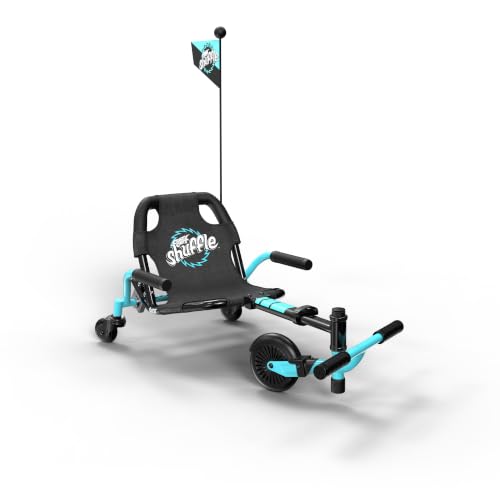


As an Amazon Associate we earn from qualifying purchases at no extra cost to you. Ratings are shown as listed on Amazon.
Quick picks by family situation
| Family situation | Best kart type | Typical suitable rider | Why it fits |
|---|---|---|---|
| First kart for a preschooler | Compact four-wheel pedal kart | Age 3–5; about 38–47 in tall | Low seat, short reach, wide stance, easy steering |
| One kart that can last several years | Adjustable recreational kart | Age 4–8; about 42–54 in tall | Multiple seat positions and a stronger steel chassis |
| Older child who rides frequently | Larger performance pedal kart | Age 7–12; about 48–62 in tall | Longer frame, larger tires, responsive steering, hand brake |
| Shared use by children and smaller adults | Heavy-duty adjustable kart | About 48–70 in tall | Higher seat range, greater weight capacity, robust drivetrain |
| Limited driveway or indoor storage | Short-wheelbase compact kart | About 38–52 in tall | Smaller turning circle and less storage space required |
What makes a pedal go kart “best”?
A pedal kart is not chosen by age label alone. Two children listed as “ages 4–8” may have very different leg lengths, confidence, and steering ability. Measure the rider from the floor to the top of the knee while seated, then compare that measurement with the pedal distance and seat adjustment range. The child should reach the far pedal with a slight bend in the knee, rather than locking the leg straight or stretching for the crank.
Age and height range
Compact preschool karts generally suit riders from roughly 38 to 47 inches tall. They usually have a fixed or minimally adjustable seat and a low center of gravity. These models are easier to control but can become cramped quickly.
Mid-size karts are typically the best value for families. A seat with four to six positions may accommodate riders from about 42 to 54 inches tall. Look for a seat that locks firmly into a metal rail or multiple reinforced holes. A plastic slider that flexes under load is less reassuring and may develop play over time.
Large pedal karts often suit riders from approximately 48 to 62 inches tall, depending on crank length and seat design. Some heavy-duty models accommodate taller riders, but published maximum height and weight limits matter more than a broad age claim. Never assume that an adult-sized frame is automatically suitable for a young child: the pedals, steering wheel, and brake lever must still be reachable.
Seat adjustment and fit
The most useful seat design allows adjustment without tools, but tool-free convenience should not replace a secure locking mechanism. A spring pin or solid locking lever is preferable to a friction-only clamp. Check that the seat cannot slide while the rider is pedaling and that the adjustment points do not leave exposed pinch areas.
For a family sharing one kart, count usable seat positions rather than simply reading “adjustable.” A kart with five positions spaced about 2 inches apart offers a practical adjustment range of around 8 inches. That is often enough to cover a younger sibling and an older elementary-school rider, but not necessarily a teenager.
Frame, drivetrain, and braking comparison
| Feature | Entry-level compact kart | Mid-size family kart | Heavy-duty performance kart |
|---|---|---|---|
| Typical frame material | Steel tube with plastic body panels | Powder-coated steel tube | Reinforced steel or steel with aluminum components |
| Approximate kart weight | 18–28 lb | 25–40 lb | 35–55 lb |
| Recommended rider capacity | Up to 55 lb | Up to 100 lb | Up to 150 lb or more |
| Seat positions | 1–3 | 4–6 | 5–8 |
| Brake design | Back-pedal or simple coaster brake | Hand brake or coaster brake | Hand-operated drum, disc, or band brake |
| Typical turning circle | About 7–10 ft | About 9–13 ft | About 11–16 ft |
| Best surface | Smooth pavement | Pavement, compacted paths, firm grass | Pavement, hard-packed dirt, moderate grass |
Steel is usually the sensible frame material for a family kart because it tolerates curb bumps, repeated assembly, and heavier riders better than thin molded plastic. Plastic bodywork can still be useful for styling and protection, but it should not be carrying the main structural load. Powder coating helps resist rust, although it will not protect chipped welds or unsealed fasteners.
Pedal karts commonly use a fixed-drive system or a freewheel system. With fixed drive, the pedals may turn whenever the rear wheels turn, which can feel natural to a young rider but requires care when descending. A freewheel system lets the kart roll while the pedals remain still, making coasting more comfortable and usually allowing a separate brake. For children riding on slopes, a dependable hand brake and freewheel drivetrain are preferable.
Turning radius and terrain: the details listings often omit
A tight turning radius is valuable on a driveway, but a very short kart may feel twitchy at speed. Compact karts often turn within about 7 to 10 feet, while longer performance designs may need 11 to 16 feet. Measure the narrowest part of the intended riding area and add at least 2 feet of clearance on each side. A kart that technically fits a path may still be frustrating if the child must repeatedly reverse or lift the rear end to turn around.
Hard rubber or molded plastic tires are quiet and maintenance-free on smooth pavement, but they can lose grip on wet grass. Pneumatic tires provide better cushioning and traction on compacted dirt and grass, though they require pressure checks and can puncture. Large treaded tires help with uneven ground, but they also increase rolling resistance. A young rider may struggle to pedal a heavy kart through soft lawn even when the tires appear “off-road.”
Pedal karts are generally unsuitable for loose sand, deep mud, steep hills, busy roads, or surfaces with large stones. Use a level, closed riding area, and treat a driveway near traffic as a storage or loading area rather than a riding route.
Assembly and ownership realities
Most pedal karts require installation of the steering wheel, seat, pedals, wheels, or body panels. Allow 30–90 minutes for assembly, depending on the drivetrain and whether the instructions are clear. The critical steps are not cosmetic: confirm that the steering linkage moves freely, the front wheels point together, the pedals are tight, and every axle nut is secured with the supplied washer or locking feature.
After the first ride, retighten accessible fasteners. New hardware can settle, and a small amount of play in the steering may become noticeable. A useful maintenance schedule is:
- Before every ride: check tire condition, seat lock, steering movement, pedal attachment, and brake operation.
- Every few weeks: inspect chain tension, axle nuts, wheel bearings, and frame welds.
- Every few months: clean dirt from the chain and apply the lubricant specified by the manufacturer.
- After wet use: dry the frame, chain, and fasteners instead of storing the kart damp.
The parts most likely to wear first are tires, pedals, chain guards, brake cables, and plastic steering components. Replacement availability is therefore more important than decorative features. Before buying, check whether the manufacturer lists replacement tires, pedals, chains, cables, and seats. A slightly more expensive kart with replaceable drivetrain parts can cost less over several years than a cheaper model that must be discarded after one broken pedal.
Best pedal go karts by buying priority
Best for a tight budget
Choose a compact steel kart with a simple coaster or back-pedal brake, provided the rider stays on smooth, level pavement. Typical market prices are about $80–$160. Avoid paying extra for lights or sound effects if the kart lacks a secure seat adjustment and durable steering hardware.
Best for growing children
A mid-size kart with at least four seat positions, a freewheel drivetrain, and a hand brake is the strongest all-round choice. Expect roughly $150–$300. This configuration balances manageable weight with enough adjustment to remain useful for several seasons.
Best for frequent outdoor use
Select a heavy-duty steel kart with pneumatic or large treaded tires, sealed or shielded bearings, a protected chain, and a replaceable brake cable. Prices commonly fall around $250–$500 or more. Its extra weight makes carrying harder, but it improves stability and durability on firm outdoor paths.
Best for small spaces
Prioritize turning radius and overall length over top speed. Measure storage width, then include room to lift the kart without scraping walls. A compact four-wheel design with a roughly 7–10-foot turning circle will be easier to use than a long racing-style frame in a narrow driveway.
Final buying checklist
- Confirm the rider’s height, leg reach, and weight against the manufacturer’s limits.
- Choose a seat that locks mechanically and offers genuinely usable positions.
- Prefer a steel load-bearing frame and protected chain or drivetrain.
- Match tire type to pavement, grass, or compacted dirt—not to an unrealistic “all terrain” label.
- Check the turning circle against the available riding area.
- For slopes or older children, choose a freewheel system with a hand-operated brake.
- Verify that replacement wear parts and assembly instructions are available.
- Supervise every ride, use a helmet, and keep the kart away from traffic and steep drops.
For most families, the best pedal go karts are mid-size adjustable models with a steel frame, four wheels, freewheel pedals, a hand brake, and tires designed for the family’s actual riding surface. That combination offers a better balance of fit, control, serviceability, and long-term value than choosing by appearance or maximum speed.

Write Your Review
No reviews yet. Be the first to share your experience!