
Our Short List of 3

- Best for: Solo singers recording vocals at a desk
- USB cardioid condenser microphone
- Table stand included
- 1.2 m USB-C cable
- Mute button

- Best for: Singer-songwriters capturing voice and instrument together
- Ultra-HD USB-C microphone
- Condenser mic for laptop or computer
- Adjustable stand
- Plug and play

- Best for: Loud vocalists and untreated rooms, with an XLR future
- USB/XLR dynamic microphone
- For PC, gaming, podcast and streaming
- Studio recording computer mic
- Mute button
All 3 Picks at a Glance
| Product | Specs | Action |
|---|---|---|
| Sennheiser Profile |
| Check price on Amazon |
| AKG Lyra |
| Check price on Amazon |
| FIFINE K688 |
| Check price on Amazon |
Key takeaways
- Compare the best USB microphones for musicians, from vocal condensers to a USB/XLR dynamic, with notes on patterns, monitoring and mounts for home recording.
A musician asks more of a USB microphone than a meeting or a stream ever does. Vocals carry wide dynamics, an acoustic guitar adds quiet fingerpicked detail, and a loud chorus can overload a capsule that sounds fine for speech. The right pick captures both ends of that range cleanly, lets you hear yourself while you track, and fits the way you actually record at home.
The three microphones below were chosen for musical work rather than calls or gaming, and none of them duplicates the streaming and home-recording roundups already on this site, so the shortlist that follows starts from a clean slate for music-first recording. One is a focused cardioid condenser for vocals, one is a multi-capture condenser for layered parts, and one is a dynamic USB and XLR model for loud singers and untreated rooms.
Quick Picks
As an Amazon Associate we earn from qualifying purchases.
| Product | Best for | Key spec from title |
|---|---|---|
| Sennheiser Profile | Solo vocals with simple controls | USB cardioid condenser microphone with table stand |
| AKG Lyra | Layered parts and stereo sources | Ultra-HD USB-C condenser microphone, adjustable stand |
| FIFINE K688 | Loud singers and later XLR upgrades | USB/XLR dynamic microphone with headphone jack |
How to Choose
Match the Capsule to Your Voice and Room
Condenser microphones capture the fine detail that makes a vocal or an acoustic guitar sound alive, including breath, string texture and room reflections. That sensitivity rewards a quiet, soft-furnished space and punishes a bare one. Dynamic microphones are less sensitive, so they hear less of the room and more of a close, loud source, which suits strong singers and untreated bedrooms. Start by judging your room honestly, then choose the capsule type that flatters it, instead of buying the most sensitive microphone and fighting its pickup later. Also think about the source itself: a whispered harmony and a belted chorus place very different demands on the same capsule, and the microphone that flatters one can strain on the other.
Think About Patterns in Musical Terms
A single cardioid pattern is enough for most solo tracking, because it hears what is in front of it and rejects the computer fan and wall behind it. Multi-capture designs earn their place when you record two singers facing each other, a vocal and guitar together, or a small ensemble around one microphone. Extra patterns you never select only add cost and confusion. Musicians who mostly overdub one part at a time should favour a clean cardioid, while writers who capture live duets benefit from switchable capture modes. Placement matters as much as the pattern itself, because a cardioid microphone still hears plenty from its sides, so keep noisy computers and windows behind it rather than beside it.
Insist on Direct Monitoring While You Track
Singing against a delayed echo of your own voice makes timing and pitch harder to judge, so a built-in headphone jack on the microphone matters more for musicians than for almost any other user. Direct monitoring sends your voice back to your headphones without the round trip through recording software. Controls for gain, mix and volume on the microphone body let you balance your voice against the backing track mid-take, without stopping to click through menus. Check that the controls you need most sit on the microphone itself. A mute button within reach also saves takes when a phone rings mid-performance, and quick headphone checks catch problems early, while they are still cheap to fix.
Plan the Mount and the Upgrade Path
A table stand is convenient, but it couples the microphone to desk knocks and puts the capsule far below mouth height for a standing singer. An adjustable stand, a standard mount thread, or compatibility with a boom arm gives you the close, raised placement that vocals need. Also consider what happens next: a microphone that also offers an XLR output can move to an audio interface later, while a USB-only model is simpler today but ends its own upgrade path at the computer. Budget for the stand or arm as part of the microphone, not as an afterthought, because placement decides more of the final sound than small specification differences ever will.
The 3 Best Options
Sennheiser Profile
- Best for: Solo singers recording vocals at a desk
- USB cardioid condenser microphone
- Table stand included
- 1.2 m USB-C cable
- Mute button
Solo singers recording vocals at a desk
USB-only connection, so there is no XLR upgrade path later
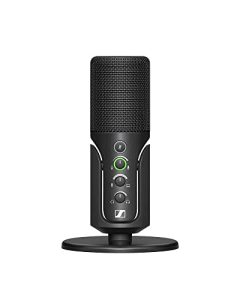
The Profile is the straightforward vocal choice in this group: a cardioid condenser from a microphone maker with deep studio heritage, set up for one singer at a computer. Its cardioid pickup focuses on the voice in front of it, and the controls a musician reaches for most, gain, mix and volume, sit on the body alongside a mute button. The included table stand and USB-C cable make it a complete starting point, while the built-in headphone jack covers direct monitoring for tracking against a backing track.
AKG Lyra
- Best for: Singer-songwriters capturing voice and instrument together
- Ultra-HD USB-C microphone
- Condenser mic for laptop or computer
- Adjustable stand
- Plug and play
Singer-songwriters capturing voice and instrument together
A sensitive condenser hears the room as well as the performance
The Lyra suits musicians who record more than a single close vocal. Its Ultra-HD condenser design makes it the detailed option here for a singer accompanying themselves on guitar, a piano part recorded at the desk, or quiet instruments that a dynamic microphone would flatten. The adjustable stand helps angle the capsule toward a guitar or a seated player, and the plug-and-play USB-C connection keeps setup simple on both PC and Mac, so a writing session can start the moment an idea arrives.
FIFINE K688
- Best for: Loud vocalists and untreated rooms, with an XLR future
- USB/XLR dynamic microphone
- For PC, gaming, podcast and streaming
- Studio recording computer mic
- Mute button
Loud vocalists and untreated rooms, with an XLR future
Dynamic capsules need close placement and healthy gain
The K688 is the dynamic option, built for singers who belt, rap or record in rooms that flatter nobody. A dynamic capsule worked close to the mouth rejects much of the room, and the combined USB and XLR connections mean the same microphone can start on a computer and later plug into an interface or mixer as your setup grows. The mute button, headphone jack and monitoring volume control cover the tracking basics, and the included windscreen helps tame plosives from close, energetic vocal delivery.
Which One Fits Your Situation
You Sing and Play Guitar at the Same Time
Choose a condenser on an adjustable stand and position it between your voice and the guitar sound hole, angled so neither source overwhelms the other. The Lyra fits this writer-style workflow, where one microphone has to balance two sources in a single take. Record a short test, listen for string volume against the vocal, and nudge the microphone a few centimetres at a time until the balance works without any software fixes afterwards.
You Record Powerful Vocals in a Spare Bedroom
A dynamic microphone worked close is your friend here. The K688 hears less of the bare walls and more of your voice, and its windscreen softens the bursts that come with loud, close singing. Hang soft furnishings behind you, keep the microphone a hand’s width away, and set gain on your loudest chorus rather than your quietest verse so peaks stay clean.
You Overdub Quiet, Detailed Solo Vocals
A focused cardioid condenser rewards a careful singer in a calm room. The Profile captures breath and nuance that a dynamic design smooths over, and its on-body mix control lets you balance your voice against the track while you record. Close the curtains, silence the fan, and track late in the evening if your street is noisy, because the detail you gain includes the room.
You Plan to Build a Small Studio Over Time
Start with a microphone that will not be made redundant by your next purchase. A USB and XLR model such as the K688 works at a computer today and into an interface tomorrow, so your first microphone stays in the chain as it grows. Buy the simple connection now, learn placement and gain on real songs, and add the interface only when you need more inputs.
Common Mistakes
- Placing the microphone on the desk and singing down at it, which buries the vocal in room sound and desk vibration.
- Setting gain using a quiet verse, then clipping every chorus because the loudest part was never tested.
- Recording with software monitoring instead of the headphone jack, then fighting the delay on every take.
- Buying extra pickup patterns for solo overdubbing, when one well-placed cardioid would record cleaner results.
- Skipping a test recording, so placement and balance problems are only discovered after a full performance.
Frequently Asked Questions
Can a USB microphone record vocals and guitar well?
Yes, within the limits of one microphone and one room. A condenser placed carefully between voice and instrument captures both with usable balance, while separate overdubs give more control. USB models in this guide include headphone monitoring, which helps you judge that balance while you play rather than afterwards. Small changes in distance shift the balance quickly, so test before committing to a full take.
Is a dynamic or condenser microphone better for singing?
It depends on the room more than the voice. Condensers reveal detail and suit quiet, treated spaces, while dynamics reject room noise and handle loud singers in ordinary bedrooms. A strong voice in an untreated room usually records more cleanly on a dynamic microphone worked close. A soft, intimate vocal in a quiet room, by contrast, usually gains more from a condenser’s sensitivity.
Do I need an audio interface with these microphones?
No. Each microphone here connects directly to a computer by USB, which is the point of the format. One model also offers an XLR output, so it can join an interface-based setup later, but nothing in this guide requires extra hardware to start recording your first songs at home.
How close should I sing to a USB microphone?
Start a hand’s width from the capsule and adjust from there. Closer placement strengthens the voice against room sound but exaggerates plosives and bass, while moving back adds natural space and more room noise. Record short tests at two or three distances and keep the one that flatters your voice.
More from Amazon
Programs that pair well with the guide above. Offers and eligibility are set by Amazon and may change.
Free shipping on eligible items, Prime Video and more. Eligible new members can start with a free trial.
Start a Prime free trialAudiobooks and podcasts to listen to on the go. Eligible new members can start with a free trial.
Try Audible freeAd-free music streaming. Eligible new subscribers can start with a free trial.
Try Music Unlimited freeA free business account with business pricing and bulk-buying tools for work, shop or home office.
Create a business accountAs an Amazon Associate we earn from qualifying purchases.
Write Your Review
No reviews yet. Be the first to share your experience!