
Our Short List of 3
All 3 Picks at a Glance
| Product | Specs | Action |
|---|---|---|
 Duracell Coppertop AA Alkaline Batteries, 16-Count Pack | Check price on Amazon | |
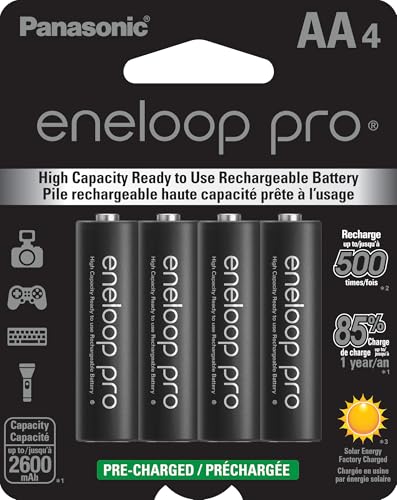
| Panasonic eneloop pro AA High-Capacity Ni-MH Rechargeable Batteries, 4-Pack | Check price on Amazon | |
 Energizer Ultimate Lithium AA Batteries, 8-Pack | Check price on Amazon |
Key takeaways
- Find the best batteries for Shure microphones, from AA alkaline and rechargeable cells to Shure lithium-ion packs, with runtime and buying advice.
As an Amazon Associate we earn from qualifying purchases
A wireless microphone only earns its keep while its transmitter is powered. The moment a battery fades mid-song, mid-sermon or mid-speech, the finest Shure system in the world becomes a silent prop. That is why the question of the best batteries for Shure microphones matters far more than its humble subject suggests. Shure wireless systems are used by touring singers, worship teams, presenters, fitness instructors, wedding DJs and karaoke hosts, and every one of those users depends on a small cell hidden inside a handheld transmitter or bodypack to hold a radio link steady for hours at a time.
The complication is that there is no single Shure battery. Different Shure families power their transmitters in different ways. Many handheld and bodypack transmitters run on two AA cells, and the owner chooses between alkaline, rechargeable nickel-metal hydride and lithium AA batteries. Other systems use Shure’s own rechargeable lithium-ion packs, shaped for specific product families and charged in Shure docks or through a connector on the pack itself. Choosing well means first identifying which of those worlds your system lives in, and only then comparing cells. This guide works through both routes, explains the trade-offs that actually affect runtime and reliability on stage, and gives a practical routine for anyone who never wants a microphone to die in public again.
One note on scope before the detail. The sections below work through each battery route in turn, and a product section after them names specific cells whose Amazon US listings were checked for this guide, one for each of the main AA routes, so you can match an exact product to the cell type your transmitter needs.
Step One: Know What Your Shure Transmitter Takes
Before comparing brands or chemistries, open the battery compartment, or read the manual for your exact system, and answer one question: does this transmitter take AA cells, a Shure rechargeable pack, or either?
The AA families are the most widespread. Entry-level and mid-range analogue and digital systems, including many BLX, SLX and PGX-era transmitters and a large share of the handheld and bodypack transmitters sold for houses of worship, schools and mobile entertainers, are built around two AA batteries. For these systems the battery decision is entirely yours, and the sections below on alkaline, nickel-metal hydride and lithium cells apply directly.
The proprietary pack families work differently. Shure’s GLX-D and GLX-D+ systems use a dedicated lithium-ion pack, the SB904 in the current generation, which charges inside the receiver’s bay or through its own connector and is not interchangeable with AA cells. The SLX-D family uses the SB903 lithium-ion pack, with AA operation also provided on its transmitters, giving owners a choice between the pack and ordinary cells. Higher-end digital families such as QLX-D, ULX-D and the Axient Digital line use the SB900-series rechargeable packs and also accept AA cells in many transmitters, a dual approach designed for professional users who want managed rechargeable power with a disposable fallback. The exact pack for your system is not a matter of preference. Packs are shaped and keyed for their families, so confirm the model name in your manual before ordering anything.
Microphones that are wired, it should be said, need no batteries at all, and some Shure condenser models draw phantom power from the mixer instead. This guide concerns the wireless transmitters that genuinely depend on cells.
Option One: Alkaline AA Batteries
Alkaline AA cells are the default choice for Shure transmitters that accept them, and for occasional users they remain the sensible choice. A fresh pair from a reputable maker delivers the full voltage a transmitter expects, behaves predictably on the transmitter’s battery meter, and can sit in a drawer or gig bag for years while holding most of its charge. For a singer who uses a wireless microphone a few times a month, or a venue that keeps microphones for occasional events, alkaline cells are simple, dependable and require no charger, no rotation system and no planning beyond keeping a sealed spare pair in the case.
Their weaknesses appear with heavy use. A busy worship team or function band can go through pairs of alkaline cells at a remarkable rate, because sensible stage practice is to start every important event with fresh batteries rather than gamble on partly used ones. That discipline, multiplied across several transmitters and several events a week, produces a steady stream of half-drained cells and a steady stream of waste. Alkaline voltage also falls gradually through the discharge, so the last portion of a cell’s life is a slope rather than a plateau, and a transmitter that looked comfortable at soundcheck can slide toward its low-battery warning during a long event if the cells began the day partly used.
Used well, alkaline cells are entirely professional. Buy from stock that turns over, check dates, store them cool and dry, keep pairs together rather than mixing cells of different ages, and treat any cell that has powered one full event as a spare for rehearsals rather than the lead set for the next show.
Option Two: Rechargeable Nickel-Metal Hydride AA Batteries
For regular users, low self-discharge nickel-metal hydride AA cells are widely regarded as the sweet spot for Shure transmitters, and they are the rechargeable route most working sound engineers settle on. Modern cells of this type hold a useful share of their charge for months in storage, which older rechargeable designs could not do, and they can be recharged hundreds of times. A team running four transmitters every week can replace a mountain of single-use cells with two rotating sets per transmitter and a good charger, and the economics and the waste reduction both follow quickly.
Two characteristics need understanding. First, a nickel-metal hydride cell runs at a slightly lower nominal voltage than an alkaline cell, so some transmitters show a battery gauge that reads a step lower or falls sooner than the actual remaining runtime would suggest. Shure transmitters generally cope well with these cells, but the practical lesson is to learn your own system’s behaviour in rehearsal, where a surprise costs nothing, rather than discovering it during a service. Second, runtime per charge is typically a little shorter than a premium fresh alkaline pair, so the working routine matters: charge fully, use for one event, then recharge regardless of how much the gauge suggests is left. Treated as single-event cells that happen to be rechargeable, they are exceptionally reliable. Treated casually, topped up at random and mixed between sets, they earn an unfair reputation for letting people down.
Capacity figures printed on rechargeable cells deserve a sceptical eye. Extremely high claimed capacities from unknown makers are a familiar marketing habit in this category, and a modest figure from an established battery maker is generally the more honest number. Consistency between cells matters more than a headline figure, because a transmitter draws from a pair and the weaker cell decides when the pair is done. Buy matched sets, keep them together for life, mark them with a pen or a label, and retire a set when one cell starts finishing noticeably earlier than its partner.
A proper charger is part of the purchase, not an accessory. A smart charger that treats each cell individually, detects the end of charge correctly and can refresh tired cells will extend the working life of every set you own, while a crude timed charger quietly cooks cells and shortens it. For a multi-transmitter rig, a charger with enough slots to handle the whole fleet at once keeps the routine simple enough to actually happen after every event.
Option Three: Lithium AA Batteries
Disposable lithium AA cells are the premium single-use option for Shure transmitters, and they have a loyal following among professionals who cannot risk a fade. Their chemistry holds a flatter voltage for longer, performs well in cold conditions that sap alkaline cells, such as outdoor winter events, and offers a long shelf life that makes them ideal as the emergency pair living permanently in the microphone case. Runtime in a wireless transmitter is typically the longest of the AA options, and the battery meter tends to stay reassuringly high before dropping relatively quickly near the end, which is the one behaviour to learn: a lithium pair that finally starts to move on the gauge has less reserve than the same movement would mean on alkaline cells.
Against that sit two considerations. Lithium AA cells cost more per pair than alkaline, which is why they are usually reserved for high-stakes events and emergency spares rather than weekly routine use. And they are single-use, so the waste argument that pushes heavy users toward rechargeables applies in full. There is also a separate category that causes confusion: rechargeable 1.5-volt lithium-ion AA cells with built-in regulation and a charging port. These are not the same product as disposable lithium cells, and microphone makers’ guidance on them varies, because the internal regulation can interact unpredictably with transmitter battery metering. Unless your system’s documentation explicitly welcomes them, the established choices, alkaline, nickel-metal hydride rechargeable or maker lithium-ion packs, are the safer ground for equipment your event depends on.
Option Four: Shure’s Own Rechargeable Packs
For systems designed around them, Shure’s lithium-ion packs solve the battery question in the most managed way. The pack is shaped for the transmitter, charges in a Shure dock, a receiver bay or through its own connector depending on the family, and reports its state far more precisely than loose cells can, because the system was designed around its exact discharge behaviour. Professional families add networked charging and monitoring, so a sound engineer can see the remaining runtime of every transmitter in the rack before a show. For an installed system in a theatre, a broadcast studio or a busy church with a technical team, that predictability is worth more than any saving on cells.
The discipline these packs demand is different rather than greater. A pack has a finite cycle life measured in years of regular use, its capacity declines gradually, and a spare pack per transmitter is close to essential for long events, because a pack mid-charge cannot be swapped for a drawer full of AA cells unless the transmitter also accepts them, as several Shure families happily do. That dual-fuel design is one of Shure’s most practical decisions: run the managed rechargeable pack as the everyday source, and keep AA cells as the universal fallback when a pack is flat, faulty or simply left behind. Owners of such systems should rehearse the fallback rather than discovering the compartment layout in the dark.
Cost shapes the decision here too. A pack and its charger cost far more upfront than loose cells, and a replacement pack years later depends on the maker continuing to supply it, which Shure’s long support history makes a reasonable expectation for its professional lines but still a consideration for very old systems. For a single microphone used at home for karaoke or practice, the pack ecosystem is more infrastructure than the job needs, and AA cells, alkaline or rechargeable, serve better.
How Long Should Batteries Last in a Shure Microphone?
Runtime depends on the transmitter, its radio power settings, and the cell type, so any single figure should be read as a range rather than a promise. As a working guide drawn from manufacturer guidance for typical Shure systems, a fresh pair of quality alkaline AA cells commonly powers a handheld transmitter through a long event and beyond, with published figures for many systems reaching toward eight hours or more under favourable settings. Nickel-metal hydride rechargeables usually deliver somewhat less per charge, lithium AA cells somewhat more, and Shure’s lithium-ion packs are rated by the company in the same broad territory, with the GLX-D+ pack, for example, published at up to twelve hours. Digital systems with higher radio output settings, bodypacks driving power-hungry headset condensers, and cold environments all shorten real-world results.
The professional habit that follows from those ranges is simple: never plan an event around the full published figure. Swap or recharge at half the rated life for anything that matters, keep the removed cells for rehearsals and low-stakes use, and treat a low-battery warning as an instruction to change at the next break, not as information to note for later. A microphone that fades during a first dance, a vow or a keynote sentence costs far more than the cells saved by stretching them.
A Battery Routine That Never Lets You Down
The users who never lose a microphone share a routine rather than a favourite brand. Batteries live with the microphones, in the same case, in known states: charged and ready, or clearly separated as spent. Rechargeable sets are numbered, rotated and charged after every event on the same charger. A sealed pair of lithium or alkaline AA cells rides in every case as the emergency reserve for AA transmitters, and pack-based systems carry a charged spare pack. Before an event, every transmitter is powered up and its gauge checked while there is still time to act on what it shows. After the event, cells are dealt with the same day, while the memory of which set did what is fresh.
Storage matters more than most owners expect. Cells stored loose in a bag can short against keys and coins, so keep them in packaging, a battery case or with terminals protected. Heat shortens the life of every chemistry in this guide, so a case left in a hot car is quietly ageing its contents. Rechargeable cells prefer to be stored partly charged rather than brim-full or empty for long periods, and every chemistry prefers a cool, dry drawer to a damp flight case in a garage.
Specific Batteries to Buy
Three checked Amazon US listings, one for each AA route covered above. Shure’s own SB900-series, SB903 and SB904 packs are discussed in the pack section, but no Amazon US listing for those packs could be verified to the same standard in this pass, so they are named there without links; buy them from an authorised Shure dealer using the exact pack model in your manual.
Duracell Coppertop AA Alkaline Batteries, 16-Count Pack
The alkaline route in a named form: Coppertop AA alkaline cells with Duracell’s Power Boost ingredients, in a sixteen-count pack that covers eight full two-cell changes across a set of transmitters, with spares left for the case.
Panasonic eneloop pro AA High-Capacity Ni-MH Rechargeable Batteries, 4-Pack
The rechargeable route: Panasonic’s BK-3HCCA4BA eneloop pro AA cells, high-capacity nickel-metal hydride cells that arrive pre-charged and hold their charge well in storage, which is exactly the low self-discharge behaviour a weekly microphone routine needs. Buy matched packs like this one and keep each set together.
Energizer Ultimate Lithium AA Batteries, 8-Pack
The lithium route: Energizer’s Ultimate Lithium AA cells in an eight-count pack, the flat-voltage, cold-tolerant single-use cells this guide recommends for high-stakes events and as the sealed emergency reserve in every microphone case.
Verdict: Matching the Battery to the User
For the occasional user with an AA transmitter, quality alkaline cells, bought fresh and swapped generously, are the best batteries in every way that matters: no charger, no system, no surprises. For the regular user, the weekly singer, worship team or working entertainer, low self-discharge nickel-metal hydride rechargeables in matched, numbered sets, charged on a proper smart charger, are the best long-term answer, with a lithium pair in the case for emergencies. For the high-stakes one-off, the wedding or the broadcast, disposable lithium AA cells earn their premium. And for owners of Shure systems built around the company’s lithium-ion packs, the pack itself, kept charged with a spare alongside, is the best battery of all, because the whole system, gauge, charger and transmitter, was designed around it.
Whichever route fits your system, the principle underneath this guide does not change. Identify the exact cell or pack your transmitter was designed for, buy it from a seller you trust, learn how its gauge behaves before an audience is listening, and swap earlier than you think you need to. Do that, and the batteries in your Shure microphones become the one part of a live event you never have to think about again.
More from Amazon
Programs that pair well with the guide above. Offers and eligibility are set by Amazon and may change.
Free shipping on eligible items, Prime Video and more. Eligible new members can start with a free trial.
Start a Prime free trialAudiobooks and podcasts to listen to on the go. Eligible new members can start with a free trial.
Try Audible freeAd-free music streaming. Eligible new subscribers can start with a free trial.
Try Music Unlimited freeA free business account with business pricing and bulk-buying tools for work, shop or home office.
Create a business accountAs an Amazon Associate we earn from qualifying purchases.
Write Your Review
No reviews yet. Be the first to share your experience!