
Our Short List of 3

- Best for: Listeners who want lively dynamics and high efficiency from a modest amplifier in a medium room.
- 1-inch LTS titanium tweeter with 90-degree by 90-degree Tractrix horn
- 6.5-inch Cerametallic woofer
- Frequency response: 44 Hz to 25,000 Hz, plus or minus 3 dB
- Sensitivity: 94.5 dB

- Best for: Warm, relaxed listening over long sessions in a smaller room or near a wall.
- 1-inch cloth dome tweeter
- 6.5-inch aramid-fiber woofer
- Frequency response: 44 Hz to 35,000 Hz
- Sensitivity: 87 dB
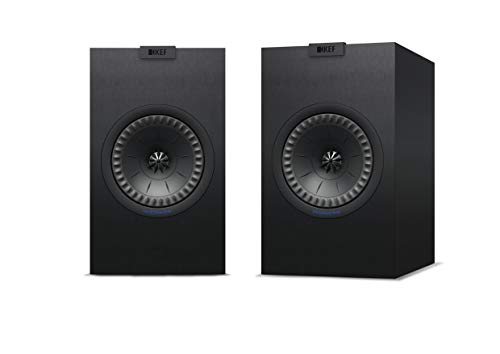
- Best for: Precise imaging and clear vocals for listeners seated across a wide area.
- 5.25-inch Uni-Q driver array with 1-inch vented aluminium dome tweeter
- Frequency response: 51 Hz to 28 kHz, plus or minus 3 dB
- Frequency range: 47 Hz at minus 6 dB
- Sensitivity: 86 dB
All 4 Picks at a Glance
| Product | Specs | Action |
|---|---|---|
| Klipsch Reference Premiere RP-600M II |
| Check price on Amazon |
| ELAC Debut 2.0 B6.2 |
| Check price on Amazon |
| KEF Q150 |
| Check price on Amazon |
 Polk Audio Signature Elite ES20 |
| Check price on Amazon |
Our Top Picks
- Klipsch Reference Premiere RP-600M II Ebony Bookshelf Speakers13 x 7.95 x 15.75 inches18 poundsCheck on Amazon
Choosing a pair of stereo speakers at this level is less about chasing one headline specification and more about matching a complete system to a real room. A speaker that sounds open and detailed in a medium living room can sound thin in a large open-plan space, while a larger design can overwhelm a small bedroom. Amplifier power, sensitivity, impedance, driver size, port position and cabinet dimensions all interact, so the right choice depends on the amplifier already in place and the distance from the listening seat.
This guide is for listeners building a first serious two-channel system, for vinyl and streaming listeners who want a clear step up from compact powered speakers, for home cinema users who need a strong front pair, and for anyone replacing ageing bookshelf speakers with a pair that will last through several amplifier upgrades. The four passive bookshelf models below were chosen from their Amazon listing names and specifications, with different strengths: high efficiency, warm balance, precise imaging, and home cinema flexibility.
Quick Picks
As an Amazon Associate we earn from qualifying purchases
| Product | Best for | Key spec from title |
|---|---|---|
| Klipsch Reference Premiere RP-600M II | Lively dynamics in a medium room with a modest amplifier | 6.5-inch Cerametallic woofer |
| ELAC Debut 2.0 B6.2 | Warm, full balance for long listening sessions | 6.5-inch aramid-fiber woofer |
| KEF Q150 | Precise imaging across a wide listening area | 5.25-inch Uni-Q driver array |
| Polk Audio Signature Elite ES20 | Home cinema and music in one flexible pair | 6.5-inch Dynamic Balance woofer |
How to Choose
Match sensitivity and impedance to the amplifier
Sensitivity tells a buyer how much sound a speaker produces from a given amount of amplifier power, and impedance tells the amplifier how demanding the load will be. A speaker rated near 94 dB will play noticeably louder than one rated near 86 dB on the same amplifier, which matters for low-powered valve amplifiers and compact integrated models. A 6-ohm design asks more current than an 8-ohm design, so the amplifier manual should confirm that the lower impedance is supported. Check the recommended power range too: an amplifier that clips at high volume can damage a tweeter more readily than a clean, more powerful amplifier used sensibly.
Decide how much bass the room really needs
Bookshelf speakers differ in low-frequency extension, and the published lower limit is only part of the story. A design reaching down to the low forties will give acoustic bass and film soundtracks a fuller foundation than a design rolling off in the low fifties, yet room placement changes the result by a large margin. Speakers close to a rear wall gain bass reinforcement, while speakers on open stands lose some of that support. A rear-firing port needs clear space behind the cabinet, whereas a front-firing port is more forgiving near a wall. Anyone who listens mainly to bass-heavy music in a larger room should plan for a subwoofer later rather than expecting a compact two-way design to do everything alone.
Compare driver size and tweeter design
Driver size shapes dispersion, midrange clarity and bass capability. A 6.5-inch woofer generally moves more air and reaches lower than a 5.25-inch woofer in a similar cabinet, which is why the larger models in this guide suit bigger rooms and louder listening. Tweeter design shapes the top end just as much: a horn-loaded titanium tweeter projects detail and dynamics with a forward character, a cloth dome tends to sound smoother and more relaxed, and a concentrically mounted tweeter places high and mid frequencies on the same axis for a wider, more stable stereo image. None of these approaches is universally better, so the choice should follow listening habits, from bright and energetic rock to soft vocals and acoustic recordings.
Measure the shelf, the stands and the listening distance
Physical fit is easy to overlook until a pair arrives and will not sit where it was planned. Measure shelf depth, stand top-plate size, and the height that places the tweeter near ear level from the usual seat. A tall, deep cabinet may suit a dedicated stand but crowd a shallow bookshelf, and a heavy speaker needs a stand rated for its weight. Listening distance matters too: nearfield desk listening favours a compact design, while a sofa three metres away benefits from a larger, more efficient speaker. Leave room for toe-in, cable access at the rear terminals, and air around a rear port before committing to a position.
The 4 Best Options
Klipsch Reference Premiere RP-600M II
- Best for: Listeners who want lively dynamics and high efficiency from a modest amplifier in a medium room.
- 1-inch LTS titanium tweeter with 90-degree by 90-degree Tractrix horn
- 6.5-inch Cerametallic woofer
- Frequency response: 44 Hz to 25,000 Hz, plus or minus 3 dB
- Sensitivity: 94.5 dB
Listeners who want lively dynamics and high efficiency from a modest amplifier in a medium room.
Check that the horn character suits the room and the amplifier, because a bright room with hard surfaces can make the top end sound forward; audition the pairing if possible and allow space behind the rear port.
The Klipsch RP-600M II suits listeners who want energy, scale and detail from a bookshelf pair without pairing it with a large amplifier. Its horn-loaded tweeter and high sensitivity give it a lively, forward presentation that brings rock, pop, film soundtracks and live recordings to life, and the solid bass response for a bookshelf design means many listeners will be content without adding a subwoofer straight away. It works well on sturdy stands in a medium living room, where its dynamics and projection can fill the space, and it also serves as a strong front pair in a home cinema system built around a capable receiver.
Watch out for: Check that the horn character suits the room and the amplifier, because a bright room with hard surfaces can make the top end sound forward; audition the pairing if possible and allow space behind the rear port.
ELAC Debut 2.0 B6.2
- Best for: Warm, relaxed listening over long sessions in a smaller room or near a wall.
- 1-inch cloth dome tweeter
- 6.5-inch aramid-fiber woofer
- Frequency response: 44 Hz to 35,000 Hz
- Sensitivity: 87 dB
Warm, relaxed listening over long sessions in a smaller room or near a wall.
Confirm that the amplifier is comfortable with a 6-ohm load and provides enough clean power, because the moderate sensitivity asks more from the amplifier than a high-efficiency design at the same volume.
The ELAC Debut 2.0 B6.2 suits listeners who value a warm, balanced and forgiving sound for long sessions across many genres. Its aramid-fiber woofer and cloth dome tweeter produce a full midrange and smooth treble that flatter vocals, acoustic instruments and older recordings, while the braced MDF cabinet keeps the presentation stable at higher volume. Because the front-firing bass-reflex port is less sensitive to rear-wall distance than a rear port, this pair is easier to place on a shelf or close to a wall, which makes it a practical choice for smaller rooms, apartments and mixed-use living spaces.
Watch out for: Confirm that the amplifier is comfortable with a 6-ohm load and provides enough clean power, because the moderate sensitivity asks more from the amplifier than a high-efficiency design at the same volume.
KEF Q150
- Best for: Precise imaging and clear vocals for listeners seated across a wide area.
- 5.25-inch Uni-Q driver array with 1-inch vented aluminium dome tweeter
- Frequency response: 51 Hz to 28 kHz, plus or minus 3 dB
- Frequency range: 47 Hz at minus 6 dB
- Sensitivity: 86 dB
Precise imaging and clear vocals for listeners seated across a wide area.
Allow clear space behind the cabinet for the rear-firing port, and pair it with an amplifier that can deliver clean power at the intended listening distance, because the compact driver and moderate sensitivity limit outright output in a large room.
The KEF Q150 suits listeners who care most about imaging, vocal clarity and a wide sweet spot. Its Uni-Q driver array places the tweeter at the acoustic centre of the midrange cone, so high and mid frequencies arrive from a single point and the stereo image stays stable when listeners move across a sofa or around the room. The compact cabinet fits shelves and stands that would crowd a larger design, and the detailed, even presentation works well for acoustic music, jazz, dialogue-heavy films and nearfield listening, provided the amplifier has enough headroom to suit the moderate sensitivity.
Watch out for: Allow clear space behind the cabinet for the rear-firing port, and pair it with an amplifier that can deliver clean power at the intended listening distance, because the compact driver and moderate sensitivity limit outright output in a large room.
Polk Audio Signature Elite ES20
- Best for: A flexible music and home cinema pair in a living room with a standard receiver.
- 1-inch Terylene high-resolution dome tweeter
- 6.5-inch Dynamic Balance woofer with mica-reinforced polypropylene cone
- Frequency response: 41 Hz to 40,000 Hz
- Sensitivity: 86 dB
A flexible music and home cinema pair in a living room with a standard receiver.
Measure the cabinet against the intended shelf or stand before ordering, because this is a substantial bookshelf design, and leave room behind it for the rear-firing Power Port to work as intended.
The Polk Audio Signature Elite ES20 suits buyers who want one pair to cover music and home cinema without fuss. Its Terylene tweeter extends cleanly into the upper range, its Dynamic Balance woofer and Power Port design give a full and controlled low end for a bookshelf speaker, and Hi-Res Audio certification signals a design intended for detailed modern recordings. The flexible impedance compatibility and broad power range make it straightforward to pair with a wide range of receivers and integrated amplifiers, and the magnetic grilles and sturdy MDF cabinet suit a busy living room that doubles as a film room.
Watch out for: Measure the cabinet against the intended shelf or stand before ordering, because this is a substantial bookshelf design, and leave room behind it for the rear-firing Power Port to work as intended.
Which One Fits Your Situation
A first serious system in a medium living room
Choose the Klipsch RP-600M II when the system will be built around a modest integrated amplifier and the room needs energy at normal listening levels. Its high sensitivity means the amplifier does not have to work hard to fill the space, and the lively presentation suits a wide range of music and film sound. Place the pair on sturdy stands, keep some space behind the rear ports, and the system will have headroom for louder sessions without sounding strained.
Long evening listening in a smaller room
Choose the ELAC Debut 2.0 B6.2 when sessions run long and the speakers will sit near a wall or on a shelf. Its warm balance and smooth treble reduce listening fatigue, the front-firing port makes placement more forgiving, and the full midrange flatters vocals and acoustic recordings. Pair it with an amplifier rated for a 6-ohm load and the result is a relaxed, musical system that suits apartments and bedrooms.
Shared seating and a focus on vocals
Choose the KEF Q150 when several people share the listening area or when vocal clarity matters most. The Uni-Q array keeps the stereo image coherent away from the centre seat, so dialogue and lead vocals stay clear from the ends of a sofa as well as the middle. Its compact size also helps in rooms where a larger cabinet would dominate the shelf, though a subwoofer is worth considering later for deeper bass.
One pair for music and films
Choose the Polk Audio Signature Elite ES20 when a single pair must serve both roles in a living room. Its extended treble, full bass and broad amplifier compatibility make it easy to integrate with a receiver, and the Power Port design helps film soundtracks carry weight without a subwoofer in a medium room. It is the most straightforward all-round choice here for a mixed-use setup.
Common Mistakes
- Choosing speakers by driver size alone, without checking sensitivity, impedance and the amplifier already in place.
- Pushing a rear-ported speaker hard against a wall, then blaming the speaker for boomy or muddy bass.
- Pairing a low-sensitivity speaker with a small amplifier in a large room and running the amplifier into distortion at high volume.
- Placing bookshelf speakers directly on a hollow shelf or an unstable surface instead of on solid stands or a braced shelf.
- Skipping the cabinet measurements and discovering too late that the speakers do not fit the shelf, the stand top plate, or the space beside the television.
Frequently Asked Questions
Do these stereo speakers need a separate amplifier?
Yes, all four models in this guide are passive bookshelf speakers, so each pair needs a separate stereo amplifier or receiver. Connect the amplifier outputs to the binding posts with speaker cable, matching the positive and negative terminals on each side. A turntable will also need a phono stage, either built into the amplifier or added as a separate unit, before it can connect to a standard line input.
How far from the wall should rear-ported speakers sit?
Rear-ported models such as the Klipsch RP-600M II, the KEF Q150 and the Polk ES20 need air behind the cabinet for the port to work. Start with a hand span of space, then move the speakers further out and listen for tighter bass. Front-ported models such as the ELAC B6.2 are more forgiving near a wall, though every speaker benefits from some breathing room and from avoiding a corner.
Will a bookshelf pair fill a large open-plan room?
A bookshelf pair can fill a large room when sensitivity is high and the amplifier has enough clean power, but output and bass depth have limits in a very large space. The Klipsch model has the best chance because of its efficiency, while the compact KEF model suits a smaller or medium room. In a large open-plan space, adding a subwoofer later is better than replacing a well-chosen bookshelf pair.
Should the speakers sit on a shelf or on stands?
Stands usually give the better result, because they place the tweeter near ear level, reduce vibration from a hollow shelf, and allow space behind a rear port. A solid, braced shelf can work when the speaker fits with room to spare and the shelf does not resonate. Keep both speakers at the same height, angle them toward the listening seat, and keep the listening triangle symmetrical.
More from Amazon
Programs that pair well with the guide above. Offers and eligibility are set by Amazon and may change.
Free shipping on eligible items, Prime Video and more. Eligible new members can start with a free trial.
Start a Prime free trialAudiobooks and podcasts to listen to on the go. Eligible new members can start with a free trial.
Try Audible freeAd-free music streaming. Eligible new subscribers can start with a free trial.
Try Music Unlimited freeA free business account with business pricing and bulk-buying tools for work, shop or home office.
Create a business accountAs an Amazon Associate we earn from qualifying purchases.




Write Your Review
No reviews yet. Be the first to share your experience!