

Key takeaways
- Compare three rackmount compressors for live sound: dbx 266xs, Behringer MDX2600 V2 and ART Pro VLA II, with gating, limiting and vocal control compared.
A live compressor earns its rack space on the loudest chorus of the night, not during soundcheck. Its real job is to keep a singer’s peaks from clipping the mixer, lift the quiet lines so they still reach the back row, and stop kick drum and bass guitar from swamping each other. Pick the wrong unit and you get too few channels for the vocal lineup, no gate to tidy up stage bleed between songs, or meters you cannot read from the FOH position.
This guide is for front-of-house engineers, church sound volunteers, and musicians who run their own PA from the stage. Every pick is a rackmount hardware unit currently sold on Amazon US, selected from the names and specifications on its Amazon product page: channel count, gating and limiting tools, sidechain options, and the connection formats a live rack actually uses.
Quick Picks
As an Amazon Associate we earn from qualifying purchases.
| Product | Best for | Key spec from title |
|---|---|---|
| dbx 266xs Compressor/Limiter Gate | Kick drum and lead vocal channels that need gating and compression together | Ratio from 1:1 to Infinity:1 with OverEasy or hard knee |
| Behringer Composer Pro-XL MDX2600 V2 | A lead vocal that needs de-essing under a hard peak ceiling | 2 channels with de-esser, peak limiter and tube simulation |
| ART Pro VLA II | Gentle leveling for speech, choir and acoustic acts | Vactrol opto compression with a 12AT7 tube gain stage |
How to Choose
Count Channels Against Your Loudest Sources
Start by listing the sources that actually misbehave at show volume: usually the lead vocal, backing vocals, kick drum and bass. A two-channel unit covers two of them, or one stereo bus. All three picks here are two-channel designs, so a four-vocal lineup means two units or a decision about which voices truly need hardware control. Check whether channels can run as independent mono processors or link for stereo, because a unit locked into stereo pairs wastes half its value on single microphones, while an unlinked pair will pull a stereo image sideways.
Look for a Gate and a Sidechain, Not Just Compression
Live rooms are noisy, and a compressor alone cannot fix bleed. An expander/gate on the same channel shuts down a vocal microphone between lines and keeps cymbals out of the tom channels, which is why the dbx and Behringer units pair both tools per channel. A sidechain insert adds another level of control: feed it an equalised signal and the compressor reacts to the frequencies that cause trouble, such as low-end build-up when kick and bass collide. If your sources are quiet acoustic acts, gating matters less; for loud stages, treat it as essential.
Match the Knee and Timing Controls to the Material
The knee decides how gradually compression arrives. A soft or OverEasy-style knee eases in around the threshold and suits voices, while a hard knee grabs peaks abruptly, which can work on drums but sounds obvious on a ballad. Timing controls matter just as much: program-dependent attack and release, like the dbx AutoDynamic circuit, reads the material and adjusts itself, which helps when songs change pace. Fully manual controls reward a careful engineer but punish a rushed one. A de-esser earns its place when one singer’s sibilance slices through every chorus.
Check Connections, Operating Level and Metering
Outboard dynamics only help if they patch cleanly into the console. Balanced XLR and 1/4-inch TRS inputs and outputs, as fitted to all three units here, connect to channel inserts or group inserts without adapters, and balanced lines reject hum on long runs to a front-of-house rack. Confirm the operating level matches your mixer: a switchable +4dBu and -10dBV input stage, like the one on the ART unit, prevents the noise or overload that comes from a mismatch. Finally, judge the metering from a distance: gain reduction LEDs and backlit VU meters should be readable under stage lighting.
The 3 Best Options
dbx 266xs Compressor/Limiter Gate

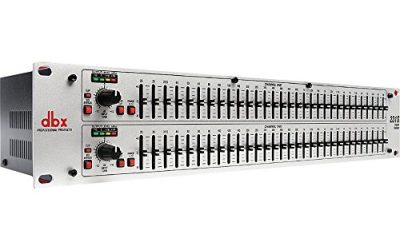
The 266xs is the workhorse pick for engineers who need compression and gating on the same channels. Each of its two channels pairs a compressor with a program-adaptive expander/gate, so one unit can clean up a snare or kick channel and still control a vocal. The selectable OverEasy or hard-knee response lets you soften the compression for singers or firm it up for drums, and the sidechain insert opens up frequency-conscious tricks such as tightening low end. Separate LED displays for gain reduction, compressor threshold and gate threshold make settings easy to confirm mid-show.
Specs
- System type: Compressor/limiter/gate, 2 channels
- Compressor threshold range: -40dBu to +20dBu
- Ratio: 1:1 to Infinity:1, selectable OverEasy or hard knee
- Inputs and outputs: XLR and 1/4-inch TRS, balanced or unbalanced
- Sidechain insert: 1/4-inch TRS on each channel
- Dimensions: 1.75 x 5.75 x 19 inches
- Power consumption: 15W maximum
Best for: Live rigs that need gating and compression on the same two channels, such as kick drum and lead vocal.
Watch out for: Attack and release are program-dependent AutoDynamic controls, so there are no fixed manual timing values to dial in.
ASIN: B004NDFRVC
Behringer Composer Pro-XL MDX2600 V2

The Composer Pro-XL MDX2600 V2 packs the most processing per channel of the three. Alongside the compressor and expander/gate, each channel adds a de-esser with male and female voicing, a dynamic enhancer that restores top end lost under heavy compression, tube simulation, and a separate peak limiter that sets a hard ceiling for the PA. That combination suits a lead vocal channel that needs sibilance control and speaker protection in one rack space. An AUTO setting for attack and release speeds up setup when changeovers are short.
Specs
- Model: MDX2600V2
- Channels: 2
- Functions: Expander/gate, compressor/limiter, de-esser, peak limiter, dynamic enhancer, tube simulation
- Connectors: XLR and 1/4-inch TRS, balanced
- Voltage: 100 Volts AC
- Dimensions: 16.65 x 5.16 x 1.5 inches
- Item weight: 4.68 lbs
Best for: Lead vocal channels that need de-essing, enhancement and a peak-limited safety ceiling in one unit.
Watch out for: The two full channel strips plus de-esser sections make the front panel dense, which slows down changes during short changeovers.
ASIN: B07PSKXCR2
ART Pro VLA II

The Pro VLA II takes a different route from the VCA designs above. Its Vactrol opto-electronic detector reacts to level changes the way an eye adjusts to light, which gives smooth, gradual leveling that suits speech, choir and acoustic instruments. A hand-selected 12AT7 tube sits in the gain stage of each channel, and the two channels link for stereo work on a main bus or a pair of room microphones. Large backlit VU meters plus a 10-segment gain reduction array keep levels readable in a dark sanctuary or club.
Specs
- Model name: ART Pro VLA II
- Channels: 2, with stereo link
- Compression type: VCA-less Vactrol opto-compression with 12AT7 tube gain stage
- Frequency response: 10Hz to 100kHz (+/-0.5dB)
- Dynamic range: Greater than 100dB
- Voltage: 120 Volts
- Item weight: 11.02 pounds
Best for: Speech, choir and acoustic sources that need smooth, gradual leveling in stereo or dual mono.
Watch out for: It is the heaviest pick here at 11.02 pounds, and its tubes are consumable parts that need professional replacement over time.
ASIN: B0012MIVW4
Which One Fits Your Situation
A Four-Piece Rock Band in a Small Club
Patch the dbx 266xs across the kick drum and the lead vocal. The gate on the kick channel trims cymbal bleed between hits, the sidechain insert lets you focus that gate, and the second channel’s OverEasy compression keeps the singer’s choruses under control without flattening the verses. Two problem sources, one rack space, and meters you can read at a glance.
One Lead Singer With a Harsh, Sibilant Microphone
Give the Behringer MDX2600 V2 the lead vocal channel. Its de-esser targets the sibilant band directly, with separate male and female voicing, so you stop reaching for the EQ every time an ‘s’ slices through. The dynamic enhancer then restores the top end that heavy compression dulls, and the peak limiter guards the PA when the singer suddenly belts.
Spoken Word and Choir in a House of Worship
The ART Pro VLA II fits spoken word, choir and acoustic worship sets. Its opto detector applies gain changes gradually, so a pastor moving around a headset microphone or a choir swelling into a chorus stays even without audible pumping. Linked stereo operation keeps a pair of choir microphones balanced, and the large VU meters are easy for volunteer operators to follow.
Protecting a Stereo Main Bus
For a stereo safety net, link the MDX2600 V2 across the main bus and set its peak limiter as the ceiling nothing crosses. The compressor section can add gentle glue at a low ratio while the limiter catches the unexpected spike from a dropped microphone or a feedback burst. Because the limiter is a separate stage, protection stays in place even when the compression is bypassed.
Common Mistakes
- Compressing the whole mix to fix one loud singer, when the problem belongs on that vocal channel alone.
- Setting the gate threshold during a quiet soundcheck, then finding it chatters or never opens once the stage reaches show volume.
- Using the fastest attack on kick and snare, which strips the transient and leaves the drums sounding flat and distant.
- Forgetting makeup gain after heavy compression, so the processed channel ends up quieter than the unprocessed one.
- Mismatching operating levels, feeding a +4dBu output into a -10dBV input and then chasing the noise or distortion that follows.
Frequently Asked Questions
Where does a compressor go in a live signal chain?
Insert it at the channel or subgroup insert point of the mixer, after the preamp gain is set. That way the compressor sees a healthy signal and acts before the fader, so riding levels during the show does not change how hard it works. Main-bus protection limiting goes across the stereo output instead.
What ratio should I start with on live vocals?
Start between 2:1 and 4:1, with the threshold set so the loudest lines pull roughly 3 to 6 dB of gain reduction. That range evens out a singer without flattening expression. Push toward 6:1 only for very uneven voices, and back the threshold off first if the quiet parts start pumping.
Can one two-channel unit handle two different singers?
Yes, as long as the unit runs in dual-mono mode with independent controls per channel, like the three picks here. Each singer gets separate threshold, ratio and gating settings matched to their voice and microphone. Just make sure stereo link or couple is switched off, or the louder singer will trigger compression on both channels.
Is a separate limiter still useful if my mixer has built-in compression?
Yes. Channel compression shapes individual sources, but it does not set an absolute ceiling at the system output. A dedicated peak limiter across the main bus catches dropped microphones, feedback spikes and sudden shouts before they reach the amplifiers and speakers. Treat it as insurance that stays set even when channel settings change.
More from Amazon
Programs that pair well with the guide above. Offers and eligibility are set by Amazon and may change.
Free shipping on eligible items, Prime Video and more. Eligible new members can start with a free trial.
Start a Prime free trialAudiobooks and podcasts to listen to on the go. Eligible new members can start with a free trial.
Try Audible freeAd-free music streaming. Eligible new subscribers can start with a free trial.
Try Music Unlimited freeA free business account with business pricing and bulk-buying tools for work, shop or home office.
Create a business accountAs an Amazon Associate we earn from qualifying purchases.

Write Your Review
No reviews yet. Be the first to share your experience!