
Our Short List of 3

- Best for: Owners of older cars who want Bluetooth and new front speakers from a single box.
- Brand: BOSS Audio Systems
- Model Number: 638BCK
- Receiver: 611UAB single din digital media receiver, no CD or DVD player
- Connectivity: Bluetooth, USB, AM/FM radio receiver
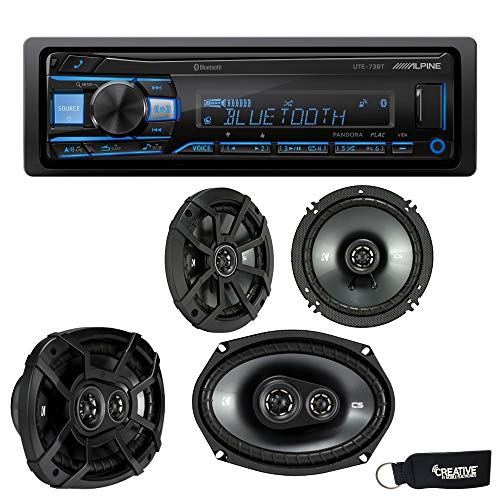
- Best for: Sedan and coupe owners whose front and rear speaker sizes differ and who want them covered together.
- Brand: Alpine
- Item model number: UTE-73BT+43CSC654+43CSC6934
- Receiver: UTE-73BT digital media receiver, no CD
- Built-in amplifier: 18W x 4 at CEA-2006 rating (per listing)

- Best for: Builders keeping their current head unit who want dedicated four-channel power with bridging flexibility.
- Brand: Pioneer
- Model: GM-A6704
- Configuration: 4-channel bridgeable amplifier
- Amplifier class: Class AB
All 4 Picks at a Glance
| Product | Specs | Action |
|---|---|---|
| BOSS Audio Systems 638BCK Car Stereo Package – Single Din, Bluetooth, No CD DVD Player, AM/FM Radio Receiver, USB, 6.5 Inch 2 Way Full Range Speakers |
| Check price on Amazon |
| Alpine UTE-73BT Bluetooth Receiver (No CD), a Pair of 43CSC654 6.5″ Speakers, and 43CSC6934 6×9 Speakers |
| Check price on Amazon |
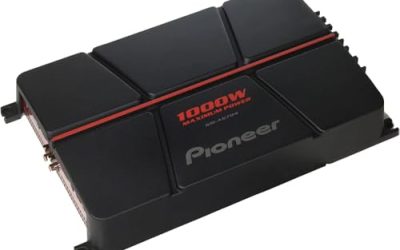
| Pioneer GM-A6704 4-Channel Bridgeable Amplifier with Bass Boost |
| Check price on Amazon |
 KICKER DSC650 6.5-Inch (160-165mm) Coaxial Speakers, 4-Ohm (Pair) |
| Check price on Amazon |
Key takeaways
- Compare car amps and speakers that actually match: matched receiver and speaker packages, a bridgeable four-channel amplifier, and a coaxial speaker pair, with fitment checks before you order.
The real decision with car amps and speakers is not chasing the biggest wattage number printed on a box. It is matching three things that have to work together in your specific vehicle: how many channels of power you need, what impedance your speakers present to that power, and whether the speakers physically fit the openings your car already has. A four-channel amplifier driving the wrong load, or a deep speaker meeting a shallow door, turns a weekend upgrade into a return.
This guide is for drivers replacing tired factory sound, owners building a first matched system from separate parts, and anyone who would rather buy a bundled package than piece components together blind. Every option below was chosen from its Amazon listing name and stated specifications, so the channel counts, speaker sizes, and model numbers you see here come from the product pages themselves rather than from roundups elsewhere.
Quick Picks
As an Amazon Associate we earn from qualifying purchases
| Product | Best for | Key spec from title |
|---|---|---|
| BOSS Audio Systems 638BCK Car Stereo Package | A single purchase that replaces the head unit and front speakers together | Single Din Bluetooth receiver with 6.5 inch 2 way full range speakers |
| Alpine UTE-73BT Bluetooth Receiver with Kicker Speaker Bundle | Cars needing both 6.5 inch and 6×9 speaker sizes covered in one box | Pair of 43CSC654 6.5 inch speakers and pair of 43CSC6934 6×9 speakers |
| Pioneer GM-A6704 4-Channel Bridgeable Amplifier with Bass Boost | Adding separate amplifier power to front and rear speakers | 4-channel bridgeable amplifier with bass boost |
| KICKER DSC650 6.5-Inch Coaxial Speakers, 4-Ohm (Pair) | A straightforward door speaker swap on an existing system | 6.5-inch (160-165mm) coaxial speakers, 4-ohm, pair |
How to Choose
Match Channels to the Speakers You Actually Run
Count your speaker locations before you count watts. A sedan running front and rear door speakers needs four channels of amplification, which is why a four-channel amplifier or a receiver with a built-in four-channel amplifier suits it. A driver who only plans front speakers plus a future subwoofer should look at bridgeable designs, where two channels combine to drive one load. Buying a monoblock when you need four channels, or a two-channel unit for a four-speaker car, leaves part of the system unpowered no matter how strong the headline output looks on the listing.
Read RMS and Impedance, Not Just the Largest Number
Listings lead with maximum power because it is the biggest figure available, but the pairing that matters day to day is continuous output into the impedance your speakers present. Most factory-replacement coaxial speakers are 4-ohm loads, so check that the amplifier or receiver section you choose is stable and rated at 4 ohms for each channel you plan to use. If a bundle lists a built-in amplifier rating such as 18 watts by four channels at a CEA-2006 rating, treat that as the honest baseline for judging how loud the package will play without a separate amplifier added later.
Confirm Speaker Size and Mounting Depth Against Your Car
A 6.5 inch speaker only helps if your doors take a 6.5 inch speaker. Many vehicles pair 6.5 inch front doors with 6×9 rear decks, which is exactly the combination one bundle below covers, while others use smaller kick panel or dash locations. Measure the existing speaker, note whether the factory grille sits close to the cone, and compare mounting depth before ordering, because a speaker that is electrically perfect still fails if the window mechanism or door panel crowds it. Adapter rings and harnesses exist for many cars, but they are separate purchases, not part of most speaker listings.
Decide Between a Package and Separate Components
A receiver and speaker package removes the matching guesswork: the head unit powers the included speakers, the sizes are stated together, and one box arrives with the harness and hardware the maker chose. Separate components demand more checking but reward it, since a dedicated amplifier such as a bridgeable four-channel unit can later drive better speakers or a bridged subwoofer channel. Choose the package when the factory radio is also failing or outdated. Choose separates when your head unit already has the features you want and only the power and speakers fall short.
The 4 Best Options
BOSS Audio Systems 638BCK Car Stereo Package – Single Din, Bluetooth, No CD DVD Player, AM/FM Radio Receiver, USB, 6.5 Inch 2 Way Full Range Speakers
- Best for: Owners of older cars who want Bluetooth and new front speakers from a single box.
- Brand: BOSS Audio Systems
- Model Number: 638BCK
- Receiver: 611UAB single din digital media receiver, no CD or DVD player
- Connectivity: Bluetooth, USB, AM/FM radio receiver
Owners of older cars who want Bluetooth and new front speakers from a single box.
Confirm your dash opening is single din and your door locations accept 6.5 inch speakers before ordering, since the package fixes both choices for you.
This package suits the driver whose factory radio and front speakers have aged out together, because it replaces both ends of that chain in one purchase. The mech-less single din receiver handles Bluetooth, USB, and AM/FM sources without a CD mechanism, and the included pair of 6.5 inch two-way speakers gives the front stage a matched starting point. It is the simplest route in this guide for an older car that needs modern phone connectivity and fresh speakers at the same time, provided your dash accepts a single din chassis and your doors take the included speaker size.
Alpine UTE-73BT Bluetooth Receiver (No CD), a Pair of 43CSC654 6.5″ Speakers, and 43CSC6934 6×9 Speakers
- Best for: Sedan and coupe owners whose front and rear speaker sizes differ and who want them covered together.
- Brand: Alpine
- Item model number: UTE-73BT+43CSC654+43CSC6934
- Receiver: UTE-73BT digital media receiver, no CD
- Built-in amplifier: 18W x 4 at CEA-2006 rating (per listing)
Sedan and coupe owners whose front and rear speaker sizes differ and who want them covered together.
Verify both speaker sizes against your own car, because returning one mismatched pair inside a bundle is more awkward than returning a standalone set.
Cars with mixed speaker sizes are the natural audience here. The bundle pairs an Alpine mech-less Bluetooth receiver with two different speaker sizes, a 6.5 inch pair for the doors and a 6×9 pair for the rear deck, which mirrors how many sedans and coupes left the factory. The receiver carries its own built-in amplifier, a 24-bit DAC, and a three-band parametric EQ, so owners who want some tonal adjustment without adding a separate amplifier get the tools inside the head unit itself. It fits buyers who want one coordinated purchase rather than three separate orders arriving on different days.
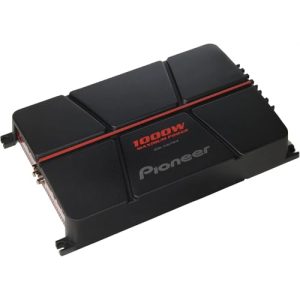
Pioneer GM-A6704 4-Channel Bridgeable Amplifier with Bass Boost
- Best for: Builders keeping their current head unit who want dedicated four-channel power with bridging flexibility.
- Brand: Pioneer
- Model: GM-A6704
- Configuration: 4-channel bridgeable amplifier
- Amplifier class: Class AB
Builders keeping their current head unit who want dedicated four-channel power with bridging flexibility.
An amplifier needs a proper power, ground, and speaker wiring run that a receiver swap does not, so confirm your installation plan and wiring kit before the amplifier arrives.
This is the separate-amplifier route for a driver who already likes the head unit in the dash and only lacks clean power behind it. The GM-A6704 is a four-channel Class AB design that can run front and rear speakers in four-channel mode or bridge down for fewer, stronger channels, and it adds a bass boost control for shaping the low end. It makes sense as the foundation of a staged build: power the door speakers properly now, then reconfigure channels later if a subwoofer joins the system, instead of replacing the amplifier at every step of the upgrade path.
KICKER DSC650 6.5-Inch (160-165mm) Coaxial Speakers, 4-Ohm (Pair)
- Best for: Drivers replacing one worn pair of 6.5 inch door speakers on a system they otherwise plan to keep.
- Brand: KICKER
- Model Name: 43DSC6504
- Item model number: 43DSC6504
- Speaker type: Coaxial, 2-way
Drivers replacing one worn pair of 6.5 inch door speakers on a system they otherwise plan to keep.
Check mounting depth and whether your car needs adapter rings or a speaker harness, since a bare pair of speakers assumes your existing mounting points line up.
Sometimes the amplifier and radio are fine and only the speakers have given up, with torn surrounds and faded output after years in hot doors. This Kicker pair addresses exactly that job: a 6.5 inch two-way coaxial design at 4 ohms, sold as a pair for a left and right door or rear location. Because the impedance matches the load most head units and four-channel amplifiers expect, it drops into a factory replacement role or pairs sensibly with the Pioneer amplifier above for a modest two-part upgrade. It is the least complicated purchase in this guide, and for many cars the most needed one.
Which One Fits Your Situation
Your Radio and Speakers Are Both Worn Out
Start with one of the two packages rather than buying parts in sequence. The BOSS 638BCK covers a single din dash and 6.5 inch front speakers with Bluetooth and USB sources, while the Alpine bundle adds a second speaker size for cars with 6×9 rear locations. Either way, one delivery replaces the source unit and the speakers it drives, and you avoid discovering mid-install that your new speakers still depend on a failing factory radio for power and signal.
Your Head Unit Is Good but the Sound Is Thin
Keep the radio and fix the power. The Pioneer GM-A6704 gives front and rear speakers their own dedicated channels, with bridging in reserve if your plans change. Pairing it with the Kicker DSC650 speakers covers the common case where the factory speakers also struggle once real amplifier power arrives. This route costs more installation effort than a package swap, because amplifier wiring runs through the car, but it leaves your familiar head unit, steering wheel controls, and dash appearance exactly as they are.
Only One Pair of Speakers Has Failed
Resist rebuilding the whole system around a single failure. The Kicker DSC650 pair replaces the worn location directly, matches the 4-ohm load your existing radio or amplifier already expects, and keeps the rest of a working system untouched. Spend your checking time on fit instead: measure the old speaker, look at the mounting depth behind it, and confirm whether your car uses a simple screw pattern or a factory bracket that needs an adapter before the new pair can seat properly.
You Plan to Add a Subwoofer Later
Buy amplification that can be rearranged rather than replaced. A bridgeable four-channel amplifier such as the Pioneer GM-A6704 can power four speakers today and later give up two bridged channels to a subwoofer while the head unit or a smaller addition covers the front stage. The packages in this guide are better finished systems than foundations, since their built-in receiver power is fixed. Planning the second stage now mostly means choosing channel flexibility and leaving room in your wiring layout for the run a subwoofer will eventually need.
Common Mistakes
- Shopping by the largest wattage figure on the box instead of checking continuous output and the impedance the amplifier is rated to drive.
- Ordering speakers by diameter alone without measuring mounting depth, then finding the door glass or panel interferes with the fit.
- Mixing a monoblock amplifier with a four-speaker plan, or a two-channel unit with front and rear locations that each need power.
- Assuming a bundle fits because one speaker size matches, without verifying the second size in a mixed front and rear package.
- Forgetting that a separate amplifier needs its own power, ground, and signal wiring, none of which travels through the factory radio harness.
Frequently Asked Questions
Do I need a separate amplifier, or is receiver power enough?
Receiver power is enough for efficient replacement speakers at moderate listening levels, and both packages here rely on it. A separate amplifier earns its place when you listen louder, run less sensitive speakers, or want channels you can bridge later for a subwoofer. The honest check is the built-in rating on the listing, such as 18 watts by four channels, against how demanding your speakers and your volume habits actually are.
What does bridgeable mean on a four-channel amplifier?
Bridging combines two amplifier channels into one stronger channel. On a four-channel model such as the Pioneer GM-A6704, that lets the same unit run four speakers, or two speakers plus a bridged load, depending on how you wire it. It is a flexibility feature rather than extra power from nowhere, because the total channel count drops as the bridged output rises, so plan which configuration your car actually needs before you wire anything.
Will 6.5 inch speakers fit any car with round door speakers?
No. Round factory speakers come in several diameters, and some doors use oval or component layouts with separate tweeters instead. Even when the diameter matches, mounting depth and bracket patterns vary by model and year. Measure the speaker you are removing, check the space behind it, and confirm the size stated in the listing against your vehicle before ordering, because a correct electrical match cannot rescue a speaker that physically cannot sit in the opening.
Can I mix brands between my amplifier and speakers?
Yes, as long as the electrical match is right. Amplifiers and speakers communicate through power and impedance, not brand loyalty, so a Pioneer amplifier can drive Kicker speakers when the channel count, impedance, and power handling line up. What matters is reading both listings carefully: the load the speakers present, the output the amplifier delivers into that load, and the sizes your car accepts. Bundles remove that checking by pre-matching the parts, which is their main advantage.
More from Amazon
Programs that pair well with the guide above. Offers and eligibility are set by Amazon and may change.
Free shipping on eligible items, Prime Video and more. Eligible new members can start with a free trial.
Start a Prime free trialAudiobooks and podcasts to listen to on the go. Eligible new members can start with a free trial.
Try Audible freeAd-free music streaming. Eligible new subscribers can start with a free trial.
Try Music Unlimited freeA free business account with business pricing and bulk-buying tools for work, shop or home office.
Create a business accountAs an Amazon Associate we earn from qualifying purchases.


Write Your Review
No reviews yet. Be the first to share your experience!