

Key takeaways
- Heavy-duty eye bolts: Use structural bolts that pass through a beam with washers and nuts when the beam is accessible from above.
- Lag screws: These can work in a suitable solid wood beam, but they must be correctly sized and installed into structural lumber—not merely porch fascia or trim.
- Spring sets: Porch-swing springs can soften the motion, but they add connection points that need periodic inspection.
- Chains or rope: Galvanized chain is predictable and durable. Marine-grade rope can look attractive but must be UV-resistant and rated for the load.
- Ceiling brackets: Use a bracket designed for swings, not a decorative plant hook or ordinary hanging-chair hook.
The best porch swings match your available width, expected use, and mounting structure first; for most homes, a 4- to 5-foot swing made from weather-resistant poly lumber or powder-coated metal offers the strongest balance of comfort, durability, and manageable installation.
Our top picks
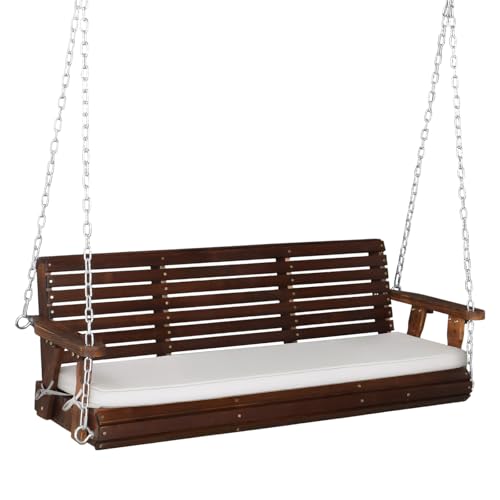


As an Amazon Associate we earn from qualifying purchases at no extra cost to you. Ratings are shown as listed on Amazon.
Quick picks by porch and priority
| Situation | Best swing type | Typical seat size | Typical capacity | Why it fits |
|---|---|---|---|---|
| Small porch or balcony | Compact two-person swing | 36–48 in. wide | 400–600 lb | Leaves more clearance for doors and walkways |
| Average covered porch | Classic three-person swing | 48–60 in. wide | 500–800 lb | Comfortable for two adults without overwhelming the space |
| Large porch or family use | Wide three-person or four-person swing | 60–72 in. wide | 700–1,000 lb | More sitting room, but requires stronger structure and more clearance |
| Frequent rain and sun | Poly lumber or powder-coated aluminum | 48–60 in. wide | 500–800 lb | Resists rot and needs less refinishing than ordinary wood |
| Traditional appearance | Painted or sealed solid wood | 48–60 in. wide | 400–700 lb | Warm appearance, provided it receives regular maintenance |
What to measure before choosing a swing
Measure the available width, depth, ceiling height, and structural mounting points—not just the space between porch posts. A swing that is 60 inches wide may need at least 72 inches of unobstructed width once the chains, arms, and side clearance are included.
Allow roughly 2 feet of open space in front of the seat for a gentle swinging arc and at least 6 inches on each side. If the porch is narrow, a 36- to 48-inch swing is usually easier to live with than a larger model that blocks a door or railing. Also check the swing’s total depth. A seat that is 20–24 inches deep is comfortable for upright sitting; a 26- to 30-inch seat can support lounging but may interfere with circulation on a shallow porch.
Height matters as well. A typical hanging swing sits about 18–22 inches above the floor at its front edge. Leave enough overhead room for the suspension hardware and allow the swing to move without striking a ceiling fan, light fixture, post, or railing.
Head-to-head: material choices
Poly lumber
Poly lumber, often made from recycled high-density polyethylene, is one of the safest choices for exposed porches. It does not rot, splinter, or require paint, and color is usually integrated through much of the material. Brands such as POLYWOOD and Trex Outdoor Furniture are well-known examples of this outdoor-furniture category.
The trade-off is weight and price. A poly-lumber swing can weigh approximately 70–120 pounds before cushions, so moving it into position may require two or three people. It can also become warm in direct sun. Look for stainless-steel or hot-dipped galvanized fasteners, because the frame may outlast cheap hardware.
Solid wood
Cedar, cypress, teak, and treated pine can all work outdoors, but they do not have the same maintenance needs. Cedar is relatively light and naturally resistant to decay, while teak is dense and durable but commonly costs more. Treated pine is economical, though it can crack, warp, or require more frequent sealing.
Wood swings need inspection at the joints, especially around the chain eyes and arm supports. Depending on the finish and exposure, expect to clean and reseal a wooden swing every one to three years. A cover helps, but trapping moisture under a cover can accelerate mildew.
Powder-coated metal
Steel and aluminum frames provide a clean appearance and can support substantial loads. Aluminum is lighter and naturally resistant to rust, while steel is often more rigid but needs an intact powder coating to protect it from corrosion. Inspect welded joints and drain holes, and touch up chips before moisture reaches bare metal.
Metal seats may be less comfortable without cushions. If cushions are included, choose removable covers made from solution-dyed acrylic or another outdoor-rated fabric, and verify that the foam can dry properly after rain.
Suspension hardware is as important as the seat
Many swing problems come from unsuitable hanging hardware rather than a weak seat. A complete installation normally needs two suspension points for a standard swing, or four for a design using separate chains at each corner. The hardware should be rated for outdoor use and for the swing’s fully occupied load.
- Heavy-duty eye bolts: Use structural bolts that pass through a beam with washers and nuts when the beam is accessible from above.
- Lag screws: These can work in a suitable solid wood beam, but they must be correctly sized and installed into structural lumber—not merely porch fascia or trim.
- Spring sets: Porch-swing springs can soften the motion, but they add connection points that need periodic inspection.
- Chains or rope: Galvanized chain is predictable and durable. Marine-grade rope can look attractive but must be UV-resistant and rated for the load.
- Ceiling brackets: Use a bracket designed for swings, not a decorative plant hook or ordinary hanging-chair hook.
For a 600-pound-rated swing occupied by two people weighing 180 pounds each, the static load is already 960 pounds when the swing itself weighs 120 pounds. Motion adds force, so hardware should have a substantial safety margin rather than merely matching the advertised capacity. If you cannot identify structural framing, consult a qualified contractor before drilling.
Installation needs by porch type
Open-beam porch
This is usually the easiest setup. A solid beam running perpendicular to the swing can accept through-bolts or properly specified lag hardware. Confirm that the beam is structural and not a decorative cover. Mark both mounting points carefully so the chains hang parallel and the seat does not twist.
Finished ceiling
A finished ceiling hides the framing, so use a stud finder only as a starting point. You may need to open a small section to verify joist direction and size. If the joists do not align with the swing, a properly engineered support frame may be necessary.
Concrete, masonry, or apartment balcony
Do not assume masonry anchors or balcony railings can support a swinging load. Concrete installations require anchors specified for the actual substrate and dynamic loads. A railing is generally not an acceptable suspension point unless the structure was explicitly designed for it. In a rental, obtain written approval before making structural changes.
Comfort details that affect everyday use
Seat depth determines whether the swing feels like a bench or a daybed. For upright conversation, choose approximately 20–24 inches. For reclining with cushions, 25–30 inches is more accommodating. A back height of 20–24 inches supports the upper back without making the swing visually bulky.
Slatted seats dry faster after rain, while closely spaced boards feel smoother and reduce the chance of small objects falling through. Cushions add comfort but also create the most maintenance. Choose quick-drying foam, removable covers, and ties that prevent the cushion from sliding during movement.
Durability and ownership realities
The first parts to wear are often not the main frame. Check chain links, carabiners, eye bolts, spring hooks, wood around fasteners, and fabric seams at least twice a year. Replace hardware showing rust, deformation, sharp edges, or damaged threads. Squeaking can indicate normal friction, but it can also signal a loose connection.
Wash poly lumber, metal, and finished wood with mild soap and water. Avoid pressure-washing close to joints or using harsh solvents that can strip coatings. Remove leaves and standing water from the seat, and let cushions dry completely before storing them. In freezing climates, store cushions indoors and consider removing the swing or covering it with a breathable, vented cover.
Do not exceed the stated capacity, allow children to stand or climb on the swing, or treat a porch swing as a substitute for a hammock. Recheck every fastener after the first few weeks because the structure can settle and chains can shift slightly.
Best choice for most buyers
For an average covered porch, choose a 48- to 60-inch poly-lumber or well-finished cedar swing with a 500- to 800-pound capacity, galvanized or stainless suspension hardware, and a 20- to 24-inch seat depth. That combination is large enough for two adults, durable in varied weather, and less demanding than unfinished wood.
Choose a compact 36- to 48-inch model when clearance is limited. Choose a 60- to 72-inch model only when the porch has a verified structural beam, generous front clearance, and enough room to move the swing safely. The best porch swings are not simply the widest or most decorative; they are the ones whose dimensions, hardware, and material match the building and the maintenance time you are willing to provide.

Write Your Review
No reviews yet. Be the first to share your experience!