

Key takeaways
- Seat cushion width at the front and narrowest point.
- Backrest height from the cushion to the top of the seat.
- Backrest width at the shoulders and lower bolsters.
- Headrest shape and whether it is removable.
- Location of armrests, folding mechanisms, and seat-belt receivers.
- Presence of side-impact airbags in the seat bolster.
The best car seat covers balance a secure vehicle-specific fit, durable upholstery, easy cleaning, comfortable temperature control, and unrestricted seat-belt and airbag operation; for most daily drivers, a custom-fit fabric cover is the safest all-round choice, while leatherette suits owners who prioritize spill resistance and a polished interior.
Our top picks

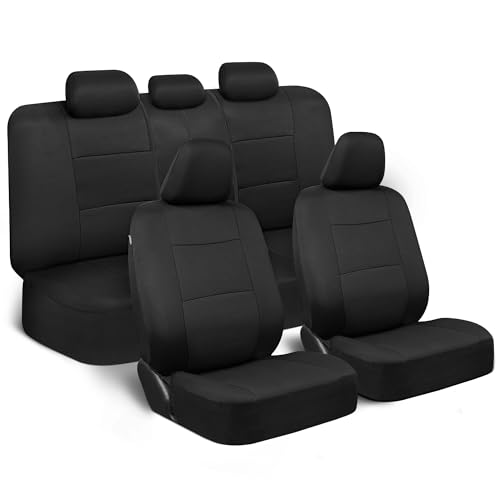
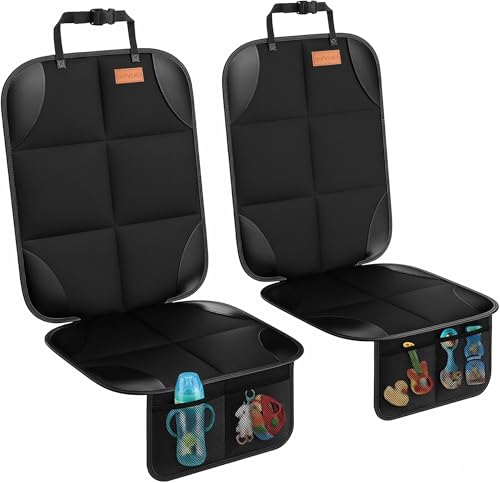

As an Amazon Associate we earn from qualifying purchases at no extra cost to you. Ratings are shown as listed on Amazon.
Quick Picks by Vehicle and Use
| Situation | Best cover type | Why it fits the use | Typical market range |
|---|---|---|---|
| Commuter car used every day | Vehicle-specific woven polyester or nylon | Breathable, washable, and less prone to temperature extremes | $100–$350 per row |
| Children, pets, or frequent food spills | Water-resistant polyester with a bench protector | Good coverage and easier removal than tightly fitted upholstery | $30–$150 per row |
| Luxury interior or professional appearance | Custom-fit leatherette | Smooth surface, strong spill resistance, and factory-like styling | $180–$600 per row |
| Hot, sunny climate | Breathable fabric, mesh, or ventilated neoprene blend | Usually retains less heat than dark synthetic leather | $60–$300 per row |
| Occasional muddy or wet outdoor use | Removable universal waterproof protector | Fast to install and inexpensive to replace | $25–$100 per row |
Fabric vs. Leatherette: Which Lasts Longer?
Fabric seat covers
Fabric covers are commonly made from polyester, nylon, canvas, neoprene, or mixtures of these materials. Woven polyester is the practical default: it tolerates regular washing, does not feel as hot as vinyl-like surfaces, and can conceal light dust and wear. Nylon generally offers strong abrasion resistance, while canvas is thicker and better suited to work vehicles, though it can feel stiff.
Neoprene-style covers provide water resistance and a close-fitting appearance, but their performance depends heavily on stitching, backing, and exposure to heat. A thin neoprene cover may stretch or fade sooner than a heavier woven fabric. Look for reinforced seams, a non-slip backing, and at least 2–3 millimeters of padding if additional comfort matters.
Fabric’s main weakness is absorption. Coffee, sweat, pet moisture, and oily residue can reach the foam unless the cover has a waterproof membrane. Even water-resistant fabric is not always waterproof: the seams and seat-base gaps are usually the first places for liquid to pass through.
Leatherette seat covers
Leatherette usually means polyurethane-coated synthetic leather or vinyl. It wipes clean quickly and resists liquid better than ordinary fabric. It can also give a basic interior a coordinated, upscale appearance. Higher-quality polyurethane leatherette tends to feel softer and less plasticky than inexpensive PVC vinyl.
The trade-off is temperature. Dark leatherette can become uncomfortably hot in direct sun and cold in winter. It may also become slippery, especially on a smooth seat cushion. Cracking commonly begins on the outer bolster, where drivers repeatedly slide across the edge during entry and exit. A cover with a fabric backing, UV-resistant surface, double-stitched seams, and moderate texture will usually age better than a glossy, thin cover.
For durability, consider how the cover will be used rather than assuming one material wins everywhere. A clean, climate-controlled commuter interior may benefit from leatherette. A vehicle parked outdoors, driven in hot weather, or used for long trips is often better served by breathable fabric.
Fit Is More Important Than Appearance
Universal covers are inexpensive and adaptable, but they can bunch at the seat base, expose upholstery around the shoulders, or interfere with seat controls. They are useful as temporary protection, particularly for muddy passengers or pets, but they rarely look or feel integrated.
Vehicle-specific covers are cut around the seat’s headrest posts, side bolsters, armrests, seat hinges, and belt receivers. They cost more, but a closer fit reduces movement and abrasion. Before ordering, check the exact vehicle year, trim, body style, row, and whether the seats are heated, ventilated, powered, or equipped with integrated head restraints.
Measure the seat rather than relying only on a “universal” label. A useful starting checklist is:
- Seat cushion width at the front and narrowest point.
- Backrest height from the cushion to the top of the seat.
- Backrest width at the shoulders and lower bolsters.
- Headrest shape and whether it is removable.
- Location of armrests, folding mechanisms, and seat-belt receivers.
- Presence of side-impact airbags in the seat bolster.
Allowing roughly 2–5 centimeters of adjustment in a universal cover can prevent a difficult installation, but excessive looseness is not a benefit. Loose material can wrinkle under the driver’s thighs, catch on controls, and make entry less stable.
Airbag Compatibility Is Non-Negotiable
Many modern vehicles place side airbags inside the outer seatback bolster. A cover that fully encloses or tightly constricts that area may delay deployment or change how the airbag exits. Choose a cover specifically labeled for seats with side airbags and confirm that it has a designated tear seam or deployment panel on the correct side.
Do not cut an opening yourself unless the manufacturer explicitly provides approved instructions. An improvised slit can fray, close up under tension, or sit in the wrong position. Covers should also leave seat-belt buckles, belt anchors, sensors, seat-mounted controls, and child-seat attachment points accessible.
If the product instructions do not clearly address side airbags, treat that as a reason to choose another product. A professional installer or the vehicle manufacturer can clarify compatibility when the seat design is unusual.
Installation: A Secure Fit in Five Steps
- Inspect the seats. Remove sharp objects, vacuum grit from the seams, and photograph the original routing of wires and buckles.
- Match each panel. Identify the driver, passenger, front, rear, left, and right pieces before stretching anything into place.
- Install the backrest first. Slide the cover evenly over the top, keeping the airbag panel aligned with the outer bolster.
- Tuck the seat cushion. Feed straps through the intended gaps without forcing material around wiring, power-seat tracks, or belt hardware.
- Check every function. Move the seat through its full range, reconnect or expose all buckles, fold the rear seats, and verify that no cover panel is pulled across an airbag area.
Most covers take approximately 30–90 minutes per row, depending on the number of panels and how closely they fit. A second person helps with leatherette because uneven stretching can create permanent wrinkles and excessive tension at the seams.
Cleaning and Ownership Costs
For fabric, vacuum first, blot spills instead of scrubbing them deeper, and use a mild upholstery cleaner on a hidden area. Remove covers only when the manufacturer permits machine washing; aggressive heat can shrink panels and change their shape. Air-drying is usually safer than a hot dryer.
For leatherette, wipe dust away with a damp microfiber cloth and use a cleaner approved for synthetic leather. Avoid bleach, strong solvents, abrasive brushes, and silicone-heavy dressings. These products can make the surface slippery or accelerate deterioration of the coating.
Consider cost per use before choosing the cheapest option. A $60 universal protector used twice weekly for two years provides about 208 uses, or roughly $0.29 per use. A $300 custom set used daily for five years provides about 1,825 uses, or roughly $0.16 per use. The calculation excludes installation and replacement, but it shows why a higher purchase price can make sense for a frequently driven vehicle.
Inspect the driver’s outer bolster first, followed by the seat-base seams, strap anchors, and areas beneath child seats. These locations experience the most friction and compression. Replace a cover when it becomes loose, exposes damaged upholstery, blocks a buckle, or shows a failed airbag seam—not merely when it looks slightly faded.
Decision Guide: Choose by Priorities
- Lowest upfront cost: Choose a universal polyester protector, accepting compromises in fit and appearance.
- Best everyday balance: Choose vehicle-specific woven fabric with washable panels and reinforced seams.
- Fastest spill cleanup: Choose textured leatherette, provided the vehicle is not routinely left in intense sun.
- Maximum heat comfort: Choose light-colored, breathable fabric and avoid solid black vinyl-like surfaces.
- Work truck or outdoor equipment: Choose heavy canvas or water-resistant polyester with separate floor and bench protection.
- Pet and child protection: Choose a removable waterproof bench protector with seat-belt openings rather than relying only on fitted front-seat covers.
What to Look for in 2026
The best car seat covers are not necessarily the thickest or most expensive. Prioritize verified vehicle compatibility, airbag-safe construction, accurately labeled materials, reinforced stress points, and cleaning instructions that match your routine. A breathable custom-fit fabric cover is the strongest general recommendation; leatherette is the better choice when wipe-clean convenience and interior styling matter more than hot-weather comfort.
Before buying, confirm the return policy, measure the seats, identify side-airbag locations, and verify that the cover preserves every seat adjustment and belt connection. Those checks prevent the most expensive mistake: protecting the upholstery with a cover that does not safely fit the vehicle.

Write Your Review
No reviews yet. Be the first to share your experience!