

Key takeaways
- The best professional karaoke systems for performers are modular PA setups built around a reliable wireless microphone, a real mixer, and speakers matched to the venue—not compact all-in-one karaoke boxes. For most working singers, the strongest choices are the Bose…
The best professional karaoke systems for performers are modular PA setups built around a reliable wireless microphone, a real mixer, and speakers matched to the venue—not compact all-in-one karaoke boxes. For most working singers, the strongest choices are the Bose S1 Pro+ for portability, the JBL EON ONE MK2 for a compact one-box rig, and the Yamaha STAGEPAS 1K mkII for larger rooms and more output.
Our top picks


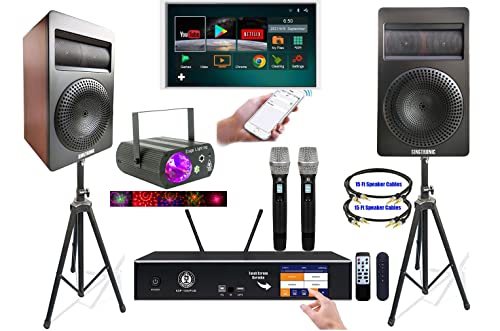
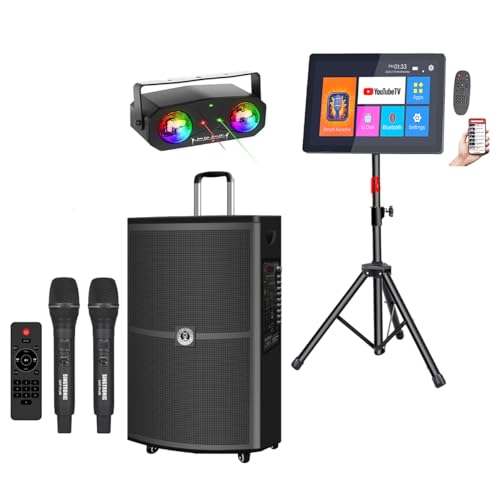
As an Amazon Associate we earn from qualifying purchases at no extra cost to you. Ratings are shown as listed on Amazon.
Best professional karaoke systems at a glance
| System | Best for | Key specifications | Main limitation |
|---|---|---|---|
| Bose S1 Pro+ | Mobile performers, small events, acoustic-style karaoke | 14.4 kg; 6.5-inch woofer; up to 11 hours with battery; three-channel mixer; Bluetooth | Less low-end and headroom than larger column systems |
| JBL EON ONE MK2 | Solo singers and compact professional setups | 17.1 kg; 8-inch woofer; seven 2-inch column drivers; up to 6 hours with battery; 123 dB maximum SPL | Battery runtime depends heavily on volume and program material |
| Yamaha STAGEPAS 1K mkII | Medium venues, corporate events, and regular performers | 12-inch subwoofer; 10-driver line array; 1,250 W dynamic power; approximately 23 kg total; Bluetooth and digital mixer | Less convenient to carry than a single compact speaker |
| Two-speaker powered PA system | Duets, bands, DJs, and larger audiences | Typically two 8- to 12-inch speakers; 1,000-2,000 W combined peak rating; 20-35 kg total before stands | Requires more transport space, cables, stands, and setup time |
What makes a karaoke system professional?
A professional setup must keep vocals intelligible while reproducing backing tracks at a useful volume. Marketing wattage is less important than maximum SPL, speaker dispersion, mixer control, and protection circuitry. A system that sounds impressive in a living room may become harsh or thin when pushed in a crowded bar.
Look for at least two independent microphone channels, adjustable reverb, a three-band or parametric equalizer, feedback control, and separate volume control for music and vocals. A dedicated echo knob is useful for casual singing, but performers need enough control to prevent the effect from masking diction.
Best portable choice: Bose S1 Pro+
The Bose S1 Pro+ is a strong choice when one person must carry the entire rig into restaurants, lounges, private parties, or small wedding spaces. Its rechargeable battery can provide up to 11 hours under favorable operating conditions, and the built-in mixer accepts microphones, instruments, and playback devices.
Its compact size makes setup quick, and multiple cabinet positions help when the speaker is placed on the floor, on a table, or on a stand. The optional wireless transmitter system reduces cable clutter. For karaoke, however, the S1 Pro+ is best treated as the amplification stage: a phone, tablet, or laptop still supplies the lyrics and backing tracks.
The trade-off is physical output. A single S1 Pro+ is appropriate for a small room or moderate audience, but it will not deliver the same bass authority or vocal projection as a larger column PA. A second unit improves coverage, yet increases cost and transport requirements.
Best compact all-in-one PA: JBL EON ONE MK2
The JBL EON ONE MK2 is more substantial than a typical battery karaoke speaker while remaining manageable for a solo performer. Its 8-inch woofer and column of seven 2-inch drivers provide better vocal projection and wider distribution than many portable boxes. JBL specifies a maximum output of 123 dB, although practical clean volume depends on room acoustics, bass content, and how much headroom is reserved for vocal peaks.
The integrated digital mixer provides useful control over microphone EQ, reverb, delay, and feedback. This matters when switching between singers: a microphone that needs a little high-frequency lift should not force a change to the entire music signal.
Battery life is rated at up to six hours, but a high-volume performance with strong bass will reduce that figure. For a paid event, bring the charger and treat battery operation as backup rather than an excuse to omit power planning.
Best for larger rooms: Yamaha STAGEPAS 1K mkII
The Yamaha STAGEPAS 1K mkII is the better fit for performers who regularly work in medium-sized rooms and need more low-frequency authority. Its 12-inch subwoofer and 10-driver line array distribute sound more evenly than a small point-source speaker, while the digital mixer offers control suitable for multiple microphones and playback sources.
The system is especially useful for karaoke hosts, duos, and entertainers who need a confident vocal image without carrying a conventional pair of speakers, stands, and a separate mixer. Its roughly 23 kg total weight is still transportable, but it is not a casual one-hand carry up several flights of stairs.
Use the system’s output conservatively. More power does not eliminate feedback, and excessive bass can reduce vocal clarity. Set the music first, then raise the microphone until it is clearly above the track without forcing the system into limiting.
Microphone quality matters more than the karaoke brand
For professional use, a reliable dynamic vocal microphone is usually a better investment than a low-cost wireless microphone included with a karaoke bundle. The Shure SM58 is a durable wired reference, while wireless systems such as the Shure BLX24/SM58 and Sennheiser XSW 1-825 provide practical stage mobility when configured for the local frequency regulations.
Choose microphones with a cardioid pattern to reduce sound entering from behind the capsule. Supercardioid models can offer greater rejection, but they require more disciplined speaker placement. Keep the main speaker in front of the microphone, never directly behind it, and avoid pointing the microphone at a monitor.
For two or more singers, buy separate receiver channels rather than relying on a single receiver that supports only one active microphone. Check the system’s frequency coordination before an event, especially in venues with wireless microphones, Wi-Fi equipment, or television production nearby.
Screen and playback options
A professional karaoke system should separate audio from lyrics. A phone is convenient for occasional performances, but a 10- to 13-inch tablet or laptop is easier to read and operate during a long set. For a fixed venue, a 24- to 32-inch external monitor placed near the performers is more useful than trying to read a small screen from across the room.
Bluetooth is convenient for background music and emergency playback, but wired connections are safer for the main show. A USB-C or 3.5 mm connection can avoid wireless interference and reduce latency. Keep a downloaded backup playlist and a second playback device; an internet connection should not be the only way to access the next song.
KaraFun offers a professional subscription tier for public performance use. Verify the current licensing terms for the country and venue rather than assuming a personal subscription covers paid events.
Decision matrix: match the system to the job
| Your situation | Recommended direction | Why |
|---|---|---|
| Under $1,000, occasional solo work, small rooms | One Bose S1 Pro+ or a comparable battery PA plus a wired dynamic microphone | Lowest transport and setup burden |
| Regular solo performer, mixed indoor and outdoor events | JBL EON ONE MK2 | More vocal headroom and mixer control while retaining battery operation |
| Weekly paid work in medium rooms | Yamaha STAGEPAS 1K mkII | Greater coverage, bass extension, and input flexibility |
| Duet, band, or audience above roughly 150 people | Two powered speakers with a separate mixer and two or more professional microphones | Stereo coverage, redundancy, and independent channel control |
| Permanent karaoke room | Powered PA, wired microphones, large display, and a dedicated playback computer | Reliability and easy replacement are more valuable than battery operation |
Worked setup: how much coverage do you need?
Suppose a performer expects 100 guests in a rectangular 12-by-10-metre room. A single speaker placed beside the singer may sound loud near the front and unclear at the back. Two speakers placed left and right of the performance area improve coverage, but they should not be aimed directly across the room at each other. Angle them toward the audience and keep them above head height when possible.
For a 40-song, four-hour event, plan for approximately six minutes per song, including announcements and singer changes. That leaves little margin for troubleshooting. Load the planned songs before arrival, test both microphone channels, and keep at least one spare cable, microphone battery set, and playback adapter.
Durability and ownership realities
The parts that usually wear first are microphone grilles, XLR cables, speaker connectors, battery packs, and mixer knobs. Replace damaged cables instead of wrapping them tightly around the speaker. Store microphones in a case, wipe grilles with a dry or lightly damp cloth, and allow equipment to dry before packing it after an outdoor event.
Rechargeable batteries gradually lose capacity. If a portable system is used weekly, expect battery performance to become an ownership consideration several years before the speaker electronics necessarily fail. Confirm that replacement batteries are available in your market before choosing a battery-dependent system.
Do not place drinks on the speaker, run cables across an unprotected walkway, or operate at maximum volume for an entire show. Leave headroom for loud singers and sudden backing-track peaks. The best professional karaoke system is the one that delivers clear vocals repeatedly, can be transported without damage, and still has a workable backup plan when a cable, battery, or internet connection fails.



Write Your Review
No reviews yet. Be the first to share your experience!