

Key takeaways
- Start with medium tips and insert the earbuds gently.
- Play a familiar vocal track at low volume.
- Try one size up if bass sounds thin or outside noise is prominent.
- Try one size down if the seal feels pressurized or the earpiece works loose.
- Check both ears separately; asymmetrical ear canals may need different sizes.
The best wired earbuds for clear, reliable sound depend on your phone connector, listening environment, and tolerance for cable noise: the Moondrop CHU II is the strongest low-cost all-rounder, the 7Hz Salnotes Zero 2 offers a smoother everyday tuning, the Etymotic ER2XR delivers the most isolation, and the Shure SE215 remains a durable choice for stage-style monitoring.
Our top picks


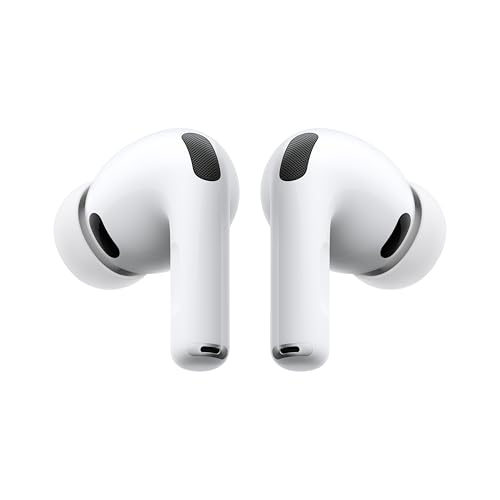
As an Amazon Associate we earn from qualifying purchases at no extra cost to you. Ratings are shown as listed on Amazon.
Quick comparison: the best wired earbuds by situation
| Model | Approx. market range | Connector | Driver and weight | Isolation and microphone | Best for |
|---|---|---|---|---|---|
| Moondrop CHU II | $15–$25 | Detachable 0.78 mm 2-pin; 3.5 mm plug | 10 mm dynamic; about 5 g per earpiece | Good passive isolation; detachable cable version normally has no microphone | Budget detail and replaceable cables |
| 7Hz Salnotes Zero 2 | $20–$30 | Detachable 0.78 mm 2-pin; 3.5 mm plug | 10 mm dynamic plus planar diaphragm; about 4.5 g per earpiece | Moderate passive isolation; cable with inline microphone is commonly available | Warm, relaxed everyday listening |
| Apple EarPods | $15–$20 | USB-C or 3.5 mm, depending on version | Open-fit dynamic design; about 10 g total | Very little isolation; clear inline microphone | Calls, laptops, and people who dislike sealed tips |
| Etymotic ER2XR | $100–$150 | Detachable MMCX; 3.5 mm plug | Dynamic driver; about 34 g including cable | Excellent deep-seal isolation; no standard inline microphone | Focused listening and noisy environments |
| Shure SE215 | $90–$120 | Detachable MMCX; 3.5 mm plug | Single dynamic driver; about 30 g including cable | Good isolation; microphone depends on cable purchased | Frequent use and over-ear cable routing |
Weights and included accessories can vary slightly by cable and regional package. A USB-C or Lightning adapter may also change the practical cost and microphone compatibility.
Our picks, head to head
Moondrop CHU II: best wired earbuds for most budget buyers
The CHU II combines a lively, detailed presentation with the feature that matters most for long-term ownership: a replaceable cable. Its 10 mm dynamic driver gives vocals enough presence for podcasts and acoustic music, while the treble brings out pick attack and small recording details. It is not the most relaxed choice for listeners who are sensitive to bright high frequencies, but it sounds more resolving than many basic fixed-cable earbuds.
The metal-and-plastic construction is compact, and the over-ear fit reduces cable movement. The 0.78 mm 2-pin connector is widely supported by replacement cables, including versions with microphones. That gives the CHU II an advantage over inexpensive earbuds that must be discarded after a plug or cable failure.
7Hz Salnotes Zero 2: best for a smoother, fuller balance
The Salnotes Zero 2 is a better match for listeners who want clear sound without an aggressively crisp top end. Its tuning emphasizes a modest amount of warmth and bass weight, making electronic music, pop, and films sound fuller than on many neutral budget models. Speech remains intelligible, although the softer balance may reveal fewer fine treble details.
Its detachable 2-pin cable improves serviceability. Check the exact package before buying if microphone performance is important, because cable configurations vary. A model with an inline microphone is useful for casual calls, but a laptop headset jack or phone adapter can still affect compatibility.
Apple EarPods: best for simple calls and an open fit
Apple EarPods remain a sensible option when microphone quality and convenience matter more than isolation. The microphone is positioned close to the mouth, and the remote is easy to use for calls and media controls. Because the housings rest at the entrance of the ear rather than sealing the canal, outside sounds remain audible.
That open design is also the limitation: buses, offices, and fans can overwhelm quiet music, and bass response depends heavily on how each ear is shaped. Choose the USB-C version for compatible modern devices, or the 3.5 mm version for conventional headphone sockets. They are not a good choice when you need strong noise reduction without electronics.
Etymotic ER2XR: best passive isolation and accuracy
The ER2XR uses a deep-insertion design with narrow eartips, so it can block considerably more outside sound than ordinary silicone-tip earbuds. Its “extended response” tuning adds some low-end weight while retaining the focused midrange that makes voices and instruments easy to follow. It is particularly effective for careful listening at moderate volume.
Fit is highly individual. Some people prefer the stability and isolation of a deeper seal; others find that style intrusive. The detachable MMCX cable improves repairability, but the standard cable is aimed at listening rather than phone calls. This is a specialist recommendation, not the most effortless first pair.
Shure SE215: best for cable durability and secure wearing
The SE215’s over-ear design keeps the cable away from clothing and reduces accidental tugs. Its detachable MMCX connection means the cable can be replaced, and Shure’s familiar stage-monitoring shape stays secure during walking or performance. Passive isolation is useful in transit and rehearsal spaces.
Its sound is warm and smooth rather than sharply analytical. Bass has a noticeable presence, while treble is comparatively restrained. That makes the SE215 comfortable for long sessions, but listeners seeking maximum sparkle or the newest technical performance may prefer a newer budget planar or hybrid design. For calls, select a compatible microphone cable rather than assuming every SE215 package includes one.
What matters more than the product name
Cable durability and connectors
The plug, strain relief, and cable are usually the first parts to fail. Repeatedly bending a cable at the phone, pulling earbuds out by the wire, or storing them tightly wrapped around a device accelerates breakage. A detachable cable changes the economics: replacing a cable in the general $10–$30 range is cheaper than replacing the entire earbud.
Common connector choices are 3.5 mm, USB-C, Lightning, 0.78 mm 2-pin, and MMCX. A 3.5 mm plug is broadly compatible but requires an adapter on many phones. USB-C earbuds contain a digital audio circuit and may work differently across operating systems. Two-pin and MMCX connectors are used between an earbud and its cable, not directly in most phones.
Fit and passive isolation
A sealed in-ear fit can improve bass consistency and reduce the temptation to increase volume in noisy places. Try the smallest eartip that seals without constant pressure, then compare it with the next size. If bass disappears when you move your jaw, the seal is probably incomplete.
For earbuds with small, medium, and large tips, a practical fitting sequence is:
- Start with medium tips and insert the earbuds gently.
- Play a familiar vocal track at low volume.
- Try one size up if bass sounds thin or outside noise is prominent.
- Try one size down if the seal feels pressurized or the earpiece works loose.
- Check both ears separately; asymmetrical ear canals may need different sizes.
Deep-seal models can isolate strongly, but you should remain aware of traffic, alarms, and people around you. No passive-isolation earbud should be treated as a substitute for situational awareness.
Microphone quality and connector compatibility
Microphone quality is determined by microphone position, wind exposure, cable design, and the phone or computer input standard. An inline microphone usually performs best indoors and close to the mouth. It will not match a dedicated USB microphone in a windy street or busy café.
Before purchasing, confirm whether your device has a headphone jack. If it does not, a USB-C-to-3.5 mm adapter must include a digital-to-analog converter; a passive adapter may produce no sound. Some inexpensive adapters also omit microphone support, so check for four-pole headset compatibility if calls are important.
Decision matrix
| Your priority | Choose | Why | Trade-off |
|---|---|---|---|
| Under $30 and replaceable parts | Moondrop CHU II | Detachable 2-pin cable and detailed sound | Usually needs a separate microphone cable |
| Warm music balance for several hours | 7Hz Salnotes Zero 2 | Fuller low end and smoother treble | Less analytical than neutral-tuned alternatives |
| Frequent calls and no sealed fit | Apple EarPods | Convenient inline microphone and open housing | Almost no passive isolation |
| Maximum isolation without batteries | Etymotic ER2XR | Deep-seal eartips block substantial external sound | Insertion style takes adjustment |
| Daily wear, movement, and cable replacement | Shure SE215 | Secure over-ear routing and detachable MMCX cable | Warm tuning and higher price |
Ownership costs and maintenance
Suppose a $25 fixed-cable pair lasts one year, while a $20 detachable-cable pair lasts three years and needs one $15 replacement cable. The three-year ownership cost is about $35, compared with $75 for buying three fixed-cable pairs. That is $11.67 per year versus $25 per year, before adapters or eartips.
Clean eartips regularly with a slightly damp cloth and let them dry completely before reinstalling them. Remove earwax from the nozzle screen with a soft, dry brush; do not push debris deeper into the driver. Store the cable loosely in a small loop, avoid sleeping on the earbuds, and disconnect by gripping the plug or connector housing. Keep spare eartips, because a stretched or dirty tip can change both comfort and bass response.
Final verdict
For the broadest combination of sound quality, repairability, and price, the Moondrop CHU II is the best wired earbuds choice for most buyers. Choose the 7Hz Salnotes Zero 2 for a warmer presentation, Apple EarPods for straightforward calls and an open fit, the Etymotic ER2XR for serious passive isolation, or the Shure SE215 when secure wearing and cable replacement matter most. Wired earbuds still make a strong case in 2026: they avoid battery charging, Bluetooth pairing problems, and wireless latency while remaining easy to repair and use across compatible devices.






Write Your Review
No reviews yet. Be the first to share your experience!