

Key takeaways
- Compare the best tin whistles for Irish folk music, from a brass key of D starter to C and D sets, a nickel Pro model and a CD learning pack.
Most people buying a first tin whistle need one thing: a whistle in the key of D that speaks easily in both octaves. D is the key that Irish session tunes and most beginner books are built around, so the real decision is not the key but the instrument itself. Body material changes the tone and the feel in your hands, the mouthpiece changes how much breath control each note takes, and a two-whistle set changes how soon you can join music written in C.
This guide serves beginners who want one dependable D whistle, returning players after a second key or a sturdier body, and gift buyers who want a learning bundle instead of a bare instrument. Every pick comes from Amazon listings, and the five finalists split along those lines: a brass D from Sondery, an aluminum C and D set, a matte black ABS set from SMARTWOODI, the nickel Feadog Pro, and a Waltons pack pairing a D whistle with a teaching CD and booklet.
Quick Picks
As an Amazon Associate we earn from qualifying purchases
| Product | Best for | Key spec from title |
|---|---|---|
| Sondery Irish Tin Whistle Key of D Brass | A first whistle for Irish sessions | Brass body in the key of D |
| Sondery Irish Tin Whistles Set Key of C and D | Covering both common keys | Aluminum whistles in C and D |
| SMARTWOODI WI-921 WI-922 Set of 2 Irish Whistles | A knockabout travel set | Matte black ABS in keys C and D |
| Feadog Pro Whistle FW26P | Stepping up to a balanced D | Nickel body in the key of D |
| Waltons Irish Tin Whistle CD Pack | Learning tunes at home | Key of D with CD and booklet |
How to Choose
Start With the Key of D
Session tunes, beginner books and most recorded Irish music assume a whistle in D, which plays the D and G major scales with straightforward fingering. A C whistle reads just as easily and suits songs that sit lower, but it will not match a session playing in D. If you only buy one whistle, buy D. If you already own D and play with singers or recorders, add C next rather than an exotic key, because C covers the most common second-key situations without forcing new fingering habits.
Pick a Body Material You Will Stick With
Brass is the traditional choice: it feels solid, warms up under your hands and gives the bright, carrying tone most people picture. Aluminum is lighter and shrugs off dents, which suits players who carry a whistle in a bag every day. ABS plastic never dents or tarnishes and stays consistent in cold rooms, though it sounds a little rounder and less metallic. Nickel plating, used on the Feadog Pro, sits between brass and plastic in feel and produces a softer, richer edge. None of these is fragile, so choose by weight and tone rather than durability worries.
Match the Mouthpiece to Your Breath Control
Every whistle here uses a plastic mouthpiece, but windway shape decides how forgiving the instrument feels. A wider bore and an open windway ask for more air and reward steady breathing with a fuller low octave. A narrower setup needs less air, which helps new players hold long notes, but it punishes overblowing with squeaks in the second octave. Beginners usually progress faster on an easy-blowing whistle and can move to a more demanding one later. If your first notes crack or jump octave, the fix is almost always slower air, not a different whistle.
Decide Between a Single Whistle and a Set
A single D whistle is the cheapest way to learn, and it is all a session player needs for months. A two-whistle set in C and D costs little more and removes the most common frustration after the first tunes: songs and hymn books that sit in C. Sets also give you a built-in spare when one whistle is lost or lent out. Bundles with a book or CD make sense only if you will actually study alone at home; players joining a class or a session learn faster from people and can skip the bundle.
The 5 Best Options
Sondery Irish Tin Whistle Key of D Brass

The Sondery brass D is the straightforward first whistle in this group: a metal body, a plastic mouthpiece and a key that matches session playing from day one. The listing describes a six-hole design spanning two octaves, and the body carries a gold-tone electroplated finish over the brass. At 63 grams it has enough weight to feel planted in the hands without tiring them during long practice. The semi-hard case in the listing name matters more than it sounds, because a bare brass tube dents quickly in a gig bag. Choose it if you want the traditional route with basic protection included.
Specs
- Body material: brass
- Instrument key: D
- Six finger holes, two-octave range
- Mouthpiece: plastic
- Item weight: 63 g
- Model number: SIW
- Semi-hard case included
Best for: Beginners who want a traditional brass D whistle with a case
Watch out for: The listing mixes brass and copper wording, so confirm the body material on the listing before ordering
ASIN: B0CQCFZRBS
Sondery Irish Tin Whistles Set Key of C and D
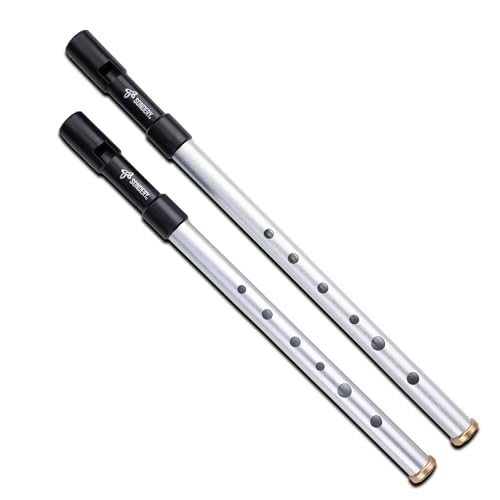
This Sondery set answers the second-key problem on the day you buy your first whistle. You get one aluminum whistle in C and one in D, so session tunes and lower songs are both covered without a second order later. Aluminum keeps the pair light, and the shared design means the fingering and breath feel stay familiar when you swap between them. The tradeoff is that neither whistle is the brass instrument traditionalists picture, and the set suits players who value coverage over owning one characterful whistle. Pick it if your practice already mixes D tunes with songs written in C.
Specs
- Two whistles in the keys of C and D
- Body material: aluminum
- Six-hole penny whistle format
- Brand: Sondery Music
Best for: New players who want both common keys in one purchase
Watch out for: You are buying two entry-level whistles, so plan on a later upgrade if you stay with the instrument
ASIN: B0CQC9PLCV
SMARTWOODI WI-921 WI-922 Set of 2 Irish Whistles Matte Black

The SMARTWOODI pair is the practical traveler of the group. Both whistles are ABS, one in C and one in D, finished in matte black, so they shrug off the dents, dings and tarnish that metal tubes collect in a backpack or car. ABS also keeps its playing feel in cold or damp rooms where metal condenses quickly. The sound is a little less bright than brass, which many home players actually prefer for quiet practice. A wood-grain version of this set exists under a separate listing, so check the finish name carefully if the matte black look is what you want.
Specs
- Two whistles, keys of C and D
- Body material: ABS
- Finish: matte black
- Models: WI-921 and WI-922
Best for: Players who want a dent-proof C and D set for travel or outdoor playing
Watch out for: A wood-grain version sells under a different listing, so double-check the finish before ordering
ASIN: B019HR9DHC
Feadog Pro Whistle FW26P

Feadog has made whistles in Ireland since 1978, and the Pro is its step-up D model, built around a nickel body that players describe as softer and richer in tone than the standard brass version. The Pro is also known for a more balanced response between octaves, which makes it less eager to squeak when you push into the second octave. That balance is exactly what a player needs after the first months, when tunes get faster and breath control gets tested. Choose the Pro if you already know you enjoy the instrument and want a D whistle that rewards better technique.
Specs
- Instrument key: D
- Body: nickel
- Model: FW26P
- Maker: Feadog, Ireland
Best for: Improving players who want a balanced, softer-toned D whistle
Watch out for: Entry-level whistles vary from unit to unit, so check the tuning against a tuner app when it arrives
ASIN: B004SL01KQ
Waltons Irish Tin Whistle CD Pack
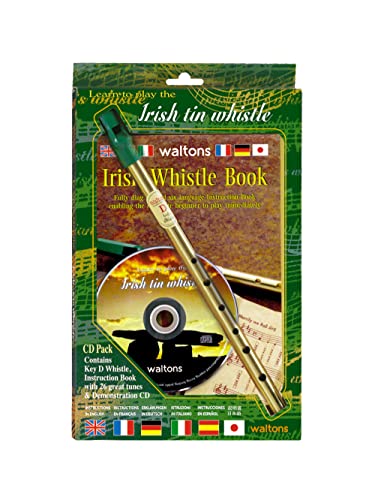
The Waltons pack is built for someone learning alone. Alongside the D whistle itself, the box carries an instruction booklet and a CD that breaks down 27 Celtic and international tunes, so your first repertoire arrives with the instrument instead of waiting for a class. The whistle follows the mellow Waltons pattern, with a softer tone that keeps home practice pleasant for everyone else in the house. It is the only pick here that teaches as well as plays, which makes it the natural gift option. Pick it if nobody around you plays and you need structure from the first day.
Specs
- Instrument key: D
- Includes instruction booklet and CD
- CD covers 27 Celtic and international tunes
- Model: 1514M
Best for: Self-taught beginners and gift buyers who want lessons in the box
Watch out for: The teaching material is on CD, so make sure you still have a way to play one
ASIN: B00006M0WJ
Which One Fits Your Situation
Your First Session Is a Few Weeks Away
Take the Sondery brass D. Sessions run on D tunes, the brass body gives you the carrying tone that holds its own next to fiddles, and the included case keeps the tube safe in a crowded bag. Learn a handful of tunes at home first, sit near the edge of the group, and join in on the ones you know.
You Are Learning Alone at Home
Take the Waltons CD Pack. The booklet and the 27-tune CD give you a practice path without a teacher, and the mellow tone keeps long evening sessions comfortable for the rest of the household. Once the tunes feel easy, the same D whistle still works when you later join other players.
You Travel and Play Outdoors
Take the SMARTWOODI set. ABS does not dent in a rucksack, does not tarnish in damp air, and the matte black finish does not flash in the sun. Having both C and D in the bag means one instrument is always a spare, and neither is precious enough to worry about around a campfire.
You Play With Singers in Changing Keys
Take the Sondery aluminum C and D set. Singers rarely stay in D, and the C whistle covers the most common alternative key with identical fingering habits. The light aluminum bodies are easy to swap mid-set, and the pair leaves room in the budget to add the Feadog Pro later as your main D whistle.
Common Mistakes
- Buying a first whistle in C or B flat because it was in stock, then finding that session tunes and beginner books are written for D.
- Blowing harder to reach the second octave instead of tightening the air stream, which produces squeaks on any whistle.
- Leaving a brass whistle loose in a bag, where the thin tube dents and the mouthpiece collects grit.
- Skipping the fingering chart and learning tunes by ear alone, which builds wrong finger habits that are slow to undo.
- Storing a played whistle wet in a closed case, which leaves moisture sitting in the windway between sessions.
Frequently Asked Questions
What key of tin whistle should a beginner buy first?
D. Almost every beginner book, online lesson and Irish session assumes a D whistle, and its fingering also gives you the G major scale used by many folk tunes. Add a C whistle later if you play with singers or recorders. Other keys are specialty purchases that most players never need during their first year.
Is brass or plastic better for a first whistle?
Neither blocks your progress. Brass feels traditional, carries well in a group and dents if you drop it on stone. ABS plastic sounds slightly rounder, shrugs off knocks and behaves the same in cold rooms. Breath control and clean fingering shape your sound far more than the body material during the first year of playing.
Why does my second octave squeak?
Usually the air is too slow or too spread out, not too weak. Aim a faster, narrower stream by tightening your lips slightly and lifting the tongue, and keep every finger hole sealed, because a small leak breaks the note. Short daily practice fixes it faster than any equipment change, and most beginners settle the second octave within a few weeks.
How should I clean and store a tin whistle?
Shake out the moisture after playing and let the whistle air-dry before it goes into its case or a drawer. Rinse the mouthpiece with lukewarm water when it needs it and let it dry fully. Store metal whistles somewhere they cannot be crushed, because a dented tube changes how the instrument feels and responds.
More from Amazon
Programs that pair well with the guide above. Offers and eligibility are set by Amazon and may change.
Free shipping on eligible items, Prime Video and more. Eligible new members can start with a free trial.
Start a Prime free trialAudiobooks and podcasts to listen to on the go. Eligible new members can start with a free trial.
Try Audible freeAd-free music streaming. Eligible new subscribers can start with a free trial.
Try Music Unlimited freeA free business account with business pricing and bulk-buying tools for work, shop or home office.
Create a business accountAs an Amazon Associate we earn from qualifying purchases.

Write Your Review
No reviews yet. Be the first to share your experience!