

Key takeaways
- Choose a compact tower when space and placement are limited, a three-way 6.5-inch design for the broadest balance of music and home theater, and a high-sensitivity dual-8-inch model when output is the priority. The best tower speakers are not necessarily the largest: they are the…
The best tower speakers are the ones whose cabinet volume, bass extension, sensitivity, and amplifier load suit both your room and your listening priorities—not simply the models with the largest woofers.
Our top picks
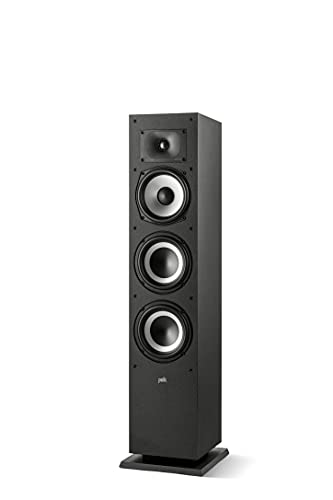


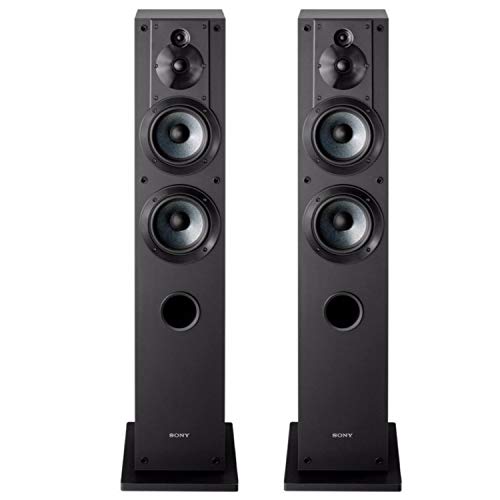
As an Amazon Associate we earn from qualifying purchases at no extra cost to you. Ratings are shown as listed on Amazon.
Quick picks by listening situation
| Situation | Best fit | Why it makes sense | Main caution |
|---|---|---|---|
| Small room, balanced music | Compact 2.5- or 3-way tower | Less cabinet energy and easier placement near walls | May need a subwoofer for cinema-level low bass |
| Medium room, mixed music and movies | Three-way tower with 6.5-inch woofers | Good midrange clarity, wide bandwidth, and manageable amplifier demands | Requires careful toe-in and several inches of clearance |
| Large room or high listening levels | High-sensitivity tower with dual 8-inch woofers | Produces strong output with less amplifier power | Large cabinets can sound boomy if placed too close to a wall |
| Music-first, detailed listening | Coherent three-way design | Separates vocals and instruments more cleanly through the midrange | Usually costs more and may expose poor recordings |
| Home-theater-first system | High-sensitivity tower from a matching speaker range | Plays dialogue, effects, and dynamic peaks confidently | Plan for a matching center speaker and subwoofer |
What makes a tower speaker suitable for your room?
Cabinet size is the first practical filter. A narrow tower typically occupies less floor area, but it is not automatically easier to place: its height and rear bass port still need breathing room. As a general guide, a room under about 150 square feet is often better served by a compact tower, while a 150- to 300-square-foot room can accommodate a conventional 6.5-inch three-way model. Rooms above 300 square feet, or listening positions more than 10 to 12 feet away, benefit from higher sensitivity and greater woofer area.
These are starting points rather than laws. A heavily furnished room absorbs more energy than a bare room, and an open-plan space may behave as a much larger acoustic volume. Measure the listening distance, not just the room’s floor area. The farther you sit, the more amplifier headroom and speaker output you need.
Head-to-head: useful tower-speaker designs
| Model | Design and bass drivers | Published sensitivity | Approx. dimensions per speaker | Approx. weight | Best use |
|---|---|---|---|---|---|
| ELAC Debut 2.0 F6.2 | 3-way; three 6.5-inch drivers | 87 dB | 43.4 × 8.3 × 10.7 in | 46.7 lb | Value-oriented music and theater |
| Polk Reserve R700 | 3-way; two 6.5-inch woofers | 88 dB | 43.5 × 10.5 × 15.6 in | 51 lb | Full-range mixed listening |
| KEF Q11 Meta | 3-way; two 6.5-inch woofers with Uni-Q mid/tweeter array | 90 dB | Approx. 44.3 × 12.2 × 15.0 in | Approx. 66.8 lb | Precise stereo imaging and large rooms |
| Klipsch RP-8000F II | 2.5-way; two 8-inch woofers | 98 dB | 43.1 × 10.9 × 17.8 in | 60.1 lb | High-output home theater and rock |
Manufacturer measurements may use different standards, so sensitivity figures are most useful for broad comparison rather than exact predictions. The Klipsch, for example, is designed to produce substantial volume from modest power. The ELAC’s lower sensitivity does not make it inferior, but it places greater demands on the amplifier when you want high playback levels.
ELAC Debut 2.0 F6.2: sensible value and moderate dimensions
The F6.2 suits listeners who want a genuine floorstanding presentation without moving into large, expensive cabinets. Its three 6.5-inch drivers distribute midrange and bass duties more effectively than many inexpensive two-way towers. Its 87 dB sensitivity makes it a reasonable partner for a capable integrated amplifier or AV receiver, though a small low-power amplifier is not the ideal match for a large room.
Polk Reserve R700: balanced all-rounder
The R700 is a strong choice for a living-room system that must handle acoustic music, pop, television, and films without emphasizing one style. Its three-way layout gives the midrange its own driver, while the dual woofers provide useful scale. It is physically deep, so check that the rear of the cabinet will not end up immediately against the wall.
KEF Q11 Meta: imaging and controlled detail
The Q11 Meta prioritizes a cohesive soundstage through KEF’s Uni-Q driver arrangement. It is attractive for two-channel listening, especially when vocals and instrument placement matter. Its tall, substantial cabinet is better suited to a medium or large room than to a cramped apartment. Its nominal 4-ohm load also makes amplifier quality and current capability more important than the sensitivity number alone suggests.
Klipsch RP-8000F II: output with modest power
With dual 8-inch woofers and horn-loaded high frequencies, the RP-8000F II is the obvious type of choice for energetic home theater, electronic music, and rock at high volume. Its high sensitivity reduces the amplifier power required for a given listening level. The trade-off is physical size and a presentation that can sound forward in a reflective room. Rugs, curtains, and modest toe-in can help control brightness.
Match the speaker to the amplifier
Do not choose an amplifier by its headline wattage alone. Look at the speaker’s nominal impedance, minimum impedance if published, sensitivity, and the distance from the listening position. A 90 dB speaker generally needs much less power than an 87 dB speaker to reach the same level, while a 4-ohm design can demand more current from the amplifier.
A useful approximation is that every 3 dB increase in output requires roughly twice the amplifier power. Suppose a speaker produces 87 dB at 1 watt and you want peaks around 105 dB at the listening seat. Allowing roughly 9 dB for distance and room losses leaves about 27 dB of required gain over the 1-watt reference. That is approximately 500 watts in an idealized calculation, which illustrates why real systems rely on room reinforcement, short-term amplifier headroom, and realistic peak targets. It also shows why an undersized amplifier driven into clipping can be more dangerous than a larger amplifier used sensibly.
For most medium-room systems, a quality integrated amplifier or AV receiver rated around 50 to 120 watts per channel into the speaker’s intended load is a practical starting range. Large rooms, low-impedance speakers, and sustained high volume justify a stronger amplifier. If you use an AV receiver, set the crossover to a subwoofer around 60 to 80 Hz; this reduces the deepest bass workload on the tower and can improve clarity.
Bass response: full-range does not mean subwoofer-free
A tower speaker with a published response reaching below 40 Hz can sound powerful on music, but movie soundtracks contain bass below that range at much higher levels. A subwoofer remains useful for effects, room correction, and smoother low-frequency response. Two towers alone may produce more bass in one seating position but less even bass across several seats.
Ported cabinets can deliver more output around their tuning frequency, while sealed or heavily damped designs often offer gentler low-frequency behavior. Neither approach is automatically better. If your room has a strong bass buildup, a smaller tower plus a properly placed subwoofer may outperform a huge tower placed in a corner.
Placement and setup steps that prevent common mistakes
-
Start with the speakers 1 to 2 feet from the front wall, measured from the rear panel, unless the manufacturer specifies otherwise.
-
Keep the left and right speakers the same distance from the main seat. Symmetry usually improves the center image more than expensive cable changes.
-
Form an approximate triangle between the two speakers and your listening position. Begin with the speakers slightly farther apart than the distance to your seat.
-
Toe them in gradually. Use less toe-in for a bright, reflective room and more toe-in when vocals appear vague.
-
Run your receiver’s room correction only after basic placement is correct. Calibration can reduce excess bass, but it cannot repair a speaker blocked by furniture or placed asymmetrically.
-
Use the supplied spikes or feet only after the cabinet is stable. On hard floors, use protective discs so the speaker does not scratch the surface.
Ownership realities
Speaker surrounds, grilles, terminals, and cabinet finishes are the parts most likely to show wear. Keep grilles attached in homes with pets or children, and use a dry microfiber cloth rather than household spray. Never push a vacuum directly against a cone or tweeter. Check binding posts occasionally, especially if you frequently move the speakers, but avoid overtightening them.
Common mistakes include buying a large tower for a small reflective room, placing rear-ported speakers directly against the wall, and assuming bi-wiring creates extra amplifier power. Bi-wiring can be omitted unless you have a specific system reason; a conventional single cable connection is normally sufficient. Also leave ventilation around the amplifier, because a speaker that is easy to drive can still encourage louder listening.
Bottom line
Choose a compact tower when space and placement are limited, a three-way 6.5-inch design for the broadest balance of music and home theater, and a high-sensitivity dual-8-inch model when output is the priority. The best tower speakers are not necessarily the largest: they are the ones that reach your listening position cleanly, work within your amplifier’s limits, and leave enough physical space for the room to sound controlled.





Write Your Review
No reviews yet. Be the first to share your experience!