

Key takeaways
- Compare five ribbon microphones for home recording, from the Royer R-121 benchmark to the MXL R144, with polar patterns, preamp gain needs and care tips.
Every other guide on this site covers the microphones home singers reach for first: USB condensers for plug-and-play tracking, XLR condensers for treated rooms, and dynamics for untreated bedrooms. Ribbon microphones are the missing flavor. Instead of a charged diaphragm, a ribbon moves a hair-thin strip of aluminum in a magnetic field, delivering a smooth, dark, natural sound that flatters harsh voices, bright guitar amps, and brassy instruments in a way no condenser quite matches.
All five picks here are passive, figure-8, XLR models, so they assume an audio interface or preamp with plenty of clean gain. In return they offer what the USB and condenser guides cannot: a top end that rolls off gently instead of biting, strong side rejection for makeshift room control, and a midrange that sits a vocal or guitar cab into a mix with little fuss. Each pick lists its verified specs, best sources, and handling limits.
As an Amazon Associate, we earn from qualifying purchases.
Quick Answer
For most home recordists adding a first ribbon, the Royer R-10 gives genuine Royer tone, high SPL handling, and a compact body. The Royer R-121 remains the benchmark for guitar cabs and brass, the AEA R84 favors vocals, the sE Electronics VR1 adds extended highs, and the MXL R144 is the low-commitment way to learn the ribbon sound.
The Five Picks in Detail
Royer R-121 Studio Ribbon Microphone

The R-121 is the microphone that restarted the modern ribbon era, and it is still the reference point every other ribbon is compared against. Its offset-ribbon design places the 2.5-micron aluminum element asymmetrically in the magnetic field, which is why it can sit in front of a loud guitar cabinet or trumpet bell and stay composed. The sound is famously even: full low mids, present but never spitty vocals, and a top end that smooths fizz instead of spotlighting it.
For home recording, the R-121 earns its keep on electric guitar, brass, drum rooms, piano, and vocals that sound harsh through a bright condenser. It is passive, so it wants a preamp with generous clean gain, and its figure-8 pattern hears the room behind it as clearly as the source in front. Royer builds it in Burbank, California, and backs it with a lifetime warranty that includes the first re-ribbon free.
Specs
- Type: Passive ribbon microphone
- Polar pattern: Figure-8
- Ribbon element: 2.5-micron aluminum, offset-ribbon design
- Frequency response: 30 Hz to 15 kHz
- Maximum SPL: Above 135 dB
- Connector: XLR
- Sensitivity: Confirm on the listing
Royer R-10 Ribbon Microphone
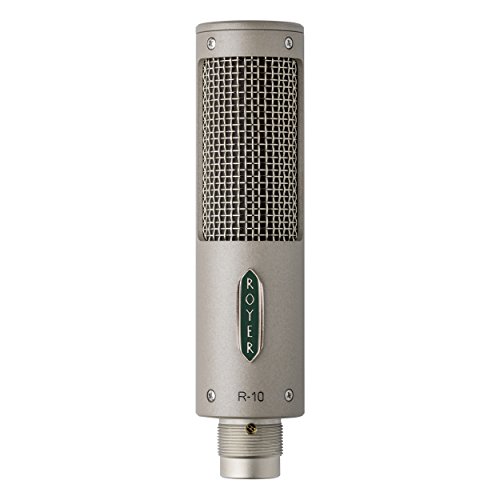
The R-10 is Royer’s entry model, hand-built in the same Burbank factory with the same 2.5-micron ribbon element as the flagship, a custom David Royer transformer, and an internal shock-mounted transducer behind a three-layer windscreen. At about 149 mm long and 368 g, it is noticeably smaller than its sibling, which makes close placement on a guitar cab or cramped desk stand much easier.
Despite the friendlier positioning, the R-10 is built for loud work: Royer rates it to 160 dB at 1 kHz, so cranked amps and close-miked percussion are safe territory. Owners reach for it on acoustic guitar, where its natural top end keeps steel strings from turning brittle. Like every passive ribbon here, it needs a strong, quiet preamp to shine, and it ships in a foam-lined aluminum case with a flexible mount and a mic sock. A five-year warranty applies, with re-ribboning free during the first year.
Specs
- Type: Passive ribbon microphone
- Polar pattern: Figure-8
- Ribbon element: 2.5-micron aluminum, offset-ribbon design
- Frequency response: 30 Hz to 15,000 Hz, plus or minus 3 dB
- Sensitivity: -54 dBV, re. 1 V/Pa
- Output impedance: 100 ohms
- Maximum SPL: 160 dB at 1 kHz
- Size and weight: About 149 mm long, 35 mm diameter, 368 g
- Included: Aluminum case, microphone mount, protective mic sock
AEA Ribbon MICS R84 Ribbon Microphone

The R84 is AEA’s love letter to the big-ribbon broadcast microphones of the RCA era, scaled for modern studios. Its large ribbon geometry produces the signature sound: a generous, warm low end, an intimate midrange, and a top end that stays pleasant and natural rather than extended or clinical. On the human voice that combination is forgiving in the best way, rounding off sibilance while keeping the performance close and present.
Home singers recording ballads, spoken word, or acoustic-led songs get the most from the R84, and it also flatters brass, piano, and percussion. It is a passive figure-8 design, so placement matters twice: aim the side nulls at noise sources, and treat the rear lobe as a second microphone hearing your room. Listing fields vary for this model, so confirm sensitivity, output impedance, and weight on the listing before ordering.
Specs
- Type: Passive ribbon microphone, big-ribbon geometry
- Polar pattern: Figure-8 (bidirectional)
- Best-known sources: Vocals, brass, piano, percussion
- Connector: XLR
- Frequency response: Confirm on the listing
- Sensitivity: Confirm on the listing
- Output impedance: Confirm on the listing
- Weight: Confirm on the listing
SE Electronics VR1 Passive Ribbon Microphone with Full 20Hz-18kHz Frequency Response
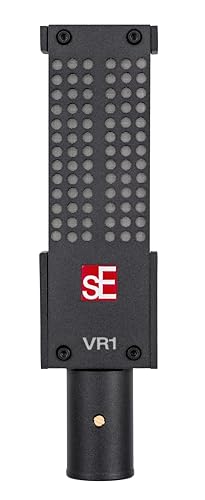
The VR1, from sE Electronics’ Voodoo series, answers the most common ribbon complaint: that the top end feels too dark. Its hand-tensioned ribbon capsule is voiced for extended high-frequency response, with a published range of 20 Hz to 18 kHz, so acoustic guitars keep their string detail, overheads keep their shimmer, and vocals keep more air than a traditional ribbon allows, without condenser harshness.
The body is the other talking point. The VR1 is ultra-slim and all-metal, so it fits into tight spots bulkier ribbons cannot, such as a crowded drum setup or close against a guitar cabinet grille. It remains a passive figure-8 microphone with the usual needs: lots of clean preamp gain, careful handling, and no blasts of air straight into the grille. Players who found classic ribbons too mellow are exactly who this model was designed for.
Specs
- Type: Passive ribbon microphone
- Polar pattern: Figure-8
- Frequency response: 20 Hz to 18 kHz
- Ribbon element: Hand-tensioned ribbon capsule
- Design: Ultra-slim body, all-metal construction
- Connector: XLR
- Maximum SPL: Confirm on the listing
- Sensitivity: Confirm on the listing
MXL R144 Multi-Purpose Ribbon Microphone with Shockmount, Purple

The R144 is the traditional first ribbon: an accessible MXL model in a purple and chrome finish that teaches a home recordist what the ribbon sound actually does. Its 1.8-micron aluminum ribbon and figure-8 pattern deliver the classic recipe of warm, full mids and gently rolled-off highs, and it handles loud sources better than its gentle looks suggest, with a maximum SPL above 130 dB for horns and electric guitars.
Because it costs a fraction of the Royer and AEA models, the R144 is the pick for experimenting: try it on a guitar cab, as a drum room microphone, or on a harsh vocal, and learn the placement rules before spending more. It arrives ready to work, with a shockmount, foam-lined carrying case, and cleaning cloth in the box. The trade-offs are output and refinement: it is a quiet microphone that leans hard on preamp gain, and its top end gives up detail the VR1 and R-121 keep.
Specs
- Type: Passive ribbon velocity microphone
- Polar pattern: Figure-8
- Ribbon element: 1.8-micron aluminum, 47 mm length
- Frequency response: 20 Hz to 17 kHz
- Impedance: 250 ohms
- Sensitivity: -56 dB (0 dB = 1 V/Pa)
- Maximum SPL: Above 130 dB at 1 kHz
- Size: 47 mm by 171 mm
- Weight: 400 g (0.85 lbs)
- Finish: Purple and chrome
- Included: Shockmount, carrying case, microfiber cleaning cloth
How to Choose
Start with gain, because it decides whether any passive ribbon works in your setup at all. Ribbons output a quiet signal, so check that your interface or preamp offers generous, low-noise gain; if it struggles with a soft dynamic microphone, it will struggle more here. Every pick here is passive and needs no phantom power.
Next, match the voicing to the source. The Royer pair and the AEA R84 lean classic and smooth, suiting loud amps, brass, and edgy voices. The sE VR1 keeps more high-frequency detail for acoustic instruments and overheads. Then plan for the figure-8 pattern: it rejects sound at the sides, but it hears the space behind the microphone, so soft furnishings behind the mic improve takes. Finally, budget for care: a case, a pop filter, and upright storage are part of the real purchase.
Who Should Skip These Picks
Anyone without an audio interface should skip this guide and start with the USB microphones covered elsewhere on this site, because all five ribbons here are XLR-only and passive. Singers in noisy rooms who cannot get close to the microphone will also fight the figure-8 pattern’s rear pickup; a close-working dynamic is the better tool there.
Buyers who need one microphone to do everything should stay with a versatile condenser instead. And anyone uncomfortable handling gear carefully should pass: a ribbon element is the most fragile transducer in home recording, and one hard drop can end it.
FAQ
Do ribbon microphones need phantom power?
No. All five picks here are passive designs that need no phantom power to work. Keep phantom power off when connecting a passive ribbon and use intact, correctly wired cables, since a faulty cable is the realistic way phantom voltage reaches a ribbon. Active ribbons are the exception and do require phantom power, but none of these five is active.
How much preamp gain does a passive ribbon need?
More than most condensers and many dynamics, because ribbon output is low, especially on quiet sources such as fingerpicked guitar or soft singing. Expect to run your interface gain high; if the result is noisy, an inline gain booster made for dynamic and ribbon microphones is the standard fix. Loud sources such as guitar cabinets need far less gain.
What are ribbon microphones best at recording?
They shine on sources condensers can make harsh: electric guitar cabinets, brass and horns, drum overheads and room microphones, strings, piano, and voices with natural edge or sibilance. The smooth top end and strong side rejection also help in small rooms. They are a poor match for very quiet, distant sources and for anyone chasing a bright, hyper-detailed pop sound.
How should a ribbon microphone be stored and handled?
Store it upright in its case or with a cover on, away from dust and magnetic debris, and never leave it where it can be knocked over. Keep it out of direct wind, use a pop filter for close vocals, and angle it slightly in front of kick drums or bass ports rather than taking the blast head-on. Modern ribbons are tougher than vintage units, but the element is still the fragile part.
Final Verdict
The Royer R-10 is the ribbon most home recordists should buy first: real Royer engineering, serious SPL handling, and a compact body that fits home sessions. Step up to the R-121 when guitar cabinets and brass are the main job. Choose the AEA R84 for voice-first work with a big, warm footprint, the sE Electronics VR1 when a ribbon must keep its high-frequency detail, and the MXL R144 to learn the ribbon sound at the lowest commitment. Confirm final specs and accessories on each listing before ordering.
Product and ASIN Reference
| Product | ASIN |
|---|---|
| Royer R-121 Studio Ribbon Microphone | B00328HPIM |
| Royer R-10 Ribbon Microphone | B075NT2J55 |
| AEA Ribbon MICS R84 Ribbon Microphone | B008ZT9784 |
| SE Electronics VR1 Passive Ribbon Microphone with Full 20Hz-18kHz Frequency Response | B004PTXVFI |
| MXL R144 Multi-Purpose Ribbon Microphone with Shockmount, Purple | B002LASBRG |
More from Amazon
Programs that pair well with the guide above. Offers and eligibility are set by Amazon and may change.
Free shipping on eligible items, Prime Video and more. Eligible new members can start with a free trial.
Start a Prime free trialAudiobooks and podcasts to listen to on the go. Eligible new members can start with a free trial.
Try Audible freeAd-free music streaming. Eligible new subscribers can start with a free trial.
Try Music Unlimited freeA free business account with business pricing and bulk-buying tools for work, shop or home office.
Create a business accountAs an Amazon Associate we earn from qualifying purchases.
Write Your Review
No reviews yet. Be the first to share your experience!