
Our Short List of 3

- Best for: Producers who track vocals, guitar and keys one or two channels at a time and mix medium-sized sessions.
- Connectivity: Thunderbolt 3
- Input/output: 10 in / 6 out
- Mic preamps: 2 Unison-enabled
- DSP: DUO Core processing
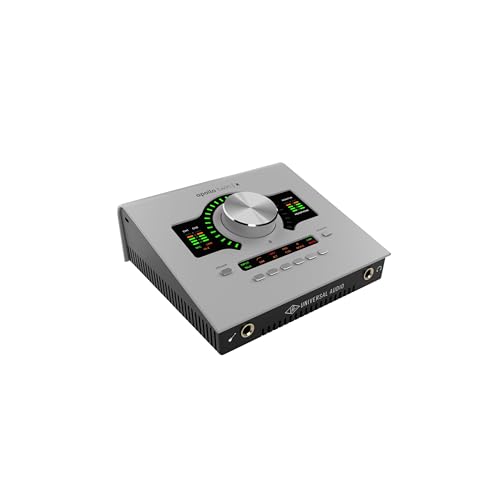
- Best for: Mix engineers and producers running long UAD plug-in chains across dense sessions.
- Connectivity: Thunderbolt 3
- Input/output: 10 in / 6 out
- Mic preamps: 2 Unison-enabled
- DSP: QUAD Core processing

- Best for: Mac-based producers who want the classic Teletronix, Pultec and UA plug-in collections included from day one.
- Connectivity: Thunderbolt 3
- Maximum sample rate: 192 kHz
- Mic preamps: 2 Unison-enabled
- DSP: DUO Core processing
All 3 Picks at a Glance
| Product | Specs | Action |
|---|---|---|
| Universal Audio Apollo Twin X DUO Gen 2 Studio+ Edition |
| Check price on Amazon |
| Universal Audio Apollo Twin X QUAD Gen 2 Studio+ Edition |
| Check price on Amazon |
| Universal Audio Apollo Twin X DUO Heritage Edition |
| Check price on Amazon |
Key takeaways
- Three Thunderbolt 3 audio interfaces for producers compared: Apollo Twin X DUO Gen 2, Apollo Twin X QUAD Gen 2 and the Twin X DUO Heritage Edition on DSP, I/O and plug-in bundles.
The real decision when buying a Thunderbolt interface is not how the preamps sound on paper — nearly every model in this class converts cleanly. It is how much DSP headroom you need for tracking and mixing through DSP plug-ins without freezing tracks, and whether your computer’s port is genuinely Thunderbolt rather than plain USB-C. A producer who records one vocal at a time and a mix engineer stacking tape emulations and reverbs across forty channels are shopping for different machines, even though the boxes look identical.
This roundup is for home and project-studio producers who have outgrown an entry-level USB interface, beatmakers moving to a DSP workflow, and engineers who want console-style monitoring on a desktop footprint. Every pick below is a true Thunderbolt 3 interface taken from its Amazon listing, with specifications drawn from the product page rather than marketing summaries.
Quick Picks
As an Amazon Associate we earn from qualifying purchases.
| Product | Best for | Key spec from title |
|---|---|---|
| Universal Audio Apollo Twin X DUO Gen 2 Studio+ Edition | Most producers stepping up from USB | Thunderbolt 3, DUO Core DSP |
| Universal Audio Apollo Twin X QUAD Gen 2 Studio+ Edition | Mix-heavy sessions with long UAD chains | Thunderbolt 3, QUAD Core DSP |
| Universal Audio Apollo Twin X DUO Heritage Edition | Mac producers who want the classic plug-in bundle | Thunderbolt 3, 5 Heritage plug-in titles |
How to Choose
Count DSP cores before you count inputs
On a DSP interface, the processor chips inside the box decide how many plug-ins you can run at once, and that limit arrives faster than most buyers expect. A single channel strip emulation is light, but a reel-to-reel tape machine, a plate reverb and a mastering limiter on the mix bus can consume a serious share of a DUO configuration. SOLO, DUO and QUAD versions of the same interface share preamps and converters, so the extra money buys processing headroom, not sound quality. If you mainly track one or two sources at a time, DUO is the sensible tier. If you mix dense sessions, QUAD keeps you from rationing instances.
Confirm your port is really Thunderbolt
A USB-C-shaped socket is not automatically a Thunderbolt port, and this is the single most common compatibility failure with this class of interface. Thunderbolt 3 and 4 ports carry the bandwidth and protocol these interfaces expect; a plain USB-C port will not work, no matter which adapter you buy. Check your computer’s specification sheet for the Thunderbolt logo or an explicit Thunderbolt 3/4 mention before ordering. Windows desktops are the usual trap, because many motherboards ship with USB-C but no Thunderbolt controller. Macs from the last several years are generally safe, but verifying takes two minutes and prevents a return.
Plan inputs around ADAT expansion
Desktop Thunderbolt interfaces typically give you two mic preamps, which suits singer-songwriters and voice work but not a drum kit. The escape route is the optical ADAT input found on the Apollo desktop line, which accepts an external eight-channel preamp and turns a compact box into a ten-input rig. If there is any chance you will record a band, a podcast panel or multi-miked drums in the next few years, an interface with optical expansion is worth prioritizing over a slightly larger plug-in bundle. Interfaces without digital inputs lock you into their analog channel count permanently.
Treat the bundled plug-in edition as part of the price
The same hardware is often sold in several software editions, and the difference is not cosmetic. An entry edition may include around twenty plug-ins, while the top edition passes fifty, adding flagship reverbs, compressors and mastering tools that are expensive to buy individually later. Heritage bundles take a different route, packaging a fixed set of classic collections instead. Compare listings carefully: two offers for what looks like the same interface can differ only in the software library, and upgrading afterward usually costs more than choosing the bigger edition at checkout. Match the bundle to the plug-ins you will actually open every session.
The 3 Best Options
Universal Audio Apollo Twin X DUO Gen 2 Studio+ Edition
- Best for: Producers who track vocals, guitar and keys one or two channels at a time and mix medium-sized sessions.
- Connectivity: Thunderbolt 3
- Input/output: 10 in / 6 out
- Mic preamps: 2 Unison-enabled
- DSP: DUO Core processing
Producers who track vocals, guitar and keys one or two channels at a time and mix medium-sized sessions.
The identical-looking Essentials+ listing carries a much smaller plug-in library, so double-check the edition name on the listing before ordering.
This is the default recommendation for producers moving up from a basic USB box. The Gen 2 conversion is the current flagship desktop design from Universal Audio, the two Unison preamps let you track through emulations of classic Neve, API and Manley hardware while you record, and the DUO Core processor comfortably handles tracking chains plus a moderate mix load. The Studio+ Edition is the one to buy, because its library of more than fifty plug-ins covers the compressors, EQs and reverbs most producers reach for daily, without an immediate second purchase.
Watch out for: The identical-looking Essentials+ listing carries a much smaller plug-in library, so double-check the edition name on the listing before ordering.
Universal Audio Apollo Twin X QUAD Gen 2 Studio+ Edition
- Best for: Mix engineers and producers running long UAD plug-in chains across dense sessions.
- Connectivity: Thunderbolt 3
- Input/output: 10 in / 6 out
- Mic preamps: 2 Unison-enabled
- DSP: QUAD Core processing
Mix engineers and producers running long UAD plug-in chains across dense sessions.
You are paying for processing power, not extra inputs — the front end is the same two-preamp design as the DUO. This listing’s spec table also contains an obvious sample-rate error, so cross-check the full specification on the manufacturer’s page before ordering.
Choose the QUAD when mixing, not recording, is where your sessions strain. It shares the Gen 2 converters, dual Unison preamps and 10-in/6-out layout of the DUO model, but doubles the onboard DSP to four cores, which is what lets you keep tape emulations, bus compressors and hardware-style reverbs instantiated across a full arrangement instead of printing effects to free up power. For producers who finish records in the box and lean on UAD versions of classic outboard gear, that headroom is the difference between mixing freely and constantly managing a DSP budget.
Watch out for: You are paying for processing power, not extra inputs — the front end is the same two-preamp design as the DUO. This listing’s spec table also contains an obvious sample-rate error, so cross-check the full specification on the manufacturer’s page before ordering.
Universal Audio Apollo Twin X DUO Heritage Edition
- Best for: Mac-based producers who want the classic Teletronix, Pultec and UA plug-in collections included from day one.
- Connectivity: Thunderbolt 3
- Maximum sample rate: 192 kHz
- Mic preamps: 2 Unison-enabled
- DSP: DUO Core processing
Mac-based producers who want the classic Teletronix, Pultec and UA plug-in collections included from day one.
This is the earlier hardware generation, and the listing’s operating-system field names Mac only — Windows buyers should confirm current driver and Thunderbolt support for this model before ordering.
The Heritage Edition is the previous-generation Twin X DUO packaged with a curated library instead of the newer edition bundles. Alongside the standard Realtime Analog Classics set, it adds five award-winning titles drawn from the Teletronix, Pultec and UA collections — the LA-2A and 1176 compressor families, Pultec EQs, the UA 610 preamp and Pure Plate reverb — which remain the core tools many producers buy an Apollo for in the first place. The hardware still offers two Unison preamps, DUO Core tracking and optical expansion, so it suits a Mac-based producer who values that specific plug-in set over the Gen 2 refinements.
Watch out for: This is the earlier hardware generation, and the listing’s operating-system field names Mac only — Windows buyers should confirm current driver and Thunderbolt support for this model before ordering.
Which One Fits Your Situation
You record vocals and guitar at home, one source at a time
The Apollo Twin X DUO Gen 2 Studio+ is your interface. Two Unison preamps cover a microphone and a DI guitar simultaneously, DUO Core power is ample for tracking chains and moderate mixes, and the Studio+ library means your first year of plug-in needs is already handled. Spend the savings versus the QUAD on acoustic treatment or a better microphone.
You mix dense sessions and hate freezing tracks
Step up to the Apollo Twin X QUAD Gen 2 Studio+. Its four DSP cores exist precisely for arrangements where every channel wears an emulation and the mix bus carries several heavy processors at once. The recording side is identical to the DUO, so this choice only makes sense when plug-in count, not input count, is your bottleneck — but when it is, the upgrade pays for itself in uninterrupted sessions.
You work on a Mac and want the classic plug-ins included
The Apollo Twin X DUO Heritage Edition bundles the compressor, EQ and reverb collections that built the UAD reputation, so you start with a finished toolkit rather than a shopping list. Accept the previous-generation hardware as the trade-off, and confirm the seller is offering the unit new with the Heritage bundle attached, since the value of this pick lives in its software.
Your computer has USB-C but you are not sure it is Thunderbolt
Stop before buying any of these. All three require a genuine Thunderbolt 3 port, and none will run from a plain USB-C socket. Check your machine’s specifications for an explicit Thunderbolt mention; if the port is USB-only, look at USB interfaces instead, or factor a computer upgrade into the plan. Guessing wrong here is the most expensive mistake in this category.
Common Mistakes
- Assuming every USB-C port supports Thunderbolt, then discovering the interface is not recognized at all.
- Comparing interfaces by preamp count when the real limit on a DSP system is plug-in processing power.
- Ordering the Essentials+ edition by accident because the listing photo matches the Studio+ hardware exactly.
- Forgetting that a Thunderbolt cable is a separate purchase on many desktop interfaces, so the box cannot be connected on delivery day.
- Buying a previous-generation model for a Windows rig without checking that current drivers still support it.
Frequently Asked Questions
Is Thunderbolt noticeably better than USB for recording?
For raw audio transfer, both handle typical channel counts. The practical advantage of these Thunderbolt models is the ecosystem around them: onboard DSP that runs plug-ins inside the interface with near-zero latency while tracking, plus mature console software for monitoring. If you never use DSP plug-ins, a good USB interface serves you equally well for less money.
Will these interfaces work with a Windows PC?
The Gen 2 models list Windows and macOS support, provided the PC has a genuine Thunderbolt 3 or 4 port — still not standard on many Windows desktops. The Heritage Edition listing names Mac in its operating-system field, so Windows users should verify current driver support for that older model on the manufacturer’s site before buying.
What is the real difference between DUO and QUAD?
Only processing capacity. Both Gen 2 versions share converters, preamps, I/O and monitoring features; the QUAD simply runs roughly twice as many UAD plug-in instances simultaneously. Track counts, latency and sound quality are the same. Buy the QUAD when your mixes regularly exhaust a DUO, not as a general quality upgrade.
Can I add more microphone inputs later?
Yes, through the optical ADAT input. Connecting an external eight-channel microphone preamp with an ADAT output expands a Twin X to ten simultaneous inputs, enough for a small band or multi-mic drum setup. The Heritage Edition listing explicitly supports up to eight additional digital channels, and the Gen 2 desktop models follow the same expansion approach.
More from Amazon
Programs that pair well with the guide above. Offers and eligibility are set by Amazon and may change.
Free shipping on eligible items, Prime Video and more. Eligible new members can start with a free trial.
Start a Prime free trialAudiobooks and podcasts to listen to on the go. Eligible new members can start with a free trial.
Try Audible freeAd-free music streaming. Eligible new subscribers can start with a free trial.
Try Music Unlimited freeA free business account with business pricing and bulk-buying tools for work, shop or home office.
Create a business accountAs an Amazon Associate we earn from qualifying purchases.
Write Your Review
No reviews yet. Be the first to share your experience!