
Key takeaways
- Powered FRFR speakers for amp modelers compared by driver size, power and connections, from a compact Spark CAB to Fender's stage-ready FR-12.
A modeler only sounds as honest as the speaker behind it. Run a floor unit or desktop amp through a traditional guitar cabinet and the cabinet’s own voicing rewrites every preset; run it through a general PA speaker and the top end can turn harsh and the feel distant. A powered FRFR cabinet is the middle path built for this job: its own amplifier, a full-range driver set and a response flat enough to leave your amp and cabinet simulations intact. The real decision is which size and feature set fits your playing.


This shortlist serves three groups: desktop-modeler players who want a matching cabinet at home, gigging players who need stage volume from a floor unit, and recording players who move between monitors and a real cabinet. Both picks come from Amazon listings that state powered, full-range flat-response operation for amp modelers in their names and specifications, and the comparison below sticks to listing facts: driver sizes, rated power, frequency figures, connections and cabinet dimensions.
Quick Picks
As an Amazon Associate we earn from qualifying purchases
| Product | Best for | Key spec from title |
|---|---|---|
| Positive Grid Spark CAB (Pearl) | A Spark amp setup at home or small jams | 140-watt RMS power, 10-inch woofer |
| Fender Tone Master FR-12 | Gigging with a floor modeler as backline | 1,000-watt Class-D amp, 12-inch speaker |
How to Choose
Driver Size and Low-End Reach
A cabinet’s woofer size sets how much low end you feel before a PA takes over. A 10-inch driver in a compact cabinet keeps palm-muted riffs tight and suits single-coil and mid-gain tones at home volumes, while a 12-inch driver moves more air for dropped tunings and bass-heavy presets. Check the listing’s frequency figures rather than the marketing line: the low number tells you where output starts rolling off. Players who rehearse with a drummer usually want the larger driver; quiet-room players rarely miss it, and a smaller cabinet also leaves more space on a desk-side floor. The cabinet’s own weight usually follows driver size, so a smaller box also wins the walk from the car.
Rated Power and Honest Headroom
Power figures only help when you compare the same kind of number. Some listings headline a peak wattage, others an RMS figure, and a peak number always reads larger. What matters on stage is clean headroom: enough output that palm-muted hits and clean swells stay uncompressed at band volume. Match the rating to your room. A modest RMS figure is plenty for home and studio use, while a high-output Class-D design covers rehearsal rooms and small stages without a PA. If a listing prints a maximum output level in decibels, treat that as the loudness yardstick and compare it across models. Ratings quoted for the amplifier section alone also ignore how efficiently the drivers turn power into sound.
Inputs, Outputs and the House Feed
Count the connections before anything else. Your modeler needs a line-level input, ideally a balanced combo jack that accepts XLR or a quarter-inch plug. A balanced XLR output matters the first time you play somewhere with a house system: it sends your full rig sound to the desk while the cabinet works as your stage monitor. Stereo players should check whether the cabinet sums a stereo feed or needs a second unit. Aux inputs for backing tracks, ground lift switches for hum, and built-in power outputs for a small amp or pedal supply all separate a modeler cabinet from a plain powered box. A ground lift earns its place the first time venue wiring adds hum.
Cabinet Size, Weight and Format
FRFR cabinets come in two broad formats: wedge-style boxes that can sit upright, tilt back or mount on a pole, and traditional cabinet shapes that stand behind you like a regular guitar cab. The traditional format suits players who want familiar stage presentation and a control panel voiced for quick room adjustments. Check the listed dimensions against your car and storage space, and weigh the cabinet honestly against your load-in routine. Tilt-back legs or a kickstand change how a cabinet couples with the floor and how much high end reaches your ears, so treat them as working features, not decoration. Both formats appear in the picks below, which makes the size and weight figures easy to compare directly.
The 2 Best Options
Positive Grid Spark CAB
The Spark CAB is the natural powered partner for Positive Grid’s Spark amp range, and its listing makes the pairing literal: built-in DC and USB-C outputs can power a Spark amp or charge a device while the cabinet handles the sound. A 10-inch woofer with two dome tweeters covers a stated 45 Hz to 20 kHz span, and the stereo combo inputs accept a modeler feed while a dedicated stereo mini input takes a phone or media player. At just under thirty pounds in a tolex-covered cabinet, it suits home rigs and small jam spaces where one box should do several jobs. One box covers sound, playback and power.
Specs
- Power: 140 watts RMS, 400 watts peak
- Woofer: 10-inch woofer
- Tweeters: 2 high-frequency dome tweeters
- Frequency response: 45 Hz to 20,000 Hz across the full spectrum
- Inputs: stereo combo XLR/TRS inputs
- Aux input: dedicated 3.5mm stereo input, cable included
- Output: balanced XLR output
- Extra outputs: built-in DC and USB-C outputs for powering Spark amps and charging devices
- Construction: tolex covering with grille cloth
- Weight: 29.8 lb
- Dimensions: 19.39 x 10.04 x 15.74 inches
- Model: SE012M-EUSS
- Color: Pearl
Best for: Spark 40, Spark MINI and Spark GO owners who want one powered cabinet that can also power the amp itself.
Watch out for: Confirm the Pearl finish on the listing before ordering, since the Spark CAB is also sold in a black finish under a separate listing.
ASIN: B0DBHPB4M3
Fender Tone Master FR-12
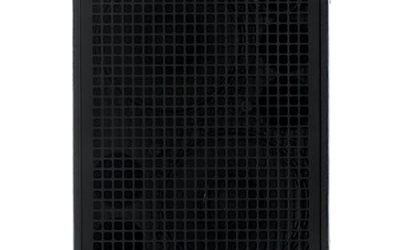
The FR-12 takes the opposite route: a full-size cabinet in classic Fender dress, built around a 12-inch special design speaker and a wide-dispersion compression driver. Its 1,000-watt Class-D power amp and stated maximum output of 130 dB give a floor modeler genuine backline volume, and the active three-band EQ with a high-frequency Cut control lets you tame a bright room from the cabinet instead of editing presets. Integrated tilt-back legs angle it toward your ears on stage, and the lightweight plywood enclosure keeps it under twenty-eight pounds despite the larger format. It reads less like PA equipment and more like the backline it replaces.
Specs
- Power amp: 1,000 watts, Class-D
- Speaker: 12-inch special design speaker
- High-frequency driver: 1-inch wide-dispersion compression driver
- Controls: Volume, Treble, Middle, Bass, Cut
- Equalization: 3-band active EQ with high-frequency Cut control
- Maximum output: 130 dB
- Frequency range: 58 Hz to 20 kHz (-10 dB)
- Frequency response: 70 Hz to 20 kHz (-3 dB)
- Input: one balanced XLR and quarter-inch combo input
- Line out: XLR with ground lift
- Cabinet: lightweight plywood with integrated tilt-back legs
- Weight: 27.6 lb
- Dimensions: 23.5 x 18.13 x 9.88 inches
- Model: 2275200000
- Voltage: 120V
- Color: Black
Best for: Gigging players running a floor modeler who need backline volume plus a balanced feed to the house system.
Watch out for: The single combo input means stereo rigs must sum to mono or run two cabinets, so check your modeler’s output settings first.
ASIN: B0CC9Z9B4J
Which One Fits Your Situation
You Run a Spark Amp and Want One Box for Home and Jams
The Spark CAB is the pick. Its power outputs were designed for the Spark amp range, so a Spark 40, MINI or GO can run from the cabinet while it plays, and the extra stereo input handles backing tracks without a mixer. The 10-inch format stays compact beside a desk or sofa, and its stated low reach down to 45 Hz keeps practice-volume bass controlled instead of boomy. Nothing else in the rig needs its own outlet.
You Gig With a Floor Modeler and Need Real Backline
Choose the Tone Master FR-12. The 12-inch speaker, high maximum output and tilt-back legs give you a personal stage sound that carries small rooms on its own, while the balanced line out with ground lift hands the front-of-house desk the same signal. Its active EQ and Cut control solve the common bright-stage problem at the cabinet, leaving your presets untouched for the next venue. That combination is what separates a stage cabinet from a practice speaker.
You Switch Between Recording and Playing in the Same Room
Either cabinet works, and the deciding factor is what sits next to it. If your modeler is a Spark amp, the Spark CAB keeps the setup to one power draw and doubles as a playback speaker for tracks. If you track with a floor unit and print the direct signal, the FR-12 gives you an honest room sound for dialing in tones, with EQ on the cabinet for quick corrections. Either way, the same presets translate between desk and room.
You Want the Rig to Look Like a Guitar Amp on Stage
The FR-12 is the closer match to a traditional backline. It wears Fender’s classic cabinet styling, stands upright behind you and reads as part of the amp line rather than a piece of PA equipment. The Spark CAB also uses a tolex-covered cabinet rather than a molded wedge shell, so it blends into a small-stage setup, but its control layout is aimed at desktop-amp owners first. Presentation rarely decides a purchase, but it shapes every gig.
Common Mistakes
- Turning off the modeler’s cabinet simulation because the speaker is called a cabinet; an FRFR design expects the finished, simulated signal and sounds thin and harsh without it.
- Plugging a powered cabinet into the speaker output of a tube amp head; FRFR cabinets accept line-level input only, and a speaker-level feed can damage both units.
- Comparing one brand’s peak wattage against another brand’s RMS figure and assuming the bigger printed number is automatically the louder cabinet.
- Judging a cabinet’s tone while standing directly in front of it at floor level, where the high-frequency driver fires past your knees instead of reaching your ears.
- Setting the modeler’s output to instrument level, then blaming the cabinet for the low volume and extra noise that follow.
Frequently Asked Questions
Can a powered FRFR speaker work with any amp modeler?
Yes, as long as the modeler provides a line-level output, which nearly all floor, desktop and rack units do. The cabinet does not care which brand built the modeler; it reproduces the signal it receives. Check that your unit’s output level and the cabinet’s input type match, and use a balanced cable run where the cabinet offers a combo input. Keep the cabinet simulation on for the pairing.
Should I turn off the cabinet simulation in my modeler?
No. A full-range flat-response cabinet is designed to reproduce a finished rig sound, including the simulated speaker cabinet and microphone. Turning the simulation off removes the part of the chain that shapes most of your tone, and the result usually sounds harsh and unfinished. Only disable cabinet simulation when you play through a real guitar cabinet, which colors the sound itself. Leave it on and trim EQ elsewhere.
Can I sing or play backing tracks through an FRFR cabinet?
Backing tracks are straightforward where the cabinet provides a dedicated stereo or aux input, as the Spark CAB does with its mini input and included cable. On a single-input cabinet like the FR-12, tracks must share the modeler’s own aux path instead. Vocals are a weaker fit either way: neither cabinet offers a microphone preamp. When both matter, give vocals their own small PA speaker instead.
How much power do I need for gigs with a band?
Judge by headroom rather than the headline number. A cabinet that stays clean while a drummer plays at full volume keeps your presets consistent; one that runs out of output compresses and feels smaller. For rehearsal rooms and small stages, look for a high stated maximum output level and a 12-inch driver, and treat a balanced line out as essential backup. Trust clean headroom over headline numbers.
More from Amazon
Programs that pair well with the guide above. Offers and eligibility are set by Amazon and may change.
Free shipping on eligible items, Prime Video and more. Eligible new members can start with a free trial.
Start a Prime free trialAudiobooks and podcasts to listen to on the go. Eligible new members can start with a free trial.
Try Audible freeAd-free music streaming. Eligible new subscribers can start with a free trial.
Try Music Unlimited freeA free business account with business pricing and bulk-buying tools for work, shop or home office.
Create a business accountAs an Amazon Associate we earn from qualifying purchases.







Write Your Review
No reviews yet. Be the first to share your experience!