

Key takeaways
- Fit beats features for a first guitar: scale length, nut width and weight decide whether you will pick it up every day.
- Buy a guitar with a simple, stable bridge; hardtail designs are the easiest to keep in tune.
- A guitar alone does not make noise, but you do not need a big amp; a headphone amp or a small practice amp is enough.
- Budget for a basic setup and fresh strings, because factory setups on entry-level guitars are often too high.
- If you are unsure about styles, choose an HSS or humbucker model and learn which sounds you like.
The best first electric guitars are the ones that fit your hands, stay in tune and make a sound you actually want to practice with. For most new players that means a Squier Sonic Stratocaster for a classic design, a Yamaha Pacifica PAC012 for flexibility, or a Squier Mini Stratocaster if hands or arms are small. You do not have to start with a full package. You do have to start with the right guitar.
This guide is built around the first ninety days, the period when most beginners either fall in love with the instrument or quietly put it in a closet. Instead of ranking guitars by brand, it looks at what causes that drop-off: strings that hurt, necks that are too wide, guitars that will not hold tune and the lack of a quiet way to practice. Each pick explains how it handles those problems, so you can choose a first electric guitar with fewer regrets.
Our top picks


As an Amazon Associate we earn from qualifying purchases at no extra cost to you.
Key takeaways
- Fit beats features for a first guitar: scale length, nut width and weight decide whether you will pick it up every day.
- Buy a guitar with a simple, stable bridge; hardtail designs are the easiest to keep in tune.
- A guitar alone does not make noise, but you do not need a big amp; a headphone amp or a small practice amp is enough.
- Budget for a basic setup and fresh strings, because factory setups on entry-level guitars are often too high.
- If you are unsure about styles, choose an HSS or humbucker model and learn which sounds you like.
Best first electric guitars: fit and feel compared
| Guitar | Scale | Pickups | Bridge | Fits best |
|---|---|---|---|---|
| Squier Sonic Stratocaster | 25.5 in | 3 ceramic single-coils | Vintage tremolo (HT hardtail also sold) | Adults and teenagers, pop and rock |
| Squier Mini Stratocaster | 22.75 in | 3 single-coils | Hardtail | Children and adults with small hands |
| Yamaha Pacifica PAC012 | 25.5 in | HSS | Vintage tremolo | Learners who want one flexible guitar |
| Ibanez Gio GRX70QA | 25.5 in | HSH | Tremolo | Rock and metal learners |
| Epiphone Les Paul Tribute | 24.75 in | 2 ceramic humbuckers | Tune-O-Matic and stop bar | Classic rock and blues learners |
| Gretsch Streamliner Jet Club | 24.75 in | Humbuckers (one- or two-pickup versions) | Wraparound | Indie and alt-rock learners |
How to check a first electric guitar fits you
- Sit and stand with it. The body should rest on your leg without forcing your shoulder up, and the strap should hold it at a comfortable height.
- Reach the first five frets. You should be able to wrap your hand around the neck without your wrist bending sharply.
- Press a chord. Strings should not need a lot of pressure. Buzzing is a setup problem; a very stiff feel is usually a sign of a high action or a long scale.
- Tap each tuner. They should hold pitch once stretched.
- Listen unplugged. A guitar that rings clearly when unplugged is usually better built than one that sounds dead.
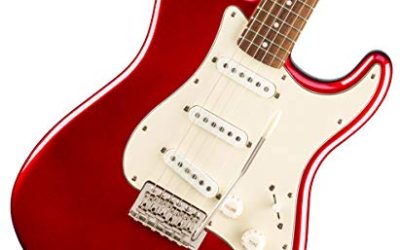
1. Squier Sonic Stratocaster: Best for a classic first Strat
- Poplar body, bolt-on maple neck with a C shape and satin finish
- 25.5 in scale, 21 narrow tall frets, 9.5 in radius
- Three ceramic single-coils, 5-position blade switch, two tone controls
- Six-saddle vintage-style synchronized tremolo (the HT version has a hardtail)
- 1.650 in synthetic bone nut
Best for: a beginner who wants an instrument that looks and plays like a real Stratocaster and who plans to stay with the guitar. The variety of finishes and layouts (SSS, HSS and hardtail HT versions) means you can match it to your taste.
Skip if: you have small hands or are very young; a 25.5 in scale can be a stretch.
Pros: Familiar shape. Easy to repair and upgrade. Five sounds from the pickup switch. Many colors.
Cons: Single-coil hum. Tremolo version requires gentle use. Basic hardware.
First-90-days note: If you do not intend to use the whammy bar, the hardtail version is easier to keep in tune and to restring. Tape or block the tremolo only with a technician’s help.
2. Squier Mini Stratocaster: Best for small hands and younger players
- Poplar body, maple neck with Indian laurel fingerboard, 9.5 in radius
- 22.75 in scale (578 mm), 20 narrow tall frets, 1.6 in nut
- Three single-coil pickups, one volume and one tone control
- Six-saddle hardtail bridge
- Strings: .009 to .042 factory set
Best for: children, adults with small hands, travelers and anyone who finds full-size guitars tiring. The short scale means closer frets and lighter string tension.
Skip if: you are a taller adult who intends to move to a full-size guitar quickly; the fret spacing will feel different.
Pros: Very comfortable. Hardtail bridge for stable tuning. Light. Simple controls.
Cons: Short scale changes how chord shapes feel on a full-size guitar. Limited tonal range. Fewer frets than a full-size model.
First-90-days note: The Mini is excellent for building finger strength and confidence. When you move up, the transition to a longer scale takes a week or two.
3. Yamaha Pacifica PAC012: Best for one flexible guitar
- Bolt-on maple neck, rosewood or walnut fingerboard, 13.75 in radius
- 25.5 in scale, 22 frets, urea nut at 1.614 in
- HSS layout: ceramic single-coils at neck and middle, humbucker at the bridge
- Master volume, master tone, 5-way switch
- Vintage-style tremolo with a screw-in arm, gloss body and satin neck finish
Best for: a beginner who does not yet know what music they will play. The humbucker at the bridge handles heavier tones, while the single-coils suit cleaner styles.
Skip if: you want a strong style statement; the design is plain.
Pros: Wide range of sounds. Flatter radius helps bending. Good reputation as a learning guitar. 22 frets.
Cons: Retail descriptions of the body wood differ, so check the maker listing. Basic tremolo. Plain looks.
First-90-days note: Ask a shop to check the nut and tremolo set-up; a small tweak makes the strings feel noticeably easier.
4. Ibanez Gio GRX70QA: Best for rock and metal beginners
- Poplar body with a quilted maple art-grain top, bolt-on maple neck
- 25.5 in scale, 22 medium frets, 42 mm nut
- HSH layout with two Infinity R humbuckers and an Infinity RS single-coil in the middle
- Single volume, single tone, 5-way switch
- Tremolo bridge (listed as T106 on current versions)
Best for: teenagers and adults who want rock, punk and heavier tones from day one, with some single-coil options for cleaner songs.
Skip if: you are sensitive to hardware roughness; reviews sometimes mention fret edges and fingerboard materials that vary by production year.
Pros: Appealing looks. Humbuckers for gain. Good value. Familiar RG shape.
Cons: Fingerboard wood differs by year and retailer. Basic tremolo. Fret ends may need dressing.
First-90-days note: Have a technician check the fret ends. A quick dressing makes the neck much more pleasant.
5. Epiphone Les Paul Tribute: Best for classic rock and blues beginners
- Mahogany body and neck with a 60s Slim Taper profile (carved top per Gibson’s page)
- 24.75 in scale, laurel fingerboard, 12 in radius, 22 medium jumbo frets, 43 mm nut
- Epiphone 650R (neck) and 700T (bridge) ceramic humbuckers
- Two volumes, two tones, 3-way toggle
- LockTone Tune-O-Matic bridge and stop bar tailpiece
Best for: anyone who dreams of playing rock and blues on a Les Paul-shaped guitar. The shorter scale gives slightly looser strings, which many beginners find easier on the fingertips.
Skip if: you want a light guitar. The body is heavier than most beginner models.
Pros: Classic look and sound. Slim neck. Stable bridge. Shorter scale.
Cons: Heavy. Not for clean sparkle. Limited tonal range.
First-90-days note: Use a wide strap to ease neck and shoulder strain during practice.
6. Gretsch Streamliner Jet Club: Best for style and indie tones
- Nato body and bolt-on nato neck, laurel fingerboard
- 24.75 in scale, 22 medium jumbo frets, bone nut
- Twin Six humbucking pickups on the standard version; a single-pickup version also exists
- Adjustable wraparound tailpiece
- Compact single-cut body
Best for: beginners who want something with character and a gentler path into humbucker sounds. The compact body is easy to hold.
Skip if: you are shopping on the very lowest budget; there are cheaper guitars.
Pros: Distinctive. Comfortable. Stable wraparound bridge. Good build for the class.
Cons: Less common, so fewer accessories. Spec differs between versions. Limited versatility.
First-90-days note: Confirm which version you are buying, because the one-pickup and two-pickup models sound different.
Also consider
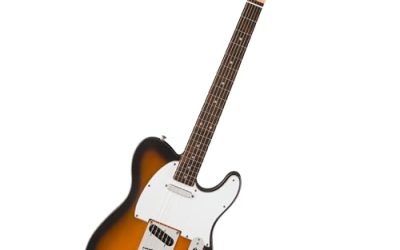
- Squier Affinity Telecaster: Poplar body, 25.5 in scale, two ceramic single-coils and a simple six-saddle bridge. A good alternative if you prefer a Telecaster to a Strat.
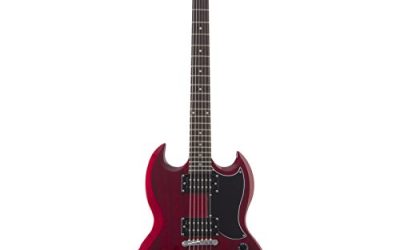
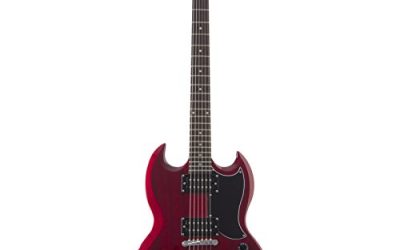
- Epiphone SG Special: A long-running, lower-cost SG with humbuckers and a slim body, popular with rock beginners.
- Squier Debut Stratocaster: A lower-cost Squier option for players on the tightest budget, though the step up to a Sonic is worth considering.
Before you buy an amp: what you really need
You will need something to hear the guitar, but it does not have to be a large amp. Three simple options cover most beginners.
- Headphone amp: The Fender Mustang Micro Plus is a pocket-size headphone amp with a rechargeable battery and Bluetooth audio streaming, per its listing. It lets you practice quietly at any hour.
- Small combo amp: The Fender Frontman 10G is a ten-watt practice amp. It is simple, light and enough for a bedroom.
- Modeling amp: The Fender Champion II 25 is a 25-watt amp with USB and aux inputs, offering more flexibility if you want built-in effects.
Whichever you pick, you will also want a cable, a clip-on tuner, a strap and a few picks. These small items do more for the early experience than a more expensive guitar would.
A realistic plan for your first ninety days
- Week 1: get comfortable. Learn how to tune by ear and with a clip-on tuner, how to hold a pick and how to sit with the guitar. Play for ten minutes at a time; sore fingertips are normal and fade within a couple of weeks.
- Weeks 2 to 3: first chords. Start with open E minor, A minor and D, then add G and C. Spend a few minutes each day changing between two shapes without pausing.
- Weeks 4 to 6: rhythm and a first song. Choose a simple song with three or four chords and play it slowly with a metronome or a backing track.
- Weeks 7 to 9: power chords and a riff. Power chords work well on humbucker guitars. A short riff teaches picking accuracy.
- Weeks 10 to 13: tone and tweaks. Try each pickup position, adjust the tone knob and consider a professional setup if you have not already had one.
The guitar that gets played most is the one that is easy to pick up. Keep it on a stand or hanger where you can see it.
Common mistakes with a first electric guitar
- Buying the biggest amp. A small amp is easier to live with, and you can play at a normal volume instead of fighting to hear yourself.
- Ignoring the setup. A high action is the number one reason beginners give up. A shop adjustment is quick and inexpensive.
- Never changing strings. Old strings sound dull and are harder to play. Replace them when they look discolored or feel rough.
- Forcing the tremolo. Pulling hard on a tremolo arm can send a guitar out of tune. Use it gently or choose a hardtail model.
- Buying for a style you might not play. A metal guitar is wasted if you want to play folk-rock. If unsure, pick a versatile HSS model.
- Overlooking posture. Slouching hurts your back and hand. Keep your wrist straight and the guitar at a comfortable height.
What a first-time buyer actually needs, in order
| Item | Priority | Why |
|---|---|---|
| The guitar itself | Essential | Fit and stable tuning decide whether you keep playing |
| Headphone amp or small practice amp | Essential | Without it the guitar cannot be heard properly |
| Instrument cable | Essential | Connects the guitar to the amp |
| Clip-on tuner | Essential | Tuning accuracy builds your ear |
| Strap | High | Needed for standing practice |
| Basic professional setup | High | Lower action, better intonation, easier fretting |
| Spare strings | High | Strings can break; fresh sets improve feel |
| Picks in two or three thicknesses | Medium | Helps you find a comfortable feel |
| Gig bag or case | Medium | Protects the guitar when you move it |
| Guitar stand or wall hanger | Medium | Keeps the guitar visible, so you play more |
What a good factory setup looks like
When you open the case, look down the neck from the headstock toward the body. The neck should have a very slight forward curve, not a back bow. Press the string at the first fret and at the 15th fret at the same time; there should be a small gap between the string and the middle frets. At the 12th fret, the string height should look low enough that pressing it takes little effort. If the strings feel high or the guitar buzzes, it needs an adjustment. That is not a sign of a bad guitar; it is the normal state of many factory-packed instruments.
Strings, picks and the small things that change feel
Lighter strings feel easier under the fingers. The Squier Mini Stratocaster ships with a .009 to .042 set, while a .010 to .046 set is the common standard on many other electric guitars. If a guitar feels stiff, a lighter set is the cheapest fix, but ask a shop to adjust the setup afterward because the neck relief changes slightly with gauge.
Picks matter more than most people expect. A thin pick strums softly and quietly; a medium pick of around 0.73 mm is a good all-round starting point; a thick pick helps with single-note lines. Buy a small variety pack and use the one that feels natural. Lastly, a guitar stand, wall hanger or simple hook near your favorite chair keeps the instrument within reach, which is the best motivator of all.
Left-handed players and other fit questions
Many of these guitars are offered in left-handed versions, but availability changes with each production run, and finishes are often limited. If you are left-handed, check the retailer listing before ordering rather than flipping a right-handed guitar, since the controls and strap button positions will not suit you. Players with larger hands should look for a wider nut and a slightly thicker neck, while players with small hands should favor shorter scales. Remember that fit is personal: two beginners of the same height can prefer very different necks.
How we chose
We did not play these guitars ourselves. This list is built from the makers’ spec pages, retailer listings and published reviews. We checked each pick against the same criteria a beginner should apply: a scale length that suits the intended player, a stable bridge, a pickup layout that works across common beginner songs and a build that can be improved by a basic setup.
We excluded very cheap guitars with unclear specs, bundle-only listings that hide the guitar model, and signature models whose cost goes into branding. We kept the picks to real current models from established makers and limited the list to two Squier guitars so that other designs are represented.
Buying guide: picking your first electric guitar
Scale length and body size
Scale length is the distance from nut to bridge. Full-size Fender-style guitars use 25.5 in; Gibson-style guitars use 24.75 in; a Mini Strat uses 22.75 in. Shorter scales put the frets closer together and lower the string tension, which is helpful for small hands and for early finger strength. For teenagers and adults with average hands a full-size guitar is normally fine; for younger children, a short-scale guitar is more comfortable.
Pickups: single-coil, humbucker or both
Single-coils are bright and clear, good for pop, funk and clean blues. Humbuckers are thick and quiet, good for rock and metal. HSS and HSH guitars offer both. If you do not yet know your style, an HSS guitar like the Yamaha Pacifica is the safest choice.
Bridge: tremolo or fixed
A fixed bridge (hardtail, Tune-O-Matic, wraparound) keeps tuning simple and is the easiest to restring. A tremolo adds vibrato but needs a good setup. Most beginners never use the arm, so a fixed bridge is usually the smarter pick.
Weight and strap
A heavy guitar becomes tiring in the first weeks. Lighter bodies such as the Strat and Mini Strat are easier. If you choose a Les Paul-style guitar, use a wide strap and practice standing in short blocks.
Set-up and string gauge
Entry-level guitars often ship with high action. A professional setup costs little compared with the guitar and can transform playability. Light-gauge strings (9 to 42) are easier to press than 10 to 46 sets, which many beginners find comfortable.
Left-handed players
Some of these models have left-handed versions, but availability varies by finish. Check the retailer listing before ordering.
Quick pick by situation
| Your situation | Choose |
|---|---|
| Child or very small hands | Squier Mini Stratocaster |
| Unsure which style you like | Yamaha Pacifica PAC012 |
| Want a classic pop and rock guitar | Squier Sonic Stratocaster |
| Heavy rock and metal | Ibanez Gio GRX70QA |
| Classic rock and blues | Epiphone Les Paul Tribute |
| Indie, alt-rock, style | Gretsch Streamliner Jet Club |
Frequently asked questions
What is the best first electric guitar for an adult beginner?
The Squier Sonic Stratocaster and the Yamaha Pacifica PAC012 are the most common choices. The Strat gives you a classic design; the Pacifica gives you more sound variety.
Which is better for learning: an electric or acoustic guitar?
Electric guitars usually have lighter strings and slimmer necks, so they are easier on the fingers. Acoustic guitars need no amp. Choose the sound you want to play; both are fine for learning.
Do I need an amp to learn on an electric guitar?
You need some way to hear it. A headphone amp or a small practice amp is enough. A large amp is unnecessary at the start.
Are best electric guitars to learn on always the cheapest?
No. Very cheap guitars often have poor setups and unreliable tuning, which discourages learners. A modest step up in quality makes a big difference in how much you play.
How often should I change strings on a new guitar?
Every one to three months for regular practice, or sooner if they sound dull or feel rough. Fresh strings are the cheapest improvement you can make.
Is a short-scale guitar a good idea for adults?
Yes, if you have small hands or find full-size guitars tiring. A Mini Strat is a legitimate learning tool; many adults enjoy it. The only trade-off is that fret spacing differs from a full-size instrument.
Should I buy a bundle?
Bundles can be convenient, but the guitar is often a lower tier model and the accessories are basic. If you buy a bundle, check that the guitar itself is the model you want.
Which one should you buy?
For most adults, the Squier Sonic Stratocaster is the easiest recommendation, and the Yamaha Pacifica PAC012 is the safest if you do not yet know your music. Choose the Mini Strat when hands are small, the Ibanez for heavy music, the Epiphone for classic rock and the Gretsch for style. Pair the guitar with a headphone amp or a small practice amp, have it set up, and give it ninety days.
Sources
- Fender and Squier product specification pages
- Yamaha product specification pages
- Ibanez product specification pages
- Gibson and Epiphone product pages
- Gretsch product pages
Last updated: October 2026
More from Amazon
Programs that pair well with the guide above. Offers and eligibility are set by Amazon and may change.
Free shipping on eligible items, Prime Video and more. Eligible new members can start with a free trial.
Start a Prime free trialAudiobooks and podcasts to listen to on the go. Eligible new members can start with a free trial.
Try Audible freeAd-free music streaming. Eligible new subscribers can start with a free trial.
Try Music Unlimited freeA free business account with business pricing and bulk-buying tools for work, shop or home office.
Create a business accountAs an Amazon Associate we earn from qualifying purchases.
Write Your Review
No reviews yet. Be the first to share your experience!