

Key takeaways
- A true classical guitar has a wide, flat neck; a crossover nylon guitar narrows and rounds the neck so steel-string players feel at home.
- Cutaway and electronics are the main reasons to choose a crossover or acoustic-electric nylon model; a pure classical guitar is quieter to hold and plays best unplugged.
- Nylon strings come in normal and light tension, and ball-end versions let you skip the tie-on knot.
- The under-500 band has real options; under 1000 adds solid tops and better electronics.
The best nylon-string guitars for players who want a softer touch are the Yamaha NTX1 and Ibanez GA5MHTCE if you come from steel-string and want a slimmer, plug-in-ready neck, the Cordoba C5CE and C4-CE for a more traditional classical feel with electronics, and the Taylor Academy 12e-N when you want a modern, comfortable nylon guitar from a major brand. Nylon strings run at lower tension than steel and are gentler on the fingertips, which is why they suit beginners, returning players, and anyone who wants a mellow, intimate sound.
Key takeaways
- A true classical guitar has a wide, flat neck; a crossover nylon guitar narrows and rounds the neck so steel-string players feel at home.
- Cutaway and electronics are the main reasons to choose a crossover or acoustic-electric nylon model; a pure classical guitar is quieter to hold and plays best unplugged.
- Nylon strings come in normal and light tension, and ball-end versions let you skip the tie-on knot.
- The under-500 band has real options; under 1000 adds solid tops and better electronics.
Our top picks


As an Amazon Associate we earn from qualifying purchases at no extra cost to you.
How We Chose These Nylon-String Guitars
We did not play any of these guitars. The list is built from maker information, dealer listings and published reviews, and it focuses on the question this topic really asks: what works for a player who wants nylon strings without giving up modern comfort? We compared body style (full classical, thinline, cutaway), likely neck feel, electronics and the typical budget band. Where a dealer listing was brief we say so, and we recommend checking the maker page for nut width and scale length before you buy. We kept to two models per brand and describe prices only in broad tiers.
Crossover Versus Classical: What the Terms Mean
A classical guitar is built for nylon strings and fingerstyle repertoire. It has a wide neck, usually with a flat fingerboard, a slotted headstock and tie-on strings. A crossover nylon guitar keeps the nylon sound but adapts the feel for players who started on steel strings or electrics: the neck is narrower, the radius is more rounded, and the body is often thinner with a cutaway and a pickup. Both are legitimate; the right one depends on whether you value tradition or comfort. If you want to play classical repertoire or study with a teacher, a wide-neck classical guitar is the better tool. If you want to strum, play with a band or plug in, a crossover is easier.
Nylon-String Guitar Comparison Table
| Model | Style | Electronics | Best for | Budget band |
|---|---|---|---|---|
| Yamaha NTX1 | Cutaway nylon, thinline feel | Acoustic-electric | Steel-string players moving to nylon | Upper end of under 1000, near the 500 mark |
| Ibanez GA5MHTCE | Thinline cutaway nylon | Acoustic-electric | Budget stage and practice | Under 500, upper-middle |
| Ortega TourPlayer Deluxe Thinline | Crossover thinline | Pickup-equipped thinline | Silent practice, band use | Around the 500 mark |
| Cordoba C5CE | Classical with cutaway | Acoustic-electric | Traditional feel with a plug | Under 1000, lower end |
| Cordoba C4-CE Edge Burst | Cutaway classical | Acoustic-electric | Colourful classic for stage | Under 500, upper end |
| Taylor Academy 12e-N | Modern nylon, grand concert style | Acoustic-electric | Comfort-first players | Under 1000, mid-range |
| Cordoba C7 | Traditional classical, cedar top | None | Unplugged classical study | Under 1000, mid-range |
1. Yamaha NTX1: Best Crossover Nylon for Steel-String Players
- Cutaway acoustic-electric nylon-string, listed in black and natural
- Part of Yamaha’s NTX line, designed around a comfortable, slim neck
- Onboard electronics and tuner as stated in the NTX range
- Check Yamaha’s page for exact nut width, scale and top wood
Best for: steel-string and electric players who want a nylon guitar that does not feel like a different instrument.
Skip if: you plan to study traditional classical repertoire.
Pros
- Cutaway gives access to upper frets for lead lines.
- Plug-in ready for small gigs.
- Neck comfort is the point of the design.
Cons
- Not a purist classical guitar.
- Finish and electronics vary by listing; confirm the exact version.
The NTX1 is the guitar to try first if you are moving over from steel strings. The familiar feel lets you focus on the new sound rather than the new neck.
2. Ibanez GA5MHTCE: Best Budget Thinline Nylon
- Acoustic-electric nylon-string guitar, listed in black
- Thinline cutaway design as indicated by the GA5 line and TCE suffix
- Upper-middle of the under-500 band
- Check Ibanez’s page for the exact specs
Best for: beginners and budget-minded players who want electronics and a cutaway from the start.
Skip if: you want a big, resonant classical voice.
Pros
- Electronics and cutaway at a low tier.
- A thin body is comfortable to hold.
- Good for practice and small stage use.
Cons
- Thin body means less acoustic volume.
- Detail specs vary by production year.
It is the practical starting point for a first nylon guitar that has to do more than sit in a living room.
3. Ortega TourPlayer Deluxe Thinline: Best for Quiet Practice and Band Use
- Crossover nylon-string electric-style guitar with a pro gig bag, per the listing
- Available in finishes including Acacia Gloss Burst and Flamed Maple Gloss Blue
- Standard, Deluxe and limited editions exist; tiers differ in finish and price
- Around the 500 mark for the Deluxe, depending on finish
Best for: players who want nylon tone at low volume in an apartment or a band setting.
Skip if: you need acoustic volume without an amp.
Pros
- Thin body keeps feedback in check.
- Gig bag included.
- Stylish finishes.
Cons
- Lower acoustic volume than a hollow classical.
- Multiple editions mean you should match the model code (RTPDLX) to your choice.
The TourPlayer is a nylon guitar built like an electric. If you play with a drummer, it is the most practical option here.
4. Cordoba C5CE: Best Traditional Feel With Electronics
- Classical guitar with cutaway and electronics, per the listing title
- Based on Cordoba’s C5 classical, which is generally described as a cedar-top model
- Lower end of the under-1000 band
- Check Cordoba’s page for the exact top and nut dimensions
Best for: players who want a true classical neck and sound but also need to plug in.
Skip if: you want a slim neck.
Pros
- Traditional classical proportions.
- Electronics with a cutaway.
- Good for guitar lessons and stage.
Cons
- Wide neck can feel large for steel-string converts.
- Listings may differ in details such as top wood.
It sits between a pure classical and a crossover. If you plan to study classical technique but sometimes gig, it is the sensible compromise.
5. Cordoba C4-CE Edge Burst: Best Budget Classical With a Pickup
- Iberia Series cutaway classical acoustic-electric, Edge Burst finish
- Upper end of the under-500 band
- Electronics with cutaway
- Check the maker page for the exact top wood
Best for: beginners who want a classical neck, a pickup and a good-looking finish for less.
Skip if: you want a solid-top, all-solid instrument.
Pros
- Part of Cordoba’s Iberia Series, which is positioned as the brand’s entry range.
- Cutaway and pickup at a low tier.
- Distinctive burst finish.
Cons
- Entry-level tonewoods and construction.
- Electronics are basic.
The C4-CE is a straightforward, low-cost way to own a plug-in classical guitar. It is not a heirloom, but it is a good teacher.
6. Taylor Academy 12e-N: Best Comfort-First Modern Nylon
- Nylon-string acoustic-electric from Taylor’s Academy line
- Listed in natural finish
- Sits in the mid-range of the under-1000 band
- Check Taylor’s page for the nut width, body size and electronics
Best for: players who want a comfortable, well-made nylon guitar from a major brand and have a mid-range budget.
Skip if: you want the cheapest possible option.
Pros
- Designed with comfort and playability in mind.
- Onboard electronics.
- Brand support and widely available setup advice.
Cons
- Costs more than entry crossovers.
- Detailed specs should be confirmed on the maker page.
The Academy line is aimed at learners who want a well-built instrument without moving into premium territory. The nylon version is a good fit for steel-string players looking for something gentle.
7. Cordoba C7: Best Unplugged Classical for Study
- Traditional classical, cedar-top configuration per the listing
- No electronics
- Mid-range of the under-1000 band
- A variant with a different top is sold as the C7 SP
Best for: students and fingerstyle players who want an unplugged instrument with a full, warm voice.
Skip if: you need a cutaway or a pickup.
Pros
- A cedar top gives a warm, immediate response.
- No electronics to complicate the sound.
- Traditional proportions suit classical teachers.
Cons
- Wide neck takes adjustment.
- Not designed for the stage.
If your goal is to learn classical technique properly, this is the type of guitar your teacher is likely to recommend: simple, resonant and traditional.
Also Consider
- Cordoba C1M: a compact student classical for beginners and younger players, in the entry range.
- WishMade hollow-body acoustic-electric classical: a lower-cost option with a flamed okoume top, listed as soundhole-less; useful for quiet practice.
- Bullstar silent nylon-string guitar: a low-cost, thin-body option for silent practice with headphones.
Switching From Steel to Nylon: What to Expect
The biggest surprise is how different the feedback feels. Steel strings push back and ring brightly; nylon strings are softer, slower to respond and warmer in tone. Many players feel that their pick attack disappears and their fingers need to do the work, which is why nylon is the natural home of fingerstyle. A pick works on a crossover guitar, but a thin pick on nylon can sound clicky, and many players move to a thicker pick, a thumb pick or their fingernails.
Fretting changes too. Nylon strings are thicker for the same pitch, so they feel fat under the fingers, and they sit further apart on a classical neck. Chords that you know by heart may need a slight change of hand position. The reward is a mellow, round tone that fits ballads, bossa nova, folk and flamenco-influenced pop, and a lower fingertip burden during long practice sessions. If you stay at it, the adjustment normally takes a couple of weeks.
- Plan to retune often. New nylon strings stretch for days, and pitch drifts with temperature and humidity.
- Look after your nails. Fingerstyle on nylon uses nail and flesh together; keep nails smooth and a consistent length.
- Use a footstool or support. Classical posture lifts the guitar on the left leg, and a footstool or a cushion support helps keep the neck at a comfortable angle.
- Do not use steel strings. The higher tension can damage a nylon-string guitar.
Match the Nylon Guitar to How You Play
| If you mostly | Look for | Good fits here |
|---|---|---|
| Study classical repertoire | Wide neck, solid top, no electronics needed | Cordoba C7, Cordoba C5CE |
| Play bossa nova, folk or pop at home | Medium neck, warm tone, pickup optional | Taylor Academy 12e-N, Cordoba C4-CE |
| Come from steel-string or electric | Narrow nut, cutaway, thinline body | Yamaha NTX1, Ibanez GA5MHTCE |
| Gig with a band | Thinline or electric-style body, pickup, feedback control | Ortega TourPlayer Deluxe Thinline, Yamaha NTX1 |
| Practice quietly at night | Low acoustic volume, headphone-friendly electronics | Ortega TourPlayer, Bullstar silent guitar |
Common Mistakes When Buying a Nylon-String Guitar
- Buying a wide classical neck when you wanted an easy transition. If you play chord shapes, try a crossover neck first.
- Paying for electronics you will not use. If you only play at home, put the budget into a better top.
- Assuming nylon means easy. The strings are gentler, but good tone and timing take practice just like any instrument.
- Ignoring humidity. Solid tops react to dry air. Keep the guitar in a case in winter, and use a humidifier if your room is dry.
- Using the wrong strings. Always check whether the guitar takes ball-end or tie-on strings, and avoid steel sets.
Nylon Strings Explained: Tension, Winding and Ends
Strings do more to change how a nylon guitar feels than most upgrades, and the choices are simpler than they look. Three variables matter: tension, construction and end type.
| Choice | What it changes | Example from current listings |
|---|---|---|
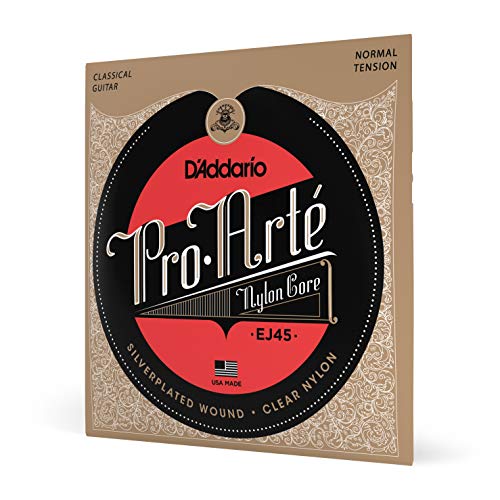
| Normal tension | More punch and volume, firmer feel under the fingers | D’Addario Pro-Arte Normal Tension; Alice classical set in a 28-43 gauge range |
| Light tension | Softer fretting, slightly less projection | D’Addario Pro-Arte Light Tension |
| Tie-on ends | Traditional classical stringing, knotted at the bridge | Ernie Ball Ernesto Palla clear and silver set (28-42) |
| Ball ends | No knots; quick to fit, familiar to steel-string players | Ernie Ball Folk Nylon ball-end set (28-42) |
| Student sets | Lower cost, adequate for early practice | D’Addario Student Nylon EJ27N |
The bass strings on any nylon set are wound with a silver-plated or similar metal wire over a nylon core, which is why they sound bright when new and dull as they age. If your bass strings begin to buzz or lose pitch stability, replace the set. Treble strings tend to last longer but can fray near the bridge. Light-tension sets suit players with sore fingers or those who prefer a soft touch; normal-tension sets suit players who want more volume and attack. A crossover guitar with a narrow nut generally works well with either.
How to Restring a Nylon Guitar
- Remove one string at a time. This keeps pressure on the neck and bridge consistent and helps you remember the routing.
- Thread the string through the bridge hole. On a tie-block bridge, pass it through, wrap it around itself once, and secure with the standard classical knot. Ball-end strings simply seat in the bridge.
- Wind onto the tuner roller. Leave a small amount of slack and use one to three wraps for treble strings and a few more for bass strings, making sure the wraps go neatly down the post.
- Bring each string to pitch gradually. Raise the pitch slowly, then pull the string gently away from the fretboard along its length a few times to stretch it.
- Retune and repeat. New nylon strings can take several days to settle. Retune before every practice session until pitch stays steady.
Care and Storage for Nylon-String Guitars
Nylon-string guitars are lighter-built than steel-string instruments, and many have thin tops that react to the weather. Keep the guitar away from radiators, windows and car trunks. Store it in its case when you are not playing, especially in winter when indoor air is dry. Maker guidance generally recommends 40 to 50 percent relative humidity, and a small humidifier in the case is inexpensive protection. Wipe the strings and fingerboard with a soft cloth after playing to extend string life. If you see the top rising near the bridge or the action gradually rising, have a technician check the guitar before the problem gets worse.
For crossover guitars with electronics, replace the battery before it dies and unplug the cable when you stop playing so the preamp switches off. A thinline body with a pickup is stable in humidity swings, but it is still wood, and the same sensible habits apply.
Nylon-String Buying Guide
Neck width and shape
Nut width is the biggest difference between classical and crossover guitars. Wide classical nuts give fingerstyle players room between strings; narrower crossover nuts feel closer to steel-string and electric guitars. If you have small hands or play chords with a thumb-over style, a narrower neck will be more comfortable. If you play classical repertoire, a wider neck is an advantage. Always check the maker’s published nut width.
Scale length
Classical guitars typically have a scale length around 650 mm. Some crossover and travel models use slightly shorter scales to ease tension and reach. If you have a limited stretch, ask about the scale before you buy.
Top wood
A solid cedar top sounds warm and responds quickly, which suits fingerstyle and gentle strumming. A solid spruce top is brighter and clearer. Laminate tops are more durable and less expensive. For a beginner, a laminate or entry-level solid top is fine; a solid top becomes more important as you improve.
Electronics and cutaway
If you play for others, a pickup is almost essential. A cutaway helps reach upper frets. Pure classical guitars without electronics are quieter to play and best suited to study and home practice. Thinline bodies cut feedback and are often paired with onboard preamps.
Strings
Nylon sets come in normal tension and light tension; D’Addario Pro-Arte sets are sold in both. Ball-end nylon strings, such as Ernie Ball’s folk nylon sets in the 28-42 range, allow you to skip tie-on knots at the bridge, which is helpful for steel-string players. Light tension is gentler on the fingers but can feel less defined. Normal tension has more punch.
Setup
Nylon guitars need less neck tension than steel-string guitars, but action still matters. A shop can adjust the saddle height to make the guitar easier to play. New nylon strings stretch for several days, so retune frequently at first.
Humidity
Solid-top nylon guitars are sensitive to dry air. Maker guidance generally recommends 40 to 50 percent relative humidity, and a case humidifier in winter is a simple precaution.
Left-handed players
Some makers offer left-handed nylon guitars, and the Takamine GC1 line is listed in left-handed versions, but availability changes, so confirm before ordering.
Frequently Asked Questions
Are nylon-string guitars easier to play than steel-string?
Nylon strings are lower in tension and softer on the fingertips, so many beginners find them more comfortable at first. The wider neck of a classical guitar can offset that advantage, which is why crossover models exist.
What is a crossover nylon-string guitar?
It is a nylon guitar with a narrower neck, a thinner body and often a cutaway and pickup, designed for players moving from steel-string or electric guitars.
What are the best classical guitars under 500?
The Ibanez GA5MHTCE and Cordoba C4-CE sit in that band and add electronics. The Cordoba C1M is an entry classical for students.
What are the best classical guitars under 1000?
The Cordoba C5CE, Cordoba C7, Yamaha NTX1 and Taylor Academy 12e-N all sit in or close to that band, depending on finish and retailer.
Can I put steel strings on a nylon-string guitar?
No. A classical guitar is built for lower tension, and steel strings can damage the neck and bridge. Use nylon strings only.
What are Spanish guitars?
The term usually refers to classical or flamenco guitars with nylon strings. In shopping terms, a Spanish guitar is a nylon-string guitar in the classical tradition.
How often should I change nylon strings?
When they sound dull, feel rough or stop holding tune. Heavy players may change them every few months; occasional players can go longer.
Which Nylon-String Guitar Should You Buy?
- Moving over from steel strings: Yamaha NTX1.
- Cheapest plug-in thinline: Ibanez GA5MHTCE.
- Quiet band or apartment use: Ortega TourPlayer Deluxe Thinline.
- Traditional feel with electronics: Cordoba C5CE.
- Entry classical with a pickup: Cordoba C4-CE Edge Burst.
- Comfort-first modern nylon: Taylor Academy 12e-N.
- Unplugged study guitar: Cordoba C7.
Sources
Yamaha, Ibanez, Ortega, Cordoba, Taylor and Takamine product listings; D’Addario and Ernie Ball string product pages; Martin and Taylor care guidance.
Last updated: October 2026




Write Your Review
No reviews yet. Be the first to share your experience!