

Key takeaways
- Check the neck joint first: set-neck and set-thru guitars (ESP LTD, Cort CR250, PRS SE) sustain differently from bolt-on-style joints, per the maker spec sheets.
- A 24.75 inch scale is the classic Les Paul feel; PRS runs slightly shorter at 24.594 inches, which many players read as a touch slacker.
- Ceramic humbuckers (Epiphone Tribute) sound tighter and louder; alnico-style pickups (ProBucker, Duncan) sound sweeter and more dynamic.
- Weight varies a lot on single-cuts, so a lighter body can matter more for a long rehearsal than an extra pickup feature.
- Spend on the model you will keep: all of these take pickup swaps later, but a poor neck joint or fretboard cannot be fixed cheaply.
The best Les Paul style guitars that do not carry a Gibson price tag are the Epiphone Les Paul Tribute for a first single-cut, the Epiphone Inspired by Gibson Les Paul Standard 50s for the closest vintage feel, and the ESP LTD EC-256 or Cort CR250 if you want a glued-in neck. Step up to the PRS SE McCarty 594 Singlecut or the ESP LTD EC-1000 Duncan when you want a stage-ready build with upgraded pickups. Every one of them shares the same core recipe: a single-cutaway body, two humbuckers, a tune-o-matic bridge and roughly a 24.75 inch scale.
Nobody needs the original to get that recipe. What changes between the cheaper and dearer copies is the neck joint, the wood under the top, the weight and the pickups, and those four things decide whether a single-cut feels like a lifelong guitar or a short-term stand-in. This guide ranks the options by those traits, not by logo.
Our top picks



As an Amazon Associate we earn from qualifying purchases at no extra cost to you.
Key takeaways
- Check the neck joint first: set-neck and set-thru guitars (ESP LTD, Cort CR250, PRS SE) sustain differently from bolt-on-style joints, per the maker spec sheets.
- A 24.75 inch scale is the classic Les Paul feel; PRS runs slightly shorter at 24.594 inches, which many players read as a touch slacker.
- Ceramic humbuckers (Epiphone Tribute) sound tighter and louder; alnico-style pickups (ProBucker, Duncan) sound sweeter and more dynamic.
- Weight varies a lot on single-cuts, so a lighter body can matter more for a long rehearsal than an extra pickup feature.
- Spend on the model you will keep: all of these take pickup swaps later, but a poor neck joint or fretboard cannot be fixed cheaply.
Quick comparison: best Les Paul style guitars at a glance
| Guitar | Best for | Scale length | Neck joint | Pickups | Frets | Budget tier |
|---|---|---|---|---|---|---|
| Epiphone Les Paul Tribute | First single-cut | 24.75 in | Bolt-on style (maker spec) | 650R / 700T ceramic humbuckers | 22 | Entry |
| Epiphone Inspired by Gibson Les Paul Standard 50s | Vintage tone and looks | 24.75 in | Glued-in | ProBucker 1 / ProBucker 2 | 22 | Mid |
| Cort CR250 | Set-neck value | 24.75 in | Set neck | VTH59 humbuckers | 22 | Mid |
| ESP LTD EC-256 | Rock and metal with a slim neck | 24.75 in | Set neck | LH-150 with coil split | 22 XJ | Mid |
| Schecter Solo-II Standard | Modern looks, roasted neck | 24.75 in | Set neck | Diamond Standard humbuckers | 22 jumbo | Mid |
| PRS SE McCarty 594 Singlecut | Players who gig | 24.594 in | Set neck | 58/15 LT “S” with partial split | 22 | Upper-mid |
| ESP LTD EC-1000 Duncan | Stage and studio workhorse | 24.75 in | Set-thru | Seymour Duncan ’59 / JB | 24 XJ | Upper end |
How a Les Paul style guitar is built, and why it sounds that way
The original design pairs a mahogany body with a carved maple cap, a glued-in mahogany neck, two humbuckers and a tune-o-matic bridge with a stop tailpiece. The cap adds brightness and attack to the dark mahogany core. The glued joint keeps the neck and body acting as one resonating piece, which is why single-cuts are known for sustain. Cheaper copies usually keep the look but change one of those ingredients: a veneer instead of a thick cap, a bolt-on style joint, or a different body wood.
None of that makes a cheaper copy bad. It simply explains the trade-offs when you read a spec sheet. If a listing says “carved mahogany top”, the guitar is not built from the maple-over-mahogany sandwich. If it says “set neck”, the neck is glued. If it says “okoume” or “sapele”, that is mahogany-family wood chosen for cost and supply, as stated on the maker’s own product pages for several Epiphone models.
1. Epiphone Les Paul Tribute: Best for a first single-cut
- 24.75 inch scale · mahogany neck, 60s SlimTaper C profile · laurel fingerboard, 12 inch radius
- 22 medium jumbo frets · 1.69 inch (43 mm) nut width
- Epiphone 650R neck and 700T bridge ceramic humbuckers · LockTone tune-o-matic and stop bar
- Carved mahogany top over a Les Paul shaped body · 15:1 die-cast tuners
Best for: players who want the shape, the two-humbucker voice and a comfortable neck without paying for set-neck construction.
Skip if: you intend to use heavy cleans and want a sweeter, more dynamic pickup response out of the box.
Pros
- Entry-level way into the classic single-cut layout
- Slim, forgiving neck profile that suits smaller and larger hands alike
- LockTone bridge keeps the strings from rattling out of their saddles
- Ceramic humbuckers are loud and punchy for rock and punk
Cons
- Neck joint is described as bolt-on on the maker spec listing, so sustain is not quite a glued-neck Les Paul
- Ceramic pickups can sound a bit hard-edged on clean channels
2. Epiphone Inspired by Gibson Les Paul Standard 50s: Best for vintage tone
- 24.75 inch scale · mahogany neck, 1959 rounded medium C profile · laurel fingerboard with trapezoid inlays
- 22 medium jumbo frets · Graph Tech nut · 1.69 inch nut width per retailer listings
- ProBucker 1 neck and ProBucker 2 bridge pickups · CTS pots with 50s-style wiring
- Mahogany body with a maple cap and a flame maple veneer · LockTone tune-o-matic · Vintage Deluxe 18:1 tuners
Best for: anyone chasing a classic blues, classic rock or country tone on a stage-looking guitar that comes with a gig bag.
Skip if: you play down-tuned heavy music and want a hotter, tighter pickup set.
Pros
- Mahogany body with maple cap matches the original construction recipe
- 50s-style wiring lets the volume knob clean up the tone without losing the highs
- Chunky 1959 style neck feels substantial for players who like a full handful
- Gig bag included with the Inspired by Gibson range
Cons
- The bigger neck profile can feel bulky for players with small hands
- Figured-top variants cost more than plain-top versions for a cosmetic difference
3. Cort CR250: Best for set-neck value
- 24.75 inch scale · set mahogany neck · jatoba fingerboard on current listings, 12 inch radius
- 22 frets · 42 mm Graph Tech NuBone nut
- Cort Voiced Tone VTH59 humbuckers on current builds (older units used ClassicRocker-II pickups)
- Mahogany body with a flamed maple top · tune-o-matic bridge with stop tailpiece · vintage-style tuners
Best for: players who want the glued-neck construction of the real thing from a maker known for solid, no-frills build quality.
Skip if: brand recognition or resale value matters, because a Cort will not trade like an Epiphone.
Pros
- Set neck and maple top are the traditional ingredients
- Graph Tech NuBone nut helps tuning stability
- Controls follow the standard two volume, two tone, three-way toggle layout
- Four finish options in the line suit both burst and amber tastes
Cons
- Older and newer production runs use different pickups and fingerboard wood, so check the listing carefully
- Distribution and local stock are thinner than for Epiphone, so trying one in person is harder
4. ESP LTD EC-256: Best for rock and metal with a slim neck
- 24.75 inch scale · set neck, three-piece mahogany neck, thin U shape
- Roasted jatoba fingerboard on most finishes, 350 mm (about 13.78 inch) radius · 22 extra-jumbo frets · 42 mm nut
- LH-150N neck and LH-150B bridge passive humbuckers · push/pull tone knob splits the coils
- Mahogany body (FM version adds a flamed maple top) · tune-o-matic with tailpiece
Best for: rock, hard rock and metal players who want a Les Paul shaped body with a flatter fingerboard and faster neck.
Skip if: you want a thick vintage neck or a maple-capped top on the base model.
Pros
- Set neck with a flat radius and extra-jumbo frets suits lead playing and string bending
- Coil-split push/pull tone knob adds brighter, thinner voices
- Slim U neck carries over from ESP’s heavier-music line
- Available with a flamed maple top for a more traditional look
Cons
- Fingerboard wood varies between finishes (jatoba on most, rosewood on some)
- The non-FM version has a plain mahogany top, so it loses the maple-cap brightness
5. Schecter Solo-II Standard: Best for modern looks and a roasted neck
- 24.75 inch scale · roasted maple neck, thin C profile · rosewood fingerboard, 14 inch radius
- 22 jumbo frets · 42 mm graphite nut
- Two Schecter Diamond Standard passive humbuckers · tune-o-matic bridge with stop tailpiece
- Mahogany body with a figured burl top · black hardware · bridge volume, neck volume, master tone
Best for: players who like single-cut tone but want modern styling, black hardware and a neck that resists seasonal movement.
Skip if: you want a vintage-correct look with nickel or gold hardware.
Pros
- Roasted maple neck is more stable in humidity swings, a general property of roasted wood that makers highlight
- Flatter 14 inch radius is friendly to bending and fast runs
- Master tone with separate volumes is simpler than a four-knob layout
- Burl top gives each guitar a distinct appearance
Cons
- Body top material differs between listing years (maple, flamed maple or burl)
- Diamond Standard pickups lean toward modern output rather than vintage chime
6. PRS SE McCarty 594 Singlecut: Best for players who gig
- 24.594 inch scale · bound mahogany Pattern Vintage neck · rosewood fingerboard, 10 inch radius
- 22 frets · 1 11/16 inch nut
- 58/15 LT “S” humbuckers · pull-switch partial coil-split · PRS two-piece bridge
- Maple top with flame maple veneer over a mahogany back · shallow violin-style carve · vintage-style tuners
Best for: working guitarists who want a more refined single-cut with vintage-inspired pickups and a different feel from the Gibson template.
Skip if: you want an exact 24.75 inch scale or the most budget-friendly entry.
Pros
- Pull-switch partial split adds a usable second voice without a separate wiring job
- Pattern Vintage neck with a 10 inch radius feels familiar to vintage fans
- Slightly shorter scale gives a marginally slinkier string feel
- Finishing and fretwork are widely praised in published reviews
Cons
- Upper-mid pricing for an SE-line guitar
- A ten inch radius is more curved than the ESP and Schecter models, which some bend-heavy players dislike
7. ESP LTD EC-1000 Duncan: Best stage and studio workhorse
- 24.75 inch scale · set-thru construction, three-piece mahogany neck, thin U contour
- Macassar ebony fingerboard, 350 mm (about 14 inch) radius · 24 extra-jumbo stainless steel frets · 42 mm nut
- Seymour Duncan ’59 neck pickup and JB bridge pickup · volume, volume, push/pull tone, three-way toggle
- Mahogany body · LTD locking tuners · Tonepros locking tune-o-matic and tailpiece
Best for: players who want known-name pickups, stainless frets and locking hardware on a single-cut that can be gigged hard.
Skip if: you are buying your first electric, or you prefer a vintage-style neck.
Pros
- Seymour Duncan ’59 and JB combination covers warm cleans through high-gain leads
- Locking tuners and Tonepros hardware help tuning stability on stage
- Stainless frets wear much more slowly than nickel
- 24 frets extend the range for lead players
Cons
- Priced at the top end of the single-cut copies covered here
- Not every retailer lists the same fingerboard material, so confirm the variant
Also consider
- Epiphone Les Paul Special II: 24.75 inch scale · mahogany neck with a 1960s SlimTaper D profile · 650R and 700T humbuckers · tune-o-matic with stop bar. A stripped-down, very low-cost route into the shape; the body wood is listed differently by different retailers, so check the exact variant.
- Epiphone Inspired by Gibson Les Paul Custom: 24.75 inch scale · mahogany body with 7-ply top binding · bound ebony fingerboard, 12 inch radius · ProBucker 2 and ProBucker 3 pickups · gold hardware. A dressier, more premium look in the Epiphone family.
- Donner DLP-style electric guitar: dual humbuckers on a poplar body in a full-size beginner format. A very low-cost starting point, but a step down in materials from the picks above.
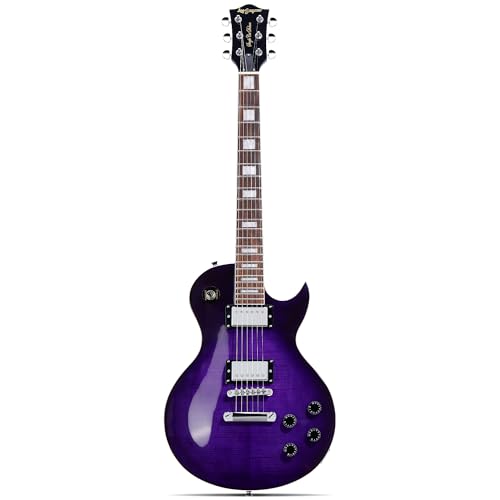
- Leo Jaymz SC Series: mahogany body · laurel fingerboard · dual humbuckers · tune-o-matic bridge · C neck. A budget single-cut for tinkerers who plan to upgrade parts over time.
How We Chose
This list is research-based: we did not personally use the products. We compared maker spec sheets, retailer listings and published reviews from guitar magazines and gear sites. Each pick had to be a real, currently listed single-cut with two humbuckers, a stop-tailpiece bridge and a Les Paul style silhouette. We prioritised neck construction, scale length, pickup type and wood choices, because those are the traits that separate a convincing single-cut from a look-alike.
We limited each brand to two main picks, spread the list across budget tiers, and avoided quoting prices because they move constantly. Where listings disagree about woods or fingerboard material, the entry says so, and we recommend confirming the exact variant before purchase.
Which genres suit which Les Paul style guitar
Single-cuts are often filed under “rock”, but the pickups and neck shape push each model toward a different corner. The Epiphone Les Paul Standard 50s and the Cort CR250 lean toward blues, classic rock and country, where a warm neck pickup and a rolled-back tone knob do most of the work. The ESP LTD EC-256, EC-1000 Duncan and Schecter Solo-II Standard lean toward hard rock and metal, because their flatter radii, extra-jumbo frets and higher-output pickups reward fast, aggressive playing. The Epiphone Les Paul Tribute sits in the middle and covers punk, alt-rock and garage playing well thanks to its ceramic humbuckers. The PRS SE McCarty 594 Singlecut is the most versatile of the group, since the partial coil-split opens up thinner, more chime-like tones for indie and pop.
Setup tips after you buy a single-cut
- Check the neck relief. A shop setup or a quick truss rod adjustment keeps the action low without buzz; most players leave the rod alone unless the neck looks clearly bowed.
- Set the bridge height and intonation. A tune-o-matic lets you adjust each saddle individually, so the notes stay in tune up the neck.
- Stretch the strings. New strings on a stop tailpiece guitar settle faster if you gently pull each one a few times and retune.
- Use a wide strap. A padded strap spreads the weight of a heavier body across the shoulder.
- Keep humidity steady. Maker guidance from companies such as Gibson and Martin recommends keeping instruments around 40 to 50 percent relative humidity to protect the fingerboard and finish.
Buying guide: what separates a good Les Paul copy from a merely similar one
Neck joint: glued, set-thru or bolt-on style
A set neck is glued into a mortise in the body, which gives the strongest transfer of string vibration into the wood. A set-thru neck, like the one on ESP LTD models, extends deeper into the body. A bolt-on style joint is simpler and more economical to build and repair. Players who value long sustain and a woody midrange should look for a glued joint; players who want a lower entry cost can accept a bolt-on style joint and still get a decent guitar.
Scale length and string feel
Most of the guitars here use a 24.75 inch scale, the same as the Gibson original. At this length, standard 10-46 strings feel relatively slack and easy to bend. The PRS SE McCarty 594 is slightly shorter at 24.594 inches, which makes the strings feel a little looser again. If you tune down a full step or more, a shorter scale can feel floppy, and heavier gauges help restore tension.
Body wood and top
Traditional single-cuts use a mahogany back with a maple cap. Some budget builds use a carved mahogany top or a veneer. Okoume and sapele are mahogany-family woods that makers use on certain Epiphone models to keep costs and supply stable. A maple cap adds brightness and snap, so if you find a mahogany-only guitar muddy through a dark amp, a bright amp or bridge pickup choice can restore the balance.
Pickups: ceramic, alnico and covered versus open
Ceramic magnets give higher output and a tighter low end, which suits heavier styles. Alnico magnets give a sweeter, more dynamic response that reacts to picking strength and volume knob changes. Many reviewers find the stock pickups on lower-cost models serviceable; swapping to a premium set is a common upgrade. Choose a guitar whose neck and hardware you love first, because pickups are the easiest part to change.
Weight and comfort
Solid mahogany-and-maple single-cuts can be heavy, and several makers publish weights on their product pages. If you play seated, weight matters less; if you stand through long sets, look for chambering or lighter body wood and use a wide padded strap. Published reviews often mention neck-dive on shorter-horned designs, so check how a model balances if you can try it in a shop.
Fretboard radius and fret size
A 12 inch radius like the Epiphone models sits between vintage-rounded and modern-flat. A 14 inch radius (Schecter) or a roughly 350 mm radius (ESP LTD) is flatter and helps big bends. Jumbo and extra-jumbo frets feel easy under the fingertip; stainless steel frets last far longer than nickel-silver if you play heavily.
Hardware and tuning stability
A tune-o-matic with a stop bar is the standard. Locking versions such as the LockTone on Epiphone models or the Tonepros locking bridge on the EC-1000 stop the bridge from rattling free. Locking tuners speed up string changes. A Graph Tech or similar low-friction nut reduces the pinging and drift that bending can create.
Budget thresholds
For the entry tier, expect bolt-on style joints and ceramic pickups. In the mid tier, expect real set-neck construction, mahogany bodies and more refined pickups. At the upper end, expect better hardware, stainless frets and brand-name pickups. Anything that promises all of these at an entry price deserves close scrutiny of the exact listing.
Which one should you buy?
- Tightest budget: Epiphone Les Paul Tribute, with the Les Paul Special II as the lowest alternative.
- Vintage blues and classic rock: Epiphone Inspired by Gibson Les Paul Standard 50s.
- Set neck without brand premium: Cort CR250.
- Rock and metal with fast playability: ESP LTD EC-256, or the EC-1000 Duncan if you can stretch.
- Modern look with a stable neck: Schecter Solo-II Standard.
- Gigging and recording: PRS SE McCarty 594 Singlecut.
Frequently Asked Questions
What is the best Les Paul style guitar for beginners?
The Epiphone Les Paul Tribute is the simplest starting point because it offers the classic layout and slim neck at an entry-level price tier. The Les Paul Special II is lower still, but it has fewer controls and a plainer build.
Are Epiphone Les Pauls any good compared with Gibson?
Yes, for most players. Epiphone builds the Les Paul shape with the same 24.75 inch scale and a similar two-humbucker layout. The differences are in wood grade, hardware, factory and finishing, which is why Gibson commands a much higher price tier.
What does single-cut mean?
A single-cut body has one cutaway where the neck meets the body, on the treble side. It gives access to the upper frets with a slightly different feel from the double-cut shape found on SG and PRS Custom designs.
Is a set neck better than a bolt-on neck?
A set neck tends to give a smoother heel and more sustain, which is why makers market it as a premium feature. A bolt-on style joint is easier to adjust and replace. Neither is automatically better for every player.
Do ceramic humbuckers sound bad?
No. Ceramic pickups have a tighter, brighter and more aggressive sound that suits rock and metal. Players who want a smoother vintage tone often prefer alnico-style pickups like ProBuckers or Seymour Duncan sets.
Can I upgrade the pickups later?
Yes. Pickup swaps are among the most common upgrades on single-cut guitars. If a guitar already has a solid neck, fretwork and hardware, new pickups can change its voice at a modest cost.
Is left-handed availability good?
Several of these models are made in left-handed versions by the makers, but stock varies by retailer and finish. Confirm before buying.
Sources
Epiphone product pages (Gibson Brands); PRS Guitars product pages; ESP Guitars product pages; Cort Guitars product pages; Schecter Guitar Research product pages; Guitar World; retailer specification listings.
Last updated: October 2026




Write Your Review
No reviews yet. Be the first to share your experience!