

Key takeaways
- SG-style tone is thick and mid-forward, which makes it a natural rhythm guitar for riffs, power chords and overdriven blues.
- Epiphone dominates the affordable SG space, so the real choice is between Special, Tribute, Inspired by Gibson and Prophecy lines.
- Neck dive is the main handling complaint; a wide, grippy strap and a good strap-button position help.
- P-90 versions sound grittier and more open than humbucker versions, with a little more hum.
- If you want something different from the Epiphone lineup, the ESP LTD Viper-256 is a set-neck alternative with a similar double-cut feel.
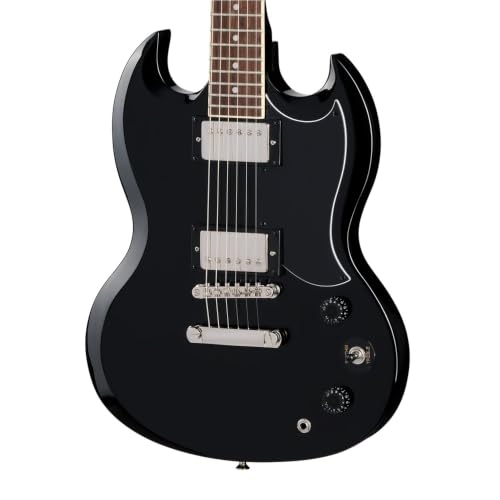
The best SG style guitars are almost all built on the same idea: a thin, double-cutaway mahogany-family body, two humbuckers (or P-90s), a tune-o-matic bridge and a 24.75 inch scale. For a first SG, the Epiphone SG Special is the lowest-cost route, the Epiphone SG Tribute is the step up, and the Epiphone Inspired by Gibson SG Special P-90 is the pick for raw, barking rhythm tone. If you want a distinctly modern take, the ESP LTD Viper-256 and the Epiphone SG Prophecy move the shape toward heavier music.
The SG earns its fans for two reasons. It is usually lighter than a Les Paul style single-cut, and its horns leave your fretting hand free to reach the top of the neck. The cost of that design is balance: the neck joint sits far up the fingerboard, so some SGs tip forward on a strap. This guide ranks SG style guitars by weight handling, rhythm punch and how well they suit heavy riffs, with a note on what is realistic at each budget tier.
Our top picks


As an Amazon Associate we earn from qualifying purchases at no extra cost to you.
Key takeaways
- SG-style tone is thick and mid-forward, which makes it a natural rhythm guitar for riffs, power chords and overdriven blues.
- Epiphone dominates the affordable SG space, so the real choice is between Special, Tribute, Inspired by Gibson and Prophecy lines.
- Neck dive is the main handling complaint; a wide, grippy strap and a good strap-button position help.
- P-90 versions sound grittier and more open than humbucker versions, with a little more hum.
- If you want something different from the Epiphone lineup, the ESP LTD Viper-256 is a set-neck alternative with a similar double-cut feel.
Quick comparison: best SG style guitars for riffs and lightweight comfort
| Guitar | Best for | Pickups | Scale | Bridge | Budget tier |
|---|---|---|---|---|---|
| Epiphone SG Special | First SG, tightest budget | Two humbuckers | 24.75 in | Tune-o-matic and stopbar | Entry |
| Epiphone SG Tribute | Step-up rhythm guitar | Two humbuckers | 24.75 in | Tune-o-matic style | Entry to lower-mid |
| Epiphone Inspired by Gibson SG Special P-90 | Gritty blues and garage rhythm | P-90 single-coils | 24.75 in | Tune-o-matic style | Mid |
| ESP LTD Viper-256 | Rock and hard rock | Passive humbuckers | 24.75 in | Tune-o-matic with tailpiece | Mid |
| Epiphone SG Prophecy | Modern heavy playing | Active Fishman Fluence humbuckers | 24.75 in | Tune-o-matic style | Upper-mid |
| Epiphone Inspired by Gibson Custom 1964 SG Standard Reissue | Vintage-style flagship | Humbuckers | 24.75 in | Vintage-style vibrato | Upper end |
Why an SG feels different from a Les Paul
An SG and a Les Paul share the same scale length, pickups and bridge, but they feel very different in your hands. The SG body is slimmer and lighter, with no thick maple cap, so the guitar sounds a touch less sustained and a touch more open in the midrange. The double cutaway gives unrestricted access to the highest frets, and the neck meets the body much farther up the fingerboard than on a single-cut.
The result is a guitar that many players find easier to carry through a long gig and easier to solo on, but it can be more demanding to balance. Published reviews of SG style instruments often mention that the headstock end feels heavy when the guitar hangs from a strap, a trait known as neck dive. Strap choice and strap-button placement matter more here than on almost any other shape.
1. Epiphone SG Special: Best for the lowest-cost SG
- 24.75 inch scale · bolt-on style neck · double-cutaway body in Cherry or Ebony finishes
- Two Epiphone humbuckers (650R and 700T on the current Special line, per Epiphone) · tune-o-matic bridge with stopbar tailpiece
- Controls follow the simple two-pickup layout with a three-way toggle
- Body wood and finish details vary slightly between production runs, so check the exact listing
Best for: beginners and budget buyers who want the SG look and a hard-rock tone for the lowest outlay.
Skip if: you want upgraded hardware, set-neck construction or premium pickups from day one.
Pros
- The most affordable way into the SG shape
- Light enough for long rehearsals
- Strong at rock, punk and classic metal rhythm
- Easy to improve later with new pickups or tuners
Cons
- Entry-level hardware and finishing
- Neck dive can show up with a thin strap
2. Epiphone SG Tribute: Best step-up rhythm SG
- 24.75 inch scale · mahogany-family double-cutaway body · Cherry or Ebony finishes
- Two humbuckers · tune-o-matic style bridge and stop tailpiece
- Part of Epiphone’s Tribute range, positioned above the Special line
- Left-handed versions are listed by some retailers
Best for: players who want a more complete SG than the Special for a modest price step.
Skip if: you need P-90 grit or modern active pickups.
Pros
- A tidy SG for riffs, power chords and classic rock
- Same light weight and slim profile as other SGs
- Good starting platform for pickup swaps
- Available in a classic cherry look
Cons
- Pickups lean toward the bright, tight side, not vintage warmth
- Detailed spec lists vary by retailer, so confirm the model year
3. Epiphone Inspired by Gibson SG Special P-90: Best for gritty rhythm
- 24.75 inch scale · double-cutaway body in Cherry · gig bag included in the listing
- Two P-90 single-coil style pickups · tune-o-matic style bridge
- Part of the Inspired by Gibson range, which sits above the Special and Tribute lines
Best for: garage rock, blues, punk and indie players who want open, rowdy single-coil bite from a mahogany-style guitar.
Skip if: you play in noisy rooms with a lot of lighting dimmer hum, or you need a quiet high-gain tone.
Pros
- P-90 pickups respond expressively to picking strength
- Sounds clearer on cleans than a typical humbucker SG
- Mid-tier build with a bag included
- A distinctive voice in a crowded market of humbucker SGs
Cons
- P-90s pick up more electrical noise than humbuckers
- Less suited to very high gain without a noise gate
4. ESP LTD Viper-256: Best non-Epiphone alternative
- 24.75 inch scale · mahogany body · set-neck construction per the LTD 256-series spec (confirm on the listing) · rosewood fingerboard on the Olympic White version
- Passive ESP-designed humbuckers · tune-o-matic bridge with tailpiece
- Part of the LTD 256 series, alongside the Eclipse EC-256
Best for: rock and metal players who want a double-cut mahogany guitar from a brand known for heavier music.
Skip if: you want the classic cherry SG appearance and Epiphone’s range of accessories.
Pros
- Different brand and styling than the Epiphone SG range
- Heavier-music pedigree with higher-output pickups
- Set-neck feel is typical of ESP’s LTD mid-tier
- Strong at sustain for solos
Cons
- Viper shape is not identical to a traditional SG
- Spec details vary by finish, so confirm fingerboard and pickups
5. Epiphone SG Prophecy: Best for modern heavy playing
- 24.75 inch scale · double-cutaway body in Aged Jet Black Metallic finish
- Active Fishman Fluence Modern humbuckers, powered by a battery, with alternate voicings per the maker
- Prophecy-series modern styling and hardware
- Gig bag included in the listing
Best for: metal, hard rock and modern-style players who want clarity at high gain.
Skip if: you want warm vintage tones or you dislike battery-powered pickups.
Pros
- Active pickups stay tight and clear under heavy gain
- Modern look stands apart from vintage SG copies
- Alternate voicing options add versatility
- Strong choice for players who tune down
Cons
- Active electronics need battery maintenance
- Upper-mid price tier for an Epiphone SG
6. Epiphone Inspired by Gibson Custom 1964 SG Standard Reissue: Best vintage-style flagship
- 24.75 inch scale · vintage-inspired SG Standard layout in Maestro Cherry
- Vintage-style vibrato tailpiece per the model name · hard case included
- Part of the Inspired by Gibson Custom line, Epiphone’s highest tier
Best for: collectors and gigging players who want the closest vintage-flavoured SG at a price below the original.
Skip if: you do not want vibrato hardware, which can affect tuning, or you want the lowest outlay.
Pros
- Authentic vintage-inspired styling and hardware
- Hard case adds protection and value
- Top of the Epiphone SG range
- Strong for classic rock and blues
Cons
- Price sits at the upper end of this list
- Vibrato tailpiece is less stable than a fixed stopbar
Also consider
- Epiphone Inspired by Gibson SG Custom: dressier white finish with premium trim, 24.75 inch scale. Listed with a gig bag.
- Epiphone SG Tribute Plus: a step-up variant of the Tribute listed in Ebony Burst and Vintage Sunburst. Check the exact spec on the listing.
- Leo Jaymz SC Series: mahogany body · laurel fingerboard · dual humbuckers · tune-o-matic bridge · C neck. A budget guitar for modders.
- Batking SG-style double-cutaway: two-piece mahogany body with P-90 pickups. A low-cost option for experimenters; expect to do some setup work.
How We Chose
This is a research-based list: we did not personally use the products. We reviewed maker spec sheets, retailer listings and published reviews to find SG style guitars that deliver the shape, a 24.75 inch scale and a recognisable humbucker or P-90 voice. Because the affordable SG market is dominated by Epiphone, several picks come from the same maker; we spread them across distinct model lines so each one serves a different player. Where listings disagree, we say so, and we avoid quoting prices because they change.
Best lightweight electric guitars: where SG style models fit
If your main goal is a lighter guitar, an SG is a logical starting point, but it is worth separating three kinds of lightness. The first is raw body mass: an SG body is thinner than a single-cut and has no heavy cap, so it tends to weigh less. The second is perceived weight on the strap, which depends on balance; an SG with neck dive can feel heavier on your shoulder than its scale weight suggests. The third is comfort in the playing position, where the double cutaway and short upper horn let you sit with the guitar on your knee without the body digging into your leg.
| Factor | What to look for | Why it matters |
|---|---|---|
| Body thickness | Slim mahogany-family body, no thick cap | Less mass hanging from the strap |
| Balance point | Guitar stays level when you let go of the neck | Prevents fatigue in the fretting hand |
| Strap | Wide, padded or grippy material | Spreads weight and stops the headstock drooping |
| Tuners | Lighter tuners at the headstock | Reduces head-heavy feel |
| Hardware | Simple tune-o-matic and stopbar | Vibrato tailpieces and extra electronics add mass |
Published reviews often report that an SG is among the lightest of the classic solid-body shapes, but individual guitars can differ by more than a pound because of wood density. If weight is your priority, ask a shop to put the guitar on a scale or check the weight in the listing before buying.
Best rhythm guitars: setting an SG up for riffs
An SG is a natural rhythm guitar because its slim body and mahogany-family tone push the midrange forward. That focus helps power chords, palm-muted riffs and open chords cut through a band without needing a lot of volume. A few setup choices make that strength even clearer.
- Pick the right strings. A 10-46 set suits most players; step up to 11-49 if you tune down or like a firmer pick attack.
- Use the bridge pickup for riffs. Roll the tone knob back a little to remove fizz while keeping the grind.
- Use the neck pickup for chords and leads. It adds warmth and body to solos and open chords.
- Set pickup height with care. Pickups that sit too close to the strings can choke sustain and sound harsh; lower them slightly if the guitar sounds thin.
- Control gain. Rhythm tones are usually clearer with less gain than lead tones; back off the drive to hear each note in a chord.
- Check intonation. A tune-o-matic bridge lets you adjust each saddle, so chords stay in tune up the neck.
Match the SG style guitar to your style
| Playing style | What matters most | Best match from this list |
|---|---|---|
| Beginner rock and pop-punk | Low cost, light weight, simple controls | Epiphone SG Special |
| Classic rock and hard rock rhythm | Thick humbuckers, stable tuning | Epiphone SG Tribute |
| Blues, garage and indie | Open dynamics, touch sensitivity | Epiphone Inspired by Gibson SG Special P-90 |
| Hard rock and metal with set-neck feel | Sustain, higher output | ESP LTD Viper-256 |
| Drop tunings and modern metal | Clarity under high gain | Epiphone SG Prophecy |
| Vintage-style collectors | Period-correct looks and hardware | Epiphone Inspired by Gibson Custom 1964 SG Standard Reissue |
How to reduce neck dive, step by step
- Change the strap. A wide strap with a textured or leather inner surface grips your clothing and stops the guitar sliding forward.
- Move the rear strap button. Some players relocate it slightly toward the upper horn area to shift the balance point backward; ask a technician if you are unsure.
- Use strap locks. They keep the strap secure and make it easier to experiment with positions.
- Try lighter tuners. Lighter machine heads reduce headstock mass; locking or heavy tuners may add to the problem.
- Adjust your playing posture. Raising the guitar slightly on the strap and angling the neck upward reduces the pull on your fretting hand.
Many players find that after a few sessions with the right strap, neck dive stops being a concern. If it persists, consider whether a different shape, such as a single-cut, suits you better.
Buying guide: what matters when you choose an SG style guitar
Balance and neck dive
Because the neck joins far up the body, SGs can hang with the headstock lower than other shapes. Wide leather or padded straps with some grip help. Some players move the rear strap button slightly, or add a lightweight strap lock. If you have the chance, hang the guitar on a strap in a shop and let go of the neck; if the headstock drops sharply, expect to compensate with your fretting hand.
Humbuckers versus P-90s
Humbuckers give a thick, quiet tone with more sustain and gain tolerance. P-90s sound looser and edgier, with a touch more hum. If most of your playing is overdriven rock, riffs and metal, humbuckers are safer. If you play garage rock, blues or indie, P-90s add personality. Active pickups, as in the Prophecy, add clarity and consistent output.
Neck joint and weight
A set-neck or set-thru design transmits more resonance and sustain; a bolt-on style joint is simpler and lower in cost. Weight depends on wood choice, but SG style guitars generally weigh less than Les Paul style single-cuts, according to published specifications. Lighter bodies can sound a little leaner, so make sure you like that character.
Scale length and string tension
The 24.75 inch scale feels slinky and bends easily with 10-46 strings. Tuning down a step is comfortable, and drop tunings feel looser. If you prefer firm tension for chunky rhythm, move up a gauge, for example to 11-49.
Bridge and tailpiece
A tune-o-matic bridge with a stop tailpiece is stable and simple. A vibrato tailpiece looks vintage and allows light pitch bends but can drift out of tune, particularly on bolt-on SGs. If you are buying for rhythm and riffs, a fixed bridge is easier to live with.
Fretboard and frets
A 12 inch radius is common and comfortable for chords, with 22 frets typical on SG style guitars. If you bend a lot, medium jumbo frets are easier on the fingers than narrow ones.
Budget thresholds
The entry tier gives you the shape, basic humbuckers and simple hardware. The mid tier adds better pickups or P-90s, a bag and improved finish. The upper tier adds active electronics or vintage-inspired hardware and a hard case. For first-time buyers, the Special or Tribute is enough; spend more only when you know the sound you want.
Ownership realities: what wears and what to upgrade first
An SG is a simple instrument, so ownership comes down to a few predictable items. The finish on slim bodies can show buckle rash and belt marks sooner than a thick-bodied guitar, so a soft cloth and an occasional wipe-down after playing is useful. The horn tips are the most exposed part of the body, which is why a hard case or a thickly padded gig bag matters if you travel. On bolt-on style models, check the neck screws occasionally, because wood expands and contracts with the seasons and a slightly loose joint affects tuning.
- First upgrade, entry tier: pickups. A better humbucker or a P-90 set changes the voice more than any other single part.
- Second upgrade: nut and tuners. Smoother nut slots help the guitar return to pitch after bends.
- Third upgrade: strap and strap locks. For an SG, this is as much a playability upgrade as a safety one.
- Consumables: strings every few weeks of regular playing, and a fresh set before any recording session.
Maker guidance from companies such as Gibson and Martin suggests keeping instruments in a stable environment around 40 to 50 percent relative humidity, which also helps slim mahogany-family bodies avoid finish cracks.
Which one should you buy?
- Tightest budget: Epiphone SG Special.
- Better all-round rhythm guitar: Epiphone SG Tribute.
- Gritty blues and garage rock: Epiphone Inspired by Gibson SG Special P-90.
- Rock and hard rock with a different brand: ESP LTD Viper-256.
- Modern heavy riffs and drop tunings: Epiphone SG Prophecy.
- Vintage flagship: Epiphone Inspired by Gibson Custom 1964 SG Standard Reissue.
Frequently Asked Questions
Are SG style guitars good for beginners?
Yes. They are light, have a slim neck and the double cutaway makes upper frets easy to reach. The main thing to manage is neck dive, which a decent strap largely solves.
What is the best SG style guitar for rhythm playing?
For humbucker tone, the Epiphone SG Tribute is a strong choice. For gritty rhythm, the Epiphone Inspired by Gibson SG Special P-90 adds more bite and dynamics.
Are SG guitars lighter than Les Paul guitars?
Generally yes, because the body is thinner and lacks a thick maple cap, according to published specifications. Individual guitars vary, so check the stated weight where available.
Do SG guitars have neck dive?
Many do, because the neck joins far up the body. Strap choice, strap-button position and holding technique can reduce the problem.
Is an SG good for metal?
Yes, especially with active or high-output pickups. The Epiphone SG Prophecy and ESP LTD Viper-256 lean in that direction.
Can I upgrade the pickups on an entry-level SG?
Yes. Pickup swaps are among the most common upgrades and can change the voice of an entry-level SG significantly.
What strings should I put on an SG style guitar?
A 10-46 set is the standard and works for most rock and blues. If you play in drop tunings or want more tension for rhythm work, an 11-49 set gives a firmer feel on the 24.75 inch scale. Heavier strings need a nut and bridge that can handle the gauge, so if the guitar buzzes, ask a technician to look at the nut slots.
Is a P-90 SG better than a humbucker SG?
Neither is better; they sound different. P-90s are open, dynamic and gritty, while humbuckers are thicker, quieter and handle high gain more smoothly. Pick based on the music you play most.
Which SG style guitar is best for small hands?
The slim neck profiles on the Epiphone SG Special and SG Tribute suit smaller hands well, according to the maker descriptions of their SlimTaper-style necks. Try a few in a shop if you can, since feel is personal.
Are left-handed SG models available?
Some Epiphone SG models are listed in left-handed versions by retailers, but stock changes. Check the exact listing.
Sources
Epiphone product pages (Gibson Brands); ESP Guitars product pages; Fishman product pages; Guitar World; retailer specification listings.
Last updated: October 2026





Write Your Review
No reviews yet. Be the first to share your experience!