

Key takeaways
- Quiet office: keep volume low and ask a nearby colleague whether they can hear speech or music.
- Public transport: engine noise may hide leakage, but high volume can still be audible to a seatmate.
- Running outdoors: leakage is rarely a concern; awareness of vehicles, cyclists, and people is the more important benefit.
- Home or shared walls: open-ear headphones are not a substitute for low-volume listening or closed-back headphones.
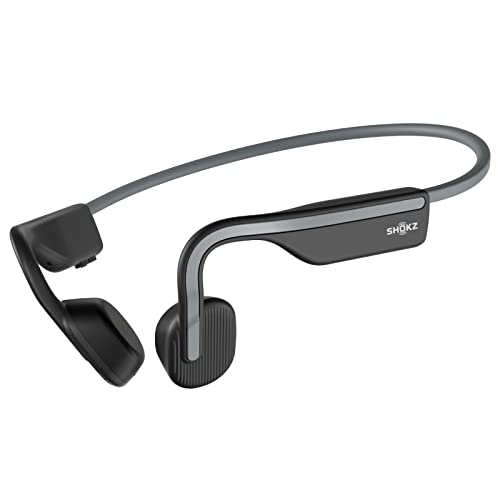
The best open ear headphones for most people are the Shokz OpenRun Pro 2 for exercise, the Shokz OpenFit 2 for everyday comfort and calls, and the Bose Ultra Open Earbuds for the widest, most natural awareness of your surroundings.
Open-ear models do not seal the ear canal. They use either a small speaker suspended near the ear, a clip-style design, or bone-conduction transducers placed against the cheekbone. That makes them useful for running, commuting, office work, and conversations, but it also means more sound leakage and less bass isolation than sealed earbuds.
Our top picks


As an Amazon Associate we earn from qualifying purchases at no extra cost to you. Ratings are shown as listed on Amazon.
Quick comparison: the leading open-ear designs
| Model | Design | Weight | Rated battery | Water resistance | Best suited to |
|---|---|---|---|---|---|
| Shokz OpenRun Pro 2 | Open-ear, behind-the-neck band | About 30 g | Up to 12 hours | IP55 | Running and structured workouts |
| Shokz OpenFit 2 | Air-conduction ear hooks | About 9.4 g per earbud | Up to 11 hours; up to 48 hours with case | IP55 | Daily wear, calls, and mixed exercise |
| Bose Ultra Open Earbuds | Clip-style air-conduction earbuds | About 6.3 g per earbud | Up to 7.5 hours | IPX4 | Premium listening and maximum awareness |
| Nothing Ear (open) | Air-conduction ear hooks | About 8.1 g per earbud | Up to 8 hours; up to 30 hours with case | IP54 | Light daily use and value-conscious buyers |
Battery figures are manufacturer ratings, normally measured at moderate volume with selected features disabled. Higher volume, phone calls, spatial audio, and cold weather can reduce actual runtime. Prices vary by region and promotions, but these products generally span roughly the mid-range to premium wireless-earbud market rather than competing with inexpensive sealed earbuds.
Which open-ear headphones should you choose?
Choose the Shokz OpenRun Pro 2 for running and high-movement exercise
The OpenRun Pro 2 uses a flexible band that sits behind the head, so there are no loose earbuds to fall out during running, interval training, or repeated head movement. Its two-part audio system combines bone conduction and air conduction to produce fuller sound than older bone-conduction models, particularly for vocals and bass.
The band is also a practical advantage in crowded places: it keeps both ears completely unobstructed and does not depend on finding a perfect ear shape. The trade-off is that glasses, helmets, high collars, and headbands can compete for the same space behind the ears and neck. It is not the most discreet choice for an office or formal setting.
IP55 protection is suitable for sweat and light rain, but it does not mean the headphones should be submerged or rinsed under a strong stream. For outdoor training, the physical stability is more important than achieving audiophile-level detail. Wind noise can still mask quiet passages, and nearby traffic will remain audible by design.
Choose the Shokz OpenFit 2 for everyday wear and clearer calls
The OpenFit 2 places a small speaker near each ear canal without plugging it. Its ear-hook shape distributes pressure across the outer ear, which tends to feel less intrusive than an in-ear tip over long workdays. The separate left and right earbuds also make it convenient to wear only one side while keeping the other ear fully available.
This design is the strongest all-rounder when call quality matters. Microphone processing is designed to reduce environmental noise, although no open design can make your voice as isolated from wind or traffic as a sealed earbud with a deep microphone system. Indoors, the OpenFit 2 is well suited to meetings, calls, podcasts, and background music.
For exercise, the hooks are stable during walking, gym sessions, and moderate running. They can shift during vigorous floor work or contact sports, especially if your ears are small or unusually shaped. Try the included fit options carefully rather than assuming the first position is correct.
Choose the Bose Ultra Open Earbuds for the most natural awareness
The Bose Ultra Open Earbuds attach around the outer ear with a clip-like shape. They do not press into the ear canal and leave the ear opening unobstructed. Their main appeal is spacious, pleasant sound while still allowing conversations, announcements, and environmental sounds to remain easy to hear.
They are particularly compelling for walking, office use, travel, and casual cycling on familiar low-risk routes. The design does not create the same behind-the-head pressure as a band, and the earbuds are visually distinctive rather than hidden. Bose’s spatial audio modes can make music feel more speaker-like, but they may reduce battery life and are not essential for podcasts or calls.
IPX4 protection covers splashing water and sweat but offers less stated dust protection than the IP55 models above. The shorter rated battery life also matters if you regularly spend a full day away from a charging case. For hard running, test the clip position first: the earbuds are stable for many users, but the lack of a band means individual ear shape has a larger effect.
Choose Nothing Ear (open) when low weight and a simpler price are priorities
Nothing Ear (open) uses a lightweight ear-hook arrangement and keeps the ear canal free. It is a sensible option for podcasts, navigation, desk work, and light exercise when you want the basic open-ear experience without moving to the highest price tier.
Its battery rating is shorter than the Shokz OpenFit 2, and the compact case holds less total energy. That makes it better for regular charging than for multi-day travel. As with other open earbuds, music heard by someone nearby depends on volume, the recording, and the distance between you. Quiet speech and acoustic music are less likely to be noticeable than loud, bass-heavy tracks.
Sound leakage: what to expect in real situations
Open-ear headphones leak more sound than sealed earbuds because the speaker is deliberately radiating into the surrounding air. Leakage is usually modest at low volume, but it becomes obvious in a quiet library, shared bedroom, or adjacent desk area when listening loudly.
- Quiet office: keep volume low and ask a nearby colleague whether they can hear speech or music.
- Public transport: engine noise may hide leakage, but high volume can still be audible to a seatmate.
- Running outdoors: leakage is rarely a concern; awareness of vehicles, cyclists, and people is the more important benefit.
- Home or shared walls: open-ear headphones are not a substitute for low-volume listening or closed-back headphones.
Bone-conduction models can leak less in some frequency ranges than air-conduction designs, but they are not silent. The safest approach is to treat every open-ear model as audible to people nearby and adjust the volume accordingly.
How each design behaves during exercise
| Activity | Most suitable design | Why | Main limitation |
|---|---|---|---|
| Long-distance running | Behind-the-neck band | Stable connection with no loose charging-case earbuds | Can interfere with glasses, hats, or collars |
| Gym and weight training | Ear-hook earbuds | Compact and less likely to touch benches or clothing | May move during floor exercises |
| Walking and commuting | Clip-style or ear-hook earbuds | Comfortable, discreet enough, and highly aware of surroundings | Wind and street noise reduce detail |
| Cycling | Any open design, used responsibly | Leaves environmental sound available | Awareness does not replace safe speed, positioning, or traffic rules |
Fit stability and call quality matter more than maximum loudness
To fit ear-hook or clip-style headphones, start with the speaker aimed toward the ear opening without touching it. Move the hook or clip by a few millimetres, then speak, smile, and turn your head. If the sound changes sharply when your jaw moves, the speaker is probably too close or poorly aligned.
For calls, microphone placement and wind handling are more important than headline audio specifications. Air-conduction earbuds with multiple microphones usually have an advantage in quiet rooms. Outdoors, wind hitting the microphones can overwhelm noise reduction. A behind-the-neck model can be more secure, but its microphone position may be less convenient if the band shifts under clothing.
Ownership realities: cleaning, charging, and wear
Sweat and skin oils are usually the first maintenance problem. Wipe the speaker housings, hooks, and charging contacts with a soft, dry cloth after workouts. Do not put wet earbuds straight into the charging case; let them dry first so moisture does not remain trapped around the contacts.
- Clean charging contacts gently when a bud intermittently fails to charge.
- Do not use alcohol, solvents, or sharp tools on mesh, microphones, or silicone surfaces.
- Keep the case closed in a pocket or bag to reduce lint on the contacts.
- Do not treat an IP rating as permission for swimming or showering.
- Expect battery capacity to decline over years; the built-in cells are not normally user-replaceable.
A simple runtime calculation helps match a purchase to your routine. If you listen for 90 minutes on five weekdays, that is 7.5 hours per week. A model rated for 8 hours per charge can cover the week only if you recharge daily and use moderate volume; a model rated for 11 or 12 hours gives more margin for calls, wind compensation, and battery aging.
Final recommendation
Buy the Shokz OpenRun Pro 2 if exercise stability and complete ear awareness come first. Choose the Shokz OpenFit 2 if you want the most balanced combination of comfort, battery life, calls, and everyday usability. Select the Bose Ultra Open Earbuds for premium, spacious listening and an especially unobtrusive ear-canal fit. The Nothing Ear (open) is the practical lighter-duty choice when you want open-ear comfort without prioritizing the longest battery or the strongest workout security.






Write Your Review
No reviews yet. Be the first to share your experience!