

Key takeaways
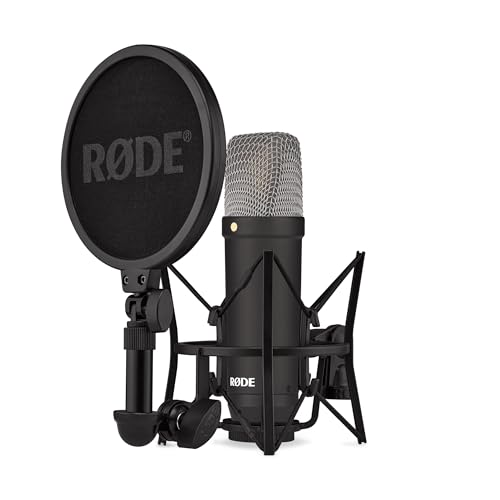
- Best overall: RØDE NT1 5th Generation — exceptionally low self-noise, a large-diaphragm capsule, and both XLR and USB connectivity.
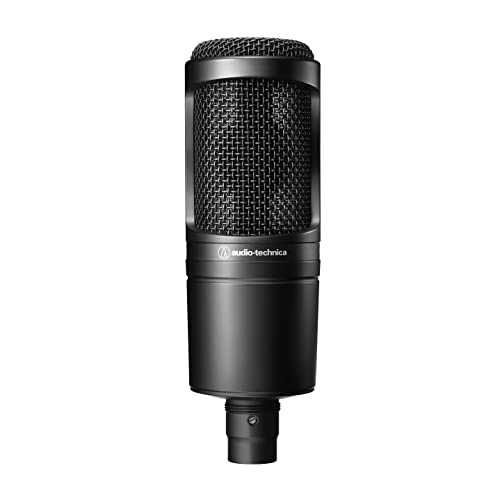
- Best budget condenser: Audio-Technica AT2020 — a dependable cardioid microphone for vocals, acoustic guitar, voiceover, and home recording.
- Best natural-sounding vocal and instrument mic: Shure KSM32 — a fixed-cardioid design with a balanced, relatively un-hyped response.
- Best for one microphone covering many sources: AKG C414 XLS or C414 XLII — nine selectable polar patterns and extensive pad and filter controls.
- Best premium studio vocal microphone: Neumann U 87 Ai — three polar patterns, switchable filtering and attenuation, and a familiar high-end vocal character.
- Best affordable multi-purpose alternative: sE Electronics sE2200 — large-diaphragm cardioid operation with switchable attenuation and low-cut filtering.
The best condenser microphones for studio recording depend on your room, sound source, and tolerance for noise: the RØDE NT1 5th Generation is the strongest all-round value, the Audio-Technica AT2020 is the best entry-level choice, the Shure KSM32 suits natural vocals and instruments, the AKG C414 XLII offers the most flexible pickup patterns, and the Neumann U 87 Ai remains a premium vocal standard.
Our top picks


As an Amazon Associate we earn from qualifying purchases at no extra cost to you. Ratings are shown as listed on Amazon.
Quick picks by recording situation
- Best overall: RØDE NT1 5th Generation — exceptionally low self-noise, a large-diaphragm capsule, and both XLR and USB connectivity.
- Best budget condenser: Audio-Technica AT2020 — a dependable cardioid microphone for vocals, acoustic guitar, voiceover, and home recording.
- Best natural-sounding vocal and instrument mic: Shure KSM32 — a fixed-cardioid design with a balanced, relatively un-hyped response.
- Best for one microphone covering many sources: AKG C414 XLS or C414 XLII — nine selectable polar patterns and extensive pad and filter controls.
- Best premium studio vocal microphone: Neumann U 87 Ai — three polar patterns, switchable filtering and attenuation, and a familiar high-end vocal character.
- Best affordable multi-purpose alternative: sE Electronics sE2200 — large-diaphragm cardioid operation with switchable attenuation and low-cut filtering.
What matters when choosing the best condenser microphones?
Polar pattern
A cardioid microphone mainly hears the front and rejects sound from behind. It is usually the safest pattern for a small or untreated room because it reduces some computer, wall, and air-conditioning noise. The Audio-Technica AT2020, RØDE NT1, Shure KSM32, and sE2200 are primarily useful in this role.
Omnidirectional microphones capture sound from all directions and can sound open and natural, but they also capture more room reflections. Figure-eight microphones hear the front and rear while rejecting the sides, making them useful for mid-side recording, two-person setups, and certain stereo techniques.
Multi-pattern microphones such as the AKG C414 and Neumann U 87 Ai are more adaptable, but their extra circuitry increases cost. Do not pay for nine patterns if you will record only one singer in a compact bedroom.
Diaphragm size
Large-diaphragm condensers, generally using a capsule around one inch in diameter, are popular for vocals because they offer strong sensitivity and a flattering sense of detail. They can also emphasize proximity effect when used close to the singer.
Small-diaphragm condensers usually provide excellent transient accuracy and consistent off-axis response. They are often the better tool for acoustic guitar, piano, cymbals, strings, and stereo pairs. A large diaphragm is not automatically “better”; it is a tonal and practical choice.
Self-noise and sensitivity
Self-noise is the microphone’s own electrical noise, measured in dB(A). Lower is better, especially for quiet vocals, classical instruments, foley, and distant microphone placement. A microphone around 4–8 dB(A) is exceptionally quiet; around 12–16 dB(A) is still suitable for most music; around 20 dB(A) can become noticeable on very quiet sources.
Sensitivity describes how much output the microphone produces for a given sound pressure level. Higher sensitivity can make gain staging easier, but it also means the microphone may capture more room sound and handling noise. Sensitivity should therefore be considered alongside polar pattern, room acoustics, and preamp quality.
Phantom power
Most studio condenser microphones require 48-volt phantom power through an XLR cable. Audio interfaces, mixing consoles, and dedicated microphone preamps commonly provide it. USB/XLR models such as the RØDE NT1 5th Generation obtain power from USB in digital mode, while their XLR output still requires phantom power.
Switch phantom power off before connecting or disconnecting a condenser microphone when possible. Balanced modern equipment is designed to tolerate normal use, but reducing connection transients is a sensible habit. Never assume an XLR connector means a microphone is compatible with every interface; check the interface’s available gain and phantom-power specification.
Head-to-head comparison
| Microphone | Capsule and pattern | Self-noise | Maximum SPL | Approximate market range | Best use |
|---|---|---|---|---|---|
| RØDE NT1 5th Generation | 1-inch large diaphragm; cardioid | 4.5 dB(A) | 142 dB SPL analog | $250–$300 | Vocals, voiceover, acoustic instruments, home studios |
| Audio-Technica AT2020 | 16 mm condenser capsule; cardioid | 20 dB(A) | 144 dB SPL | $90–$130 | First studio microphone, vocals, guitar |
| Shure KSM32 | 3/4-inch large diaphragm; cardioid | 14 dB(A) | 139 dB SPL | $450–$650 | Natural vocals, acoustic instruments, overheads |
| AKG C414 XLS/XLII | 1-inch large diaphragm; nine patterns | 6 dB(A) | 140 dB SPL | $1,000–$1,400 | Multi-source studio work and stereo techniques |
| Neumann U 87 Ai | Large diaphragm; cardioid, omni, figure-eight | 15 dB(A) | 117 dB SPL at 0.5% THD | $3,500–$4,500 | Lead vocals, broadcast, demanding professional rooms |
| sE Electronics sE2200 | 1-inch gold-sputtered capsule; cardioid | 16 dB(A) | 138 dB SPL | $250–$350 | Vocals, voiceover, guitar, general studio use |
Published specifications are not perfectly comparable because manufacturers use different test conditions, particularly for maximum SPL and noise. Treat the table as a buying guide rather than a laboratory ranking.
Which microphone fits your room and experience?
| Your situation | Most sensible choice | Why |
|---|---|---|
| Budget below $150 and limited experience | Audio-Technica AT2020 | Simple cardioid operation and low purchase risk; spend the remainder on a stand, pop filter, and room treatment. |
| Small untreated room and frequent recording | RØDE NT1 5th Generation or Shure KSM32 | Both offer useful vocal detail without requiring multi-pattern controls; careful placement still matters more than extra features. |
| One microphone for vocals, guitar, piano, and different rooms | AKG C414 XLS or XLII | Pattern selection, pad settings, and high-pass filtering make it adaptable to changing sources. |
| Quiet acoustic music or distant microphone placement | RØDE NT1 5th Generation or AKG C414 | Very low self-noise preserves detail when the source is not close to the capsule. |
| Professional vocal room and high budget | Neumann U 87 Ai | Its three patterns, established voicing, and studio compatibility justify the cost when the room and production chain are already strong. |
Vocal versus instrument performance
Vocals
Large-diaphragm cardioid condensers are the usual starting point. The NT1 and sE2200 provide a modern, detailed presentation, while the KSM32 tends to sound less deliberately colored. The C414 XLII is often chosen when a vocal needs extra presence; the XLS version is generally the more neutral option. The U 87 Ai offers pattern choices and a controlled low-frequency response, but it will not hide a reflective room.
Place the microphone 15–25 cm from the singer, add a pop filter, and angle the capsule slightly away from the mouth if “P” and “S” sounds are prominent. Moving closer increases bass through proximity effect; moving farther away captures more room.
Acoustic guitar and other instruments
For acoustic guitar, the KSM32, C414, and NT1 can all work well, but position is more important than brand. Aim near the 12th fret rather than directly at the sound hole for a clearer balance. A small-diaphragm cardioid condenser may deliver sharper pick detail and more consistent stereo imaging than a large-diaphragm model.
For loud guitar cabinets, percussion, and brass, check maximum SPL and use the microphone’s pad when needed. A pad reduces the signal entering the microphone’s electronics; it does not make a poor placement or an overloaded preamp sound better.
Setup and ownership details that affect results
- Mount the microphone securely. Use a stable stand and a shock mount or the supplied clip. The first parts to fail are often stand threads, clips, cable connectors, or elastic suspension bands—not the capsule.
- Connect before enabling phantom power. Set the interface gain low, connect the XLR cable, enable 48 V if required, and raise gain while monitoring peaks.
- Control the room. Place the performer away from bare walls, windows, and corners. A cardioid microphone rejects the rear best when its rear is pointed toward the loudest unwanted sound.
- Keep moisture and debris away. Do not blow into the capsule. Store the microphone in its case or pouch, use a pop filter, and remove dust with a soft brush or clean, dry air used cautiously.
- Check noise before buying a preamp. Record several seconds of silence with the intended gain. If the noise comes from the computer, room, cable, or interface, a quieter microphone alone may not solve it.
A useful ownership calculation is cost per recording session. A $100 microphone used for 20 sessions costs $5 per session in the first year; a $1,200 microphone used for 240 sessions costs $5 per session over the same period. That does not make the expensive microphone automatically better—the calculation simply shows why durability, frequency of use, and the quality of the room should guide the budget.
Final recommendation
Choose the RØDE NT1 5th Generation for the broadest combination of low noise, sensitivity, modern connectivity, and price. Choose the AT2020 when the budget is tight, the KSM32 when a natural cardioid sound matters, and the C414 when multiple patterns will genuinely be used. The Neumann U 87 Ai is a serious professional investment, but improving the room and microphone technique usually produces a larger audible gain than moving from a competent mid-priced condenser to a flagship model.




Write Your Review
No reviews yet. Be the first to share your experience!