

Key takeaways
- Cardioid: accepts sound mainly from the front and reduces sound from the rear. Aim the rear null toward a monitor, noisy computer, or reflective wall.
- Omnidirectional: captures sound from all directions. It can sound natural in a good room but offers little isolation.
- Figure-eight: captures front and rear while rejecting the sides. It is useful for two-sided sources and mid-side techniques, but room reflections become part of the recording.
- Supercardioid or hypercardioid: narrows the front pickup area and adds a small rear lobe. This can improve isolation, but the rear lobe must be positioned carefully.
Best Studio Microphones for Clear Recordings
The best studio microphones are the ones whose pickup pattern, frequency response, output level, and room compatibility match the source you are recording—not necessarily the most expensive model.
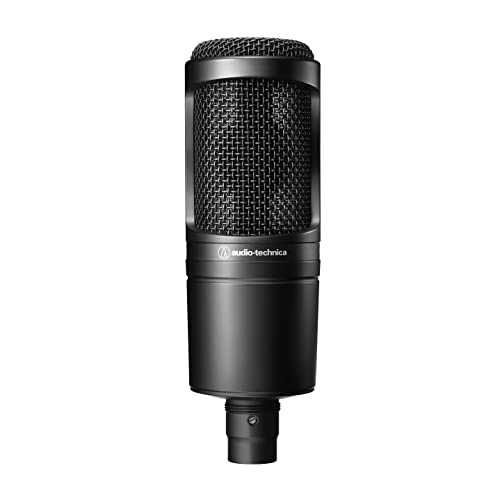
For a practical shortlist, choose a cardioid condenser such as the Audio-Technica AT2020 for an affordable treated-room setup, a Shure SM7B for close-miked vocals and untreated rooms, a multi-pattern condenser such as the AKG C414 XLII for one microphone that can cover many instruments, or a ribbon such as the Royer R-121 when you want smooth, natural-sounding electric guitar and brass.
Our top picks
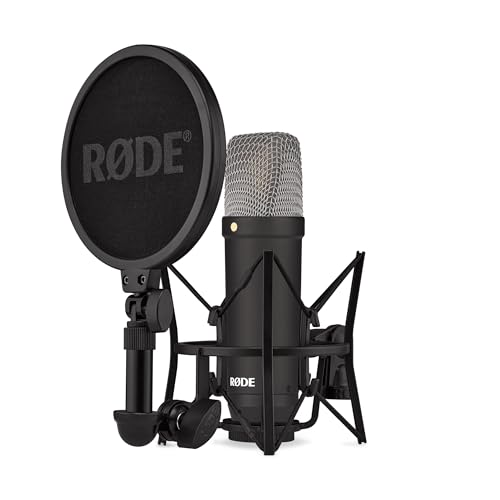
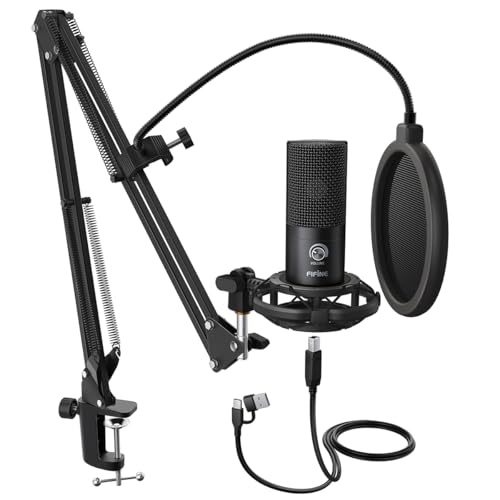

As an Amazon Associate we earn from qualifying purchases at no extra cost to you. Ratings are shown as listed on Amazon.
Quick picks by recording situation
| Recording situation | Best microphone type | Suitable example | Why it fits |
|---|---|---|---|
| Bedroom or reflective room | Close dynamic | Shure SM7B | Rejects much of the room and handles loud sources without harsh treble. |
| First home-studio condenser | Cardioid condenser | Audio-Technica AT2020 | Low entry cost, detailed top end, and straightforward 48-volt operation. |
| Lead vocals in a treated room | Large-diaphragm condenser | Neumann TLM 103 | High sensitivity and presence help a vocal sit forward in a mix. |
| Several singers or instruments | Multi-pattern condenser | AKG C414 XLII | Multiple polar patterns and switchable filters make placement more flexible. |
| Electric guitar cabinet | Passive ribbon or dynamic | Royer R-121 | Captures body and brightness without exaggerating high-frequency bite. |
| Snare, toms, guitar amp, or loud live-room sources | Dynamic | Shure SM57 | Rugged, compact, and able to tolerate high sound-pressure levels. |
Condenser, dynamic, or ribbon: what changes in the recording?
Condenser microphones
Condenser microphones use a powered capsule and usually require 48-volt phantom power. They tend to provide higher sensitivity and more extended high-frequency detail than dynamics, which can make vocals, acoustic guitar, piano, and room recordings sound open and articulate.
That sensitivity is also a disadvantage in an untreated room. A condenser hears reflections from walls, ceilings, desks, and computer fans more readily. If your recordings sound boxy or distant, changing microphones may help less than moving the microphone away from reflective surfaces and adding broadband absorption.
The affordable Audio-Technica AT2020 is a sensible entry point for spoken vocals, singing, acoustic guitar, and demonstrations. The AKG C414 XLII is a more adaptable choice because its selectable patterns include cardioid, omnidirectional, and figure-eight options, along with intermediate settings.
Dynamic microphones
Dynamic microphones are generally less sensitive and do not need phantom power. They are useful when the vocalist is close to the capsule, the source is loud, or the room is difficult to control. Their reduced sensitivity can also make preamp gain more important.
The Shure SM7B is a cardioid broadcast-style dynamic with a broad, controlled response and built-in switches for low-cut and presence shaping. It is often effective on intimate vocals, voice-over, rap, guitar cabinets, and loud singers. The Shure SM57 is smaller and more naturally suited to snare drums, guitar amplifiers, percussion, and utility work.
A common mistake is assuming that a dynamic microphone automatically needs a special booster. The SM7B has relatively low output, so a quiet interface may need much of its available gain. Check the interface specification and listen for hiss before buying an inline gain device. Active gain boosters can also require phantom power, while the passive microphone itself should be used according to the manufacturer’s instructions.
Ribbon microphones
Ribbon microphones use a very thin metal ribbon and are valued for smooth treble, realistic midrange, and a strong sense of depth. Many passive ribbons have a figure-eight pattern: they capture sound from the front and rear while rejecting the sides.
The Royer R-121 is a classic passive ribbon for guitar cabinets, brass, strings, and room-friendly blend work. Its rear pickup can be useful for combining direct and reflected sound, but it also means that the wall behind the microphone matters. Keep passive ribbons away from strong blasts of air, including close kick-drum use and careless plosive-heavy vocal recording.
Pickup patterns are a placement decision
- Cardioid: accepts sound mainly from the front and reduces sound from the rear. Aim the rear null toward a monitor, noisy computer, or reflective wall.
- Omnidirectional: captures sound from all directions. It can sound natural in a good room but offers little isolation.
- Figure-eight: captures front and rear while rejecting the sides. It is useful for two-sided sources and mid-side techniques, but room reflections become part of the recording.
- Supercardioid or hypercardioid: narrows the front pickup area and adds a small rear lobe. This can improve isolation, but the rear lobe must be positioned carefully.
For a vocalist in a small untreated room, start with cardioid, place the microphone away from the nearest wall, and aim the least sensitive rear area toward the noisiest reflection. For two acoustic instruments, a multi-pattern microphone may be more useful than buying two specialized microphones immediately.
Frequency response: avoid choosing by “bright” or “warm” alone
A microphone’s frequency-response graph tells you more than a label such as warm, airy, or natural. A presence rise around the upper midrange can improve intelligibility and vocal projection, but it may emphasize sibilance or guitar pick noise. A gentle high-frequency roll-off can flatter brass, cymbals, and aggressive guitar tones. Extended low-frequency response can capture proximity effect, foot noise, and room rumble as well as useful body.
Cardioid microphones become more bass-heavy as the source moves closer. This proximity effect can add intimacy to a vocal or weight to a guitar cabinet, but it can also create a muddy recording. Ask the performer to maintain a consistent distance, use a pop filter, and engage a high-pass filter only when low-frequency noise or buildup is actually present.
Room treatment matters more than a premium capsule
Before spending heavily on a condenser, improve the recording position. Place thick broadband absorbers at the first-reflection points beside and behind the performer, reduce the distance to large hard surfaces, and avoid placing the microphone directly against a wall. Thin decorative foam may reduce some high-frequency flutter but will not control low-mid room modes effectively.
A useful test is to record the same spoken sentence while facing different directions. If the tone changes dramatically, the room is contributing strongly. A dynamic microphone used close to the mouth may produce a cleaner result than a sensitive condenser several inches farther away.
Preamp and interface requirements
| Microphone | Type and pattern | Published response | Power | Approximate weight | Practical preamp note |
|---|---|---|---|---|---|
| Audio-Technica AT2020 | Condenser, cardioid | 20 Hz–20 kHz | 48 V phantom | 345 g | Usually easy for modern interfaces. |
| Shure SM7B | Dynamic, cardioid | 50 Hz–20 kHz | None required | 765 g | Benefits from a quiet preamp with ample gain. |
| AKG C414 XLII | Condenser, nine patterns | 20 Hz–20 kHz | 48 V phantom | 300 g | Normal interface preamps are generally suitable. |
| Royer R-121 | Passive ribbon, figure-eight | 30 Hz–15 kHz | None required | 244 g | Needs a quiet, high-gain preamp; never assume phantom power is appropriate. |
| Neumann U87 Ai | Condenser, three patterns | 20 Hz–20 kHz | 48 V phantom | 500 g | Compatible with standard professional mic preamps. |
These figures describe the microphones, not the entire recording chain. Interface gain, equivalent input noise, cable condition, and monitoring level affect the final result. A microphone with low output is not automatically inferior; it simply demands a clean gain stage.
How much should you spend?
Entry-level condenser microphones commonly occupy the roughly $80–$200 market range. Reliable stage-style dynamics and utility studio dynamics often fall around $100–$250. More specialized broadcast dynamics, ribbons, and flexible multi-pattern condensers commonly range from about $300 to $1,500, while flagship large-diaphragm condensers can cost several thousand dollars.
For occasional recording, a $100–$200 cardioid condenser or dynamic is usually easier to justify than a premium microphone. For weekly vocals, instruments, or commercial work, durability, interchangeable accessories, repair support, and a pattern selector may repay the higher cost.
Setup and ownership details that affect clarity
- Mount the microphone securely. A heavy microphone can sag a weak stand or shock mount, changing distance during a take.
- Use a pop filter for vocals. Keep it several centimeters in front of the capsule and maintain a consistent mouth-to-filter distance.
- Start 15–30 centimeters away. Adjust by ear: move closer for intimacy and more proximity effect, farther away for a leaner sound and more room.
- Lower the input gain if clipping occurs. Do not solve distortion with software after recording; leave sensible headroom at the interface.
- Disconnect safely. Turn phantom power off before connecting or removing microphones, especially when using unfamiliar cables or passive ribbon microphones.
- Keep the capsule dry and clean. Use a clean, dry exterior cloth. Do not spray cleaner into the grille, blow forcefully into the capsule, or store a ribbon microphone where humidity and dust can accumulate.
The parts most likely to cause trouble are cables, stand threads, elastic shock-mount bands, grille dents, and foam windscreens—not usually the capsule itself. Replace stretched shock-mount bands and damaged windscreens rather than improvising with tape. Store the microphone in its case or pouch, away from moisture, smoke, and extreme temperature changes.
Final recommendation
Choose the Audio-Technica AT2020 if you need an affordable first condenser and have a reasonably controlled room. Choose the Shure SM7B for close, controlled vocal recording where room rejection and a smooth response matter more than maximum sensitivity. Choose the AKG C414 XLII when one microphone must cover vocals, acoustic instruments, ensembles, and multiple placement techniques. Choose the Royer R-121 for smooth, detailed guitar cabinets and other sources that benefit from ribbon character. If you are recording in a reflective room, solve placement and treatment first; the best studio microphones cannot remove reflections that were captured at the source.






Write Your Review
No reviews yet. Be the first to share your experience!