

Key takeaways
- Under 1000 dollars buys better hardware, nicer fretwork and named pickups; it does not change the basic design choices, so pick the shape and scale first.
- Set necks and chambered bodies add sustain and warmth; bolt-on guitars add snap and easier repair.
- A 24.75 in scale feels softer and bends more easily than a 25.5 in scale; PRS sits in the middle at 25 in.
- Vintage-style bridges (Tune-O-Matic, Bigsby) need a little more care than a hardtail but reward you with classic tone.
- The best value tends to be a Mexican or Indonesian build from a major maker, not a bundle.
If you are shopping for the best electric guitars under 1000 dollars, you are in the zone where an instrument stops feeling like a compromise. Necks are properly finished, pickups are voiced by the maker rather than bought in bulk, and the guitar can sit next to far more expensive models on a stage without apology. The strongest all-rounders here are the Fender Player II Stratocaster, the PRS SE Custom 24 and the Epiphone Les Paul Standard 50s.
The question at this level is no longer “will it play?” but “which kind of working guitar do I need?” A Strat, a double-cut PRS, a chambered Revstar and a Bigsby hollow-body each solve a different problem. The seven picks below are arranged so you can match the instrument to the job, with the spec lines that matter for gigging: scale, radius, neck joint, pickups, bridge and fret material.
Our top picks


As an Amazon Associate we earn from qualifying purchases at no extra cost to you.
Key takeaways
- Under 1000 dollars buys better hardware, nicer fretwork and named pickups; it does not change the basic design choices, so pick the shape and scale first.
- Set necks and chambered bodies add sustain and warmth; bolt-on guitars add snap and easier repair.
- A 24.75 in scale feels softer and bends more easily than a 25.5 in scale; PRS sits in the middle at 25 in.
- Vintage-style bridges (Tune-O-Matic, Bigsby) need a little more care than a hardtail but reward you with classic tone.
- The best value tends to be a Mexican or Indonesian build from a major maker, not a bundle.
What the extra money buys over a 500-dollar guitar
Three upgrades account for most of the difference. First, the neck: better wood selection, nicer fret ends and, on some models, stainless-steel frets that last years longer. Second, the pickups: named alnico designs and coil-split options instead of anonymous ceramic units. Third, the hardware: sealed or locking tuners, better nuts and bridges that hold intonation. Finish quality improves too, but finish is the last thing that affects how a guitar plays.
Best electric guitars under 1000: side-by-side specs
| Guitar | Scale | Neck joint | Pickups | Bridge | Place in the band |
|---|---|---|---|---|---|
| Fender Player II Stratocaster | 25.5 in | Bolt-on | 3 Alnico V single-coils | 2-point tremolo | Upper end |
| PRS SE Custom 24 | 25 in | Set neck | 2 PRS 85/15 S humbuckers | PRS tremolo | Upper end |
| Epiphone Les Paul Standard 50s | 24.75 in | Set neck | 2 ProBuckers | Tune-O-Matic | Middle |
| Yamaha Revstar Standard RSS20 | 24.75 in | Set neck | 2 Alnico V humbuckers | Tune-O-Matic | Upper end |
| Gretsch G5420T Electromatic | 24.6 in | Set neck | 2 Filter’Tron humbuckers | Bigsby B60 | Upper end |
| Ibanez AZ24S1F | 25.5 in | Bolt-on | 2 Modern Custom humbuckers | T106 tremolo | Lower end |
| Charvel Pro-Mod So-Cal Style 1 HH HT E | 25.5 in | Bolt-on | 2 Seymour Duncan Distortion humbuckers | Hardtail | Upper end |
1. Fender Player II Stratocaster: Best for classic Strat versatility
- Contoured alder body, bolt-on maple neck with a Modern C profile
- 25.5 in scale, 22 medium jumbo frets, 9.5 in radius with rolled edges
- Three Player Series Alnico V single-coils, 5-way switch
- Two-point synchronized tremolo with bent steel saddles, ClassicGear tuners
- Made in Mexico
Best for: anyone who wants the most-copied electric guitar design in a refined, dependable form. It covers clean, blues, pop and classic rock with a snap that no humbucker guitar quite matches.
Skip if: you need high gain without noise. Standard single-coils hum in the same way they always have.
Pros: Proven design with huge aftermarket support. Comfortable Modern C neck. Rolled fingerboard edges feel broken-in. HSS and Modified variants exist if you want more variety.
Cons: Simple electronics; many owners later fit noiseless pickups. A tremolo needs gentle use to stay in tune. Plain styling compared with its Fender American siblings.
What to know: The Player II line replaced the earlier Player series and keeps the same basic formula with small refinements. If you want more output, look at the HSS variant rather than modifying the pickups.
2. PRS SE Custom 24: Best for modern versatility and a smooth neck
- Mahogany back with a maple top and flame maple veneer (per PRS)
- Wide Thin maple neck, set-neck assembly, rosewood fingerboard with bird inlays
- 25 in scale, 24 frets, 10 in radius
- PRS 85/15 “S” humbuckers, push-pull tone control for coil-splitting
- PRS patented tremolo, PRS-designed tuners
Best for: players who want a guitar that can go from clean funk to heavy rock without changing instruments. The 24-fret neck and double-cut body give excellent upper-fret access.
Skip if: you prefer an old-school, vintage-style look or a very chunky neck. The Wide Thin profile is slim by design.
Pros: Smooth neck feel. Well-regarded pickups for the band. Coil-split gives single-coil-like tones. Strong build reputation in published reviews.
Cons: The top is a veneer rather than a solid carved cap. Tremolo is best used lightly. Higher end of the budget.
What to know: PRS has refreshed the SE Custom 24 several times (cosmetics and pickup specs have changed), so check the exact model year if you buy used. The 25 in scale sits between Gibson and Fender lengths, which many players find a comfortable compromise.
3. Epiphone Les Paul Standard 50s: Best for classic humbucker rock
- Mahogany body with a maple cap (flame maple veneer on figured models)
- Mahogany set neck with a 59 Rounded Medium C profile, laurel fingerboard on most finishes
- 24.75 in scale, 22 medium jumbo frets, Graph Tech nut at 43 mm
- ProBucker 1 (neck) and ProBucker 2 (bridge), CTS pots, 50s wiring
- LockTone Tune-O-Matic bridge and stop bar tailpiece, premium gig bag on the listed model
Best for: rock, blues, hard rock and classic fat humbucker tones. If a thick midrange and long sustain are what you want, this is the shape built for it.
Skip if: you are sensitive to weight. Les Paul-style guitars are heavier than Strats and PRS models.
Pros: Authentic Gibson-inspired design. Strong sustain. 50s wiring makes the tone knob more useful. Good looks.
Cons: Heavy. Neck dive on a thin strap. Pickups are good but not boutique.
What to know: Other guitars in the same Epiphone line use different neck profiles, so try before you buy if you can. Tune-O-Matic bridges are easy to set up but use a stop bar that benefits from an occasional cleaning of the saddle slots.
4. Yamaha Revstar Standard RSS20: Best for a chambered, modern rock-and-roll guitar
- Chambered mahogany body with a maple top, set-in 3-piece mahogany neck with carbon reinforcement
- Rosewood fingerboard, 12 in radius, 24.75 in scale
- 22 jumbo stainless-steel frets, 1.65 in nut
- Yamaha VH5 Alnico V humbuckers, Focus Switch (push-pull passive boost), 5-way switching
- Tune-O-Matic bridge, die-cast chrome tuners, gig bag included, made in Indonesia
Best for: players who want a lightweight, resonant guitar with unusual features and a café-racer look. The Focus Switch gives a quick midrange-heavy boost for solos.
Skip if: you want a conventional Les Paul or Strat feel. The Revstar is its own thing.
Pros: Chambered body keeps weight down. Stainless frets last a long time. Distinct styling. Carbon-reinforced neck stays stable.
Cons: Styling is polarizing. Fewer aftermarket parts than Fender or Gibson shapes.
What to know: The five-way switch has subtle phase shifts in positions two and four, which gives it a more Strat-like range than most dual-humbucker guitars.
5. Gretsch G5420T Electromatic: Best for a Bigsby hollow-body
- Laminated maple arched-top body with trestle bracing and bound F-holes
- Classic C-profile maple neck with a laurel fingerboard, 12 in radius
- 24.6 in scale, 22 medium jumbo frets, 1.6875 in Graph Tech NuBone nut
- Two FT-5E Filter’Tron humbuckers, individual volume controls plus master volume and tone
- Adjusto-Matic bridge and Bigsby B60 vibrato, .011 to .049 strings
Best for: rockabilly, indie, jangle pop and anyone who values character and style over versatility. The Bigsby adds shimmering vibrato.
Skip if: you play at stage volume with a lot of gain. Hollow bodies feed back readily.
Pros: Immediate, distinctive sound. Beautiful look. Strong clean tones with a bit of sparkle. Lightweight.
Cons: Feedback at high volume. Bigsbys complicate string changes. Narrow tonal range compared with a solid-body.
What to know: Bigsby vibratos add friction at the bridge, so ask your shop to set up the nut and saddles for smooth tuning. If you plan to play heavier gain, consider the center-block versions from Gretsch rather than this fully hollow design.
6. Ibanez AZ24S1F: Best for modern S-style playing on the lower end of the budget
- Alder body with a flamed maple top, AZ roasted maple neck, jatoba fingerboard
- 25.5 in scale, 24 jumbo stainless-steel frets, 305 mm radius, 42 mm nut
- Two Ibanez Modern Custom humbuckers (alnico magnets), Dyna-MIX10 switching with Alter Switch
- T106 tremolo, 10.5 mm string spacing
- Introduced for 2025, made in China
Best for: players who want a thin, fast neck and modern tones in a compact, contoured body. It leaves part of the budget free for a case or a setup.
Skip if: you want a thick vintage neck.
Pros: Roasted maple neck feels smooth. Stainless frets. Versatile switching. Lowest price of the seven.
Cons: Newer model with limited long-term feedback. Made in China. Tremolo is a basic design.
What to know: According to Ibanez, the Alter Switch enables a power-tap mode when set to the neck position, which adds a single-coil-like option.
7. Charvel Pro-Mod So-Cal Style 1 HH HT E: Best for hot-rod hard rock
- Alder body, bolt-on maple neck with graphite reinforcement, ebony fingerboard
- 25.5 in scale, 22 jumbo frets, 12 to 16 in compound radius, 1.6875 in nut
- Seymour Duncan TB-6 (bridge) and SH-6N (neck) Distortion humbuckers
- 3-way blade switch, push-pull volume for coil-split, no-load tone control
- Charvel HT6 string-through-body hardtail, sealed die-cast locking tuners
Best for: aggressive rock and metal, where tuning stability and output matter more than subtlety. The hardtail bridge removes tremolo complications.
Skip if: you want warm, vintage tones.
Pros: Excellent tuning stability. Strong output. Ebony fingerboard feels fast. Branded Seymour Duncan pickups.
Cons: Bright and edgy. No tremolo. Upper end of the budget.
What to know: A listing for this model occasionally describes different pickups from the maker spec; rely on the Charvel page when checking.
Also consider
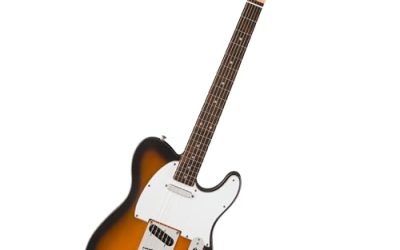
- Fender Player II Telecaster: Alder, chambered ash or chambered mahogany body options, Alnico V single-coils and a 9.5 in radius maple or rosewood neck. Pick it if the Strat shape feels busy.
- PRS SE CE24: The bolt-on-neck sibling of the Custom 24 with the same double-cut shape. A lower-priced way into the PRS family.
- Epiphone Casino: A hollow-body with dual P-90 pickups and a classic British Invasion pedigree. Good for rock and indie.
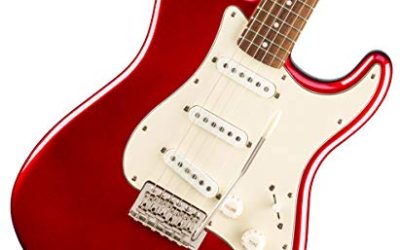
- Fender Vintera II 50s Stratocaster: A vintage-spec Strat for players who want the late-1950s look and feel rather than the modern Player formula.
Matching each guitar to an amp and a pedal approach
A guitar at this level will show up the weaknesses of a poor amp, so it is worth thinking about the signal chain before you buy. The table below is general guidance based on pickup type and typical use, not a measurement of any specific amp.
| Guitar | Amp character that suits it | Pedal approach |
|---|---|---|
| Fender Player II Stratocaster | Clean-leaning combo with headroom | Light overdrive, a little reverb and delay |
| PRS SE Custom 24 | Any channel-switching amp; handles clean to crunch | One overdrive plus a boost is plenty |
| Epiphone Les Paul Standard 50s | British-voiced crunch amp | Gentle drive; the pickups supply the thickness |
| Yamaha Revstar Standard RSS20 | Mid-gain amp that does not need extra boost | Use the Focus Switch instead of a booster |
| Gretsch G5420T Electromatic | Clean valve-style or modeling amp with spring reverb | Reverb, tremolo and slapback delay |
| Ibanez AZ24S1F | Modern high-gain or modeling amp | Tight overdrive or a noise gate |
| Charvel Pro-Mod So-Cal Style 1 | High-gain amp with a tight low end | Overdrive in front, noise gate in the loop |
A gig-readiness checklist for a new guitar
- Restring with your preferred gauge and stretch the strings until they stop going flat.
- Check that every tuner turns smoothly and that nothing slips when you bend a string hard.
- Look at the nut slots; strings should sit in them without pinching, which is the most common cause of a tremolo or tuning problem.
- Confirm that the pickup selector, jack and pots are tight and do not crackle.
- Attach strap locks, because strap buttons are the most common point of failure for heavy guitars.
- Play the guitar through the amp you will gig with, at gig volume, for at least thirty minutes before the first show.
- Pack a spare set of strings, a tuner and a cable, because the guitar is rarely what lets you down.
Understanding model changes and used listings
Guitar buyers often assume that a more expensive guitar is always a better fit, but at this level fit matters more than price. A guitar that feels too heavy, too wide at the nut or too tight in the stretch will be played less, no matter how good its pickups are. Spend your first hour with any candidate on posture, reach and balance before you plug in.
Several guitars here have changed in recent years. The Fender Player II series replaced the earlier Player line, PRS has updated the SE Custom 24 more than once, and Ibanez introduced the AZ Standard series in 2025. When you search used listings, the model name alone does not identify the version. Check the pickups, bridge, finish and fretboard against the current maker spec before you agree on a price, and ask for photographs of the headstock and neck joint.
Retailers also bundle guitars with extras such as stands, cables and cleaning kits. Treat those as a convenience, not as value: an accessory bundle never improves the guitar itself.
Why switching options earn their place at this level
Coil-splits, push-pull pots and extra mini-toggles can look like gimmicks, but on a working guitar they replace pedals and second guitars. A coil-split turns a humbucker into a single-coil-like voice for clean verses, then back to full power for the chorus. The PRS SE Custom 24 and the Charvel Pro-Mod in this list both use this idea. The Revstar’s Focus Switch works in the opposite direction, adding a passive midrange boost for solos. When comparing guitars, read the control layout carefully: a guitar with one useful switch is worth more than a guitar with three confusing ones.
How we chose
We did not play these guitars ourselves. The list is based on manufacturer spec pages, retailer listings and published reviews from guitar magazines and music retailers, with specifications cross-checked wherever sources disagreed. Where body wood or pickup details conflicted between sources, we followed the maker.
Each guitar had to be a current model, sit below the 1000-dollar line at typical street prices, and offer a clear advantage: a named pickup design, a quality neck, stainless frets or a distinctive construction. We limited the list to two models per brand, covered the main body shapes (Strat, double-cut, Les Paul, chambered, hollow-body, hot-rod) and left out bundles and signature models whose cost goes into branding rather than build.
Buying guide: choosing a guitar that will not need replacing
Match the neck joint to your habits
Bolt-on necks (Fender, Ibanez, Charvel) are stiffer in feel, easier to repair and easy to swap. Set necks (PRS, Epiphone, Yamaha, Gretsch) are glued in for a smoother heel and more sustain. If you gig often and travel, a bolt-on guitar is easier to service. If you play seated or prefer a warm, singing sustain, a set neck is hard to beat.
Scale length and string tension
The scales here range from 24.6 in to 25.5 in. Each half-inch changes string tension and fret spacing noticeably. Over 25 in feels tighter and snappier; under 25 in feels looser and warmer. If you use heavy strings or tune down, longer scales stay tighter. If you play a lot of bends and vibrato, shorter scales are easier.
Fret material and finish
Stainless-steel frets, as on the Revstar and Ibanez AZ, wear more slowly than nickel-silver frets. A satin neck finish feels fast and dry; a gloss neck can feel sticky in humid rooms. Neither is superior, but you should know which you prefer.
Weight and balance
Weight matters more than most buyers expect. If you play standing for an hour or more, a lighter Strat, Revstar or hollow-body is easier on the shoulder than a solid mahogany guitar. If you can, hold a guitar for ten minutes before buying.
Resale and upgrades
Fender, Gibson-inspired Epiphone and PRS guitars hold value better than less common shapes. If you plan to upgrade the pickups, pick a guitar with standard routing: Strat, Tele, Les Paul and PRS bodies all accept a wide choice of replacements.
Cases and care
Most guitars here ship with a gig bag or nothing at all. A hard case protects better for travel. Store the guitar at around 40 to 50 percent relative humidity, which is the range most makers recommend for wood instruments, and keep it away from heaters and direct sunlight.
Quick pick by situation
| Your situation | Choose |
|---|---|
| Only one guitar, many styles | PRS SE Custom 24 |
| Clean tones and classic rock | Fender Player II Stratocaster |
| Thick humbucker rock | Epiphone Les Paul Standard 50s |
| Lightweight and unusual | Yamaha Revstar Standard RSS20 |
| Style and shimmer | Gretsch G5420T Electromatic |
| Modern speed on a smaller spend | Ibanez AZ24S1F |
| Heavy gigging, no tremolo | Charvel Pro-Mod So-Cal Style 1 |
Frequently asked questions
Is a guitar under 1000 dollars good enough for professional use?
Yes. Many working musicians use guitars in this range on stage and in the studio. Pickups, tuners and a good setup matter more than the logo on the headstock.
What is the best electric guitar under 1000 for a gigging player?
The PRS SE Custom 24 and the Fender Player II Stratocaster are the most common picks, thanks to dependable hardware and flexible tones. The Charvel is a strong choice if you want a hardtail.
Is it better to buy a new guitar under 1000 or a used one costing more?
New guitars come with warranties and fresh frets. Used American-made guitars may cost slightly more but can offer better wood and hardware. If you are not comfortable inspecting a used guitar, buy new.
Are mid range electric guitars worth it over entry-level models?
If you play regularly, yes. Better tuners, nuts and pickups make the guitar stay in tune and sound better, and you will not outgrow it as quickly.
Do these guitars need a setup?
Almost every guitar benefits from one. Even a good factory setup can be tuned to your string gauge and playing style.
Should I get an HSS or HH configuration?
HSS gives more clean options; HH gives more power and less hum. Coil-split switches on the PRS and the Charvel give HH guitars some single-coil flexibility.
Can I use these guitars for metal?
The Charvel and the PRS SE Custom 24 are the best fits, followed by the Ibanez AZ24S1F. The Les Paul-style Epiphone also handles heavy rock well. The Strat and the Gretsch are better suited to cleaner styles.
Which one should you buy?
If you can only own one, choose the PRS SE Custom 24 for its all-round capability. If you know your sound, go straight to the guitar designed for it: the Fender Player II Stratocaster for clean sparkle, the Epiphone Les Paul Standard 50s for a fat humbucker voice, the Yamaha Revstar for a lighter, more modern feel, the Gretsch for character and the Charvel for heavy music. The Ibanez AZ24S1F is the smart pick if you want to save some of the budget.
Sources
- Fender and Charvel product specification pages
- PRS Guitars SE model pages
- Epiphone and Gibson product pages
- Yamaha, Gretsch and Ibanez product pages
- Guitar World published reviews
Last updated: October 2026
More from Amazon
Programs that pair well with the guide above. Offers and eligibility are set by Amazon and may change.
Free shipping on eligible items, Prime Video and more. Eligible new members can start with a free trial.
Start a Prime free trialAudiobooks and podcasts to listen to on the go. Eligible new members can start with a free trial.
Try Audible freeAd-free music streaming. Eligible new subscribers can start with a free trial.
Try Music Unlimited freeA free business account with business pricing and bulk-buying tools for work, shop or home office.
Create a business accountAs an Amazon Associate we earn from qualifying purchases.
Write Your Review
No reviews yet. Be the first to share your experience!