

Key takeaways
- Two of the picks, the Guild OM-120 and Blueridge BR-140, are all-solid wood: top, back and sides.
- The Seagull S6 uses a solid cedar top, which sounds warmer and more immediate than spruce.
- The LL6 ARE and Academy 10e include pickups; the Yamaha’s is passive and needs a preamp for stage use.
- Nut widths range from 1 11/16 to 1 3/4 inches, which affects fingerstyle comfort more than most buyers expect.
- Expect a gig bag or case with several models; check each listing, as accessories vary.
The best acoustic guitars under 1000 dollars deliver genuine solid-wood tone, and the strongest all-round choices are the Blueridge BR-140 and Guild OM-120 for all-solid construction, the Seagull S6 Original for a distinctive cedar-top sound, and the Taylor Academy 10e or Fender Paramount PD-220E if you also want built-in electronics. Spending this much is no longer about getting a playable guitar; it is about choosing which tonewood personality you want to live with.
This guide explains the spec-sheet language that separates a solid top from an all-solid guitar, then compares seven models using maker specifications and published reviews. We cover tonewood pairings, bracing, nut width and who each guitar suits.
Key takeaways
- Two of the picks, the Guild OM-120 and Blueridge BR-140, are all-solid wood: top, back and sides.
- The Seagull S6 uses a solid cedar top, which sounds warmer and more immediate than spruce.
- The LL6 ARE and Academy 10e include pickups; the Yamaha’s is passive and needs a preamp for stage use.
- Nut widths range from 1 11/16 to 1 3/4 inches, which affects fingerstyle comfort more than most buyers expect.
- Expect a gig bag or case with several models; check each listing, as accessories vary.
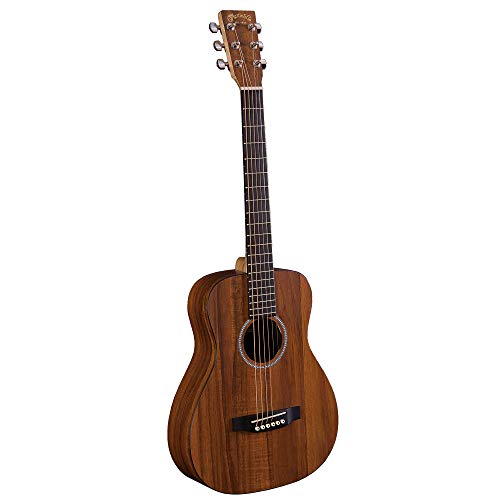
Our top picks



As an Amazon Associate we earn from qualifying purchases at no extra cost to you.
Solid Top, All-Solid, Laminate: Reading the Spec Sheet
Makers use three phrases that sound similar and mean different things. Knowing them saves money.
| Term | What it means | Typical effect |
|---|---|---|
| Laminate | Cross-layered thin veneers glued together | Stable, quieter, less sustain |
| Solid top | One book-matched board for the top; back and sides often laminate | Most of the volume and character gain |
| All-solid | Solid top, back and sides | Fuller bass, more resonance, more climate sensitivity |
Under 1000 dollars you can have either of the last two. A solid top with laminated back and sides, as on the Seagull S6 Original (whose cherry back and sides are described as laminated) and Taylor Academy 10e, gives most of the benefit with extra durability. An all-solid guitar, like the Guild OM-120 and Blueridge BR-140, is more resonant but needs a bit more care in dry rooms.
Spec Comparison: Best Acoustic Guitars Under 1000
| Guitar | Top | Back and sides | Scale | Nut | Pickup |
|---|---|---|---|---|---|
| Blueridge BR-140 | Solid Sitka spruce | Solid mahogany | 25.6 in | 1 11/16 in | None |
| Guild OM-120 | Solid mahogany | Solid mahogany | 25.5 in | 1 3/4 in | None |
| Seagull S6 Original | Solid cedar | Wild cherry (laminated) | 25.5 in | about 1.72 to 1.8 in | None |
| Fender Paramount PD-220E | Solid spruce or mahogany | Solid mahogany | 25.3 in | 1.69 in | Soundhole system |
| Yamaha LL6 ARE | Solid Engelmann spruce (A.R.E.) | Rosewood | 650 mm | 44 mm | Passive SRT piezo |
| Taylor Academy 10e | Solid torrefied spruce | Layered walnut | 24 7/8 in | 1 11/16 in | ES-B with tuner |
| Epiphone Inspired by Gibson J-45 | Solid Sitka spruce | Solid mahogany | 24.72 in | 43 mm | Fishman Sonitone |
1. Blueridge BR-140: Best All-Solid Dreadnought for Pre-War Tone
- Solid Sitka spruce top with solid mahogany back and sides.
- Pre-war-style forward-shifted X bracing.
- Scale length 25.6 inches; 1 11/16 inch bone nut; bone saddle.
- Santos rosewood fingerboard and bridge; Gotoh open-gear tuners with butterbean buttons.
- Neck joins the body at the 14th fret; gig bag included according to listings.
Best for: flatpickers, bluegrass and folk players who want a vintage dreadnought voice. Skip if: you need a pickup or a cutaway.
Pros: an all-solid dreadnought with bone fittings and quality tuners is exceptional value at this level; the forward-shifted bracing gives punch for rhythm playing; the narrower nut suits average hands.
Cons: no electronics; the vintage tone may sound dark to bright-guitar lovers; less common in shops, so trying one in person can be harder.
2. Guild OM-120: Best All-Mahogany Guitar for Warm, Intimate Sound
- Orchestra-model body with a solid African mahogany top, back and sides.
- Scalloped Sitka spruce bracing; African mahogany neck.
- Scale length 25.5 inches; 1 3/4 inch bone nut; rosewood fingerboard with 16 inch radius, 20 frets.
- Rosewood bridge, bone saddle, Guild Vintage 18 open-gear tuners.
- Gloss finish; premium gig bag included.
Best for: fingerstyle, blues and singer-songwriter playing where midrange warmth matters. Skip if: you want bright, chiming highs or big bass.
Pros: mahogany tops give instant, woody response and a slightly compressed, microphone-friendly sound; the orchestra body is comfortable to hold; the wider nut helps fingerstyle clarity.
Cons: less volume and sparkle than a spruce-topped guitar; the 1 3/4 inch nut is wide for small hands; no pickup.
3. Seagull S6 Original: Best Cedar-Top Sound and Easy Playability
- Dreadnought body with solid cedar top; wild cherry back and sides (described by reviewers as laminated).
- Silver leaf maple neck with 21 frets; rosewood fingerboard and bridge.
- Scale length 25.5 inches; GraphTech Tusq nut and saddle.
- Slim version has a 1.72 inch nut; the standard model is listed at about 1.8 inches.
- Double-action truss rod; Seagull high-ratio tuners.
Best for: strummers, harmony singers and anyone who wants a quick, warm response without the formality of spruce. Skip if: you want a classic spruce-top bright attack.
Pros: cedar tops respond to a light touch; the neck shape and fingerboard are widely praised in published reviews; a long-running model with strong reputation; the Slim option suits smaller hands.
Cons: the laminate sides keep it from being all-solid; the standard model’s nut is wide; retailers list slightly different radii.
4. Fender Paramount PD-220E: Best All-Solid Guitar With a Built-In Pickup
- Dreadnought with a solid Sitka spruce or solid mahogany top, depending on finish, and solid mahogany back and sides.
- Offset X bracing; mahogany “C” neck with ovangkol fingerboard (15.75 inch radius), 20 frets.
- Scale length 25.3 inches; bone nut, 1.69 inches (43 mm) wide.
- Fender/Fishman soundhole pickup system with volume and blend; retailers name it either Sonitone Plus or Presys VT Plus.
- Case included per the listing titles.
Best for: players who want an all-solid guitar they can plug in for coffee-shop gigs or church use. Skip if: you dislike soundhole controls or want a cutaway.
Pros: all-solid construction with a bone nut and case is hard to beat for the cost; the 43 mm nut suits most hands; both spruce and mahogany versions exist.
Cons: pickup naming varies between sources, so confirm the electronics before buying; no cutaway; heavier than laminate guitars.
5. Yamaha LL6 ARE: Best for Aged-Top Tone and Quality Fittings
- Original Jumbo body with a solid Engelmann spruce top treated with Yamaha’s A.R.E. aging process.
- Rosewood back and sides; published reviews report the back and sides as laminated.
- Scale length 650 mm (25 9/16 inches); 44 mm nut width.
- 5-ply mahogany and rosewood neck; urea nut and saddle; gold die-cast tuners.
- Passive SRT piezo pickup with no onboard controls.
Best for: players who like a round-shouldered jumbo’s big voice and want the pickup for a pedal-and-preamp rig. Skip if: you want plug-and-play electronics with a built-in preamp and tuner.
Pros: A.R.E. gives a more mature tone from the first day; strong projection; refined cosmetics; the pickup is unobtrusive.
Cons: the passive SRT needs an external preamp or DI; the jumbo is large to hold; sources disagree on whether the back and sides are laminated.
6. Taylor Academy 10e: Best Comfortable Player With Onboard Electronics
- Non-cutaway dreadnought with a solid torrefied spruce top and layered walnut back and sides.
- Scale length 24 7/8 inches; 1 11/16 inch nut; 15 inch fingerboard radius.
- Built-in armrest and light strings for comfort.
- ES-B electronics with a digital tuner.
- Gig bag included according to the maker.
Best for: players who value comfort and want an electric-ready guitar that behaves well on stage. Skip if: you want a traditional dreadnought scale length or a plain unplugged design.
Pros: the shorter scale and armrest are friendlier than most; torrefied tops sound lively; excellent build consistency; an easy way into the Taylor family.
Cons: walnut sides lean bright; earlier versions used sapele, so used listings differ; electronics are simpler than those on higher Taylor models.
7. Epiphone Inspired by Gibson J-45: Best All-Solid Slope-Shoulder Value
- Slope-shoulder body with solid Sitka spruce top and solid mahogany back and sides.
- Scale length about 24.72 inches; 43 mm nut; Indian laurel fingerboard with 20 medium jumbo frets.
- Bone nut and saddle.
- Fishman Sonitone electronics with a Sonicore under-saddle pickup.
- Cutaway versions with extra electronics are sold as well.
Best for: singers who love the warm, round slope-shoulder voice made famous by the Gibson J-45. Skip if: you confuse it with the cheaper laminated J-45 Studio, which is a different guitar.
Pros: all-solid with a short 24.72 inch scale, so notes are easy to fret; Fishman electronics; bone nut and saddle; classic looks.
Cons: sits at the upper end of the budget; the Studio and Inspired-by series have similar names; slope-shoulder bodies project less than dreadnoughts.
Fit Check: Hands, Lap and Room
Specs on paper do not replace fit. Before you commit, walk through a short fit check using the numbers in the table above.
- Hands: if you can comfortably reach a full barre chord on a 25.5 inch scale, anything on this list will work. If you struggle, favour the Taylor Academy 10e (24 7/8 inches) or the Epiphone J-45 (about 24.72 inches).
- Lap: large bodies such as the Yamaha jumbo and the dreadnoughts sit wide. If you play seated for long periods, the orchestra-size Guild is easier to hold.
- Room: a bright spruce guitar can sound harsh in a small, hard-surfaced room, while mahogany and cedar tend to soften reflections. A big jumbo sounds best in a larger space.
- Playing partners: if you often play with a second guitarist, choose a different tonewood from theirs so the two guitars sit in separate frequency ranges.
Tonewood Pairings and What They Usually Sound Like
Maker descriptions and published reviews tend to agree on the broad character of each combination. These are tendencies, not guarantees, because bracing, body size and finish all shift the result.
| Pairing | Found on | Usual character |
|---|---|---|
| Sitka spruce over mahogany | Blueridge BR-140, Epiphone J-45 | Balanced, strong midrange, dry and punchy |
| Mahogany over mahogany | Guild OM-120, Paramount (mahogany top) | Warm, woody, quick decay, intimate |
| Cedar over cherry | Seagull S6 Original | Soft attack, rounded highs, responsive |
| Engelmann spruce over rosewood | Yamaha LL6 ARE | Big, open, layered overtones |
| Torrefied spruce over walnut | Taylor Academy 10e | Clear, bright, focused |
If you already own a spruce-top guitar, a mahogany or cedar guitar adds contrast rather than repeating what you have. If this is your only guitar, spruce is the safest all-rounder.
Buying Used: A Checklist for Guitars in This Class
Many of these models are common on the used market, and a barely played example can save a good amount. Work through this list before you commit.
- Check the top for cracks and bellying. Look along the bridge and the soundhole with a torch. Small finish checks are cosmetic, but any crack in the wood needs a repair quote.
- Sight down the neck. A gentle forward bow is normal, but a neck that twists or has a sharp rise at the body joint can mean costly work.
- Measure the action. Strings at the 12th fret that sit around 3 mm above the fret on the low E are standard. A very high reading can mean the saddle has already been sanded down, leaving no room to adjust.
- Look at the fret ends. Sharp fret ends on the sides of the neck suggest the wood has dried out, a sign the guitar has not been kept at 40 to 50 percent humidity.
- Try the electronics, where fitted. Plug in any pickup and listen for crackle, dead spots and a failing tuner display. Replacement electronics can cost nearly as much as a budget guitar.
- Confirm the model code. Names like Studio, Standard and Inspired by Gibson denote very different guitars. Match the serial and spec sheet to the maker’s page.
Also Consider
- Martin D-X2E: a Mexican-made X Series dreadnought with a Sitka spruce top and mahogany-pattern HPL back and sides, a 25.4 inch scale and Fishman MX electronics.
- Taylor 114ce: a Grand Auditorium cutaway with a solid Sitka top, layered back and sides and the ES2 system.
- Eastman PCH2-D: a solid thermo-cured Sitka top over laminated rosewood, with a bone nut and a gig bag.
- Yamaha FG830: a more affordable solid-spruce, rosewood-laminate dreadnought if you want to spend less.
How the Seven Were Chosen
We did not personally use these guitars. The list draws on maker spec sheets, retail listings and published reviews. We required at least a solid top from a maker with a consistent track record, then favoured guitars that offer a different voice: spruce, cedar and mahogany tops; dreadnought, orchestra and jumbo shapes; and options with and without electronics. Where listings conflict on a spec, such as the LL6’s back and sides or the Paramount’s pickup name, we say so rather than choosing one.
Buying Guide: Choosing a Solid-Wood Guitar Without Overspending
Match the top wood to your playing
Sitka spruce is the benchmark: bright, loud and dynamic, with plenty of headroom for hard strumming. Engelmann spruce, as on the Yamaha, is slightly softer and more responsive. Cedar, as on the Seagull, is warmer and speaks quickly at low volume. Mahogany tops, as on the Guild, are woody and midrange-focused. If you play in a duo or with other acoustic instruments, a warmer top will sit better.
Body shape decides comfort and voice
Dreadnoughts like the Blueridge are loud with strong bass. Orchestra models like the Guild are smaller and more balanced. Slope-shoulder guitars like the Epiphone are warm and round. Jumbo bodies like the Yamaha have extra volume and low end but are bulky for smaller players. Sit with the guitar in your lap before buying; the right size makes you play more.
Scale length and string tension
The range here runs from 24.72 inches on the Epiphone to 25.6 inches on the Blueridge. The shorter the scale, the looser the strings feel at the same pitch. Shorter scales are friendly to bends and barre chords; longer scales give a firmer, more articulate low end.
Nut width
The nut width affects string spacing. Most players are comfortable between 43 and 44 mm. A 1 3/4 inch nut (44.45 mm) like the Guild is excellent for fingerstyle but a stretch for small hands.
Bracing and age
Forward-shifted scalloped bracing, as on the Blueridge, gives a lively, vintage tone. Other makers use proprietary patterns to maximise strength and volume. Treated tops like the Yamaha’s A.R.E. and the Taylor’s torrefied spruce are engineered to sound more mature from the start, which matters if you do not want to wait years for a top to open up.
Electronics: yes or no
A pickup adds weight and a little cost, and changes the sound slightly. If you never plug in, choose an acoustic-only model. If you play out occasionally, an on-board preamp like the Taylor’s is more convenient than a passive pickup that needs a separate DI box.
Humidity and care
All-solid guitars react more to dry air than laminate ones. Makers such as Martin, Taylor and Gibson recommend 40 to 50 percent relative humidity. In winter, use a case humidifier and keep the guitar away from heating vents. If the fret ends start to feel sharp on the sides of the neck, the wood has likely dried; humidify gradually rather than all at once.
Case and setup
Some models include a gig bag or case; others do not. Budget for a good case if yours is not included, and ask a shop to do a setup so the strings sit comfortably on the neck.
What the Extra Money Buys Over a 500 Dollar Guitar
Players moving up from a solid-top guitar in the lower tier often ask whether the jump is worth it. The honest answer depends on what you hear and feel, but the differences are consistent across makers.
- Back and sides: several guitars here are all-solid, which adds low-end depth and a longer, more complex decay than laminate sides.
- Nut and saddle: bone replaces plastic on the Blueridge, Guild and Paramount, improving sustain and tuning stability.
- Tuners and hardware: open-gear and higher-ratio tuners hold pitch better and are more pleasant to turn.
- Bracing and finish: lighter, scalloped or forward-shifted bracing and thinner finishes let the top move more freely.
- Case or bag: a premium gig bag or case is often included, which shrinks the extra cost of the guitar.
If you are happy with a solid-top guitar and the sound does not leave you wanting, the upgrade is optional. If you find yourself wishing for more bass, more sustain or a more comfortable neck, this budget is the first where the difference is audible to most players.
Choosing Among the Best Acoustic Guitars Under 1000 by Style
| Your style | Pick |
|---|---|
| Flatpicking and bluegrass rhythm | Blueridge BR-140 |
| Fingerstyle and blues, warm midrange | Guild OM-120 |
| Quick response, light touch strumming | Seagull S6 Original |
| All-solid with a pickup for gigs | Fender Paramount PD-220E |
| Big jumbo sound with a pedal rig | Yamaha LL6 ARE |
| Comfort and easy plug-in | Taylor Academy 10e |
| Singing with a round, warm slope-shoulder tone | Epiphone Inspired by Gibson J-45 |
Frequently Asked Questions
Is an all-solid guitar worth the extra care?
If you keep it at a stable 40 to 50 percent humidity, yes. All-solid guitars give fuller bass and more resonance, though a solid top with laminate sides is more forgiving.
What is the difference between cedar and spruce tops?
Spruce is brighter, louder and more dynamic. Cedar is warmer, quicker to respond and often more comfortable for lighter touches.
Do I need a pickup on a guitar at this price?
Only if you plan to play with an amp or PA. A pickup adds cost and weight, but a model like the Paramount PD-220E or Academy 10e offers it without much compromise.
What does A.R.E. mean on the Yamaha?
It stands for Acoustic Resonance Enhancement. Yamaha treats the spruce top with heat, humidity and pressure to mimic the effect of age.
Is the Taylor Academy 10e a good guitar for beginners?
It is comfortable and well made, so many players start there. Its price puts it above typical beginner guitars, but the armrest and shorter scale make it very approachable.
Are these guitars available left-handed?
Some models are, but availability varies by maker and retailer. Check the specific listing.
How much should I spend on a case?
If a guitar has no case, budget for at least a padded gig bag, and a hardshell case if you travel. Protection costs less than repairing a cracked top.
Which One Should You Buy?
If you want the best all-solid sound, pick the Blueridge BR-140 for a spruce-and-mahogany dreadnought or the Guild OM-120 for mahogany warmth. Choose the Seagull S6 Original for cedar-top speed and playability. Pick the Fender Paramount PD-220E or Epiphone Inspired by Gibson J-45 if you want an all-solid guitar with electronics, the Taylor Academy 10e for the most comfortable plug-in guitar, and the Yamaha LL6 ARE for a jumbo voice that works with a pedal rig. Whichever you choose, set aside a little extra for a case and a setup.
Sources
- Blueridge Guitars Historic Series specifications
- Guild Guitars Westerly Collection specifications
- Seagull Guitars S6 series pages
- Fender Musical Instruments Paramount series pages
- Yamaha Corporation L-series product pages
- Taylor Guitars Academy series pages
- Epiphone product pages and Guitar World published reviews
Last updated: October 2026





Write Your Review
No reviews yet. Be the first to share your experience!