

Key takeaways
- Four of the seven picks are all-solid wood; the Eastman, Taylor and Martin D-10E mix solid tops with other construction.
- The Martin 15-series StreetMaster guitars are solid mahogany throughout and use a worn satin finish by design.
- Yamaha’s L-series guitars have a passive pickup that needs a preamp, while the Taylor and Martin D-10E have onboard electronics.
- Rosewood adds bass and overtones; mahogany adds midrange focus and a woody character.
- Spread over ten years, even the full budget costs only a small amount per day of playing.
The best acoustic guitars under 2000 dollars are the Martin D-15M and 000-15M StreetMaster for all-solid mahogany, the Yamaha LL16 ARE and LS16 ARE for all-solid rosewood with an aged spruce top, the Eastman AC422CE for a cutaway grand auditorium with solid rosewood, and the Taylor 214ce and Martin D-10E Road Series for players who want a pickup. At this level the question stops being “is it good enough?” and becomes “which voice do I want to hear for the next ten years?”
This guide is for players who already know what they like and want to spend close to professional-grade money without paying for inlays or boutique branding. We compare seven models using maker specifications, explain the wood and bracing differences that matter, and show how to think about the budget as a cost per year of playing.
Key takeaways
- Four of the seven picks are all-solid wood; the Eastman, Taylor and Martin D-10E mix solid tops with other construction.
- The Martin 15-series StreetMaster guitars are solid mahogany throughout and use a worn satin finish by design.
- Yamaha’s L-series guitars have a passive pickup that needs a preamp, while the Taylor and Martin D-10E have onboard electronics.
- Rosewood adds bass and overtones; mahogany adds midrange focus and a woody character.
- Spread over ten years, even the full budget costs only a small amount per day of playing.
Our top picks



As an Amazon Associate we earn from qualifying purchases at no extra cost to you.
What Changes When the Budget Reaches Two Thousand
Between the lower tiers and this level, the differences are not subtle once you hear them side by side. All-solid wood makes the guitar respond to the lightest touch. Better bracing patterns, bone nuts and saddles, quality tuners and hardshell cases arrive as standard. Tonewoods such as solid rosewood, ebony, Katalox and Richlite replace the plain hardwoods of cheaper models. Makers still cut costs, but they do it on cosmetics rather than on the parts that make sound.
You also pay for consistency. A guitar from Martin, Taylor, Yamaha or Eastman at this level has gone through a more careful sorting of wood and a more detailed final setup, which reduces the chance of buying one that feels lifeless.
Where Each Pick Sits in the Budget
| Guitar | Position in band | Top, back and sides | Pickup |
|---|---|---|---|
| Martin D-10E Road Series | Lower end | Solid Sitka spruce, solid sapele | Fishman MX-T |
| Taylor 214ce | Lower end | Solid Sitka spruce, layered rosewood | Taylor ES2 |
| Yamaha LL16 ARE | Middle | Solid Engelmann spruce, solid rosewood | Passive SRT piezo |
| Yamaha LS16 ARE | Middle | Solid Engelmann spruce, solid rosewood | Passive SRT piezo |
| Eastman AC422CE | Middle to upper | Solid Sitka spruce, solid rosewood | Fishman system (varies) |
| Martin 000-15M StreetMaster | Upper end | Solid mahogany throughout | None |
| Martin D-15M StreetMaster | Upper end | Solid mahogany throughout | None |
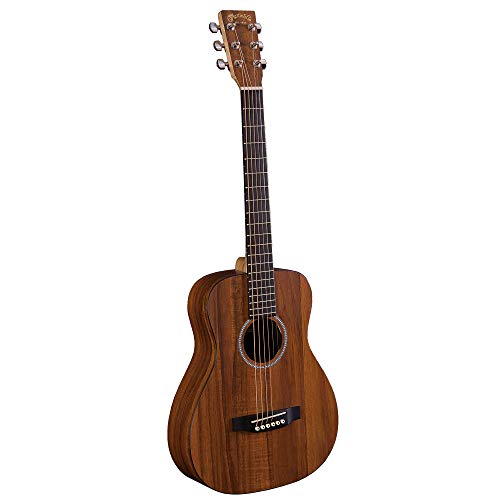
1. Martin D-15M StreetMaster: Best for Mahogany Dreadnought Punch
- Dreadnought with a solid mahogany top, back and sides.
- Distressed satin finish designed to look broken in from new.
- Standard Martin dreadnought proportions; a 25.4 inch scale is standard for Martin’s 14-fret dreadnoughts.
- Simple dovetail neck joint; Modified Low Oval neck profile on the 15 series.
- Gig bag included per several retailer listings.
Best for: flatpickers, rhythm players and singers who want a dry, punchy, mid-focused tone and a guitar that looks like it has already lived. Skip if: you want a pickup or a bright, chiming top.
Pros: an all-mahogany Martin delivers the famous dreadnought shape at a lower price than spruce-and-rosewood models; the worn finish hides scratches; dry, woody tone sits well in recordings.
Cons: mahogany tops have less sparkle and projection; no electronics; the distressed finish is a matter of taste.
2. Martin 000-15M StreetMaster: Best Smaller Body for Fingerstyle
- 000-14 fret auditorium body, solid mahogany top, back and sides.
- Non-scalloped spruce X bracing; Modified Low Oval neck.
- Scale length 25.4 inches; nut 1 11/16 inches per Martin, with some retailers listing different figures.
- Katalox fingerboard and bridge; bone nut; distressed satin finish.
- Simple dovetail neck joint.
Best for: fingerstyle, blues and recording where a controlled, balanced voice is more valuable than raw volume. Skip if: you play loud rhythm with a heavy pick.
Pros: the 000 body is comfortable and responsive; the sound is warm and direct; the worn finish adds character and durability.
Cons: less low-end than a dreadnought; no pickup; nut figures vary between sellers, so check Martin’s own page.
3. Yamaha LL16 ARE: Best All-Solid Rosewood Jumbo
- Original Jumbo body with a solid Engelmann spruce top treated with A.R.E. and solid rosewood back and sides.
- Five-ply mahogany-and-rosewood neck; ebony fingerboard and bridge.
- Scale length 650 mm (25 9/16 inches).
- Passive SRT Zero Impact piezo pickup with no onboard controls.
- Gig bag included according to retailers.
Best for: players who want a large, resonant voice and plan to run it into a preamp or DI. Skip if: you want built-in volume and tone controls.
Pros: rare all-solid rosewood construction in this class; A.R.E. gives an aged, open sound; strong projection and sustain; refined cosmetics.
Cons: the jumbo body is large; the pickup needs outboard gear; some model codes (LL16M and LL16 12-string) share the name, so confirm which one you are buying.
4. Yamaha LS16 ARE: Best Concert-Size All-Solid Option
- Concert-size body with a solid Engelmann spruce top (A.R.E.) and solid rosewood back and sides.
- Scale length 650 mm; nut width 44 mm; string spacing 11.0 mm.
- Mahogany-and-rosewood five-ply neck; ebony fingerboard with 400 mm radius.
- Passive SRT piezo pickup.
- Hard bag and Elixir strings per Yamaha listings.
Best for: fingerstyle and small-room players who want the L-series quality in a more manageable size. Skip if: you need dreadnought volume.
Pros: all-solid, comfortable and balanced; the concert body is easy to hold; the same engineering as the larger LL16.
Cons: passive pickup again needs a preamp; less low-end than the jumbo; a smaller dealer network than Martin or Taylor.
5. Eastman AC422CE: Best Cutaway Grand Auditorium With Solid Rosewood
- Grand auditorium cutaway with a solid Sitka spruce top and solid rosewood back and sides on most listings.
- Hand-scalloped X bracing; mahogany neck; ebony fingerboard.
- Scale length 25.4 inches; 1 3/4 inch bone nut; 12 inch radius.
- Fishman electronics, most commonly listed as the Matrix, though some dealers list other systems.
- Hardshell case supplied on most listings; a dealer variant with eucalyptus back and sides exists.
Best for: gigging acoustic players who want a flexible all-rounder, a cutaway for upper-fret access and a case included. Skip if: you want a famous-name logo on the headstock.
Pros: a rare combination of solid rosewood, cutaway, pickup and case at this level; the grand auditorium shape suits strumming and fingerstyle; bone nut and quality fittings.
Cons: pickup type varies by dealer and year; the 1 3/4 inch nut is wide; resale is lower than for Martin or Taylor.
6. Taylor 214ce: Best Easy-Playing Cutaway With Great Electronics
- Grand auditorium cutaway with a solid Sitka spruce top and layered Indian rosewood back and sides.
- Tropical mahogany neck, ebony fingerboard and bridge, 20 frets.
- Scale length 25.5 inches; 1 11/16 inch nut; Nubone nut and Micarta saddle.
- Taylor Expression System 2 behind-the-saddle pickup.
- Structured gig bag included; made in Mexico.
Best for: players who value a slim, easy neck and reliable stage sound. Skip if: you want all-solid construction; the back and sides are layered.
Pros: Taylor’s neck and action are among the most player-friendly in the industry; the ES2 system sounds natural through a PA; the layered sides resist humidity changes; strong resale value.
Cons: layered rosewood is less resonant than solid; there is a deluxe 214ce DLX version that costs more, so check the listing; the gig bag offers limited protection.
7. Martin D-10E Road Series: Best Lower-Cost Martin With a Pickup
- Dreadnought with a solid Sitka spruce top and solid sapele back and sides.
- Scale length 25.4 inches; 1 3/4 inch nut; Performing Artist neck with High-Performance Taper.
- Richlite fingerboard and bridge; scalloped X bracing; satin finish.
- Fishman MX-T electronics with volume, tone and a soundhole tuner that mutes the output.
- Soft-shell case; made in Mexico per dealers.
Best for: players who want a real Martin dreadnought, with a pickup, at the more affordable end of this band. Skip if: you want rosewood or mahogany tonality.
Pros: all-solid with onboard electronics; the Performing Artist neck is slim and comfortable; the muting tuner is handy on stage; good Martin resale.
Cons: Richlite is a synthetic fingerboard material, which some players dislike; satin finish scuffs; sapele is a little less rich than rosewood.
Also Consider
- Martin 00-15M: a smaller-bodied all-mahogany Martin for fingerstyle and travel.
- Martin D-16E: a spruce-and-mahogany or rosewood Martin with a pickup, sitting at or near the top of this budget depending on version.
- Taylor 314ce Studio: a step up in Taylor’s range, sitting at the line between this guide and the next tier.
- Martin D-12E Retro Road: a Road Series variant with a spruce top and sapele sides.
How We Chose
We did not personally use these guitars. This list is built from maker spec sheets, retailer listings and published reviews. We looked for solid-wood construction, established makers, consistent specs across dealers, and distinct tonal profiles, so that the list covers mahogany, rosewood and spruce voices, small and large bodies, and electric and acoustic-only models. Where dealers disagree, for example on the Eastman’s pickup or the Martin 000-15M’s nut width, we point it out. We also set aside boutique and signature models whose cost comes mainly from cosmetics, since the aim here is sound and playability per unit of budget. Finally, we weighted ownership: guitars from makers with wide dealer networks and clear care guidance are easier to service and resell, which matters when the purchase is a long-term one.
Buying Guide: Spending Up to Two Thousand Wisely
Rosewood or mahogany?
Rosewood back and sides, as on the Yamaha L-series and Eastman, give extended bass and a shimmering overtone structure, which many players describe as a larger, more complex sound. Mahogany, as on the Martin 15-series, produces a drier, more focused sound with a strong fundamental. Sapele, on the D-10E, sits between the two. Choose rosewood for lush strumming, mahogany for direct fingerstyle and recording.
Body size
The dreadnought and jumbo shapes (Martin D-15M, Yamaha LL16) project loudly and cover the low end. The auditorium and grand auditorium shapes (Martin 000-15M, Eastman, Taylor) are balanced and more comfortable. The concert shape (Yamaha LS16) is intimate and responsive. If you mostly play alone, go smaller; if you play with a band, go larger.
Bracing
The Martin 15 series uses non-scalloped bracing for a sturdy, lower-cost build, while the Eastman and D-10E use scalloped bracing for a freer, more open top. Scalloped bracing usually gives more bass and sustain, while non-scalloped bracing gives a tighter attack. This affects tone more than most buyers expect.
Electronics
If you play live regularly, electronics are worth choosing now rather than adding later. Models with preamps (Taylor ES2, Fishman MX-T) are plug-and-play. Passive systems (Yamaha SRT) need a preamp or DI box. Adding a pickup to a guitar later costs more than buying one with it, and installation can change the guitar.
Nut width and neck feel
Nut widths here range from 1 11/16 inches (Taylor, Martin 000-15M) to 1 3/4 inches (Martin D-10E, Eastman). The narrower nut suits chord-heavy players, and the wider one suits fingerpickers. Neck profile matters too; the Taylor and the D-10E’s Performing Artist neck are slim, while the Martin 15-series has a modified low oval feel.
Case and travel
A hardshell case protects an all-solid guitar far better than a gig bag. The Eastman is typically supplied with one, and Martin’s soft case is adequate for local travel. If you fly or travel with the guitar, budget for a real case.
Humidity
Makers including Martin, Taylor and Gibson advise keeping acoustics at roughly 40 to 50 percent relative humidity. All-solid guitars such as the Yamaha L-series and Martin 15-series are the most sensitive, and a case humidifier is cheap insurance, particularly in winter.
Living With an All-Solid Guitar: A Seasonal Routine
The wood that makes these guitars sound better also makes them more responsive to the room. Maker care guides from Martin, Taylor and Gibson all point to the same routine, and it costs very little.
- Buy a hygrometer. A small digital gauge placed in the case tells you the real humidity. The target range from makers is about 40 to 50 percent relative humidity.
- Humidify in dry months. When heating runs, indoor air often falls well below that range. A soundhole or case humidifier keeps the top from shrinking, which prevents sharp fret ends and cracks.
- Dehumidify in damp months. In humid summers a silica-gel pack in the case keeps the top from swelling, which raises the action and dulls the tone.
- Avoid sudden changes. Do not leave the guitar in a car, near a window or beside a radiator. Move it between rooms in its case and let it reach room temperature before opening the case.
- Wipe the strings and body after playing. Sweat corrodes strings and dulls a satin finish. A dry microfibre cloth is all that is needed.
- Change strings on a schedule. A set that is a few months old on a frequently played guitar loses brightness. Fresh phosphor bronze strings are the most affordable tone upgrade available.
- Book an annual check. A shop can look at the truss rod, nut slots, saddle height and brace glue joints, catching small problems early.
Questions to Ask Before You Pay
- Is the exact model code in the listing? Martin, Yamaha and Taylor each sell several close variants. Match the code, the top wood and the electronics to what you want.
- What is the return window? A guitar at this level should be returnable if the action is poor or the top has a flaw.
- Is a case included? If not, add one to the budget.
- Does the seller do a setup? Many specialist shops include a setup on all-solid guitars, which saves a trip.
- Is the pickup the one you expect? The Eastman and Paramount lines have used different electronics over time, so confirm the system named in the listing.
Upgrading Strings and Small Parts Without Changing the Guitar
At this level the guitar rarely needs hardware swaps, but a few small choices let you tune its voice without spending much.
- String gauge: light (.012 to .053) is the factory standard on most of these guitars. Medium gauge adds volume and bass on dreadnoughts but raises tension, which can stress a mahogany top. Custom-light sets ease fingering on the wide-nut models.
- String coating: coated strings last longer, which helps if you sweat heavily or travel. Uncoated phosphor bronze sounds a touch brighter when fresh.
- Bridge pins: bone pins can add a little clarity, though the effect is small and subjective. Replace plastic pins only if you want to experiment.
- Strap button and strap: a cutaway like the Taylor or Eastman is easier to play standing with a wide, padded strap, and some players add a second button if the guitar has none at the neck heel.
- Capo: choose one that clamps evenly; an uneven capo pulls strings sharp, which shows more on a guitar that is otherwise in tune.
Treat these as tweaks. If the base guitar suits your hands and ears, you will not need them.
Stage or Home: A Quick Decision Matrix
| Main use | Best match | Why |
|---|---|---|
| Home and recording only | Martin 000-15M, Yamaha LS16 ARE | No electronics to pay for, comfortable bodies, clear response |
| Regular gigs, plug-and-play | Taylor 214ce, Martin D-10E | Onboard preamp, tuner and controls |
| Gigs with a pedal rig or DI | Yamaha LL16 ARE, Eastman AC422CE | Quality pickup path into outboard gear |
| Open mics and travel | Taylor 214ce, Martin D-10E | Cutaway or slim neck, robust finishes |
The Cost Per Year Calculation
The full budget sounds like a lot, but guitars in this class tend to be played for a decade or more and often resell for much of what you paid. Treat the ceiling as an example. If you spend the full 2,000 dollars and keep the guitar for ten years, the cost is 200 dollars a year, about 55 cents a day. If you resell it for half after ten years, the cost falls to roughly 100 dollars a year. Compare that with replacing a budget guitar that you outgrow after two years and the premium looks smaller than it first appears. Add a modest allowance for a case, a setup and humidity control and the total remains reasonable.
Choosing Among the Best Acoustic Guitars Under 2000
| You are… | Choose |
|---|---|
| A flatpicker who loves mahogany punch | Martin D-15M StreetMaster |
| A fingerstyle player who wants a focused 000 | Martin 000-15M StreetMaster |
| After the largest, richest all-solid voice | Yamaha LL16 ARE |
| After a smaller body with all-solid rosewood | Yamaha LS16 ARE |
| A gigging player who wants a cutaway and a case | Eastman AC422CE |
| Wanting the easiest neck and best plug-in sound | Taylor 214ce |
| Wanting a Martin dreadnought with a pickup | Martin D-10E Road Series |
Frequently Asked Questions
What is the difference between all-solid and solid-top guitars?
All-solid guitars have a solid top, back and sides. Solid-top guitars have laminated back and sides. All-solid guitars tend to be more resonant but more sensitive to humidity.
Is Martin worth the price over Yamaha?
Martin offers brand heritage, strong resale value and a particular dry, woody tone. Yamaha offers all-solid rosewood, A.R.E. aging and often more spec for the money. Choose by sound and feel rather than logo.
Do I need a cutaway?
Only if you regularly play above the 12th fret. A cutaway slightly reduces body volume, so players who rarely venture high up the neck usually prefer to do without.
What is the difference between the Taylor 214ce and the 214ce DLX?
The DLX adds a gloss finish, white binding, decorative inlays and a hardshell case. The sound is similar, so the extra cost goes mainly toward looks and protection.
Will a StreetMaster finish wear out?
The distressed satin finish is designed to look worn from the start. It is durable and hides scratches well, but it will not turn glossy with age.
How do I power a passive piezo pickup?
You plug it into a preamp or DI box with a high input impedance. The preamp provides the gain and EQ. Without one, the signal sounds thin and quiet.
Are these guitars suitable for recording?
Yes. Mahogany guitars like the Martin 15 series record warmly, while rosewood Yamahas give a full-range sound. A good microphone and a quiet room matter more than the model.
Which One Should You Buy?
If you want a Martin for the heritage, choose the D-15M for strumming and the 000-15M for fingerstyle. If rosewood is your passion, pick the Yamaha LL16 ARE or the smaller LS16 ARE. The Eastman AC422CE gives you a cutaway, solid rosewood and a case, the Taylor 214ce gives the best neck and plug-in tone, and the Martin D-10E gives a real Martin with a pickup at the more modest end of the budget. Think about the voice first, the body size second, and the pickup third.
Sources
- Martin Guitar 15 Series and Road Series product pages
- Yamaha Corporation L-series product pages
- Eastman Guitars AC series listings
- Taylor Guitars 200 Series pages
- Guitar World and Acoustic Guitar magazine published reviews
Last updated: October 2026




Write Your Review
No reviews yet. Be the first to share your experience!