

Key takeaways
- Harley Benton guitars are sold through Thomann; US buyers order from Germany and have to account for shipping and import duties, so compare the landed cost, not the sticker.
- The spec sheets are the selling point: Alnico-5 pickups, stainless frets, roasted maple necks and 42 mm nuts on models that sit in the budget tier.
- Each guitar here maps to a familiar design: Telecaster (TE-52), Stratocaster-style (Fusion-III), ES-335 (HB-35 Plus), Les Paul-style double-cut (DC-Custom II) and single-cut (SC-Custom III Active).
- If you would rather buy from a local shelf, two stand-in picks near the end cover the same ground.
The best Harley Benton guitars for budget players and modders are the HB-35 Plus for semi-hollow tone, the TE-52 for a Telecaster-style bolt-on, the Fusion-III HSS Roasted for a modern all-rounder, and the DC-Custom II or SC-Custom III Active for humbucker-driven rock. Harley Benton is the house brand of the German retailer Thomann, which is why the specs read like a mid-priced guitar and the price tier sits well below the big names, and why buying one outside Europe takes a little planning.
Our top picks


As an Amazon Associate we earn from qualifying purchases at no extra cost to you.
Key takeaways
- Harley Benton guitars are sold through Thomann; US buyers order from Germany and have to account for shipping and import duties, so compare the landed cost, not the sticker.
- The spec sheets are the selling point: Alnico-5 pickups, stainless frets, roasted maple necks and 42 mm nuts on models that sit in the budget tier.
- Each guitar here maps to a familiar design: Telecaster (TE-52), Stratocaster-style (Fusion-III), ES-335 (HB-35 Plus), Les Paul-style double-cut (DC-Custom II) and single-cut (SC-Custom III Active).
- If you would rather buy from a local shelf, two stand-in picks near the end cover the same ground.
Quick comparison: best Harley Benton guitars by body style
| Model | Body and neck | Pickups | Scale | Best for |
|---|---|---|---|---|
| HB-35 Plus | Semi-hollow, arched maple top, set neck | Two Roswell LAF Alnico 5 humbuckers, coil split | 628 mm | Blues, indie, jazz-leaning rock |
| TE-52 | American ash body, bolt-on caramelised maple neck | Two Roswell TEA Alnico 5 single coils | 648 mm | Country, funk, clean to crunch |
| Fusion-III HSS Roasted | Nyatoh body, roasted maple bolt-on, 24 frets | Roswell humbucker plus two single coils, coil split | 648 mm | Versatile rock and pop |
| DC-Custom II | Meranti body, set neck, 24 frets | Two Tesla VR-Nitro Alnico 5 humbuckers | 628 mm | Classic rock and hard rock |
| SC-Custom III Active | Meranti body and neck, 24 frets | Two Tesla active humbuckers | 628 mm | Modern rock and metal |
| Squier Classic Vibe 50s Telecaster | Shelf stand-in for TE-52 | Fender-designed Alnico single coils | 648 mm | Local purchase alternative |
| Epiphone Les Paul Tribute | Shelf stand-in for DC-Custom II | Two humbuckers | Gibson-style | Local purchase alternative |
1. Harley Benton HB-35 Plus: Best semi-hollow for the money
- Semi-hollow body with F-holes, a mahogany sustain block and an arched maple top
- Set-in Canadian maple neck · 628 mm scale · 305 mm radius · 22 frets · 42 mm nut
- Laurel fretboard with block inlays on current listings (older reviews mention pau ferro, so the wood varies by run)
- Two Roswell LAF Alnico 5 humbuckers with push/pull coil splitting on the volume controls
- Tune-O-Matic bridge, sealed die-cast tuners, .010 to .046 strings
Best for: players who want a 335-style guitar for blues, indie and warm clean tones without a premium outlay. Skip if: you need a light guitar; MusicRadar’s review put the weight around 8 lb, which it called typical for a 335-style instrument.
Pros: set-neck construction at a budget tier; coil splits make it more versatile than a plain 335; Alnico 5 pickups; looks well beyond its tier.
Cons: some variation between production runs (fretboard wood); a little neck-heavy for some players; semi-hollow bodies can feed back at high gain.
2. Harley Benton TE-52: Best Telecaster-style guitar for modders
- American ash body with a caramelised Canadian maple neck and fingerboard
- 648 mm (25.5 inch) scale · 305 mm radius · 21 medium jumbo frets · 42 mm nut
- Two Roswell TEA Alnico 5 vintage-style single coils
- One volume, one tone, three-way switch · Kluson-style machine heads
- Strung with .010 to .046 sets
Best for: country, funk and straight-ahead rock players who want a classic design they can modify. Skip if: you want a humbucker or more switching options.
Pros: ash plus caramelised maple is a premium-looking combination at a budget tier; a reviewer on Guitar Pedal Demos preferred its neck over a Squier Classic Vibe 50s Telecaster; the simple wiring makes pickup and pot swaps easy.
Cons: basic controls; ash bodies tend to run heavier; US buyers need to import it.
3. Harley Benton Fusion-III HSS Roasted: Best all-rounder
- Nyatoh body with roasted Canadian maple neck and fingerboard · modern C profile
- 648 mm scale · 305 mm radius · 24 medium jumbo Blacksmith stainless frets · 42 mm nut with a Graph Tech TUSQ nut
- Roswell HAF-B Alnico 5 humbucker (bridge) and two Roswell single coils
- Master volume, tone with push/pull coil split, 5-way switch
- Wilkinson WVS50IIK tremolo, chrome hardware · listed as made in Indonesia on at least one retailer page
Best for: players who want one guitar for classic rock, pop and modern leads. Skip if: you want an authentic vintage-style Strat; this is a modern superstrat in spirit.
Pros: stainless frets and roasted maple are upgrades most guitars at this tier skip; 24 frets give more range; coil split widens tone; the Fusion-III and Fusion-II differ mainly in switching (push/pull tone versus a humbucker/single-coil switch), according to Rock Guitar Universe.
Cons: many variants (HSS, HSH, left-handed) so check the listing; tremolo is not a locking unit.
4. Harley Benton DC-Custom II: Best for classic rock humbuckers
- Meranti body and set neck · Modern C profile · roasted jatoba fretboard (some sheets say rosewood)
- 628 mm scale · 350 mm radius · 42 mm nut with Graphite nut · 24 medium jumbo stainless frets
- Two Tesla TM VR-Nitro Alnico 5 humbuckers
- One volume, one tone with push/pull coil split, three-way switch
- WSC Tune-O-Matic bridge, HB machine heads, chrome hardware (white version has gold)
Best for: classic rock, hard rock and blues-rock players who want a double-cut set-neck guitar. Skip if: you prefer vintage-style single-cut shapes.
Pros: set neck with 24 stainless frets at a budget tier; coil split; a flatter 350 mm radius suits bends and shred; MusicRadar singled it out as a solid rock performer.
Cons: fretboard wood descriptions vary; meranti body is heavier than some alternatives; not a vintage-correct design.
5. Harley Benton SC-Custom III Active: Best for modern rock and metal
- Meranti body and neck · Modern C profile · rosewood fingerboard · 350 mm radius
- 628 mm scale · 42 mm nut with graphite nut · 24 medium jumbo stainless frets
- Two Tesla TM AH-5 active humbuckers (needs a battery)
- Two volumes, one tone, three-way switch (the Vintage Black version adds a push/pull coil split)
- WSC Tune-O-Matic bridge; white version has black hardware, Vintage Black has gold
Best for: modern rock and metal players who want active-pickup output in a single-cut shape. Skip if: you do not like swapping batteries or want vintage-style response.
Pros: active humbuckers keep high gain tight; stainless frets; classic single-cut shape.
Cons: active electronics add battery maintenance; pickup voicing is aggressive; fewer clean-tone options.
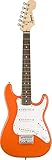
6. Squier Classic Vibe 50s Telecaster: Best shelf stand-in for the TE-52
- Telecaster design with a 648 mm (25.5 inch) scale · maple neck and fingerboard
- Fender-designed Alnico single-coil pickups · three-way switch · one volume, one tone
- Butterscotch Blonde finish on the listing · Fender’s two-year warranty on the product page
Best for: anyone who wants the Telecaster idea but wants to buy from a local retailer with easy returns. Skip if: you specifically want an ash body and caramelised neck.
Pros: widely supported; many mods and parts are standard; easier to try in a shop than an import.
Cons: sits in a higher tier than the TE-52; fewer upgrades out of the box.
7. Epiphone Les Paul Tribute: Best shelf stand-in for the DC-Custom II
- Les Paul-style single cut with two humbuckers and Tune-O-Matic bridge
- Gibson-style scale length · Epiphone’s Les Paul Tribute line
- Heritage Cherry Sunburst and Ebony finishes on current listings
Best for: classic rock players who want the shape locally. Skip if: you want 24 frets or a flat radius.
Pros: instantly recognizable design; plenty of aftermarket parts; easy to resell.
Cons: fewer built-in upgrades than the DC-Custom II; standard Les Paul-style neck heel limits upper-fret access.
Also consider
- Ibanez Gio GRX70QA: an HSH budget guitar with a tremolo, a local-shelf option for the Fusion-III’s rock role.
- Yamaha Pacifica PAC112V: a long-running HSS Strat-style guitar at a small step above entry level.
- Epiphone Les Paul Special II: an entry-level humbucker guitar that makes a good modding platform.
- Squier Affinity Series Telecaster: a lower-tier Telecaster that leaves room for upgrades.
How to buy Harley Benton from the US: the landed-cost calculation
Harley Benton products are sold exclusively through Thomann in Germany. The brand opened an official Reverb store for US buyers in October 2024 and announced it would close it, so check whether it is currently open. Otherwise, a US buyer orders from Thomann, and the arithmetic changes:
- Start with the guitar price on the Thomann page. Check how the checkout treats sales tax for your country before you compare.
- Add the shipping quote for your country. Thomann’s FAQ gives an average delivery time of 6 to 9 working days to the US; shipping cost depends on the size and number of items.
- Add the import duty or tariff your country currently charges. Recent US tariffs have changed this figure, so confirm it before ordering.
- Add any courier or broker fee at delivery. Some couriers collect duties at the door, and some charge a handling fee.
- Compare with a local alternative plus the cost of a setup. A US-shelf guitar can be adjusted by a local tech and returned without international freight.
Thomann advertises a 30-day money-back guarantee and a three-year warranty, but return shipping from the US is paid by the buyer, so this protection has a real cost. For many players the correct decision is simple: if you are a tinkerer who enjoys a project, the import is justified; if you want a plug-and-play guitar, buy local.
Best budget guitars: what a Harley Benton shows about value
The Harley Benton formula is simple. Put money into the parts you can feel (stainless frets, a solid neck, a good nut) and use plain hardware elsewhere. This is why a budget guitar from the brand may have better frets than a mid-tier guitar from another brand but a basic bridge and tuners. When you shop for the best affordable guitars, apply the same logic:
- Frets and nut: these decide how well the guitar plays and stays in tune. Stainless frets last longer and need less polishing.
- Neck wood and finish: roasted or caramelised maple resists humidity swings and feels smoother.
- Pickups: upgrade-worthy at any price, but a decent Alnico 5 set means you can delay upgrading.
- Hardware: tuners and bridges matter most when the guitar has a vibrato.
Modding roadmap: what to change first on a budget guitar
| Priority | Upgrade | Why | Notes |
|---|---|---|---|
| 1 | Professional setup | Action, relief and intonation affect playability more than parts | Cheap and effective on any guitar |
| 2 | Strings and nut slots | Fresh strings and a smooth nut improve tuning stability | Graphite lubricant helps |
| 3 | Pots and capacitor | Smoother taper and better tone control response | Easy solder job |
| 4 | Pickups | Biggest change in tone | Already decent on these models, so optional |
| 5 | Tuners and bridge | Helps on tremolo models | Only if you hit a real problem |
Setup checklist when your Harley Benton arrives
A guitar that crosses an ocean in a carton arrives with the strings at full tension and the neck unadjusted for your climate. Treat the first hour as part of the purchase. This routine follows standard setup practice, not our own repairs.
- Let it acclimate in its box. If the parcel was cold or hot in transit, leave it closed for a few hours so the wood and finish do not shock.
- Inspect the neck, frets and finish. Look for sharp fret ends, finish chips near the neck pocket and a cleanly cut nut. Photograph any defect before you play, because that is the evidence you need for a return.
- Check neck relief. Fret the low E at the first and last frets and look at the gap at the middle. A small gap is normal; a large gap or no gap means a truss-rod adjustment, a quarter turn at a time.
- Set the action and intonation. Adjust bridge height for comfortable playing and set each saddle so the open string and the twelfth-fret note agree on a tuner.
- Replace or lubricate where it counts. Fresh strings, a touch of graphite in the nut slots and a tightened jack nut remove the most common early annoyances.
- Check the electronics. Crackling pots and a loose output jack are easy fixes, but they are better caught inside the return window.
Best Harley Benton guitars by genre
| Genre | First choice | Second choice | Why |
|---|---|---|---|
| Blues and indie | HB-35 Plus | TE-52 | Warm humbuckers with splits, or classic single-coil bite |
| Country and funk | TE-52 | Fusion-III HSS | Snappy single coils and a 25.5 inch scale |
| Classic and hard rock | DC-Custom II | Fusion-III HSS | Set-neck humbuckers with a flatter radius |
| Modern rock and metal | SC-Custom III Active | DC-Custom II | Active pickups keep high gain tight |
| Pop and session work | Fusion-III HSS | TE-52 | Single-coil clean tones plus a humbucker for leads |
Harley Benton versus Epiphone and Squier: who competes with whom
The three brands approach the budget market differently. Squier, as Fender’s value brand, uses Fender’s designs and supports them with a wide dealer network and strong resale. Epiphone does the same for Gibson designs, and its current line carries “Inspired by Gibson” branding on many models. Harley Benton skips the licensed-design premium: it builds the same shapes under its own name, spends the savings on the spec sheet, and sells directly through Thomann.
That strategy explains the pattern in the guitars above. You get features such as roasted maple, stainless frets and Alnico 5 pickups at a lower tier, but you give up the dealer network, the easy local return and, in some cases, resale value. If you value the spec, Harley Benton is hard to beat. If you value convenience and resale, a Squier or Epiphone is the safer choice. Many players resolve this by buying a Harley Benton as a project guitar and a licensed model as the daily player.
There is also a consistency point. Harley Benton guitars are made in multiple factories across Asia, according to published information, so fit and finish can vary by production run. Reviewers often describe quality as high for the tier, but the safest approach is to inspect your guitar on arrival and use the return window if anything is wrong.
How We Chose
We did not play or handle these guitars ourselves. The list is built from Harley Benton and Thomann product pages, MusicRadar’s best-of guide and its HB-35 Plus review, Rock Guitar Universe reviews and spec compilations. We chose one model per body style, favoured models with stainless frets and Alnico-5 or active pickups, and excluded acoustics and basses because their specs and availability differ. Because the brand’s guitars are hard to find in US stores, two local-shelf stand-ins sit at the end of the main list so US readers have a buying path. Where specs disagreed (fingerboard wood on the HB-35 Plus and DC-Custom II) we say so.
Buying guide: how to choose among the best Harley Benton guitars
Body style first
Decide what you want to hear. A bolt-on, single-coil guitar (TE-52) is bright and snappy. A set-neck humbucker guitar (DC-Custom II, SC-Custom III) is thicker with more sustain. A semi-hollow (HB-35 Plus) is warmer and more airy. The Fusion-III sits between: bridge humbucker for gain, single coils for clean.
Scale length
The TE-52 and Fusion-III use a 648 mm (25.5 inch) scale, which gives more string tension and a tighter bass. The HB-35 Plus, DC-Custom II and SC-Custom III use 628 mm, which is Gibson-style and slinkier. If you use lighter strings, the 648 mm scale feels more stable. If you bend a lot, the 628 mm scale is easier.
Nut width and radius
All five models have a 42 mm nut, a slim width that suits smaller hands and fast playing. The DC-Custom II and SC-Custom III have a flatter 350 mm radius; the others use 305 mm. A flatter radius is easier for shredding; a rounder radius suits chords.
Pickup type
Alnico 5 pickups are the classic choice; active pickups need a battery and sound compressed and tight. Passive Alnico models are better for varied styles.
Frets
Stainless steel frets on the Fusion-III, DC-Custom II and SC-Custom III are a durable upgrade that most guitars at this tier lack.
Where to buy
If you want to return or exchange easily, buy from a local retailer. If you want the Harley Benton spec, order from Thomann and include shipping and duties in your budget.
Left-handed note
Several models are offered in left-handed versions on Thomann, though stock changes often.
Frequently Asked Questions
Are Harley Benton guitars good?
They are well regarded for their spec sheets relative to their price tier. Reviewers highlight features such as stainless frets, Alnico pickups and roasted maple, which are unusual in budget guitars.
Where are Harley Benton guitars made?
According to published information, they are made in around 20 factories across China, Indonesia and Vietnam, and sold under Thomann’s house brand.
Can I buy Harley Benton in the US?
Yes, from Thomann in Germany, with international shipping and import duties. The official US Reverb store was announced to close, so check its current status.
What is the best Harley Benton electric guitar for beginners?
The Fusion-III HSS Roasted is versatile, and the TE-52 is simple and classic. Beginners who want a local purchase should consider a Squier Telecaster or an Ibanez Gio.
Are they good for modding?
Yes. Standard scales, common pickup routes and simple wiring make them popular platforms for upgrades, and they have good frets and nuts to start with.
Do the active pickups in the SC-Custom III need a battery?
Yes. Active humbuckers like the Tesla TM AH-5 run on a battery, so plan to carry a spare and unplug the cable when the guitar is not in use.
Is a Harley Benton better than a Squier?
It depends on the model. On paper, Harley Benton often offers upgraded woods and frets, while Squier offers easier local purchase, wide support and strong resale.
Which one should you buy?
Buy the HB-35 Plus for warm semi-hollow tone. Buy the TE-52 if you want a Telecaster to modify. Buy the Fusion-III HSS Roasted if you want one guitar to cover many styles. Buy the DC-Custom II for rock and the SC-Custom III Active for modern high gain. If importing sounds like too much work, the Squier Classic Vibe 50s Telecaster and the Epiphone Les Paul Tribute are the sensible local equivalents.
A simple decision rule helps if you are still undecided. If you play one style and know what you like, pick the model that matches it in the genre table. If you play many styles, choose the Fusion-III, because its coil split and five-way switch give the widest range. If you are not sure that you want a project at all, start with the local stand-ins, learn what you like for six months, and then order a Harley Benton as a second guitar when you know which features you would actually use. Either way, set aside a little budget for a professional setup, because it improves every guitar on this list.
Sources
- Harley Benton product pages
- Thomann product pages and FAQ
- MusicRadar: best Harley Benton guitars and HB-35 Plus review
- Rock Guitar Universe: Fusion-III and HB-35 Plus reviews
- Guitar Pedal Demos
Last updated: October 2026.




Write Your Review
No reviews yet. Be the first to share your experience!