

Key takeaways
- Scale length decides comfort: 32 inches feels close to a normal bass, while 30 inches and below is easier on small hands and tight reaches.
- An acoustic bass is quiet unplugged next to a guitar, so almost every model here has a built-in pickup and preamp for practice amps and small PAs.
- Jumbo bodies project more air; slim bodies feed back less on stage. Pick the body for the room, not just the looks.
- Strings matter: phosphor-bronze acoustic bass sets in the 45-95 or 45-100 range are standard, and short-scale models need their own sets.
The best acoustic bass guitars are the ones that solve the biggest problem of the instrument: a hollow body has to move a lot of air to make low notes audible, so volume, string tension and scale length matter more here than on any six-string. For most players the Fender CB-60SCE is the safest all-round choice, the Ibanez AEB10E is the loudest unplugged option in this group, and the Cordoba Mini II Bass MH-E or Martin 000CJr-10E Bass suit players who want a compact, short-scale neck.
Key takeaways
- Scale length decides comfort: 32 inches feels close to a normal bass, while 30 inches and below is easier on small hands and tight reaches.
- An acoustic bass is quiet unplugged next to a guitar, so almost every model here has a built-in pickup and preamp for practice amps and small PAs.
- Jumbo bodies project more air; slim bodies feed back less on stage. Pick the body for the room, not just the looks.
- Strings matter: phosphor-bronze acoustic bass sets in the 45-95 or 45-100 range are standard, and short-scale models need their own sets.
Our top picks


As an Amazon Associate we earn from qualifying purchases at no extra cost to you.
How We Chose These Acoustic Basses
We did not personally use any of these instruments. This list is built from the published manufacturer specifications, dealer spec sheets and professional reviews, with a focus on what makes an acoustic bass practical: scale length, nut width, body depth, pickup system and whether the neck feels like a bass or a guitar. We kept to current models from established makers and capped the list at two models per brand. Where retailers disagreed on a detail such as fingerboard material, we say so instead of guessing. We also kept the list to models that are widely stocked, so you can compare them in a shop if you have one nearby.
Quick Comparison of the Best Acoustic Bass Guitars
| Model | Scale length | Body style | Electronics | Best for |
|---|---|---|---|---|
| Fender CB-60SCE | 32 in | Concert cutaway | Fishman Classic Design, 2-band EQ, tuner | All-round first acoustic bass |
| Fender Kingman Bass V2 | about 30.3 in | Concert with Venetian cutaway | Fishman preamp | Vintage look, easy reach |
| Ibanez AEGB24E | about 32 in | Slim body, soft cutaway | Undersaddle pickup, AEQ-2T preamp with tuner | Stage use with low feedback |
| Ibanez AEB10E | 32 in | Jumbo, soft Florentine cutaway | Fishman pickup, AEQ preamp with tuner, XLR and 1/4 in outputs | Loudest unplugged tone |
| Epiphone El Capitan J-200 Studio Bass | about 30.5 in | Super jumbo J-200 shape | Fishman under-saddle system | Big-body looks, shorter reach |
| Cordoba Mini II Bass MH-E | 22 7/8 in | Small mahogany body | Undersaddle piezo, 3-band EQ, tuner | Travel and small hands |
| Martin 000CJr-10E Bass | 24 in | 000 shape | Fishman Sonitone | Premium short-scale feel |
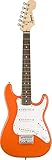
1. Fender CB-60SCE: Best Overall Acoustic Bass
- Scale length: 32 inches, listed by retailers as medium scale
- Body: concert-size cutaway with a solid spruce top and laminated mahogany back and sides
- Neck: mahogany, laurel fingerboard (some listings say walnut), 22 frets, plastic nut about 1.69 inches wide
- Electronics: Fishman Classic Design pickup with two-band EQ and built-in tuner, powered by a 9V battery
- Strings: phosphor-bronze, 45-100 gauge
Best for: players who want one acoustic bass that does everything reasonably well, including students moving over from a standard electric bass.
Skip if: you want a very loud unplugged sound or a very short reach; the body is concert-size, not jumbo.
Pros
- The 32-inch scale is close enough to a normal bass that finger spacing carries over.
- A solid spruce top is a step up from the all-laminate builds found on cheaper basses.
- The onboard tuner and two-band EQ cover the basics for plugging into a small amp.
- It is a long-running model, so strings, gig bags and setup advice are easy to find.
Cons
- Unplugged volume is modest, as with every acoustic bass of this size.
- The two-band EQ is simple; heavy tone shaping needs an outboard preamp or DI.
The CB-60SCE is the reference point for this whole list. If you are not sure which style suits you, this is the model that gets you closest to a regular bass feel while still being a genuine acoustic instrument. It is also a sensible benchmark when you compare other models: ask whether the extra money buys more volume, a shorter scale or better electronics.
2. Fender Kingman Bass V2: Best for a Vintage Look and Easier Reach
- Scale length: about 30.3 inches (770 mm), 20 frets, nut about 1.5 inches wide
- Body: concert-style body with a Venetian cutaway, solid spruce top and laminated mahogany body
- Neck: mahogany with a Jazz Bass style profile and walnut fingerboard
- Bracing: forward-shifted scalloped X
- Electronics: Fishman preamp system with tuner and EQ
Best for: players who like the narrow nut of a jazz-style neck and want a shorter stretch than a 32-inch model without going to a mini bass.
Skip if: you need the deepest low-end sustain; shorter scales trade a little string tension for comfort.
Pros
- A 1.5-inch nut and Jazz Bass profile feel familiar to electric bassists.
- Twenty frets and a 30-inch-class scale are easy on the left hand.
- The Venetian cutaway and vintage styling stand out from the usual dreadnought look.
Cons
- One retailer listing shows a different scale and body shape; check the exact model before buying.
- It costs more than the CB-60SCE, so the value case rests on feel and styling rather than on volume.
The Kingman is the model to try if your hands tire on a 34-inch bass. Fender’s published dimensions put it noticeably shorter than the CB-60SCE, and the narrower nut helps with fast fingerstyle lines. Because it is shorter, the same string gauge feels a little looser, so a slightly heavier set can help if the strings feel floppy.
3. Ibanez AEGB24E: Best Slim Acoustic Bass for the Stage
- Scale length: about 32 inches (815 mm per the maker’s North American page)
- Body: thin body with soft Florentine cutaway, laminated sapele top, back and sides
- Neck: nyatoh and maple, 21-fret walnut fingerboard, 43 mm nut, 400 mm radius
- Body size: about 15 inches wide and 3 3/4 inches deep at the maximum
- Electronics: undersaddle pickup with AEQ-2T preamp and onboard tuner
Best for: gigging players who play loudly with a band and need an acoustic-looking bass that does not howl with feedback.
Skip if: you mostly play unplugged at home; the thin body is quieter acoustically than a jumbo.
Pros
- Shallow body reduces feedback and is comfortable to hold against the chest.
- String spacing and neck shape are close to an electric bass, with a 43 mm nut.
- Factory strings are a carbon-coated set in the .040-.095 range, which keeps tension lighter than a 45-100 set.
Cons
- All-laminate construction limits the acoustic tone compared with a solid-top model.
- Thin body means less natural volume; treat it as a plug-in instrument.
The AEGB24E is the practical answer to a question many stage players ask: how do I get a wooden-bodied bass that behaves like an electric in a loud room? Its shallow body trades acoustic projection for stability. If you want warm, woody tone through a PA and care less about how it sounds in the bedroom, this is a better match than a jumbo.
4. Ibanez AEB10E: Best for Unplugged Volume
- Scale length: 32 inches (812.8 mm)
- Body: jumbo shape with soft Florentine cutaway; current specs list a spruce top and sapele back and sides
- Neck: 43 mm nut, 58 mm at the 14th fret, 400 mm radius
- Electronics: Fishman S-Core pickup with AEQ preamp and tuner; balanced XLR and 1/4 inch outputs on current specs
- Strings: .040-.095 factory set, 19 mm string spacing
Best for: singer-songwriters and church or coffeehouse players who want the biggest natural sound for the money and a direct XLR out.
Skip if: a jumbo body feels too large for you, or you need a short scale.
Pros
- A jumbo body moves more air, so the instrument is audible in a quiet room without an amp.
- Dual outputs let you go direct to a mixer or to a bass amp.
- The 32-inch scale suits players who want standard bass spacing.
Cons
- Spec details changed across production years, so check the exact listing for top wood and fingerboard.
- The large body is more prone to feedback at high stage volume.
This is the choice if your first priority is how the instrument sounds when nobody is plugged in. It pairs well with a medium-gauge phosphor-bronze set. If you plan to use it as a stage instrument, a soundhole cover or a low-cut on the preamp can tame low-frequency feedback.
5. Epiphone El Capitan J-200 Studio Bass: Best Big-Body Look With a Shorter Scale
- Scale length: about 30.5 inches (774.7 mm), 20 frets
- Body: super jumbo J-200 shape, solid Sitka spruce top, layered mahogany back and sides
- Neck: mahogany, Medium C profile, Indian laurel fingerboard, about 1.69 inch nut
- Bridge: moustache-style bass bridge
- Electronics: Fishman under-saddle system (retailers list different model names)
Best for: players who want a showpiece instrument with a large, resonant body and a neck that is easier to reach than a 32-inch model.
Skip if: you need a compact instrument for travel or sitting in a small chair.
Pros
- A solid spruce top on a super jumbo body gives it a larger acoustic voice than most in this price class.
- The 30.5-inch scale and 20 frets are friendly to small hands.
- Dealer spec sheets list a Medium C neck profile, a familiar shape for guitarists.
Cons
- The J-200 body is wide and deep, which some players find awkward when seated.
- Pickup model names vary by listing; confirm the electronics before ordering.
The El Capitan Studio Bass is the most visually dramatic option here. A very large body and a shorter scale is an unusual combination, which is why it appeals to guitarists who also play bass: the neck feels less stretched than a standard bass, while the body supplies the projection.
6. Cordoba Mini II Bass MH-E: Best Compact Acoustic Bass for Travel and Small Hands
- Scale length: 22 7/8 inches (580 mm), 19 frets
- Body: small mahogany top, back, sides and neck, about 15 5/8 inches long and 3 3/8 inches deep
- Nut: NuBone, about 45 mm wide; C-shaped neck
- Electronics: undersaddle piezo with onboard tuner, volume, bass, mid, high and phase controls
- Strings: .037-.090 D’Addario coated set; no case included
Best for: kids, travelers, guitarists who want a bass for songwriting, and anyone who wants a small instrument that tunes to standard E-A-D-G.
Skip if: you want a full-size body or the string tension of a long-scale bass.
Pros
- The 580 mm scale is a half-size bass, light to carry and easy to reach.
- Full preamp with phase control is more than most mini instruments provide.
- Retailers list it with a gig-bag-friendly size; the case is sold separately.
Cons
- Acoustic volume is lower than a full-size model; plan to amplify it.
- Fingerboard material varies by listing, so check the one you are buying.
A short scale lowers string tension, so the Mini II uses lighter strings than a full-scale bass. If you also own a travel guitar, this is a natural companion. It is not a bass to replace a full instrument on a stage, but it is a genuinely playable one for a hotel room or a songwriting desk.
7. Martin 000CJr-10E Bass: Best Premium Short-Scale Acoustic Bass
- Scale length: 24 inches
- Body: 000 shape with spruce top and sapele back and sides
- Neck: select hardwood, Richlite fingerboard and bridge, 20 frets, 1.75 inch nut
- Hardware: Gotoh chrome bass tuners, scalloped X bracing
- Electronics: Fishman Sonitone; ships with a gig bag and uses Martin short-scale bass strings
Best for: guitarists who want a high-quality, short-scale bass with a familiar Martin build and a wide, comfortable nut.
Skip if: you are shopping on a strict budget or need a 32-inch neck.
Pros
- A 24-inch scale is easy to reach and lets guitarists adapt quickly.
- A maker with a long reputation for acoustic building stands behind the design.
- Gig bag included.
Cons
- Priced at the upper end of this group.
- Requires short-scale strings, which are less common in shops than standard sets.
Retail listings label this model as the 000C Jr E Bass, while Martin’s own naming is 000CJr-10E. It is the model to look at if you want a mini bass that feels like a premium guitar rather than a toy.
Also Consider
- Washburn AB5K: a 32-inch medium-scale four-string with a spruce top, mahogany back and sides, and a QPH preamp with four-band EQ. Despite the name, it is not a five-string. Owners often switch to medium-scale strings.
- Washburn Mini Comfort Bass (WCBM15SEK): a compact travel-style bass with a solid cedar top and Barcus-Berry electronics.
- Leo Jaymz Acoustic Electric Bass: a 4-string with mahogany body and top, aimed at players who want a lower-cost entry point.
- Best Choice Products Acoustic Electric Bass: a budget full-size starter with a padded gig bag; fine for finding out whether you enjoy the instrument, with the usual limits in setup and electronics.
Buying Guide: Choosing an Acoustic Bass by Scale, Body and Strings
Scale length
Scale length is the distance from nut to saddle, and it controls reach and string tension. A 32-inch scale (Fender CB-60SCE, Ibanez AEB10E) feels like a standard bass for most players. A 30-to-31-inch scale (Kingman V2, El Capitan) trims reach noticeably. A 24-inch or 22-7/8-inch scale (Martin, Cordoba) behaves like a short-scale or half-size instrument. If you have a small frame or a hand injury, shorter is almost always more comfortable. If you plan to play alongside a standard bass often, stay at 30 inches or longer so the feel carries over.
Body size and volume
Body depth drives unplugged volume. A jumbo body of around 4 inches deep projects more than a thin body of 3 3/4 inches or less. For solo or small-room use, pick jumbo. For stage use at higher volume, pick thin to control feedback. Expect every model to sound smaller than a six-string acoustic of the same shape, because the strings are longer and thicker and need more air to speak.
Top wood and construction
A solid spruce top (Fender CB-60SCE, Epiphone El Capitan, Martin) generally opens up and improves with age; an all-laminate top (Ibanez AEGB24E) is more stable and cheaper. If you play mostly amplified, laminate is a perfectly reasonable choice. If you want acoustic character, prioritize a solid top.
Pickup and preamp
Nearly every acoustic bass is sold with an undersaddle piezo and onboard preamp. At a minimum look for: a built-in tuner, at least two-band EQ, and a quarter-inch output. Direct XLR output is useful for churches and small venues. A phase switch helps fight feedback. Because acoustic bass pickups can sound thin, many players run the signal through a bass amp rather than a regular acoustic guitar amp, which cannot handle the low frequencies cleanly.
Strings and setup
Phosphor-bronze strings in the 45-95 or 45-100 range are standard on 32-inch models; short-scale instruments such as the Martin and Cordoba use lighter or specially made sets. Acoustic bass strings are heavy and age quickly, so budget for a fresh set once or twice a year. Check string height at the 12th fret during the first week: a low-priced instrument often benefits from a professional setup.
Fretted or fretless
Some makers list fretless acoustic basses, such as an Ibanez fretless model in the AEG family. A fretless neck suits players who already know their intonation; for a first instrument, stay fretted.
Left-handed players
Some models are offered in left-handed versions at certain retailers, but availability changes, so confirm before buying.
Ownership Notes: Strap Pins, Cases and Battery Habits
Acoustic basses are heavier at the neck than guitars because the strings are thick and the scale is long, so check whether the instrument has a strap button at the heel and at the tail before you buy. If it does not, a luthier can fit one in minutes. A strap with a wide pad helps more than you would expect on a jumbo body.
Case fit is the next surprise. A 32-inch-scale concert body is long, and many dealers sell only guitar-sized cases. Look for a case listed specifically for acoustic bass, and measure the body length and depth against its inside dimensions. The compact Cordoba and the Martin short-scale model fit more ordinary bags, but they still need padding at the headstock.
Finally, the onboard preamp runs on a 9V battery in most of these models. Unplug the cable when you stop playing, because the preamp switches on when a cable is inserted, and a flat battery in the middle of a set is the most common avoidable problem. Carry a spare, and replace the battery before a gig rather than after it dies.
Unplugged Versus Plugged In: Which Matters More
Ask yourself where you will play ninety percent of the time. If the answer is a living room, pick the model with the biggest body and a solid top. If the answer is a stage, pick the model with the best preamp and the least feedback. If you travel, pick the shortest scale you find comfortable. Few instruments do all three, which is why the quick comparison table is arranged by use.
Frequently Asked Questions
Are acoustic bass guitars loud enough to play without an amp?
They can be played unplugged, but they are quieter than acoustic guitars. A jumbo body such as the Ibanez AEB10E or Epiphone El Capitan projects the most. For anything beyond personal practice, plan on amplifying.
What are the best acoustic electric bass guitars for beginners?
The Fender CB-60SCE is the most balanced starting point because its 32-inch scale feels like a standard bass and it has a tuner and EQ built in. A short-scale option such as the Cordoba Mini II Bass MH-E is better for children or small hands.
Can I use regular electric bass strings on an acoustic bass?
No. Acoustic basses need phosphor-bronze or bronze strings made for hollow bodies. Nickel electric strings do not drive the top properly and sound dull.
What amp should I use with an acoustic bass?
A bass amp or an acoustic amp rated for bass frequencies. A regular acoustic guitar amp can distort at low frequencies. A direct box into a mixer is the cleanest option for churches and small venues.
Is a short-scale acoustic bass worth it?
Yes, if reach or portability matters. A short scale lowers the tension and shortens the stretch. The tradeoff is a slightly softer low end and the need for special strings.
Do acoustic bass guitars need special care?
They need the same humidity care as acoustic guitars. Makers such as Martin generally advise keeping instruments in the 40 to 50 percent relative humidity range and using a hardshell or well-padded case when travelling.
How are acoustic basses tuned?
Standard tuning is E-A-D-G, an octave below the lowest four guitar strings. Short-scale models like the Cordoba tune to the same notes.
Which One Should You Buy?
- One bass for everything: Fender CB-60SCE.
- Easier reach with a bass-style neck: Fender Kingman Bass V2.
- Loud band and stage use: Ibanez AEGB24E.
- Loudest at home and best direct outputs: Ibanez AEB10E.
- Big body with shorter scale: Epiphone El Capitan J-200 Studio Bass.
- Travel or small hands: Cordoba Mini II Bass MH-E.
- Premium short-scale: Martin 000CJr-10E Bass.
Sources
Fender product and specification pages; Ibanez product pages; Epiphone product pages; Martin Guitar product pages; Cordoba Guitars product pages; Guitar World; No Treble; Washburn product pages.
Last updated: October 2026





Write Your Review
No reviews yet. Be the first to share your experience!