

Key takeaways
- Use the physical microphone-off control when private conversations are taking place.
- Review voice recordings and set automatic deletion where the platform offers it.
- Require a voice or app confirmation for purchases and sensitive household actions.
- Remove unused third-party skills, services, and smart-home accounts.
- Use separate household profiles if recommendations, calendars, or messages should not be shared.
- Keep firmware and router software updated, since a smart speaker is a networked computer in the home.
Best Smart Speakers for the Kitchen
The best smart speaker for a kitchen is the Sonos Era 100 if you want clear music, dependable voice pickup, and splash resistance; choose the Amazon Echo Dot for a small, inexpensive assistant, the Google Nest Audio for Google-heavy smart homes, or the Apple HomePod mini for an iPhone-centered household.
A kitchen speaker has a harder job than a bedroom speaker. Exhaust fans, boiling water, dishwashers, refrigerators, and running taps compete with its microphones, while limited counter space exposes it to grease and splashes. The right choice depends less on maximum volume than on whether it can hear a short command from several feet away, fit safely beside your appliances, and survive ordinary kitchen maintenance.
Our top picks
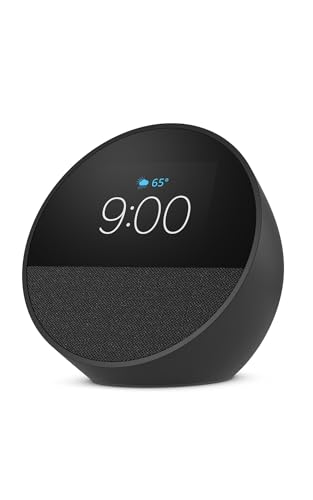
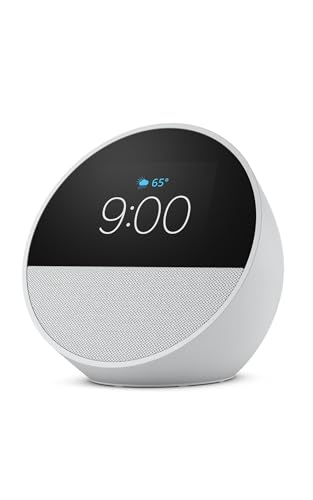
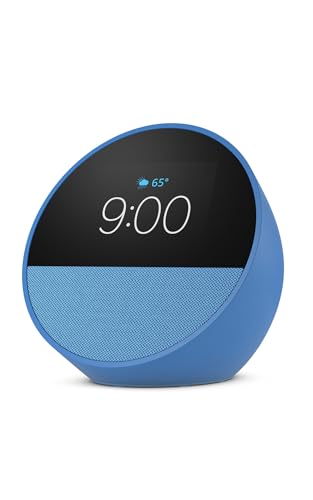
As an Amazon Associate we earn from qualifying purchases at no extra cost to you. Ratings are shown as listed on Amazon.
Quick comparison
| Speaker | Approx. size and weight | Kitchen strengths | Important limitation | Typical market range in 2026 |
|---|---|---|---|---|
| Amazon Echo Dot (5th Gen) | 100 × 100 × 89 mm; 304 g | Small footprint, Alexa routines, low cost | No official water-resistance rating; modest bass | $30–$60 |
| Google Nest Audio | 175 × 124 × 78 mm; about 1.2 kg | Strong Google Assistant recognition and room-filling sound | Not water resistant; relatively tall on a crowded counter | $70–$100 |
| Apple HomePod mini | 97.9 mm diameter × 84.3 mm high; 345 g | Compact, good sound for its size, Apple Home integration | Not designed for splashes; best with Apple devices | $80–$100 |
| Amazon Echo (4th Gen) | 144 × 144 × 133 mm; about 970 g | More capable music playback, Alexa smart-home hub features | Uses substantial counter space and has no water rating | $80–$120 |
| Sonos Era 100 | 182.5 × 120 × 130.5 mm; 2.02 kg | Best overall music quality, multi-room audio, IP54 resistance | More expensive; voice features depend on assistant choice | $200–$250 |
Dimensions exclude the power cable and any stand. Prices are broad market ranges rather than fixed prices, since promotions and regional pricing change frequently.
Best overall: Sonos Era 100
The Sonos Era 100 is the strongest all-round choice for a kitchen where music matters as much as timers and recipes. Its stereo-oriented driver arrangement produces a fuller presentation than miniature assistant speakers, and Sonos multi-room control makes it easy to group the kitchen with other rooms.
Its IP54 rating is particularly useful in this location. That means it has protection against limited dust ingress and water splashes, not that it can be rinsed, submerged, or placed beside a sink. Wipe it with a slightly damp, soft cloth and keep the power connection away from standing water.
The Era 100 also includes microphone controls and a physical microphone-disconnect switch. These are useful when you want music without voice control, although disabling the microphone prevents hands-free commands until it is switched back on. Sonos Voice Control is focused on music control; Alexa can provide broader smart-home functions where supported.
Best small and affordable choice: Amazon Echo Dot
The Echo Dot is the best smart speaker for kitchen counters with very little spare room. Its roughly 10-centimeter footprint can fit on a shelf, appliance alcove, or corner beside a coffee machine. Alexa is particularly practical for timers, shopping lists, unit conversions, recipe reminders, broadcasts, and routines.
Voice pickup is generally most reliable when the Dot is elevated and its microphone openings are not facing a wall or blocked by a utensil holder. Its small driver is adequate for podcasts and background music, but it cannot reproduce the low-end authority of the Echo or Sonos models. If the kitchen is noisy, an inexpensive Dot may hear a command less consistently than a larger speaker placed in a clearer location.
The Echo Dot has no official water-resistance rating. Treat it as an indoor electronic device: keep it away from the sink, stovetop steam, splattering pans, and surfaces that are frequently wiped with spray cleaner.
Best for Google households: Google Nest Audio
Google Nest Audio is a good match for people who already use Google Calendar, Google Maps, YouTube Music, Google Photos, or Google Home-compatible lights and plugs. It provides a larger soundstage and more bass than the Nest Mini, while its far-field microphones are intended for commands across a room.
Its fabric exterior looks unobtrusive, but that material should not be treated as washable. Dust and flour can settle into the fabric, and greasy kitchen vapor can discolor it over time. Use a dry, soft brush or carefully vacuum at low suction rather than spraying cleaner directly onto the enclosure.
Nest Audio is not water resistant. It is best on a high, dry shelf rather than next to a sink or under a cabinet where steam collects. Google Assistant can control compatible lights, outlets, thermostats, and other devices, but the available control depth depends on each device’s Google Home integration.
Best for Apple users: HomePod mini
The HomePod mini makes the most sense when the household already uses iPhone, iPad, Apple Music, and HomeKit or Matter accessories. Its compact, nearly 10-centimeter footprint is easy to place, and Siri can set multiple timers, create reminders, play music, announce messages, and control compatible smart-home devices.
It is a strong choice for a small kitchen because it sounds larger than its dimensions suggest. Two HomePod mini speakers can also form a stereo pair, although buying two is less space-efficient and more expensive than using one larger speaker.
The HomePod mini has no official water-resistance rating. Avoid placing it beside the sink, and do not assume its fabric-covered body can tolerate cooking steam indefinitely. Siri’s recognition and smart-home usefulness are also less compelling if most household members use Android phones or non-Apple services.
Best Alexa speaker for better music: Echo (4th Gen)
The fourth-generation Echo is the middle ground between the tiny Echo Dot and the music-focused Sonos Era 100. Its larger enclosure, 3-inch woofer, and twin tweeters give it more satisfying volume and bass for cooking sessions, while Alexa handles the same broad range of timers, lists, routines, and device controls.
It can be a particularly useful smart-home hub because compatible versions include Zigbee support, allowing certain devices to connect directly rather than requiring a separate bridge. However, the Echo’s spherical shape occupies more counter space than its footprint initially suggests, and its nearly one-kilogram weight makes it less convenient to move during cleaning.
Like the Echo Dot, it is not water resistant. Position it away from the stovetop and use the microphone-off button when privacy matters.
Which speaker fits your situation?
| Your situation | Best fit | Why |
|---|---|---|
| Under $60 and limited counter space | Echo Dot | Smallest practical footprint and broad Alexa routines |
| Mostly Apple devices | HomePod mini | Strongest integration with Apple services and Home controls |
| Google services and Android phones | Nest Audio | Natural fit for Google Home and Assistant workflows |
| Frequent music listening | Sonos Era 100 | Better detail, fuller sound, and multi-room expansion |
| Frequent splashes are unavoidable | Sonos Era 100, cautiously placed | Its IP54 rating offers limited splash protection; no smart speaker should be submerged |
| Several Zigbee smart-home devices | Echo (4th Gen) | Can reduce the need for a separate compatible hub |
Voice pickup: placement matters more than size
Even the best microphones struggle when a speaker is hidden behind a blender or positioned directly beside an extractor fan. Place the speaker at least 30 centimeters from large appliances where possible, with its microphones facing the open room. A shelf around chest height is often better than the rear corner of the counter.
For a simple coverage estimate, imagine a 3-by-4-meter kitchen. A speaker placed near one short wall is roughly 3 to 5 meters from the opposite work area. That is within the practical command range of modern far-field speakers in a quiet room, but a running hood fan can reduce recognition substantially. In that situation, moving the speaker one meter closer may help more than upgrading to a larger model.
Privacy and smart-home settings to change first
- Use the physical microphone-off control when private conversations are taking place.
- Review voice recordings and set automatic deletion where the platform offers it.
- Require a voice or app confirmation for purchases and sensitive household actions.
- Remove unused third-party skills, services, and smart-home accounts.
- Use separate household profiles if recommendations, calendars, or messages should not be shared.
- Keep firmware and router software updated, since a smart speaker is a networked computer in the home.
Microphone muting is not the same as turning off every network function. The speaker may still remain connected to Wi-Fi, so use the app or unplug it when you need the device fully offline.
Kitchen ownership and cleaning realities
The parts most likely to show wear are the power cable, fabric or grille, microphone switch, and surfaces exposed to grease. Never spray degreaser onto a speaker, cover microphone holes with tape, or use a wet cloth around the power socket. Unplug the speaker, use a barely damp cloth for hard surfaces, and use a soft dry brush for grilles and fabric.
Do not place any model directly above a kettle, beside a rice cooker steam outlet, or within splash distance of a sink. For the Sonos Era 100, IP54 is useful insurance against occasional splashes, not permission to clean it under a tap. If the kitchen routinely produces heavy steam, a dry shelf outside the main cooking zone will extend the life of any speaker.
Final recommendation
Choose the Sonos Era 100 for the best combination of music, voice control, and limited splash protection. Choose the Echo Dot when space and price come first, Nest Audio for a Google-centered home, HomePod mini for Apple households, and Echo (4th Gen) when stronger Alexa audio and built-in smart-home hub capability are worth the larger footprint. Whichever model you buy, careful placement and privacy settings will have as much effect on daily satisfaction as the speaker itself.



Write Your Review
No reviews yet. Be the first to share your experience!