

Key takeaways
- Best music quality below the premium tier: Sonos Era 100, especially if you use multiple streaming services.
- Best Apple integration: HomePod 2. Choose the HomePod mini when room size and budget are more important than bass.
- Best smart-home breadth: Echo 4th Gen, because Alexa supports a wide selection of devices and routines.
- Best single-speaker impact with Alexa: Echo Studio.
- Best battery-powered smart speaker: JBL Authentics 300.
- Best expandable multiroom path: Sonos, provided you are comfortable using the Sonos app and staying mainly on Wi-Fi.
The best smart speakers in 2026 are the Sonos Era 100 for balanced music and flexible streaming, the Apple HomePod 2 for Apple households, the Amazon Echo Studio for Alexa-based home control, and the JBL Authentics 300 for room-filling sound with battery portability. The right choice depends less on maximum volume than on your phone, streaming subscriptions, privacy expectations, room size, and willingness to stay inside one ecosystem.
Our top picks
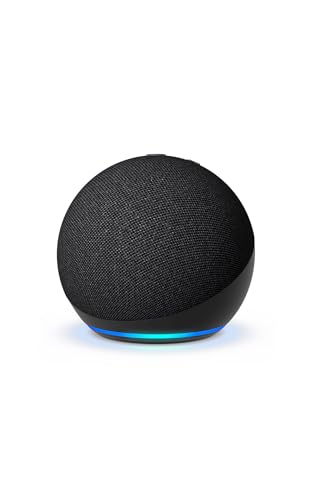
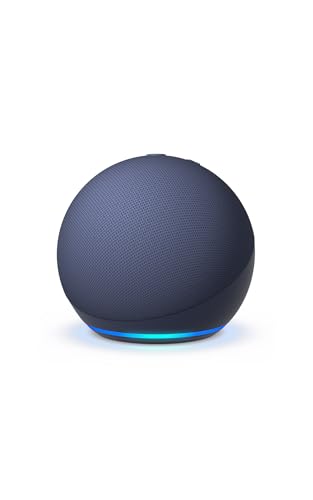
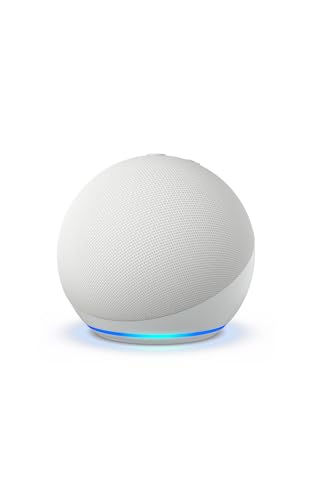

As an Amazon Associate we earn from qualifying purchases at no extra cost to you. Ratings are shown as listed on Amazon.
Best smart speakers at a glance
| Speaker | Best for | Approx. size and weight | Power and portability | Typical market range |
|---|---|---|---|---|
| Sonos Era 100 | Best overall music-and-multiroom balance | 7.2 x 4.7 x 5.1 in; 4.4 lb | AC power only | $200–$250 |
| Apple HomePod 2 | Best for Apple Music and iPhone households | 6.6 x 5.6 in; 5.2 lb | AC power only | $250–$300 |
| Apple HomePod mini | Best compact Apple smart speaker | 3.3 x 3.9 in; 0.76 lb | AC power only | $80–$100 |
| Amazon Echo 4th Gen | Best value for Alexa routines and compatible devices | 5.7 x 5.7 x 5.2 in; 2.1 lb | AC power only | $70–$110 |
| Amazon Echo Studio | Best Alexa speaker for larger rooms | 8.1 x 6.5 in; about 7.7 lb | AC power only | $180–$230 |
| JBL Authentics 300 | Best portable smart speaker for louder listening | 13.5 x 7.7 x 7.1 in; 10.8 lb | Up to about 8 hours on battery | $300–$450 |
Dimensions and battery figures are manufacturer-published specifications or commonly listed operating figures; actual wireless battery life varies with volume, network activity, and features. Market ranges change with sales and regional availability.
Sonos Era 100: the best all-rounder for music
The Sonos Era 100 is the safest recommendation for listeners who use several streaming services and want a speaker that can grow into a multiroom system. It produces a fuller, more controlled sound than most small voice assistants, with useful stereo separation for its size. A second Era 100 can be paired for stereo playback, although two speakers cost considerably more than a single smart speaker.
Sonos supports services including Spotify, Apple Music, YouTube Music, Amazon Music, Deezer, Tidal, and others, although exact availability depends on region. AirPlay 2 support makes it particularly convenient for Apple devices, while Bluetooth provides a simpler direct connection. A USB-C line-in adapter is available separately, which matters if you want to connect a turntable, television, or portable player.
Alexa is available for voice control, but the Era 100 is not the ideal choice if your main goal is a deep Alexa smart-home setup. Sonos voice control is primarily focused on music commands. The speaker also requires a phone-based setup and a Wi-Fi network; it is not designed to operate as a portable Bluetooth speaker.
Apple HomePod 2 and HomePod mini: best for Apple households
The HomePod 2 is the strongest choice when most of your listening happens through Apple Music and your home already uses iPhone, iPad, Apple TV, or HomeKit devices. Its automatic room sensing and computational audio help it sound unusually large for its footprint, with particularly satisfying bass at moderate listening levels. A stereo pair with an Apple TV 4K can also serve as a television audio system, subject to Apple’s compatibility requirements.
Siri handles playback, timers, messages, personal requests, and HomeKit or Matter-compatible home control. The HomePod 2 also includes temperature and humidity sensing. Music options are more Apple-centered than on Sonos: AirPlay is excellent, but direct third-party service integration is not as broad or consistent. If your household relies heavily on Spotify, the HomePod can still receive audio through AirPlay, but the experience is less seamless than using Apple Music.
The HomePod mini is a better fit for bedrooms, desks, kitchens, and smaller rooms. It is inexpensive enough to place several around a home, and its low-power design makes it practical as an intercom, timer, or smart-home control point. Its small enclosure cannot deliver the bass weight or volume of the larger HomePod 2.
Amazon Echo 4th Gen and Echo Studio: best for home control
The fourth-generation Echo is the value pick when voice-controlled routines matter more than audiophile refinement. Alexa supports a broad range of smart-home products, including lights, plugs, thermostats, locks, cameras, and Matter-compatible devices. Its built-in temperature sensor, motion-aware routines through compatible features, and extensive third-party skill ecosystem can make it useful beyond music.
Sound quality is respectable for casual listening, podcasts, radio, and background music. It is not as spacious or musically polished as the Sonos Era 100, and heavy bass can become less controlled at high volume. The Echo is nevertheless a strong choice for a kitchen, office, or bedroom where convenience matters more than critical listening.
The Echo Studio is the more serious Alexa music option. Its larger enclosure and multiple drivers produce deeper bass and greater scale, and it supports spatial-audio formats from compatible services and content. It works best with some clearance around the cabinet rather than being pushed into a shelf corner. Choose it when you want Alexa routines and a single speaker capable of filling a medium or large room.
JBL Authentics 300: best when battery power matters
The JBL Authentics 300 combines a retro-styled cabinet with Wi-Fi, Bluetooth, Alexa, Google Assistant, and a built-in battery. That combination is unusual: many smart speakers are tied to a wall outlet, while many portable speakers give up voice assistants and Wi-Fi streaming.
It is physically large and heavy, but the handle and roughly eight-hour rated battery make it practical to move between rooms or take outside within reasonable range of a network or Bluetooth device. Its sound favors strong bass and energetic listening. It is a better match for parties and open spaces than for listeners seeking a compact bedside speaker.
Before buying, check the assistant and streaming behavior in your region. Dual-assistant support does not mean every command or service behaves identically under both assistants.
Head-to-head: which speaker wins each decision?
- Best music quality below the premium tier: Sonos Era 100, especially if you use multiple streaming services.
- Best Apple integration: HomePod 2. Choose the HomePod mini when room size and budget are more important than bass.
- Best smart-home breadth: Echo 4th Gen, because Alexa supports a wide selection of devices and routines.
- Best single-speaker impact with Alexa: Echo Studio.
- Best battery-powered smart speaker: JBL Authentics 300.
- Best expandable multiroom path: Sonos, provided you are comfortable using the Sonos app and staying mainly on Wi-Fi.
Privacy controls that deserve attention
Every always-listening smart speaker uses local microphones to detect a wake word, then sends some requests to cloud services for processing. The physical microphone-mute switch on Echo, HomePod, Sonos, and JBL models is more dependable than relying only on an app setting. A visible mute indicator is useful, but remember that muting microphones also disables voice commands.
Review voice-history controls in the manufacturer’s account dashboard. Alexa allows users to review and delete voice recordings; Apple emphasizes on-device processing for some requests and account-linked processing for others; Sonos and other platforms have their own privacy settings. Disable personalized results, purchasing by voice, or household-member recognition if those features are unnecessary. Place speakers away from private conversations, work calls, or areas where guests may not expect a microphone.
Smart-home compatibility: avoid buying by logo alone
Look for the actual protocol and controller combination rather than assuming that “works with smart home” means universal compatibility. Matter can simplify setup across Apple Home, Alexa, Google Home, and other controllers, but device features may still differ by platform. Thread border-router support can also matter for low-power devices, but a speaker may support one protocol while lacking another.
For a mixed household, choose the platform that controls your most important devices first. If your locks, lights, and thermostat are already reliable in Alexa, an Echo may be less frustrating than starting a separate Apple Home setup. If everyone uses iPhones and Apple TV, HomePod is usually the more coherent control point.
A practical buying matrix
| Your situation | Recommended choice | Why |
|---|---|---|
| First smart speaker, modest budget | Echo 4th Gen | Broad assistant features and good everyday value |
| Frequent music listening in a medium room | Sonos Era 100 | Better musical balance and multiroom expansion |
| Apple Music, iPhone, and Apple TV user | HomePod 2 | Strong ecosystem integration and room-aware sound |
| Small bedroom or desk | HomePod mini or Echo 4th Gen | Compact control without overwhelming the space |
| Large room and Alexa routines | Echo Studio | More acoustic scale and stronger bass than the standard Echo |
| Move the speaker regularly | JBL Authentics 300 | Built-in battery without giving up Wi-Fi and voice assistants |
Ownership realities and setup mistakes
Most smart speakers fail as household products because of placement and network problems rather than worn-out drivers. Keep at least several inches of clearance around a speaker, avoid blocking microphones with books or fabric, and do not put a bass-heavy model directly in a corner unless you want exaggerated low frequencies.
Dust the grille with a dry, soft cloth. Do not spray cleaner into microphone openings, use compressed air at close range, or place a non-waterproof speaker near a sink. The first component likely to become inconvenient is often the software ecosystem: a discontinued service, changed login requirement, or unreliable router can affect usability before the speaker hardware wears out.
For a simple setup, connect the speaker to a stable 2.4 GHz or 5 GHz home network, update its firmware, add your preferred music services, and create only the routines you will actually use. Test playback from outside the room before mounting or permanently placing the speaker. That small check catches weak Wi-Fi coverage, account-linking problems, and voice-recognition issues while they are still easy to fix.



Write Your Review
No reviews yet. Be the first to share your experience!