

Key takeaways
- Strat-style guitars (Squier, Donner) suit clean, pop, funk and blues; humbucker guitars (Epiphone, Jackson, Ibanez) suit rock and metal.
- A 24.75 inch scale, as on the Epiphone SG Special, feels looser than the 25.5 inch Fender-style scale.
- A vintage-style tremolo looks cool but can drift out of tune; a hardtail bridge, like on the Squier Mini, stays in tune more easily.
- Plan for an amp, cable and tuner; the guitar is only part of the cost.
- A basic professional setup often improves a budget electric more than any upgrade part.
The best electric guitars under 200 dollars are the Squier Debut Stratocaster for clean and classic tones, the Epiphone SG Special for crunchy rock with a short scale, the Jackson JS11 Dinky and Ibanez Gio GRX20Z for heavier styles, the Squier Mini Stratocaster for small players, and the Donner DST-152R for the most pickup variety. At this budget the body shape and pickup layout decide your sound, and the quality of the setup decides whether the guitar plays well.
Cheap electrics have improved so much that a good one can last you for years of practice and even gigs. This guide compares six guitars through the specs that matter most for playing: scale length, nut width, pickup layout, fretboard radius and bridge type. It also covers what you must buy besides the guitar, because an electric is not much use without an amp.
Key takeaways
- Strat-style guitars (Squier, Donner) suit clean, pop, funk and blues; humbucker guitars (Epiphone, Jackson, Ibanez) suit rock and metal.
- A 24.75 inch scale, as on the Epiphone SG Special, feels looser than the 25.5 inch Fender-style scale.
- A vintage-style tremolo looks cool but can drift out of tune; a hardtail bridge, like on the Squier Mini, stays in tune more easily.
- Plan for an amp, cable and tuner; the guitar is only part of the cost.
- A basic professional setup often improves a budget electric more than any upgrade part.
Our top picks


As an Amazon Associate we earn from qualifying purchases at no extra cost to you.
How Pickups Shape the Sound at This Price
Pickup layout is the first decision, because it fixes the range of tones. Single-coil pickups, as on a Strat, are bright, clear and a little thin, with a bell-like quality that shines for clean playing. Humbuckers combine two coils to cancel hum, giving a thicker, louder sound that takes distortion well. Some guitars mix the two, placing a humbucker at the bridge and single-coils elsewhere.
| Layout | Found on | Sound | Suits |
|---|---|---|---|
| SSS (three single-coils) | Squier Debut, Squier Mini | Bright, clear, chimey | Pop, funk, blues, clean rock |
| HH (two humbuckers) | Epiphone SG Special, Jackson JS11, Ibanez GRX20Z | Thick, loud, high gain | Rock, hard rock, metal |
| HSS with coil split | Donner DST-152R | Versatile, from clean to heavy | Players who want variety |
Spec Comparison: Best Electric Guitars Under 200
| Guitar | Scale | Nut | Pickups | Bridge |
|---|---|---|---|---|
| Squier Debut Stratocaster | 25.5 in | 41.9 mm | 3 single-coils | 6-saddle tremolo |
| Epiphone SG Special | 24.75 in | Check listing | 2 humbuckers | Tune-o-matic, stopbar |
| Jackson JS11 Dinky | 25.5 in | 1.6875 in | 2 humbuckers | 2-point tremolo |
| Ibanez Gio GRX20Z | 25.5 in | 42 mm | 2 humbuckers | Tremolo |
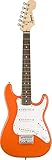
| Squier Mini Stratocaster | 22.75 in | 1.6 in | 3 single-coils | Hardtail |
| Donner DST-152R | 25.5 in | Check listing | HSS, coil split | 6-saddle tremolo |
1. Squier Debut Stratocaster: Best for Clean Tones and Classic Looks
- Poplar body with a matte finish; “C”-shaped neck; laurel fingerboard with a 9.5 inch radius.
- Scale length 25.5 inches; nut width 41.9 mm (1.65 inches); 21 narrow-tall frets.
- Three ceramic single-coil pickups with 5-way switching; one volume and two tone controls.
- Six-saddle vintage-style synchronised tremolo.
- Two-year warranty and a free Fender Play subscription, according to retailer listings; an HSS version also exists.
Best for: beginners who want a classic Strat shape and clear tones for pop, blues and funk. Skip if: you play high-gain metal; single-coils buzz under heavy distortion.
Pros: five usable pickup settings; the narrow nut feels comfortable; a maker with a long track record and a warranty; plenty of upgrade parts exist.
Cons: single-coils are noisy with high gain; the tremolo can drift out of tune; the 9.5 inch radius is curved, which some players find harder for bends than flatter boards.
2. Epiphone SG Special: Best for Crunchy Rock With a Short Scale
- Poplar body with a mahogany veneer per maker listings; bolt-on mahogany neck with a SlimTaper “D” profile.
- Scale length 24.75 inches (628.65 mm); 22 frets.
- Two open-coil humbuckers, the 650R in the neck and 700T in the bridge, with ceramic magnets.
- Tune-o-matic bridge with a stopbar tailpiece; three-way switch, master volume and master tone.
- Fingerboard material varies by production run.
Best for: rock, punk and classic riffs where thick humbuckers and sustain matter. Skip if: you want a tremolo arm or single-coil sparkle.
Pros: the fixed Tune-o-matic bridge stays in tune; the short scale makes bends easier; the SG shape is light and fast to play; strong sustain.
Cons: neck-heavy balance; sits at the very top of this budget; basic electronics; some listings differ on fingerboard wood.
3. Jackson JS11 Dinky: Best for Fast Play and Heavy Riffs
- Poplar body with a gloss finish; one-piece maple bolt-on neck with graphite reinforcement and a scarf joint.
- Scale length 25.5 inches; 12 inch radius amaranth fingerboard; 22 jumbo frets; nut width 1.6875 inches.
- Two high-output ceramic humbuckers with a three-way blade switch, master volume and master tone.
- Two-point fulcrum tremolo bridge with black hardware.
- Sealed die-cast tuners.
Best for: hard rock and metal players who want a flat, fast neck. Skip if: you want a vintage-style look or clean single-coil tones.
Pros: the 12 inch radius is flatter and easier for bends and speed; high-output pickups handle distortion; the graphite-reinforced neck is stable; aggressive styling.
Cons: one-tone controls limit tone shaping; the tremolo can lose tuning if used heavily; some players find cheap hardware basic.
4. Ibanez Gio GRX20Z: Best Budget Rock Guitar From a Specialist Brand
- Poplar double-cutaway body; bolt-on maple neck with 22 medium frets.
- Scale length 25.5 inches (about 648 mm); nut width about 42 mm.
- Two Infinity R humbucking pickups with ceramic magnets and a five-way switch, per recent listings.
- T106 tremolo bridge; one volume and one tone control.
- Fingerboard material has changed across production years.
Best for: rock players who want a familiar body shape and bold finishes. Skip if: you need exact, unchanging specs; the listing differs by year.
Pros: a fast-feeling neck; the five-way switch offers more tones than a simple three-way; ceramic humbuckers give a modern bite; frequently on sale.
Cons: specs vary by seller and year; basic tremolo; sits at the upper end of this budget.
5. Squier Mini Stratocaster: Best for Small Players and Travel
- Three-quarter-size poplar body with a maple “C” neck and Indian laurel fingerboard (9.5 inch radius).
- Scale length 22.75 inches (578 mm); nut width 1.6 inches; 20 narrow-tall frets.
- Three standard single-coil pickups with five-way switching.
- Six-saddle hardtail bridge, which holds tuning better than a tremolo.
- Two-year warranty according to listings.
Best for: children, adults with small hands and anyone who wants a travel guitar. Skip if: you want a full-scale feel for long-term playing.
Pros: short scale and small body are easy to handle; the hardtail bridge is stable; full Strat tones; light weight.
Cons: the small scale feels cramped for large hands and changes bending feel; pickups are basic; limited resale.
6. Donner DST-152R: Best Variety of Sounds for the Money
- Poplar body with a satin maple “C” neck and laurel fingerboard; 22 frets.
- Scale length 25.5 inches.
- HSS pickup layout with a coil-split on the bridge humbucker, giving seven sound modes with the five-way switch.
- Six-saddle synchronised tremolo.
- Sold as a kit for adults, with accessories varying by listing.
Best for: players who want one guitar that covers clean, blues and rock. Skip if: you want consistent quality control from a major maker.
Pros: coil-splitting is rare at this price; many sound options; kit offers extras; low cost of entry.
Cons: quality control is less consistent than at the major makers; a setup is likely to be needed; spec detail varies by listing.
Also Consider
- Epiphone Les Paul Special II: a Les Paul-style guitar with a 24.75 inch scale and 650R/700T humbuckers; it sits at or just over the 200 dollar line, so compare current listings.
- Squier Sonic Stratocaster: a step above the Debut with ceramic single-coils and a hardtail option, usually priced a little over this budget.
- Ibanez Gio GRX70QA: a flame-top style with extra finish options, typically just over the line.
- Yamaha Pacifica PAC012: a well-regarded entry model that costs more than this budget allows.
How We Chose
We did not personally use these guitars. The list is based on maker spec sheets, retailer listings and published reviews. We looked for guitars that cost under the line on typical listings, from makers with a track record, and that cover different styles: classic single-coil, rock humbucker, heavy modern, small-scale and versatile HSS. We prioritised specs that affect playability, such as scale length, nut width, fretboard radius, bridge type and pickup layout, and we flagged any model where sources disagree.
Buying Guide: What Matters Most in a Budget Electric
Scale length
The two common scales are 25.5 inches (Fender and most modern guitars) and 24.75 inches (Gibson and Epiphone). A shorter scale has lower tension, so strings feel looser and bends are easier, while a longer scale gives a tighter, snappier attack. The 22.75 inch scale of the Squier Mini is a three-quarter size designed for small players.
Nut width and neck shape
Nut widths on this list run from 1.6 inches (Mini) to 1.69 inches (Jackson). A narrower nut suits small hands and chords; a wider one gives more space for fingerpicking. “C” shaped necks are the most common and suit most hands; a slim “D” or flat “speed” neck is faster for lead playing.
Fretboard radius
A lower number (9.5 inches) means a more curved board, which feels natural for chords. A higher number (12 inches) is flatter, making bends and fast runs easier without choking out. Neither is better; it depends on your style.
Bridge type
A hardtail or fixed bridge, like on the Epiphone and Squier Mini, stays in tune easily. A tremolo bridge allows pitch dips and dives but can drift, especially with cheap hardware. If you rarely use the arm, you can block it or tune the springs tight to improve stability.
Pickups and controls
Choose single-coils for clean and classic tones and humbuckers for loud and heavy sounds. A coil-split or five-way switch adds range. Budget pickups sound adequate, but upgrading them is the most effective improvement if you later want more character.
Body wood
Poplar is the common body wood at this price. It is light, stable and takes paint well. The tone differences between wood types are smaller than the differences from pickups and setup.
Guitar-only or kit
Kits with an amp can save money if you have no gear, but the amps in them are usually small and basic. A stand-alone guitar from a maker like Squier or Epiphone plus a separate practice amp usually gives better results.
What else you need
Besides the guitar, plan for an amplifier, an instrument cable, a clip-on tuner, a strap, picks and a gig bag. Headphone amps are a good choice for apartments. Allow a modest sum for a setup that lowers the action and checks the intonation.
The Rest of the Rig: Amp Options for a First Electric
An electric guitar needs an amplifier or an interface to be heard properly, and the choice shapes what you hear from the guitar. These general options cover most first setups, and the power ranges are typical rather than product specifications.
| Option | Typical power | Good for | Watch out for |
|---|---|---|---|
| Small solid-state practice amp | 10 to 20 watts | Bedroom practice, simple clean and drive tones | Harsh distortion on the cheapest models |
| Modelling amp | 10 to 40 watts | Trying many tones, built-in effects | Menus can distract a beginner |
| Headphone amp | Headphone only | Silent practice in apartments | No speaker feel |
| Phone or computer app with an interface | Not applicable | Recording and silent play | Needs an interface and some set-up |
If you pick humbucker guitars like the Jackson or Ibanez, an amp with a decent drive channel makes them shine. If you pick the Squier Debut, a clean channel with some reverb flatters single-coils. For tight spaces, a headphone amp is the cheapest way to avoid complaints.
Reading Your Controls: A Short Tone Primer
- Pickup selector: on a Strat-style five-way switch, position one is the bridge pickup (bright, biting), three is the middle (hollow), and five is the neck (round, warm). On a three-way switch, the bridge pickup is for lead and the neck is for rhythm.
- Volume knob: turning it down a little cleans up distortion without touching the amp.
- Tone knob: rolling it back softens harsh highs, which suits bright single-coils and ceramic humbuckers.
- Coil split (Donner DST-152R): switches the bridge humbucker to a single coil for a brighter, thinner tone.
- Tremolo arm: use gentle movements; large dives on a budget bridge can pull the guitar out of tune.
Strings for a Budget Electric
String choice changes feel as much as many hardware upgrades. Most budget electrics ship with .009 or .010 gauge sets, and a quality replacement set is the cheapest improvement available.
- .009 to .042 (extra light): easiest to bend and fret, popular with beginners and with short-scale guitars like the Squier Mini.
- .010 to .046 (regular light): the standard for most players, balanced for chords and leads.
- .011 and heavier: more tension, a fuller tone and better for lower tunings, but harder for a new player’s fingers.
- Coated strings: last longer if you sweat heavily, at a slightly higher cost.
When you change gauge, a technician may need to adjust the truss rod and bridge, especially on a tremolo guitar. Changing to a similar gauge keeps things stable.
Mistakes First-Time Electric Buyers Make
- Buying a kit with a poor amp. The amp is half of your sound. A modest amp from a known brand beats a tiny bundled one.
- Chasing the lowest price. The cheapest no-name guitars often have rough frets and unstable tuning. A step up to a maker with a warranty is worth it.
- Using too much gain. Heavy distortion hides mistakes and makes practice sound better than it is. Practise clean to learn accurately.
- Ignoring the setup. Strings that sit too high make a good guitar feel bad. Ask a shop to lower the action.
- Forgetting hearing safety. Even a small amp can be loud in a small room. Keep the volume at a comfortable level and take breaks.
Setting Up a Cheap Electric at Home
- Change the strings. Factory strings are often poor. A set of .010 to .046 strings is a standard starting point.
- Check the neck relief. Press the low E string at the first and last frets; the gap near the 7th fret should be about the thickness of a thin business card. Adjust the truss rod only in small quarter-turns, or let a technician do it.
- Raise or lower the bridge saddles. Common guidance puts the low E string at about 2 mm above the 12th fret on an electric. Lower strings mean easier playing but risk buzzing.
- Check intonation. Compare the open string note with the 12th-fret harmonic and 12th-fret fretted note with a tuner. Adjust the saddle forward or back to match.
- Tighten the jack and pots. Loose output jacks cause crackle and are cheap to fix.
- Stabilise the tremolo. Set the springs so the bridge sits flat, or block it with a small piece of wood if you do not use it.
Upgrade Path: What to Change First and What to Leave Alone
Budget electrics reward small, targeted upgrades. Spend in this order and stop when the guitar feels right.
- Setup and strings. Action, relief and intonation account for most of the difference between a guitar that feels cheap and one that feels good.
- Nut and tuners. A poorly cut plastic nut can snag strings and cause tuning drift. A technician can recut or replace it, and locking or better-quality tuners hold pitch better.
- Pickups. Replacing the stock pickups is the most audible upgrade, particularly on the bridge position. Pick a replacement that suits your style.
- Electronics. New pots and a quality output jack reduce noise and crackle.
- Bridge hardware. On a tremolo guitar, new saddles or a block can improve stability.
Leave cosmetic changes, such as a new pickguard or knobs, until last. They change the look but not the sound or feel. It also helps to change only one thing at a time, so that you can hear what each upgrade actually does and avoid spending on parts that make no difference to your playing.
Which of These Guitars Hold Their Value?
If you may sell the guitar once you outgrow it, brand matters. Squier, Epiphone, Ibanez and Jackson guitars are easy to resell because buyers recognise them. Kits from lesser-known brands sell for much less, and kit extras rarely add resale value. Keep the original box, tidy the guitar and note any upgrades you have made to get the best price. Many players keep their first electric as a spare for alternate tunings or for lending to friends, which gives it ongoing use.
Choosing Among the Best Electric Guitars Under 200
| Style or need | Pick |
|---|---|
| Clean pop, blues, funk | Squier Debut Stratocaster |
| Classic rock and punk crunch | Epiphone SG Special |
| Hard rock and metal with a fast neck | Jackson JS11 Dinky |
| Rock with a flexible five-way switch | Ibanez Gio GRX20Z |
| Small hands or travel | Squier Mini Stratocaster |
| One guitar for many styles | Donner DST-152R |
Frequently Asked Questions
Can I play an electric guitar without an amp?
Yes, but it will be very quiet. For proper practice you need an amp or a headphone amp, which also lets you adjust the tone.
What amp should I buy with a cheap electric?
A small practice amp of 10 to 20 watts is enough for home. A headphone amp is ideal for quiet practice. Avoid very cheap amps in kits if you can stretch a little.
Are cheap electrics worth upgrading?
The cheapest improvement is a setup and new strings. After that, pickups give the biggest change, followed by tuners and the nut.
Is a tremolo bridge a bad idea for beginners?
Not necessarily, but it can cause tuning issues. If you rarely use the arm, a hardtail guitar or a blocked tremolo is simpler.
What strings should I use?
Nickel-wound .010 to .046 strings are standard. Lighter .009 sets are easier to bend, and heavier sets suit lower tunings.
Which is better for beginners, Strat or humbucker guitars?
Neither. Choose by the music you want to play. Single-coils suit clean styles, and humbuckers suit rock and metal.
Are these guitars available left-handed?
Some are, but availability varies. Check the listing for the specific model.
Which One Should You Buy?
For classic clean tones and the safest bet from a major maker, buy the Squier Debut Stratocaster. For rock with a comfortable short scale, buy the Epiphone SG Special. If you play heavier music and want a fast neck, pick the Jackson JS11 Dinky or Ibanez Gio GRX20Z. If you or your child is small, choose the Squier Mini Stratocaster, and if you want the widest range of tones for your money, try the Donner DST-152R. Add a small amp, a tuner and a setup, and you have a complete starting rig.
Sources
- Fender Musical Instruments Squier Debut and Mini series pages
- Epiphone SG Special product pages
- Jackson Guitars JS series pages
- Ibanez Gio series listings
- Donner DST-152R listings
- Guitar World published reviews
Last updated: October 2026




Write Your Review
No reviews yet. Be the first to share your experience!